
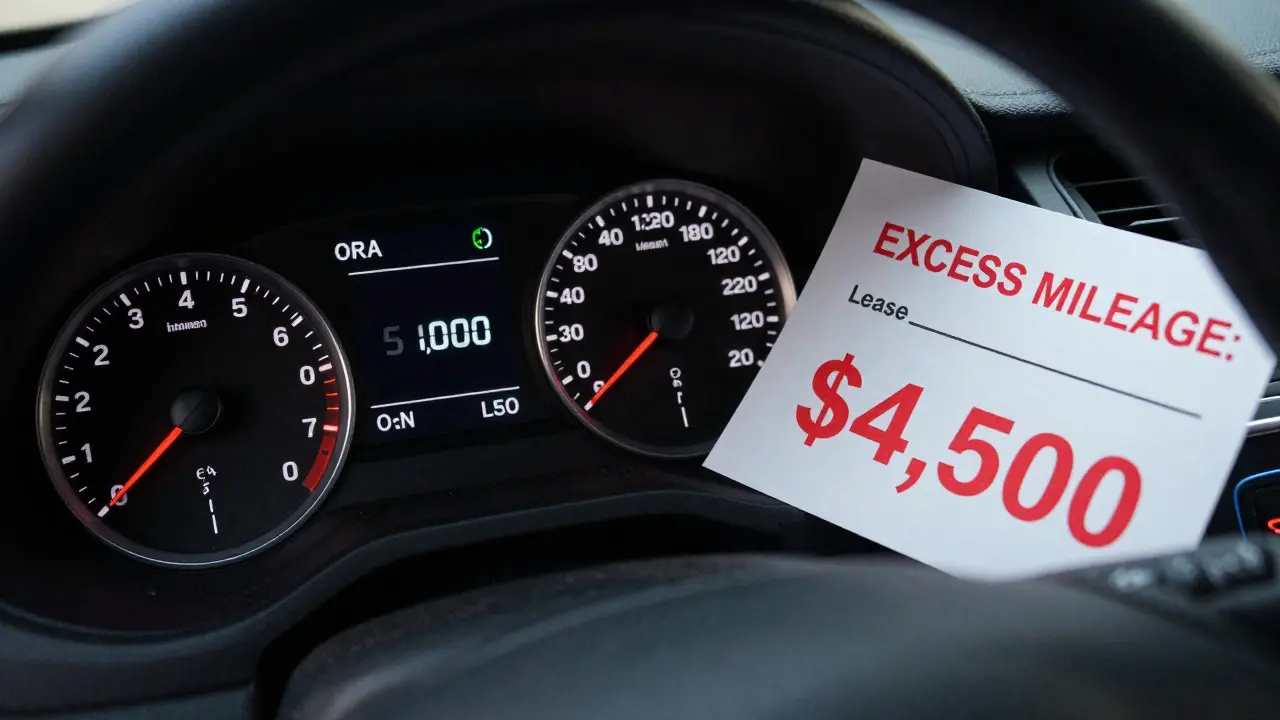
When you lease a car, you agree to a set number of miles you can drive over the term-usually 10,000, 12,000, or 15,000 miles per year. If you go over that limit, you pay extra. But what happens if you extend or renew your lease? Do those extra miles just keep piling up? Or does the odometer get a fresh start? The answer isn’t simple, and most people don’t realize how much it matters until they’re staring at an end-of-lease bill.
Why Mileage Matters in a Lease
Lease companies don’t just care about how long you’ve had the car. They care about how much it’s been used. High mileage means more wear and tear. A car with 80,000 miles on it isn’t worth as much at resale as one with 30,000 miles-even if both are the same age. That’s why your lease contract locks in a mileage limit. Exceed it, and you pay anywhere from 15 to 25 cents per extra mile. That can add up fast. Drive 5,000 miles over your limit? That’s a $750 to $1,250 charge.But here’s the thing: mileage doesn’t reset just because you’re staying in the car. Many people assume that if they renew or extend their lease, the odometer resets like a new contract. It doesn’t. The total miles you’ve driven are still tracked. The lease company doesn’t forget.
What Happens When You Extend Your Lease
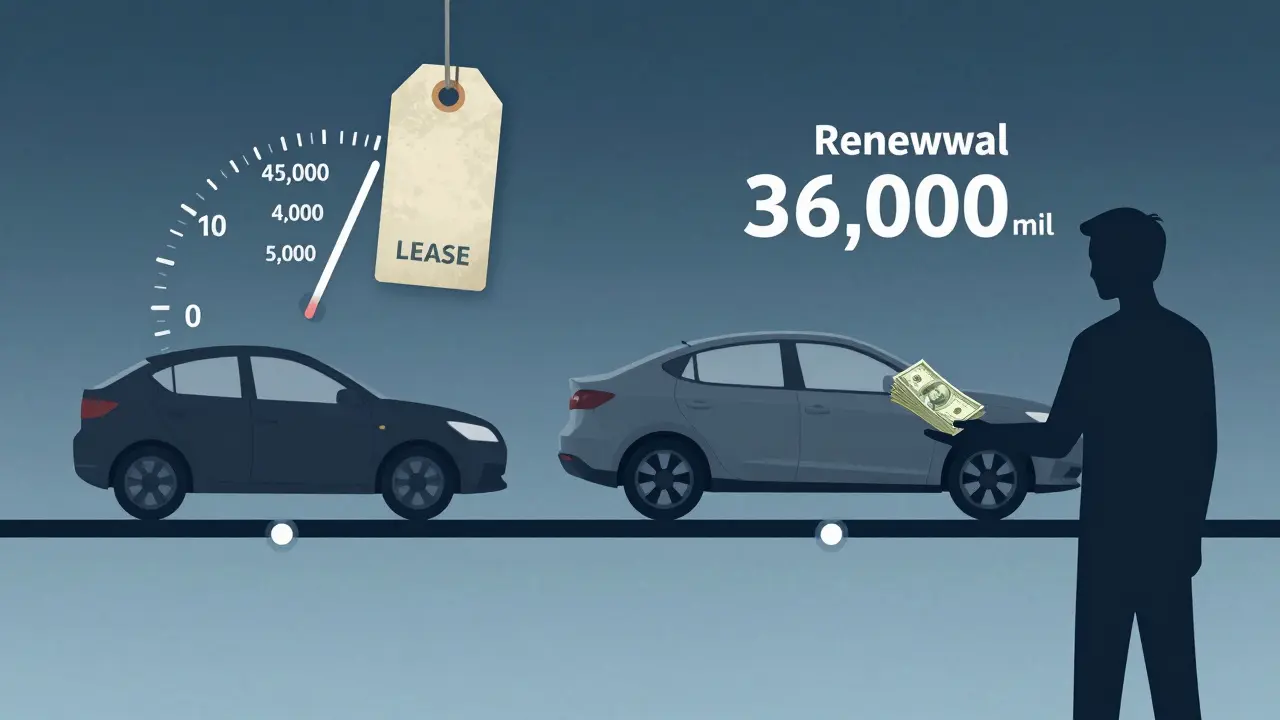
Extending your lease means you keep driving the same car for a few more months-usually 3 to 6 months-after the original term ends. This is common if you’re waiting for a new model to arrive or if you’re not ready to buy another car.During an extension, you keep paying your monthly payment. But your mileage limit? It stays the same. If you started with 36,000 miles over three years and you’ve driven 42,000 miles, you’re already 6,000 miles over. If you extend for six months, you don’t get an extra 5,000 miles. You’re still on the same 36,000-mile total. Those extra 6,000 miles still count. And if you drive another 2,000 miles during the extension, you’re now 8,000 miles over. Your end-of-lease fee just got bigger.
Some lease companies offer a small mileage buffer during extensions-maybe 1,000 to 2,000 miles-but you have to ask for it. It’s not automatic. And even then, it’s a tiny gift. It doesn’t erase your past overages.
What Happens When You Renew Your Lease
Renewing means you’re signing a new lease agreement, usually with the same manufacturer or dealer. You might get a new car, or sometimes you can keep the same one. This is where people get confused.When you renew, you get a fresh mileage allowance. But only for the new lease. The old one doesn’t vanish. The total miles from your first lease still exist. They’re just not part of the new calculation. For example:
- Lease 1: 36,000-mile limit. You drove 45,000 miles. You owe $1,350 in excess fees.
- Lease 2: You renew with a new 36,000-mile limit for a new car.
You pay the $1,350 for Lease 1. Then Lease 2 starts with a clean slate: 36,000 miles again. Your new car doesn’t inherit your old overages. But here’s the catch: you still have to pay for the old overages before you can walk away or renew. You can’t just skip it.
Some dealerships will roll the excess mileage fee into your new lease payment. They’ll add it to your monthly bill. That sounds nice, but it’s not a reset. It’s a debt transfer. You’re still paying for those extra miles-you’re just spreading it out over 24 or 36 more months. And you’ll pay interest on it. That’s not a deal. It’s a trap.
When Mileage Resets (And When It Doesn’t)
There’s one situation where mileage resets completely: when you return the car and walk away. If you pay your excess fees upfront or settle them at the end, the lease is closed. The car goes back to the leasing company. The odometer reading is recorded. The miles are counted. Done.If you buy the car outright at the end of the lease, you own it. The mileage is yours forever. No more limits. No more fees. That’s the only real reset.
But if you stay in the same car-whether by extension or renewal-you’re still under the same lease contract’s rules. The miles you’ve already driven are part of the record. The leasing company keeps that data. They use it to calculate depreciation, resale value, and your final bill.
How to Avoid a Big Mileage Bill
If you know you’re going to drive more than your limit, don’t wait until the end to deal with it. Here’s what actually works:- Buy extra miles upfront. When you sign the lease, you can often pay for additional miles-say, 5,000 extra-for a fixed price per mile (usually 10 to 15 cents). That’s cheaper than paying 20 cents later.
- Track your mileage monthly. Most lease agreements let you check your odometer reading online. Set a reminder every month. If you’re on pace to go 10,000 over, act now.
- Don’t assume extensions reset anything. If you’re extending, assume you’re still on the same odometer. Don’t drive like you’ve got a fresh start.
- Ask before you renew. If you’re renewing, ask: "Will my old excess miles be forgiven?" The answer is almost always no. But sometimes, if you’re a loyal customer, they’ll waive part of it.
- Consider buying the car. If you love it and drive a lot, buying it might be cheaper than paying excess fees. The buyout price is set in your contract. Compare it to what the car is worth on the used market.
What Lease Companies Actually Do
Leasing companies aren’t trying to trick you. They’re following strict rules set by manufacturers and financial regulators. The odometer reading is part of the vehicle’s history. It’s reported to national databases like Carfax and AutoCheck. If you extend or renew, they can’t erase that data-it’s illegal. The mileage is tied to the VIN. It’s permanent.That’s why some companies offer a "mileage buyout" option during renewal. You pay a lump sum to cover your past overages, and they give you a new lease with a clean slate. It’s not a reset. It’s a settlement. You’re paying to clear the slate.
Real-World Example: A Lease Extension Gone Wrong
Sarah leased a 2023 Honda CR-V in January 2023 with a 12,000-mile annual limit. She drove 15,000 miles each year. After three years, she had driven 45,000 miles. Her limit was 36,000. She owed $2,700 in excess fees (15 cents per mile over).She called her dealer and asked for a six-month extension. They agreed. She drove another 6,000 miles during the extension. Her total? 51,000 miles. Her excess? 15,000 miles. Her fee? $4,500.
She thought the extension gave her a new allowance. It didn’t. She paid $4,500 at the end. She could’ve bought 10,000 extra miles upfront for $1,200. Instead, she paid over three times more.
What You Should Do Now
If you’re close to your lease end:- Check your current mileage right now. Don’t guess.
- Compare it to your contract limit.
- Calculate how much you’ll owe if you go over.
- Call your leasing company and ask: "If I extend or renew, will my past excess miles be forgiven?"
- If they say no, ask: "Can I pay the excess now at a lower rate?"
Most people wait until the last minute. By then, the damage is done. The best time to fix your mileage problem is six months before your lease ends. That’s when you still have options.
Does extending my car lease reset my mileage limit?
No. Extending your lease means you keep driving the same car under the same mileage terms. The total miles you’ve driven since the lease began still count. You don’t get a fresh allowance. Any extra miles you drive during the extension add to your existing overage.
Can I renew my lease and start fresh with new mileage?
Yes, but only for the new lease. Your old overages don’t disappear. You must pay them before you can renew. Some dealers let you roll them into your new monthly payment, but that adds interest. It’s better to pay them off upfront or buy extra miles before your lease ends.
Do I get extra miles if I renew with the same car?
No. Even if you keep the same car, renewing means a new contract. Your old mileage is still recorded and must be paid for. The new lease gives you a new mileage limit for the new term, but your past overages remain your responsibility.
How much do excess mileage fees usually cost?
Most lease contracts charge between 15 and 25 cents per mile over the limit. Some premium brands charge up to 30 cents. Compare that to buying extra miles upfront-often 10 to 15 cents per mile. Paying later is always more expensive.
Can I avoid excess mileage fees by buying the car?
Yes. If you buy the car at the end of your lease, you own it. The mileage limit disappears. You can drive as much as you want. The buyout price is listed in your contract. If it’s lower than the car’s market value, buying it might save you money-especially if you’ve driven a lot.
Do lease companies track mileage after the lease ends?
Yes. The odometer reading at lease end is recorded and linked to the vehicle’s VIN. That data is shared with services like Carfax and AutoCheck. Even if you extend or renew, the original lease mileage remains part of the car’s history. It can’t be erased.
Comments
kelvin kind
Just learned this the hard way. Drove 18k miles in a year on a 12k lease. Thought extending would help. Nope. Got hit with $2k. Don't be like me.
March 24, 2026 at 12:16
Ananya Sharma
This is why capitalism is a pyramid scheme. You pay for a car you never own, then get fined for using it like it's yours. The lease company doesn't care if you're a single mom working two jobs or a CEO with a chauffeur-they just want your money. The odometer doesn't lie, but neither do the contracts. And guess who writes them?
March 26, 2026 at 10:21
Ian Cassidy
Mileage overage is just depreciation in disguise. Leasing companies use residual value models based on historical data. High-mileage vehicles drop faster in auction value. That 20-cent-per-mile fee? It’s not a penalty-it’s actuarial math. You’re paying for the difference between projected and actual resale.
March 26, 2026 at 15:02
Sarah McWhirter
I swear the leasing companies have a secret handbook called 'How to Scare People Into Paying More'. I got a letter that said 'Your lease is ending soon!' with a red border. Like I was gonna run away. I called them. They said 'We can roll it into your next lease!' Like that’s a gift. Bro, I’m not buying another car from you. I’m done. I’m buying a used truck next time. No more games.
March 27, 2026 at 08:51
Ben De Keersmaecker
The VIN is permanently tied to the odometer reading. That’s not a corporate policy-it’s federal law under 49 U.S.C. § 32705. Any attempt to alter, conceal, or reset mileage data is a felony. So when someone says 'They should reset it,' they’re not just wrong-they’re advocating for fraud. The system isn’t broken. It’s working exactly as designed.
March 29, 2026 at 07:39
Sandy Dog
I cried when I saw my bill. Like, full-on ugly sobbing. I thought I was being smart by extending. I even posted a TikTok about how I ‘outsmarted the system.’ Now I have 12k in fees and a broken heart. My dog won’t even look at me. I’m moving to Canada. They don’t do leases there. They just let you drive. 😭
March 29, 2026 at 22:08
Paritosh Bhagat
You people are so naive. You think the lease company is just a business? No. It’s a financial instrument. They bundle your lease into a security, sell it to investors, and the whole thing depends on mileage projections. If you go over, it throws off the whole model. So they don’t forgive. They can’t. It’s not personal. It’s Wall Street. And you’re the collateral.
March 31, 2026 at 19:21
Adrienne Temple
If you're thinking about extending, just ask for a mileage buyout upfront. I did it last year. Paid $1.20 per extra mile instead of 20 cents later. Saved $800. Seriously, call them. They'll help if you're nice. And yes, I'm a woman in my 40s. I know how to talk to people. You can too. 💪
April 1, 2026 at 13:37
Amanda Harkins
I didn’t even know this was a thing until my lease ended. I thought ‘renewal’ meant a fresh start. Turns out I was just a dumb sheep. Now I have to pay $1,500. I’m so mad I can’t even type straight. Why is everything so complicated?
April 2, 2026 at 00:49
Aaron Elliott
The entire leasing industry is predicated on the assumption that consumers are incapable of comprehending contractual obligations. The opacity of mileage policies is not an oversight-it is a feature. By design, the language is deliberately ambiguous. The consumer is meant to be confused. The corporation is meant to profit. Ergo, the system functions as intended.
April 3, 2026 at 13:43
Chris Heffron
I just want to say... you're not alone 😊 I went over by 7k miles. Paid $1,400. Then I bought a 2019 Camry outright. No more lease drama. Best decision ever. You got this!
April 4, 2026 at 22:56
Nick Rios
I’ve been leasing for 10 years. I always buy extra miles upfront. It’s like insurance. You hope you don’t need it. But if you do, you’re glad you paid for it. No drama. No surprises. Just peace of mind.
April 6, 2026 at 03:38
Tom Mikota
You know what’s wild? The same companies that charge you 25 cents a mile for overage? They sell those cars at auction-where they’re bought by people who drive them 50k miles a year. So you’re paying extra so they can resell it to someone who’ll drive it twice as much. The system is a joke.
April 6, 2026 at 16:53
Zach Beggs
I extended my lease last year. Didn’t think about mileage. Got hit with $1,800. Learned my lesson. Now I track it on my phone. Every Sunday. No more surprises.
April 7, 2026 at 09:15
Jeanie Watson
I’m not mad. I’m just disappointed. I thought I was being smart. Turns out I was just being gullible. Lesson learned. Next time, I’m buying.
April 9, 2026 at 03:59