
Imagine buying a car that gets smarter every year without you ever visiting a dealership. This isn't science fiction anymore; it is the reality of modern ADAS (Advanced Driver Assistance Systems). These systems rely heavily on two invisible but critical technologies: Over-the-Air (OTA) updates wireless software patches sent directly to vehicles and Remote Services cloud-based connectivity allowing real-time data exchange between car and manufacturer. Together, they transform your vehicle from a static machine into a living, evolving platform.
In 2026, the gap between what a car does when you drive it off the lot and what it can do three years later has never been wider. Manufacturers are no longer just selling hardware; they are selling continuous improvement. But how exactly does this work under the hood? And why should you care about these digital pipelines?
The Evolution from Static to Dynamic Vehicles
For decades, a car’s capabilities were fixed at the point of sale. If your cruise control felt sluggish or your blind-spot warning was annoyingly sensitive, you were stuck with it until you bought a new model. That era is over. Today, Vehicle Software Architecture the underlying code structure managing all electronic components in a car is designed for changeability.
This shift mirrors the smartphone revolution. Just as Apple or Samsung push updates to fix bugs or add features to your phone, automakers like Tesla, Ford, and Volkswagen now push updates to your car’s Electronic Control Units (ECUs) small computers that control specific functions like braking or steering. The difference is higher stakes. A bug in a social media app is an annoyance; a bug in an automatic emergency braking system can be dangerous. Therefore, the reliability of OTA infrastructure is paramount.
The transition requires a robust Telematics Control Unit (TCU) a dedicated module handling cellular connectivity and data transmission. In 2026, most new vehicles come equipped with 5G-enabled TCUs, allowing them to download gigabytes of data in minutes rather than hours. This speed is crucial for large firmware updates that might recalibrate camera sensors or improve radar processing algorithms.
How Over-the-Air Updates Actually Work
You might think an OTA update is just like updating your laptop. It’s not quite that simple. Cars have dozens of separate computers, each with its own operating system and security protocols. An OTA process must coordinate across this fragmented landscape.
Here is the typical workflow for a major ADAS update:
- Detection: The TCU checks the manufacturer’s cloud server daily while the car is parked and plugged in (or idle). It compares the current version of each ECU’s firmware against the latest available release.
- Download: If an update is available, the system downloads the package. To save battery and data, many manufacturers only allow full downloads when the vehicle is stationary and connected to Wi-Fi or charging.
- Verification: Before installing anything, the car verifies the cryptographic signature of the update. This ensures the file hasn’t been tampered with by hackers. Security is non-negotiable here.
- Installation: The update is written to a backup partition on the ECU. This is known as an A/B partition scheme. If the installation fails or the new software crashes, the system automatically rolls back to the previous stable version (Partition A).
- Calibration: After rebooting, the ADAS system may require a brief calibration period. For example, lane-keeping assist might need to relearn the alignment of the front cameras.
This complexity means that not all updates happen instantly. Critical safety patches often get priority bandwidth, while cosmetic changes to the infotainment screen might wait for a scheduled maintenance window.
The Role of Remote Services in Real-Time Safety
While OTA updates handle long-term improvements, Remote Services handle immediate needs. Think of OTA as the annual physical exam and Remote Services as the daily heartbeat monitor.
Remote services enable bidirectional communication. Your car sends data to the cloud, and the cloud sends commands back. This relationship powers several key features in modern ADAS:
- Predictive Maintenance: Sensors detect wear on brake pads or degradation in battery health. Instead of waiting for a warning light, the system alerts your phone app weeks in advance, suggesting a service appointment.
- Geofencing and Theft Recovery: If your car leaves a predefined zone or is stolen, remote services can lock the engine, disable acceleration, or send precise GPS coordinates to law enforcement.
- Climate Pre-conditioning: You can start heating or cooling your cabin via an app before you even step outside. This uses remote commands to activate the HVAC system while the car is still plugged in.
- Fleet Management Insights: For commercial fleets, remote services provide real-time data on driver behavior, fuel efficiency, and route optimization. This helps companies reduce costs and improve safety compliance.
In the context of ADAS, remote services also allow for "shadow mode" testing. Manufacturers can silently run new AI algorithms alongside the active ones, comparing results without affecting the driver. If the new algorithm performs better in handling icy roads, it can be packaged into the next OTA update.
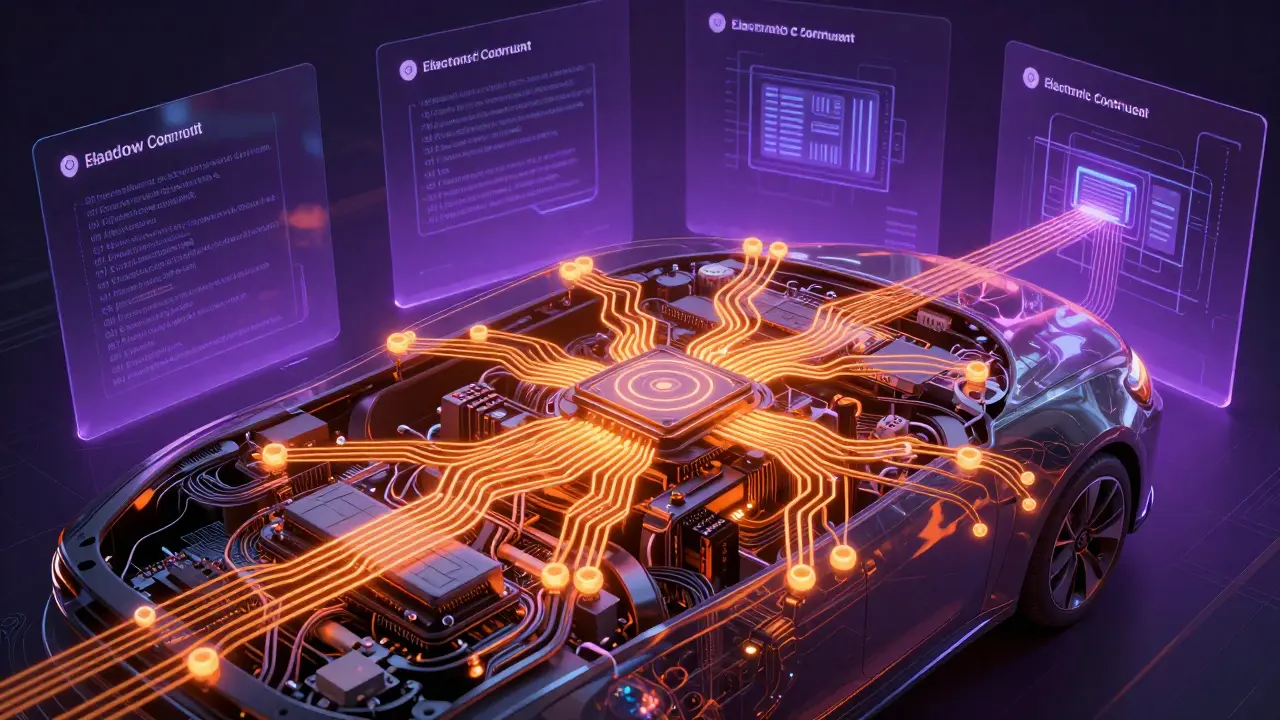
Security Risks and Mitigation Strategies
Connecting a car to the internet opens up new attack vectors. Hackers don’t need to break into your garage to access your vehicle; they just need to find a vulnerability in the digital pipeline. This is why cybersecurity is integral to ADAS design.
In 2026, leading automakers follow strict standards set by organizations like ISO/SAE 21434 an international standard for road vehicle cybersecurity engineering. Key mitigation strategies include:
| Threat Vector | Mitigation Strategy | Example Implementation |
|---|---|---|
| Man-in-the-Middle Attack | End-to-End Encryption | All data between TCU and Cloud is encrypted using TLS 1.3 protocols. |
| Firmware Tampering | Secure Boot & Digital Signatures | ECUs refuse to load unsigned code. Only authorized keys from the manufacturer can install updates. |
| Denial of Service (DoS) | Rate Limiting & Firewalls | Cloud servers block excessive requests from single IP addresses to prevent system overload. |
| Unauthorized Access | Multi-Factor Authentication (MFA) | Users must verify identity via biometrics or OTP before unlocking doors remotely. |
Despite these measures, vulnerabilities still exist. Regular penetration testing by third-party security firms is common practice. Automakers also maintain Vulnerability Disclosure Programs (VDPs), encouraging ethical hackers to report flaws responsibly rather than exploiting them.
Impact on Resale Value and Ownership Experience
One of the biggest questions buyers ask is whether OTA updates affect resale value. The answer is generally yes, but in a positive way. A car that receives regular feature additions maintains relevance longer than one that becomes obsolete after purchase.
Consider the difference between a 2020 model and a 2026 model. The 2026 model might have received five major ADAS enhancements since launch, including improved night vision and pedestrian detection. These features make the used car more attractive to buyers who want modern safety tech without paying new-car prices.
However, there is a caveat. If a vehicle relies too heavily on subscription-based remote services, it can frustrate owners. Imagine paying monthly fees for heated seats or advanced navigation after already purchasing the hardware. This trend, known as "feature gating," has sparked consumer backlash. Smart manufacturers are moving toward lifetime free updates for core safety features, reserving subscriptions only for premium entertainment or convenience perks.
From an ownership perspective, OTA updates reduce hassle. No more scheduling dealer visits for minor software glitches. Instead, you wake up to a notification saying, "Your autopilot has been improved." It feels like magic, but it’s really just efficient logistics.
Challenges Facing Widespread Adoption
Not every car on the road supports OTA updates yet. Older models lack the necessary hardware, specifically the high-bandwidth TCUs and redundant storage partitions required for safe rolling back. Retrofitting these systems is expensive and technically complex.
Another challenge is fragmentation. With hundreds of different ECUs from various suppliers, creating a unified update path is difficult. Some automakers use centralized architectures where one main computer controls everything, making updates easier. Others use distributed networks, requiring careful coordination across multiple nodes.
Data privacy is another concern. Remote services collect vast amounts of information about driving habits, locations, and even voice commands. Regulations like GDPR in Europe and CCPA in California require transparent consent mechanisms. Users must know what data is collected and how it is used. Failure to comply can result in hefty fines and loss of consumer trust.
Future Trends: What Comes Next?
Looking ahead, the integration of OTA and remote services will deepen. We expect to see more personalized ADAS profiles. Your car could learn your preferred following distance, braking style, and alert preferences, then sync them across all your vehicles via the cloud.
Artificial Intelligence will play a larger role in predicting failures. Instead of reacting to problems, cars will anticipate them. For instance, if sensors detect unusual vibration patterns in the suspension, the system might order replacement parts automatically and schedule a repair slot before the issue worsens.
We may also see cross-brand compatibility. Imagine being able to update your ADAS system using a generic platform that works across different manufacturers, similar to how app stores work today. This would increase competition and innovation, forcing brands to focus on quality rather than proprietary lock-ins.
As autonomous driving levels advance, OTA updates will become even more critical. Level 3 and Level 4 autonomy require constant refinement of AI models. These refinements can only be deployed efficiently through wireless channels. The car of the future won’t just drive itself; it will teach itself, learning from millions of other vehicles on the road.
Are OTA updates safe for my car?
Yes, when implemented correctly. Reputable manufacturers use secure boot processes and A/B partitioning to ensure that if an update fails, the car reverts to a working state. Always keep your vehicle’s telematics module updated to benefit from the latest security patches.
Can I turn off remote services if I’m concerned about privacy?
Most modern vehicles allow you to disable certain data-sharing features through the infotainment settings or companion app. However, completely disabling remote connectivity may limit functionality like emergency calls (eCall) or remote unlocking. Check your owner’s manual for specific instructions on managing privacy settings.
Do older cars support OTA updates?
Generally, no. Most pre-2020 vehicles lack the necessary hardware, such as high-speed cellular modems and redundant memory partitions. While some aftermarket solutions exist, they rarely offer the same level of integration and security as factory-installed systems.
Will OTA updates void my warranty?
No, official OTA updates provided by the manufacturer are covered under warranty. In fact, ignoring recommended updates could potentially void coverage if a failure occurs due to outdated software. Always accept critical safety prompts promptly.
How much data do remote services use?
Basic telemetry uses minimal data, often less than 1GB per month. However, large firmware updates can consume several gigabytes. Many manufacturers include unlimited data plans for essential vehicle communications, while streaming media or hotspot usage may incur additional charges depending on your plan.