
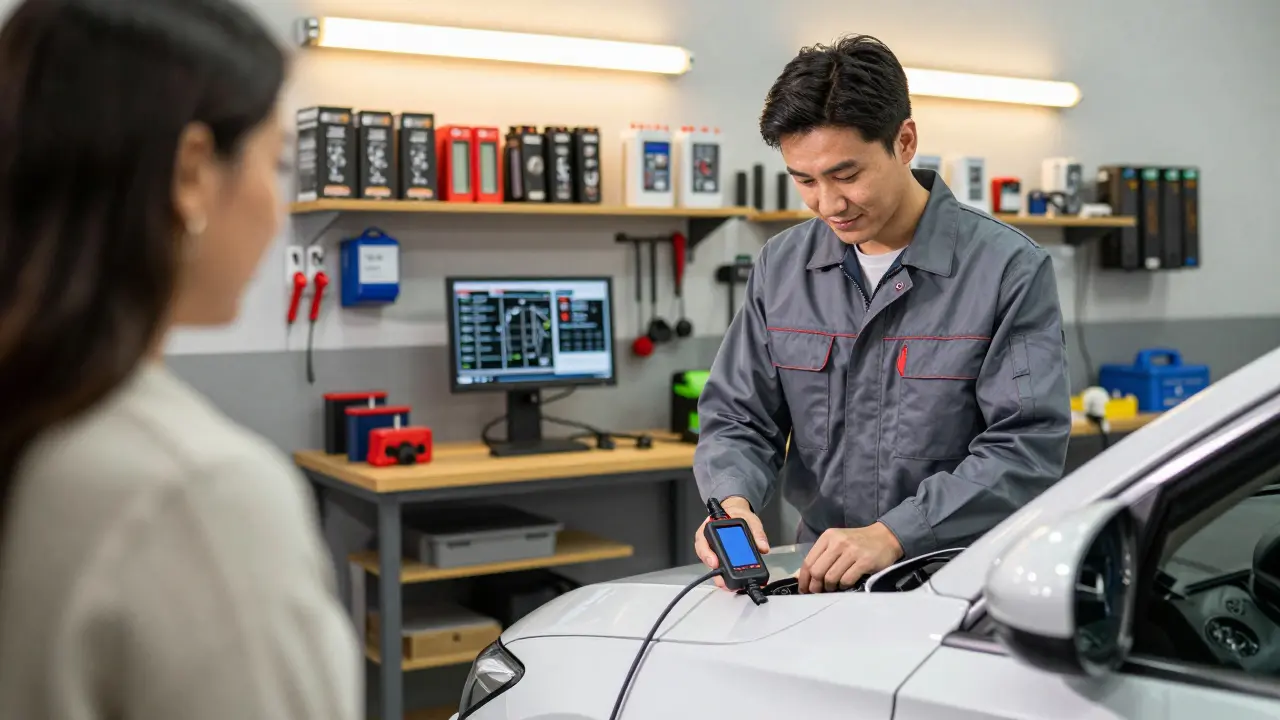
When you take your car to a shop for a simple fix-like a dead battery or a faulty sensor-you expect it to be done quickly and affordably. But if your car is made after 2015, chances are the shop doesn’t have the tools, software, or access to the data it needs. That’s not because mechanics are unskilled. It’s because manufacturers have locked down critical systems behind proprietary codes and encrypted networks. Right to repair laws are changing that. And for anyone who owns a car, relies on an independent mechanic, or just hates paying dealership prices, this shift matters more than you think.
What Right to Repair Actually Means for Cars
Right to repair isn’t a buzzword. It’s a legal requirement forcing manufacturers to give owners and independent repair shops the same access to tools, diagnostic data, and software that dealerships get. Before these laws, companies like Ford, General Motors, and Tesla treated vehicle data like a trade secret. If you wanted to reset your transmission error code or recalibrate your adaptive cruise control, you had to go to the dealer-and pay $150 just for the diagnostic scan.
In 2023, the U.S. National Highway Traffic Safety Administration (NHTSA) updated its rules under the Motor Vehicle Owners’ Right to Repair Act. Now, all manufacturers selling vehicles in the U.S. must provide standardized, unencrypted access to telematics and diagnostic data via a common interface. The same rule applies in the EU, where the European Parliament passed binding legislation in 2024. In the UK, which still follows EU standards post-Brexit, these rules are enforceable under the Vehicle Type Approval framework.
That means if your 2024 Honda Civic has a misfire code, any certified mechanic can plug in a $30 OBD-II scanner, read the code, and fix it-no dealership login, no subscription fee, no waiting three days for a remote diagnostic from the manufacturer.
How Independent Shops Are Winning
Before 2024, independent repair shops were stuck. They could replace brake pads. They could change oil. But when it came to anything involving software-adaptive cruise, lane-keep assist, EV battery calibration-they were out of luck. Manufacturers used proprietary dongles, encrypted APIs, and contractual bans to keep them out.
Now, they’re not just in the game-they’re thriving. A 2025 survey by the Independent Automobile Manufacturers Association found that 68% of independent shops in the U.S. reported a 40% increase in repair volume since the new laws took effect. Why? Because they can now do the same diagnostics as dealerships, at half the cost.
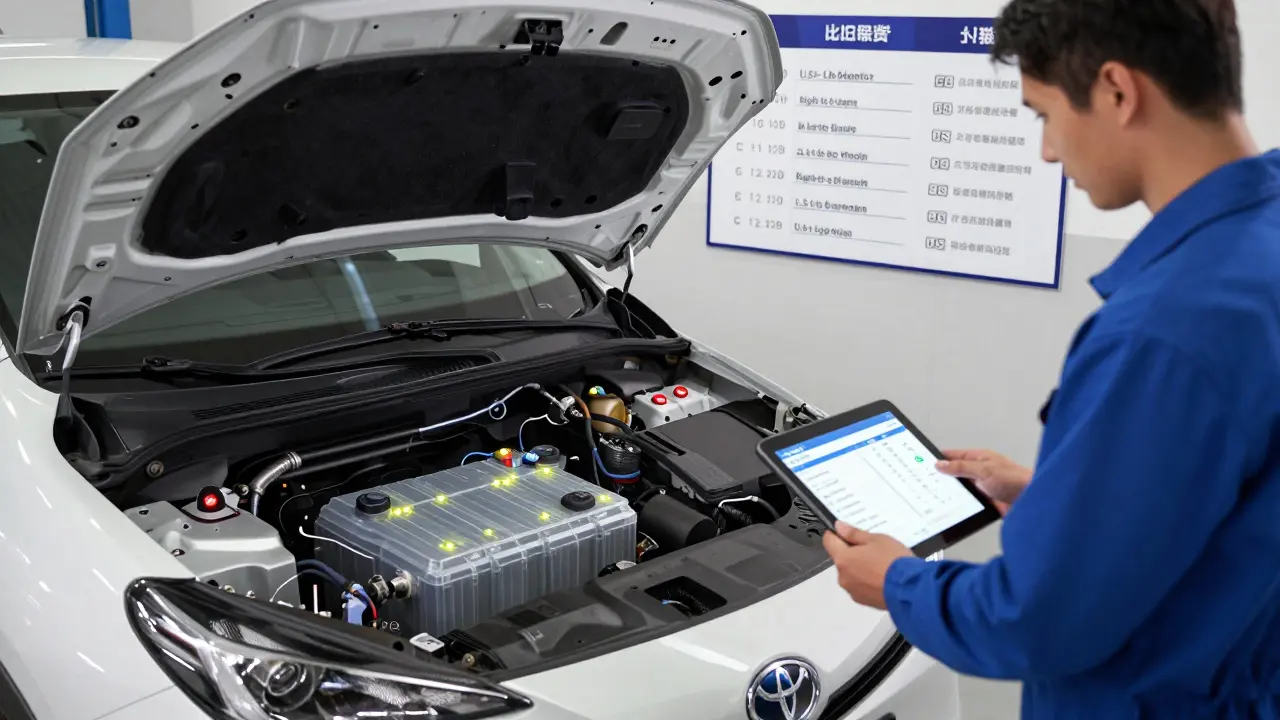
Take the case of a 2022 Toyota Prius with a faulty hybrid battery monitor. Under old rules, the dealer would charge $220 just to read the fault code, then quote $3,800 to replace the entire battery pack. With right to repair, an independent shop can access the same diagnostic stream, confirm it’s just a sensor glitch, and replace the $45 sensor instead. The customer saves $3,500. The shop makes a fair profit. And the car stays on the road.
The Hidden Cost of OEM Lock-In
Manufacturers didn’t lock data for safety reasons. They did it to control aftermarket revenue. Think about it: if you can’t get your car fixed anywhere but the dealership, you’re forced into their service packages. They bundle expensive maintenance plans. They mark up parts by 200%. They even delay software updates unless you pay for a “premium service subscription.”
A 2024 study by Consumer Reports showed that dealerships charged 37% more on average for identical repairs compared to independent shops. For EVs, the gap was even wider-up to 52% more for software recalibrations. That’s not service. That’s a monopoly.
Right to repair breaks that. It forces manufacturers to sell diagnostic tools and software licenses at fair market prices. It stops them from disabling features if you use a non-dealer repair. It even requires them to release repair manuals and wiring diagrams online-free of charge.
What About Safety and Cybersecurity?
You’ve probably heard the argument: “If anyone can access your car’s software, hackers could take control.” It sounds scary. But it’s not true.
Modern cars already have robust security layers. The diagnostic port is physically separate from the vehicle’s core control networks. Accessing the engine control unit doesn’t give you access to the infotainment system or the braking module. That’s by design. Manufacturers have known this for years.
Even Tesla, which fought hardest against right to repair, admitted in a 2023 SEC filing that “the risk of unauthorized remote access via diagnostic tools is negligible due to multi-layered encryption and isolation protocols.”
And here’s the kicker: independent shops are just as careful as dealerships. They need certifications. They need liability insurance. They need to follow the same safety standards. The difference? They’re not trying to upsell you on a $1,200 software update you don’t need.
What This Means for You as a Car Owner
If you own a car built after 2020, here’s what you can do now:
- Take your car to any shop with the right tools-no more dealership pressure.
- Buy used parts from reputable rebuilders. Manufacturers can’t block you from using non-OEM components anymore.
- DIY repairs with confidence. You can now legally download factory repair manuals and diagnostic software from manufacturer websites.
- Keep your car longer. When repairs are affordable and accessible, you’re less likely to trade it in after a minor issue.
- Resell your car for more. Buyers know your vehicle was maintained properly, not just by a dealer who never fixed the real problem.
For example, a 2021 Ford Mustang with a recurring check engine light used to cost $500 to fix at the dealer. Now, a local shop with a $200 scanner can diagnose it in 10 minutes, find a loose gas cap sensor, and replace it for $75. That’s not just savings. That’s freedom.
What’s Still Missing
Right to repair laws aren’t perfect. Some manufacturers still find loopholes. A few still require you to sign a digital waiver before accessing software. Others delay releasing diagnostic tools for newer models by months. And EVs? Their battery management systems are still tricky-though the 2025 EU update now requires real-time battery health data to be open.
Also, not every shop has upgraded yet. Smaller garages in rural areas may still lack the training or funding to buy the new diagnostic equipment. That’s why training programs and state grants are now being rolled out. In the UK, the government launched a £12 million fund in late 2025 to help independent shops upgrade their tools.
But the trend is clear: control is shifting. From manufacturers to owners. From dealerships to local mechanics. From profit-driven lock-in to genuine repair.
What Comes Next
The next step? Full interoperability. Imagine plugging your car into any scanner, anywhere in the world, and getting the same diagnostic data. That’s already happening in Europe. The U.S. is catching up. And soon, your car won’t be a locked device-it’ll be just another machine you can fix.
For now, if you’re tired of being nickel-and-dimed by dealerships, if you want to support local shops, or if you just want to keep your car running without paying a fortune-right to repair laws are your new ally. They’re not about ideology. They’re about fairness. And they’re working.
Do right to repair laws apply to electric vehicles (EVs)?
Yes. Starting in 2024, both the EU and U.S. require EV manufacturers to provide open access to battery management systems, charging diagnostics, and motor control data. This means independent shops can now diagnose range issues, recalibrate regenerative braking, and replace faulty battery sensors without needing manufacturer approval. Tesla, Rivian, and Ford Mustang Mach-E owners can now get these repairs done at local garages, not just at branded service centers.
Can I still use aftermarket parts under right to repair laws?
Absolutely. Manufacturers can no longer void your warranty or block diagnostics just because you used a non-OEM part. This includes everything from brake pads and sensors to infotainment screens and battery modules. As long as the part meets industry safety standards (like SAE or ISO), it’s legal to use. Many independent shops now stock high-quality aftermarket parts that cost 40-60% less than dealer parts and perform just as well.
What if my car is older than 2020? Do these laws help me?
Right to repair laws mainly apply to vehicles manufactured after 2020, when digital systems became standard. However, many independent shops still have legacy tools and software for older models. Even if your car predates the law, you’re likely better off going to an independent mechanic-they’ve been fixing older cars for decades, often at lower rates than dealerships ever charged. The law doesn’t change that, but it does protect your right to choose who fixes it.
Do I need special training to use the new diagnostic tools?
You don’t need training to use the tools as a customer, but mechanics do. The law requires manufacturers to provide free training materials and certification paths for independent shops. Many community colleges and trade schools now offer free right-to-repair certification courses. These cover how to read encrypted codes, update software safely, and handle EV-specific diagnostics. You can find local training through your state’s automotive association or the Independent Automotive Aftermarket Association.
Can manufacturers still charge for software updates?
No. Under the 2024 regulations, manufacturers must provide all software updates-whether for safety, performance, or emissions-free of charge to owners and authorized repair shops. You can no longer be forced to pay for a $150 update that fixes a known bug. If your car needs a firmware patch, the manufacturer must deliver it via a public server or through your mechanic’s diagnostic tool, at no extra cost.
Comments
Rohit Sen
Honestly? I think this is just another way for big mechanics to get rich. Why should I care if my car can be fixed anywhere? I just want it to work.
March 21, 2026 at 22:54
Vimal Kumar
This is actually huge. My cousin runs a small shop in Chandigarh and he’s been able to hire two more techs since last year. No more begging dealerships for access. It’s wild how much difference this makes.
March 23, 2026 at 06:06
Amit Umarani
The article says 'manufacturers treated vehicle data like a trade secret.' That’s not accurate. They protected it because it’s proprietary intellectual property. There’s a difference. And yes, punctuation matters.
March 24, 2026 at 14:26
Noel Dhiraj
I’ve been taking my 2021 Civic to a local shop for two years now. They fixed a weird battery drain issue for $60. Dealer wanted $300. This law is a game changer. No drama. Just good work.
March 25, 2026 at 16:47
vidhi patel
It is imperative to note that the term 'right to repair' is a misleading euphemism. The legal framework is not a 'right' but a regulatory imposition on private enterprise. Furthermore, the NHTSA did not 'update its rules'-it overstepped its statutory authority.
March 26, 2026 at 05:26
Priti Yadav
You think this is about repair? Nah. This is a Trojan horse. Next thing you know, your car will be hacked remotely. Tesla already has a backdoor. I read it on a forum. They’re tracking everything. Don’t trust the government. Or the mechanics.
March 27, 2026 at 09:28
Ajit Kumar
It is a fact, and not merely an opinion, that the monopolistic practices of automotive manufacturers have been systematically dismantled by legislative intervention grounded in consumer sovereignty. Moreover, the assertion that diagnostic port isolation mitigates cybersecurity risk is empirically verifiable through SAE J2534-1 compliance documentation, which confirms that the CAN bus architecture remains segmented from vehicle control networks. Therefore, the opposition to right-to-repair legislation is not only economically indefensible but also technically unsound.
March 27, 2026 at 17:07
Diwakar Pandey
I’ve got a 2019 Hyundai that’s still running great. Took it to a guy who works out of his garage. He fixed the AC compressor without even calling the dealer. Just plugged in his scanner. Didn’t even charge me for the diagnostic. Feels good to support local guys.
March 29, 2026 at 03:42
Geet Ramchandani
Let’s be real. This isn’t about fairness. It’s about destroying a profitable ecosystem so that underfunded, uncertified garages can fumble with expensive ECUs. I’ve seen what happens when untrained techs try to recalibrate a battery management system. Cars catch fire. Or worse-they stop working mid-highway. And now we’re supposed to cheer? This is deregulation with a smiley face.
March 29, 2026 at 05:19
Pooja Kalra
There is a metaphysical dimension to this issue. The car, once a machine of utility, has become an extension of corporate surveillance. To repair it is to reclaim agency. But can a $30 OBD-II scanner truly restore autonomy? Or does it merely simulate freedom while the algorithm watches?
March 30, 2026 at 04:20
Sumit SM
I love this! The fact that manufacturers can no longer charge for software updates? That’s huge! I mean, think about it-how many times have you been stuck paying for a fix that should’ve been free? It’s like buying a phone and being charged to update iOS. Absurd! And now, with open manuals and free training? This is the future-transparent, fair, empowering. We’re not just fixing cars-we’re fixing a broken system!
March 30, 2026 at 13:08
Jen Deschambeault
I run a small shop in Montreal and we’ve seen a 50% increase in EV repairs since last year. The EU rules made it easier to get tools, and now we’re helping Canadian customers too. It’s not perfect, but it’s moving in the right direction. Keep pushing for interoperability.
March 31, 2026 at 20:47