
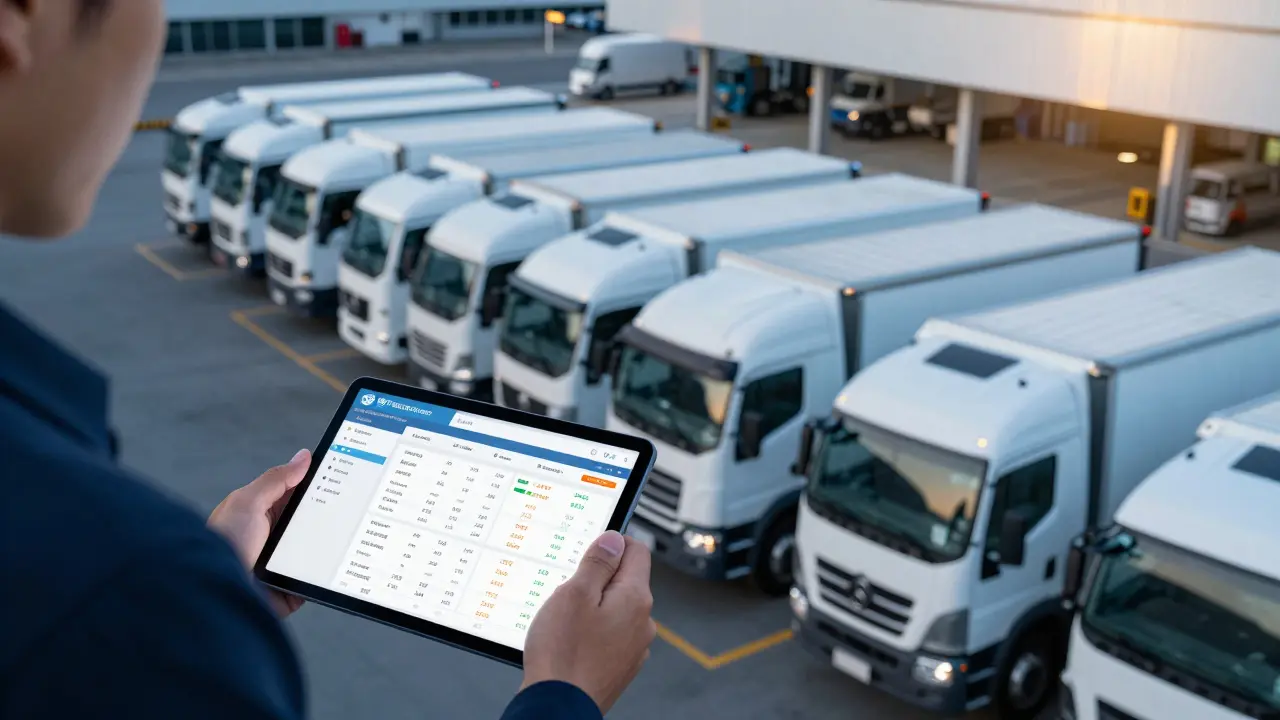
Cutting these costs doesn't require a magic wand, but it does require a shift from guessing to measuring. You can't fix what you can't see. By combining smart technology with driver behavior changes, you can stop the bleeding and actually turn your fuel spend into a competitive advantage.
Quick Wins for Lowering Fuel Spend
- Stop excessive idling: Every hour of idling can burn up to a gallon of fuel.
- Right-size your vehicles: Don't use a heavy-duty truck for a light-duty load.
- Implement a strict no-idle policy: Create a culture where turning off the engine is the default.
- Monitor tire pressure weekly: Under-inflated tires increase rolling resistance and kill MPG.
- Train drivers on 'smooth' driving: Aggressive acceleration and braking waste fuel rapidly.
The Foundation of Modern Fuel Management
To get a grip on your costs, you need a system. Fuel Management is a strategic process of monitoring and controlling fuel consumption across a fleet of vehicles to reduce waste and prevent theft. It moves you away from simply paying invoices to actually understanding where every drop of fuel goes. Without a structured approach, you're essentially flying blind.
The first step is implementing Fuel Tracking Software is a digital tool that integrates fuel card data with vehicle telemetry to calculate exact fuel efficiency per mile. This software allows you to spot 'fuel outliers'-vehicles that are burning more than their peers on the same route. For example, if two identical vans are running the same city route, but one is getting 15 MPG and the other 12 MPG, you don't have a fuel price problem; you have a mechanical or behavioral problem.
Tackling the Idling Epidemic
Idling is the silent killer of fleet budgets. Many drivers leave engines running to keep the cabin cool or warm, or simply because it's easier than restarting. However, a typical diesel engine idling for an hour can waste nearly a gallon of fuel. Across a fleet of 50 trucks, if each driver idles for just 30 minutes a day, you're flushing thousands of dollars down the drain every month.
The solution isn't just a memo. You need Telematics is the branch of information technology that combines computing, wireless communication, and GPS to monitor vehicle location and behavior in real-time. By using telematics, you can generate idling reports that show exactly which drivers are the worst offenders. When drivers know the office can see exactly how long they've been idling at a job site, the behavior changes overnight. To make this fair, provide alternatives like auxiliary power units (APUs) for long-haul drivers who need climate control during sleep cycles.
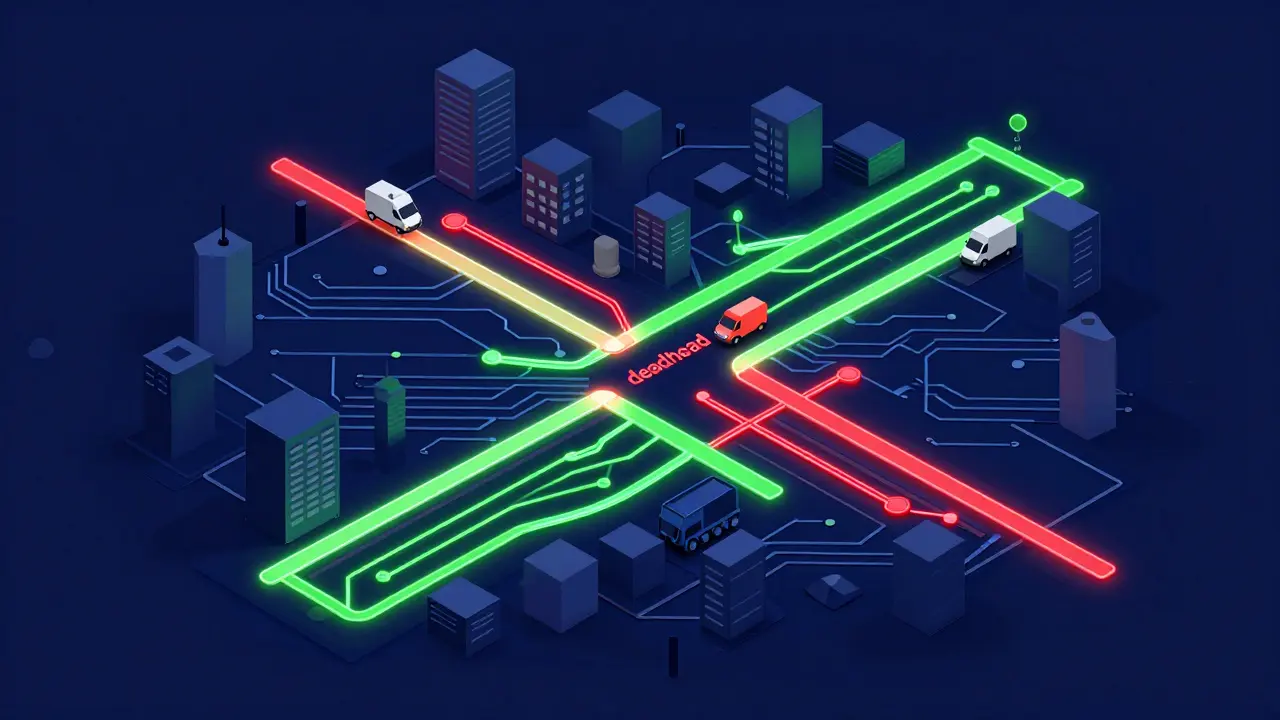
Route Optimization and the War on Deadhead Miles
Distance equals fuel. It sounds simple, but the way routes are planned often leads to 'deadhead miles'-miles driven without a payload. If your drivers are crisscrossing the city or taking long detours, you're paying for miles that don't generate revenue.
Integrating Route Optimization Software is an algorithmic tool that calculates the most efficient path for a vehicle to take based on traffic, distance, and delivery windows. This technology eliminates unnecessary mileage by clustering stops logically. A real-world example: a delivery fleet in a dense city like London or New York can reduce total mileage by 10-15% just by switching from manual planning to dynamic routing. That's a direct 10-15% reduction in fuel consumption without changing a single vehicle.
Driver Behavior: The Human Element
You can have the newest trucks and the best software, but a lead foot will always ruin your numbers. Aggressive driving-defined by hard braking, rapid acceleration, and speeding-can drop fuel economy by as much as 30% on the highway. The physics are simple: it takes significantly more energy to get a heavy vehicle up to speed quickly than it does to maintain a steady pace.
The most effective way to combat this is through a gamified incentive program. Instead of punishing bad drivers, reward the ones with the best fuel efficiency. Use your telematics data to create a leaderboard. When a driver sees they are in the top 10% for MPG, and that earns them a monthly bonus or a gift card, they become invested in the goal. This turns fuel management from a corporate mandate into a personal challenge.
| Strategy | Implementation Cost | Time to Result | Potential Savings |
|---|---|---|---|
| Idling Policy | Low | Immediate | 5-10% |
| Route Optimization | Medium | Short-term | 10-20% |
| Driver Training | Medium | Medium-term | 5-15% |
| Vehicle Right-Sizing | High | Long-term | 15-25% |
Preventing Fuel Theft and Leakage
It's a harsh reality: fuel theft happens. Whether it's 'siphoning' from tanks or drivers using company fuel cards for their personal cars, the loss is significant. If you're only checking your fuel bills once a month, the theft has already happened and the money is gone.
To stop this, you need to link Fuel Cards is specialized credit cards used by fleet drivers to purchase fuel and maintenance, providing detailed transaction data. to your GPS data. This is called 'fuel reconciliation.' If a fuel card is swiped at a station in one town, but the vehicle's GPS shows it was five miles away at that exact moment, you've caught a fraud attempt in real-time. This level of oversight doesn't just stop theft; it prevents the 'convenience' of drivers topping up their personal vehicles on the company's dime.
Vehicle Maintenance and Aerodynamics
A poorly maintained engine is a thirsty engine. Old spark plugs, dirty air filters, and clogged fuel injectors force the engine to work harder, burning more fuel to produce the same amount of power. Implementing a strict preventative maintenance schedule ensures that the vehicle is always operating at peak efficiency.
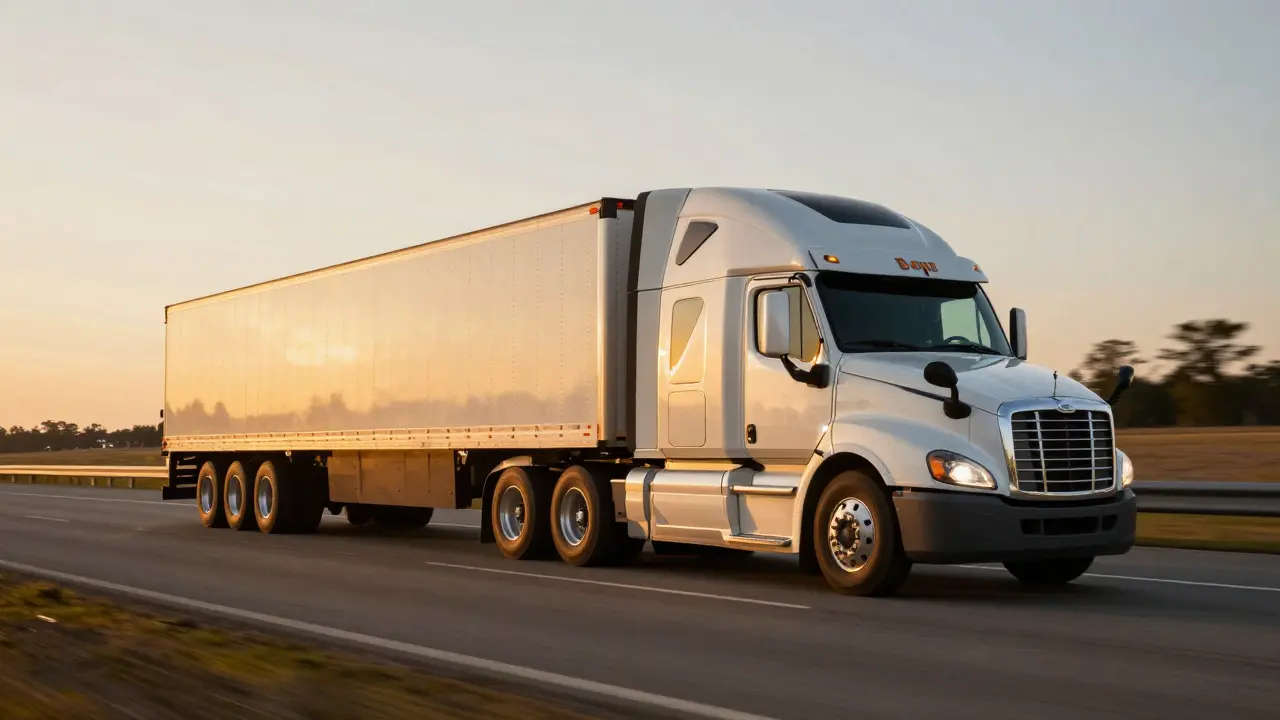
For long-haul fleets, aerodynamics are the next frontier. At highway speeds, the majority of fuel is spent pushing air out of the way. Adding Aerodynamic Fairings is curved panels attached to the sides or top of a truck to reduce wind resistance. can improve fuel economy by 2-5%. While it seems small, for a fleet running millions of miles, a 3% improvement can translate to tens of thousands of dollars in annual savings. Don't forget the basics: keeping tires inflated to the manufacturer's recommended PSI is the cheapest way to reduce rolling resistance.
The Road Ahead: Transitioning to Alternatives
While optimizing diesel and gas is the immediate goal, the long-term strategy involves diversifying your energy sources. Electric vehicles (EVs) and Compressed Natural Gas (CNG) vehicles offer different cost structures. While the upfront cost is higher, the 'fuel' cost per mile is often significantly lower.
The key here is a phased transition. Don't replace your whole fleet at once. Start with your most urban, stop-and-go routes-these are where Electric Vehicles is vehicles powered by an electric motor using energy stored in rechargeable batteries. excel because of regenerative braking and the lack of idling waste. By analyzing your current fuel data, you can identify exactly which routes would benefit most from an EV transition, ensuring you get the highest return on investment.
How do I know if my fuel costs are too high?
Calculate your cost per mile (CPM) by dividing your total fuel spend by the total miles driven. Compare this against industry benchmarks for your specific vehicle class. If your CPM is consistently 10-15% higher than similar fleets in your region, you likely have inefficiencies in driver behavior or vehicle maintenance.
Does route optimization actually save fuel, or just time?
It does both. By reducing the total mileage, you directly reduce the amount of fuel burned. Furthermore, optimization software avoids high-traffic areas and heavy congestion, reducing the time vehicles spend in stop-and-go traffic, which is where fuel efficiency is at its lowest.
What is the most effective way to stop drivers from idling?
The most effective method is a combination of telematics monitoring and a fair incentive program. When drivers are held accountable through data-backed reports and rewarded for low-idling performance, they are far more likely to comply than if they are simply told to stop through a policy handbook.
Are fuel cards enough to prevent fuel theft?
Fuel cards provide a paper trail, but they don't stop theft in real-time. To truly prevent theft, you must cross-reference the fuel card transaction (time and location) with the vehicle's GPS coordinates. If the two don't match, you have evidence of unauthorized fuel use.
How often should I check tire pressure to save fuel?
For commercial fleets, tire pressure should be checked weekly. Even a small drop in PSI increases the vehicle's rolling resistance, forcing the engine to work harder and consume more fuel. Automated Tire Pressure Monitoring Systems (TPMS) can provide real-time alerts to avoid manual checks.
Next Steps for Fleet Managers
If you're feeling overwhelmed, don't try to do everything at once. Start with a 'Fuel Audit.' For the next 30 days, track every gallon used and every mile driven. Identify your top three fuel-consuming vehicles and investigate why they are outliers. From there, implement one change-like a strict no-idle policy-and measure the result for a month. Once you prove the savings on a small scale, you'll have the buy-in from your team and stakeholders to invest in more advanced tools like route optimization or telematics.
Comments
Daniel Kennedy
Most people underestimate how much a simple maintenance schedule saves. If you aren't swapping your air filters every few thousand miles, you're basically burning money. I've seen fleets save an extra 2% just by being obsessive about the basics before even touching the expensive software.
April 17, 2026 at 04:07
Mark Tipton
It is quite fascinating how we are encouraged to embrace telematics without considering the surveillance state implications. One must wonder if this data is being funneled into a larger corporate database to track not just fuel, but every single movement of the working class. Furthermore, the efficiency of these algorithms is often overstated by the vendors who sell them. We are essentially paying to be monitored by a digital eye that claims to save us pennies while stealing our privacy. The correlation between GPS and fuel cards is a slippery slope toward total control. I suspect the 'leakage' mentioned is merely a pretext for more invasive monitoring. Truly, the industrial complex thrives on this perceived need for 'optimization' while the individual driver becomes a mere cog in a machine. It is an absolute travesty of labor rights masquerading as fiscal responsibility. We should be questioning why the cost of energy is allowed to fluctuate so wildly in the first place instead of focusing on whether a driver idled for ten minutes. The systemic failure of the energy grid is the real issue here, not the behavior of a few truckers. This entire approach is a distraction from the macroeconomic realities of fuel pricing. It is a classic misdirection tactic. I find it utterly quaint that some believe a 'leaderboard' solves a systemic economic crisis. The psychological manipulation involved in gamification is frankly abhorrent.
April 17, 2026 at 23:12
Jeff Napier
all these tracking tools are just ways for the big oil companies to know exactly how much we can squeeze out of the drivers before they quit
April 19, 2026 at 11:55
Donald Sullivan
Cut the crap about the 'surveillance state.' If you're stealing fuel from your boss, you deserve to be caught. Period.
April 20, 2026 at 15:40
Ronak Khandelwal
Love the idea of the leaderboard! 🏆 Turning a chore into a game is such a great way to keep everyone motivated and happy while saving the planet 🌍✨ Let's all grow together! 🌱
April 22, 2026 at 00:47
Jeanie Watson
Too much reading. Just buy electric trucks and be done with it.
April 22, 2026 at 19:04
Sibusiso Ernest Masilela
The sheer audacity of suggesting that a 'gift card' is an appropriate incentive for professional drivers is laughable. This is an amateur's guide to fleet management at best. If you can't manage your margins without treating your staff like children in a classroom, you have no business owning a fleet.
April 23, 2026 at 06:52
Jessica McGirt
The point about tire pressure is so often overlooked. I've noticed that even a slight dip in PSI makes the vehicle feel sluggish and definitely impacts the range.
April 24, 2026 at 17:44
Tom Mikota
Wow... such great advice!!! except for the part where you think drivers actually care about a leaderboard... lol!!
April 25, 2026 at 09:47
Adithya M
I completely agree with the focus on route optimization. It's common sense! Why drive 20 miles when you can drive 10? Any manager who doesn't use this is just wasting money!
April 25, 2026 at 22:21
Tina van Schelt
Those aerodynamic fairings are a total game changer for the long-haulers. It's like slicing through butter once you get those wind-cheating panels installed.
April 26, 2026 at 18:38
Taylor Hayes
It's really important to remember that drivers are under a lot of stress. Maybe instead of just tracking them, we can talk to them about why they're idling-sometimes it's the only way they can get a moment of peace in a tiny cabin.
April 26, 2026 at 20:32