
Quick Checklist for Vehicle Inspections
Before you get bogged down in the details, here is a fast way to filter out the duds. If a vehicle fails more than two of these, walk away.
- Fluid Colors: Milky oil or bubbling coolant suggests a blown head gasket.
- Tire Wear: Uneven tread wear (cupping) usually means the suspension is shot.
- Cold Start: A vehicle that struggles to start when cold often hides battery or fuel system issues.
- Smell: A musty, damp scent in the cabin is a red flag for flood damage.
- Panel Gaps: Uneven spaces between doors and fenders indicate previous heavy collisions.
Analyzing the Powertrain and Mechanical Health
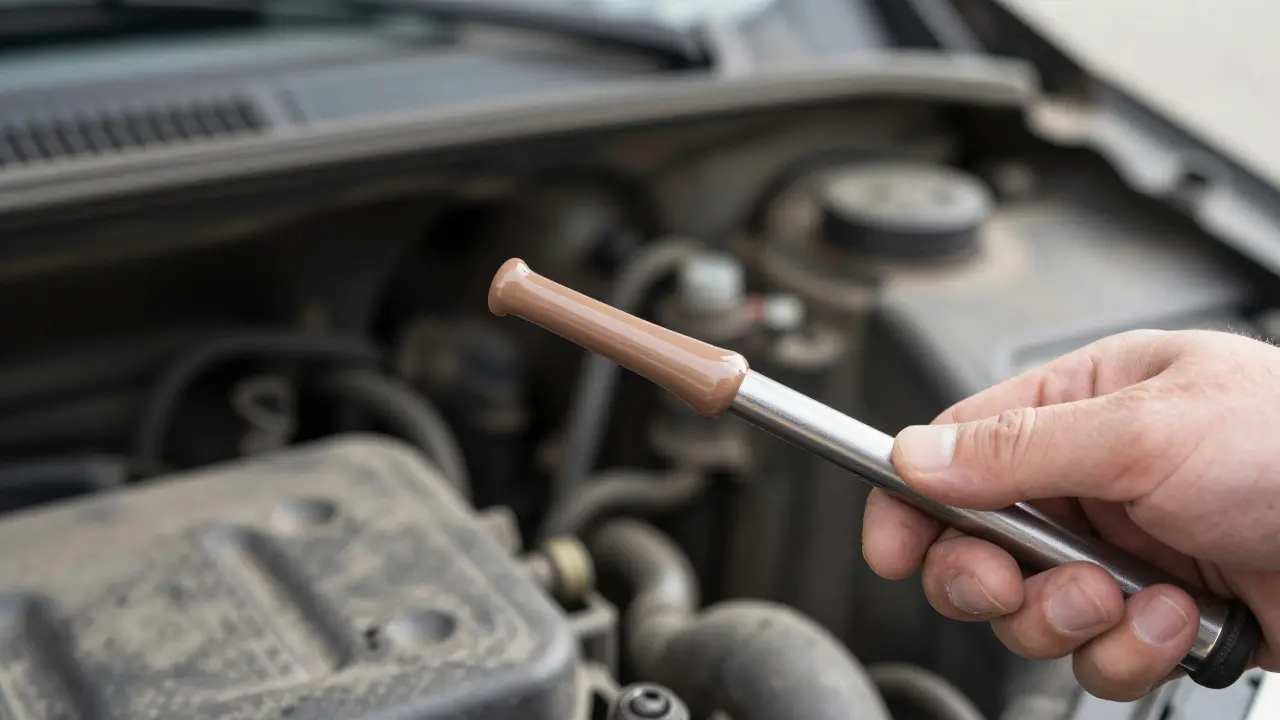
The heart of any acquisition is the engine and transmission. You need to move beyond the basic "it runs fine" assurance. Start by checking the Engine is the internal combustion or electric power source that drives the vehicle's wheels. For combustion engines, pull the oil dipstick. If the oil looks like chocolate milk, you have coolant leaking into the oil system-a catastrophic failure waiting to happen.
Listen for "knocking" or "pinging" sounds while the engine is idling. A rhythmic metallic tapping often points to valve train wear or rod knock, both of which require expensive teardowns. If you're looking at a diesel, check for excessive black smoke during acceleration, which suggests faulty fuel injectors or a clogged particulate filter.
The Transmission should be your next focus. Shift through all gears-including reverse-while stopped. Any delay in engagement or a "clunk' when shifting is a sign of worn clutches or low hydraulic pressure. In automatic vehicles, if the fluid smells burnt (like scorched toast), the internal friction plates are likely charred, and the unit will soon fail.
The Invisible Danger: Chassis and Frame Integrity
A beautiful paint job can hide a twisted frame. To truly evaluate a vehicle, you have to look at the bones. Inspect the Chassis, which is the load-bearing structural framework of a vehicle. Look for "crinkles" in the metal or welds that don't look factory-standard.
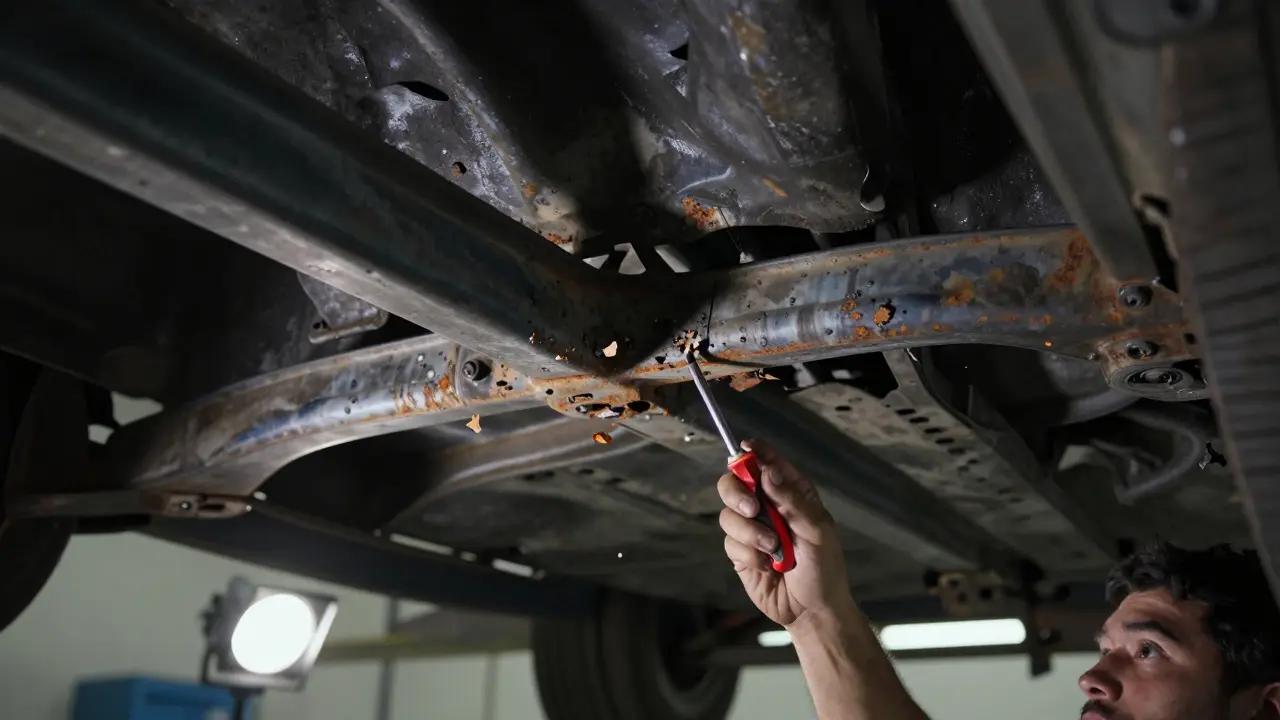
In regions where salt is used on winter roads, rust is the primary enemy. Don't just look at the surface; use a screwdriver to poke the frame rails. If the metal flakes off in large chunks (known as scaling), the structural integrity is compromised. This isn't just a cosmetic issue; a rusted frame can fail during a collision, making the vehicle unsafe and impossible to insure in many jurisdictions.
Check the wheel alignment visually. If the vehicle "dogs-tracks" (the rear wheels don't follow the front wheels in a straight line), the frame is likely bent. This happens often in fleet vehicles that have suffered curb strikes or minor collisions that were "fixed" cheaply without a frame rack.
Evaluating Interior Wear and Usage Patterns
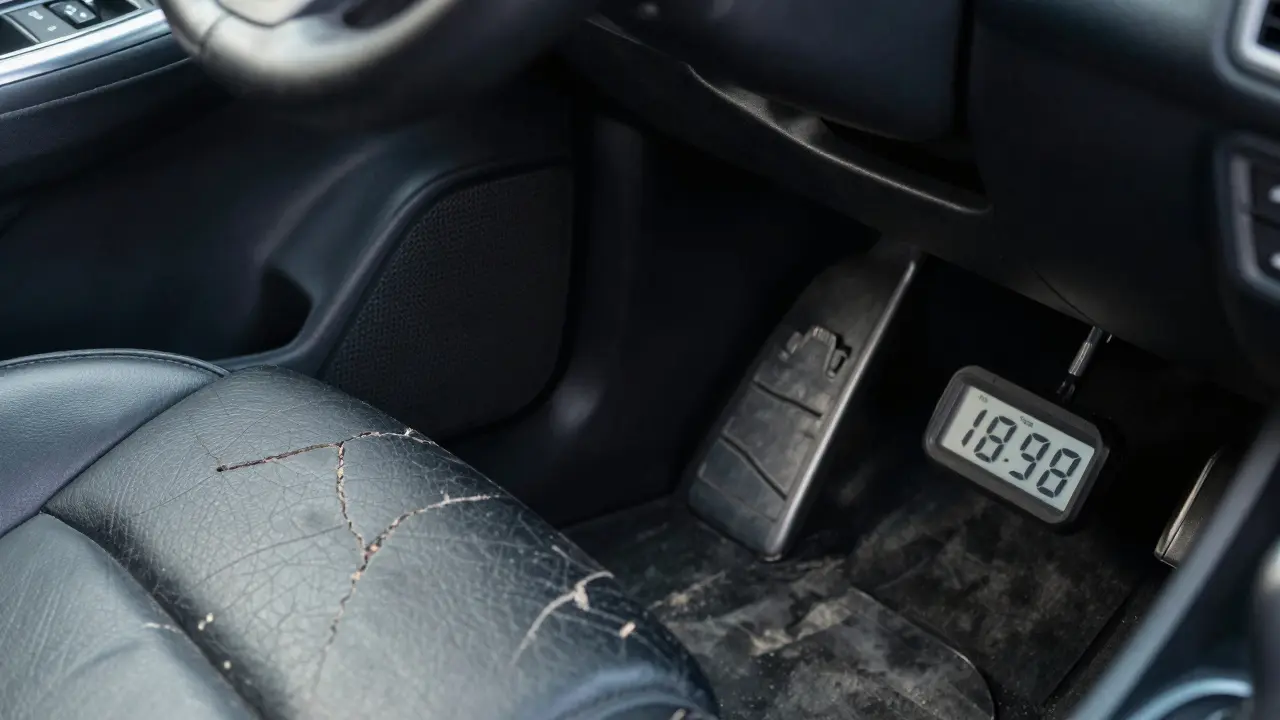
The interior tells you how the previous owner treated the machine. While an engine can be tuned, the driver's seat bolster reveals the truth about the vehicle's life. Heavy wear on the left side of the seat suggests a high-mileage urban commute with constant stopping and starting.
Check the Odometer, the instrument that records the total distance traveled by a vehicle. However, never trust the number blindly. Look for "mileage mismatch." If the odometer says 40,000 miles but the steering wheel is worn smooth and the brake pedal rubber is gone, the clock has likely been rolled back. Compare the mileage to the service records; a jump from 100k to 30k is an immediate deal-breaker.
Test every single electrical component. Flip every switch, turn on the AC, and check the window regulators. In modern vehicles, a failing ECU (Engine Control Unit) can be a nightmare to diagnose and replace, often costing thousands of dollars if the electronics have been tampered with or exposed to moisture.
Comparing Evaluation Methods
Depending on your budget and the scale of your vehicle condition evaluation, you might choose different levels of scrutiny. Some prefer a quick visual check, while others insist on a full laboratory-style analysis.
| Method | Time Required | Reliability | Best For |
|---|---|---|---|
| Visual Walkaround | 15-30 Mins | Low | Initial screening/filtering |
| Diagnostic Scan (OBD-II) | 10 Mins | Medium | Checking hidden engine codes |
| Professional Pre-Purchase Inspection (PPI) | 2-4 Hours | High | High-value fleet acquisitions |
| Fluid Analysis (Oil/Coolant) | 3-5 Days | Very High | Heavy-duty industrial machinery |
Integrating Data into Acquisition Decisions
Once you have the physical data, you need to translate it into a financial decision. Don't just decide if the car is "good" or "bad." Use a weighted scoring system. Assign a value to critical areas: Engine (40%), Frame (30%), Interior/Electronics (20%), and Cosmetics (10%).
If a vehicle scores low on the frame but high on the engine, the risk is too high regardless of the engine's health. However, a vehicle with a perfect frame but worn brake pads is a prime acquisition target because the repair cost is predictable and low.
Use the Vehicle History Report, which is a document providing the ownership and accident history of a vehicle using its VIN, to cross-reference your findings. If your inspection found a repainted door but the report shows "no accidents," you know the seller is hiding something. This discrepancy is often more important than the damage itself because it indicates a lack of transparency.
Common Pitfalls in Vehicle Acquisition
Many buyers fall for the "recent service" trap. A seller might claim they just changed the oil and filters, but without receipts, this is just a claim. Always ask for the Maintenance Log. A gap of one year in service records for a commercial vehicle is a sign of neglect that usually manifests as premature engine wear.
Another mistake is ignoring the tires. New tires on a high-mileage car are often a "smoke screen." Sellers put on a fresh set of cheap tires to make the car look well-maintained and distract the buyer from a leaking transmission or a knocking engine. Always check the tire date codes; if the tires are brand new but the car has been sitting, it might be hiding a long-term mechanical failure that the seller is trying to mask.
What is the most important thing to check during a vehicle inspection?
The structural integrity of the chassis and frame is the most critical. While engines can be replaced or rebuilt relatively easily, a bent or severely rusted frame is often unfixable or prohibitively expensive to repair, and it directly impacts the safety of the vehicle.
Can I trust an OBD-II scanner to tell me everything about the engine?
No. An OBD-II scanner only detects faults that the computer is programmed to recognize. It won't tell you if there is a mechanical rattle, a slow oil leak, or if the owner recently cleared the codes to hide a recurring problem. It is a tool, not a complete solution.
How do I identify a rolled-back odometer?
Look for a mismatch between the mileage and the wear and tear of the interior. If a car has 20,000 miles but the driver's seat is torn and the pedals are worn through, the odometer has likely been tampered with. Always cross-reference with official service records and history reports.
Is it worth paying for a professional Pre-Purchase Inspection (PPI)?
Yes, especially for fleet acquisitions. A professional mechanic has a lift and specialized tools to see things you cannot, such as undercarriage leaks or suspension bushing failure. The cost of a PPI is a tiny fraction of the cost of a failed engine.
What does "milky oil" actually mean?
Milky or creamy oil indicates that coolant has mixed with the engine oil. This usually happens because of a blown head gasket or a cracked engine block. This is a critical failure that requires an immediate rejection of the vehicle.
Next Steps for Buyers
If you are managing a growing fleet, don't wing it. Create a standardized inspection form that every team member must follow. This removes subjectivity and ensures that no one forgets to check the spare tire or the AC compressor.
For high-volume acquisitions, consider partnering with a third-party inspection service. They can provide a consistent grade for every vehicle, allowing you to compare multiple options on a level playing field. Finally, always negotiate the price based on the specific flaws you found. If you discover the brakes are 70% worn, subtract the cost of a full brake job from your offer price immediately.
Comments
Anand Pandit
Great tips here. For anyone doing this on a budget, just remember that a basic flashlight and a magnet can help you spot those cheap Bondo repairs on the body panels where the metal is missing
April 28, 2026 at 01:30
rahul shrimali
Spot on info! Get those PPIs done every time no matter what!
April 28, 2026 at 18:23
Bhavishya Kumar
The structural integrity of the chassis is indeed the paramount consideration in any vehicle acquisition. It is imperative that one does not overlook the subtle indicators of frame misalignment
April 28, 2026 at 22:20
Bharat Patel
It is interesting how a machine's physical wear mirrors the life of the person who drove it. A worn pedal isn't just rubber; it's a thousand hours of a human's daily grind captured in a physical object
April 29, 2026 at 13:00
Reshma Jose
Totally agree with the weighted scoring system. It's the only way to stop yourself from getting emotional about a car that looks pretty but is basically a heap of scrap under the hood
April 29, 2026 at 13:45
Eka Prabha
The obsession with OBD-II scanners is simply a diversion. These diagnostic protocols are designed by the OEMs to mask deeper systemic failures. We are being led to believe that a handheld device provides the full truth when in reality the corporate hegemony of the automotive industry ensures the most critical data remains proprietary and hidden from the consumer to maintain a cycle of planned obsolescence and forced replacement
April 30, 2026 at 04:08
Bhagyashri Zokarkar
omg i once bought a car that smelt like a wet dog and i thought it was just the prev owner had a puppy but nooo it was actualy flood damage and the whole thing just started falling apart after two weeks and i felt so betrayed by the seller who looked so sweet and i just wanted a reliable ride for my commute but everything just went wrong and i cried for like three days straight because i spent all my savings on a piece of junk that literally rusted before my eyes and it was just so heartbreaking
April 30, 2026 at 19:54
Rakesh Dorwal
The advice on the frame is solid. You have to be careful because some of these imported reports are fake anyway, probably some foreign company trying to flood our market with garbage junk cars while they keep the good ones for themselves
May 1, 2026 at 01:15
Vishal Gaur
i think this is mostly good but honestly who has time to use a screwdriver on every frame rail when you have like five other things to do in a day anyway its just too much work for a regular person to do unless they are a total gearhead or something like that i guess and some of these things like the chocolate milk oil stuff is just kinda gross to even think about lol
May 1, 2026 at 01:59
ujjwal fouzdar
A car is but a vessel of our desires and a mirror of our failures. To seek a perfect chassis in a world of chaos is the ultimate tragedy of the modern consumer. We hunt for the ghost of reliability in a graveyard of rusted steel and call it an investment. Oh, the agony of a blown head gasket is not just a mechanical failure, it is a spiritual collapse of one's trust in the material world!
May 2, 2026 at 09:17
Nikhil Gavhane
It's really tough when you find a car you love and then realize it has these issues. Just take your time and don't let the seller rush you into a bad deal
May 3, 2026 at 03:12
Rajat Patil
I believe that being honest with the seller about the faults you found is the best way to reach a fair price for both parties
May 4, 2026 at 19:33
deepak srinivasa
I wonder if the fluid analysis is actually feasible for a small business owner or if that's mostly for huge industrial fleets
May 5, 2026 at 15:34
pk Pk
Listen up! If you're too scared to poke the frame with a screwdriver, you're not ready to own a fleet. Get your hands dirty and demand the truth from the seller or you'll be paying for it for years!
May 7, 2026 at 15:31