
Buying a used car is exciting, but there is one ghost that haunts every buyer's mind: the flood car. You might find a vehicle with a suspiciously low price tag and a clean-looking exterior, but underneath that paint lies a nightmare of corroded wiring, ruined electronics, and hidden mold. Flood damage is a type of vehicle impairment caused by submersion in water, leading to long-term mechanical and electrical failures. It doesn't just ruin the car; it can make it unsafe to drive years after the initial incident.
You don't need to be a mechanic to spot these red flags. You just need to know where to look and what to smell. This guide walks you through the three most reliable indicators-smells, silt, and rust-and shows you how to perform a thorough inspection before handing over your cash.
The Nose Test: Identifying Water-Related Odors
Your nose is often more sensitive than your eyes when it comes to water damage. When a car sits in standing water, organic materials like carpet, seat foam, and dashboard plastics begin to decompose or absorb moisture. Even if the seller has tried to mask the issue with air fresheners or heavy perfumes, the underlying scent usually lingers in the fabric fibers.
When you open the door, take a deep breath immediately. Do not let the engine run yet. You are looking for two specific types of smells:
- Musty or Moldy: This is the classic sign. It smells like an old basement or wet dog. If you detect this odor near the floor mats or under the seats, assume the water line was at least waist-high.
- Sweet Chemical: Sometimes, sellers use ozone generators or strong cleaners to kill the mold. This leaves behind a sharp, chemical sweetness that feels unnatural in a car cabin. If the air smells "too good" or sterile, be skeptical.
If the smell is faint, check the spare tire well. The spare tire is rarely cleaned, and any moisture trapped there will retain the original scent from the flood event. Lift the trunk liner and sniff the area around the jack and spare wheel. If it smells damp or musty, the rest of the car likely has been compromised too.
Hunting for Silt: The Physical Evidence of Submersion
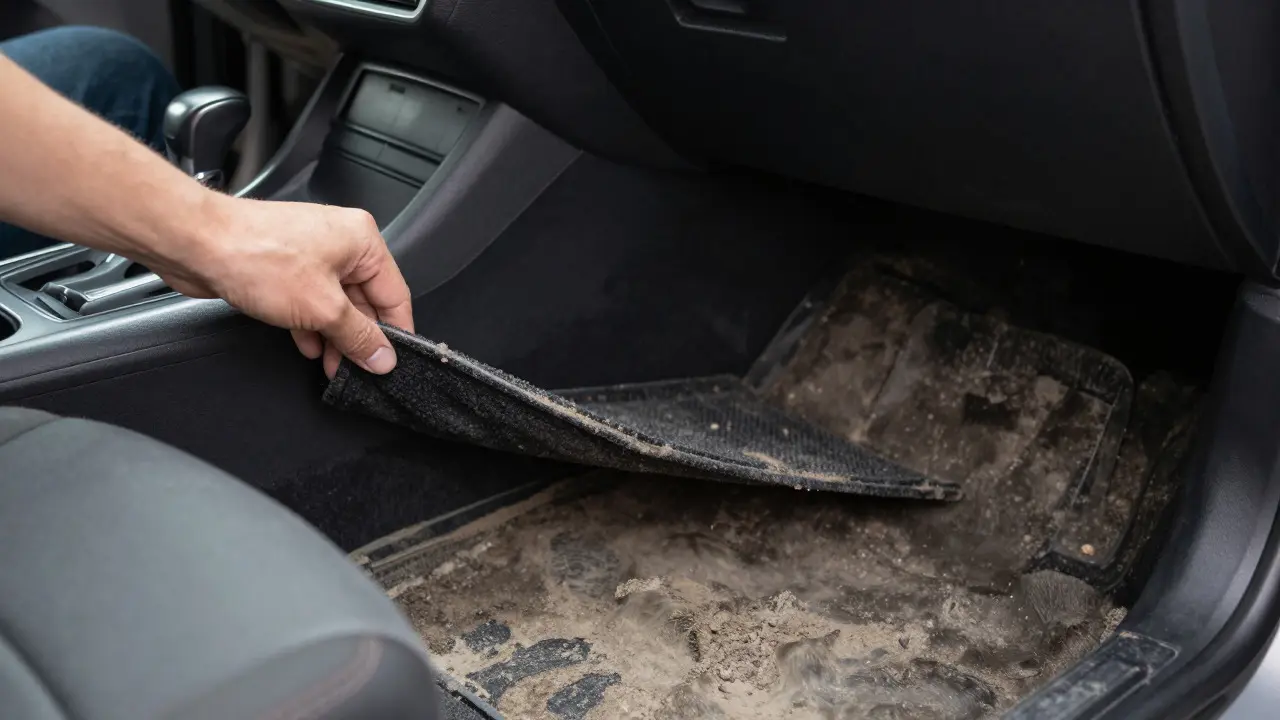
While smells can be masked, physical debris is much harder to hide completely. Silt is fine sediment and dirt carried by floodwater that settles in crevices and hard-to-reach areas. Unlike surface dirt that washes off easily, silt gets packed into tight spaces where regular cleaning misses.
You need to inspect specific high-trap points. Bring a flashlight and get down on your hands and knees. Here is where silt loves to hide:
- Under the Carpet: Roll back the front and rear carpets. Look at the plastic floor pan beneath. If you see a thin layer of grayish-brown dust or mud, that is silt. Tap the plastic gently; if loose debris falls out, it’s a major red flag.
- Seat Tracks and Rails: Slide the front seats all the way forward and backward. Look at the metal rails on the floor. Silt accumulates in the grooves of these tracks. Use a white paper towel to wipe the rails. If it turns dirty, the water level reached the bottom of the seats.
- Behind the Dashboard: Use a long-handled brush or a mirror to look behind the steering column and the center console. Floodwater carries debris that settles here. If you see rust or grime on the metal brackets behind the dash, the water was high enough to soak the electronics.
- Gas Tank Cap Area: Open the fuel filler door. Check the threads of the gas cap and the inside of the filler neck. Silt often gets stuck in the threads here because it’s a recessed area that isn’t wiped down during detailing.
Remember, silt indicates the car was submerged in moving or stagnant water containing soil. A car washed in a rainstorm won’t have silt packed into its seat rails. This is distinct evidence of significant flooding.
Rust Inspection: The Long-Term Corrosion Signal
Rust is the delayed reaction to flood exposure. Water accelerates oxidation, especially on steel components that are not painted or sealed. While surface rust can appear from normal wear, widespread rust in specific areas suggests prolonged contact with water.
Focus your inspection on these critical zones:
- Brake Calipers and Rotors: Pop the hood and look at the brake components. If the calipers show orange flaking rust, it could be normal age-related wear. However, if the rotors themselves are pitted or heavily corroded, or if the brake lines show signs of bubbling rust, suspect water intrusion.
- Bolt Heads and Brackets: Check the bolts holding the battery tray, the engine mounts, and the suspension arms. These parts are often made of raw steel. If they are heavily rusted while the surrounding body panels remain clean, it indicates localized corrosion from standing water.
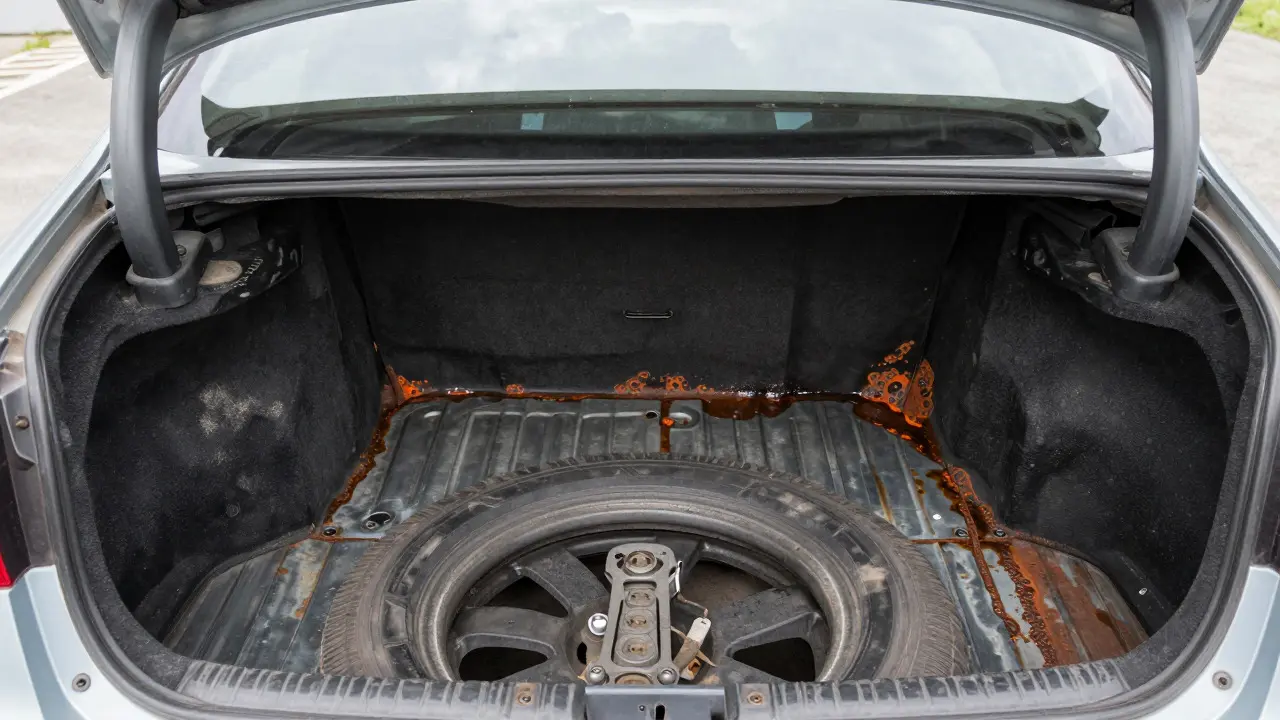
- Inside the Trunk Floor: Remove the trunk mat and lift the carpet. Look at the metal floor pan. Rust bubbles or orange spots here mean water sat in the trunk for days. This is a common spot for flood cars because water flows toward the lowest point of the vehicle.
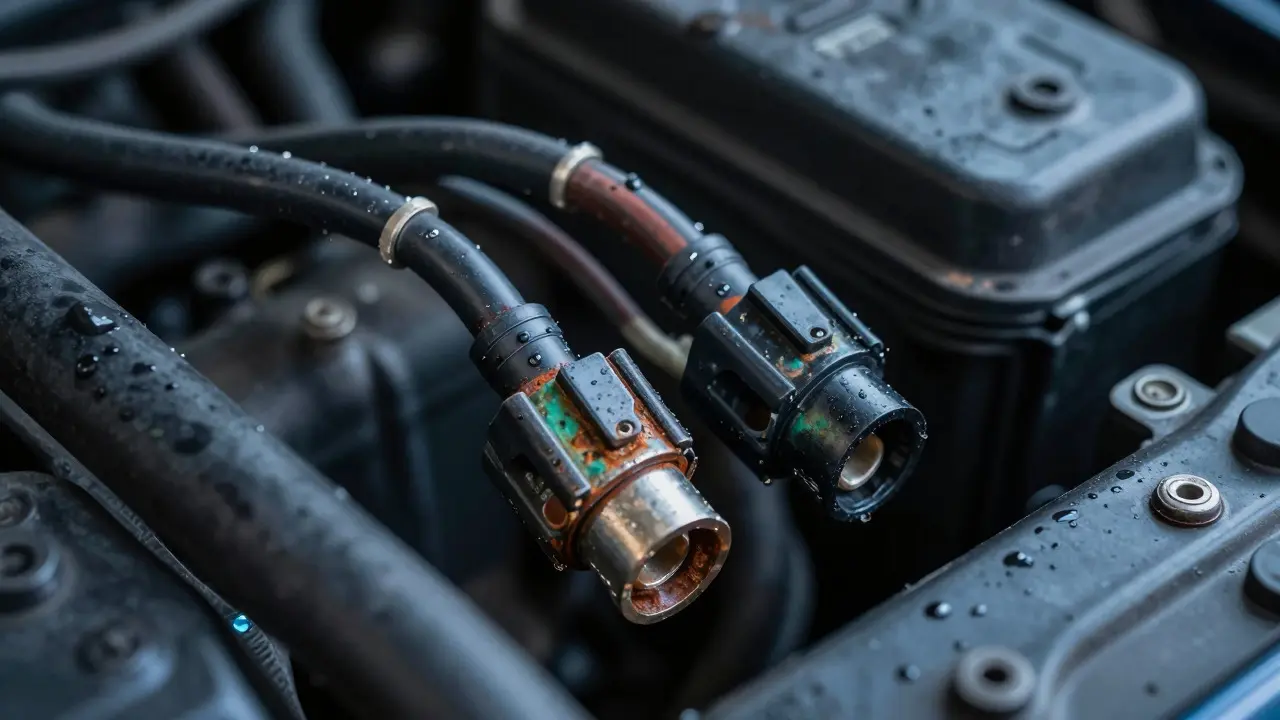
- Wiring Harness Connectors: Look at the main electrical connectors under the hood and in the engine bay. If the pins inside the connectors are green (copper oxidation) or brown (rust), the water reached the electrical system. This is dangerous because corroded connections cause intermittent electrical failures later.
Rust on the exhaust system is less indicative of flood damage since exhausts are exposed to moisture constantly. Focus instead on internal structural points and electrical interfaces.
Electrical Checks: Testing the Hidden Systems
Flood damage rarely kills a car instantly. Instead, it creates latent defects that fail months or years later. The electrical system is the most vulnerable component. Water conducts electricity, causing short circuits that burn out fuses, relays, and control modules.
Before buying, test every electronic feature in the car. Do not rely on the seller’s word. Turn on the ignition and cycle through these systems:
- All windows and mirrors
- Power seats and memory settings
- Air conditioning and heating
- Radio, Bluetooth, and infotainment screen
- Backup camera and sensors
- Headlights, fog lights, and turn signals
If any of these functions work intermittently or require multiple attempts to activate, walk away. Intermittent electrical issues are the hallmark of flood-damaged wiring harnesses. The moisture causes resistance changes that fluctuate with temperature and humidity.
Additionally, check the fuse box. Look for any burnt fuses or blown relays. If the owner has replaced many fuses recently, ask why. A pattern of repeated fuse failures is a strong indicator of past water exposure.
Verifying History: Beyond the Visual Inspection
Even if the car passes your visual and sensory checks, you need objective data. Sellers of flood cars often try to erase their history by changing the title or selling across state lines. Your best defense is a Vehicle Identification Number (VIN) check.
Use a service like Carfax or AutoCheck to pull the full history report. Look specifically for:
- Title Branding: Does the title say "Flood," "Salvage," or "Rebuilt"? In many US states, flood-damaged cars must be titled as salvage. If the title is clean but the car shows signs of water damage, the seller may have committed fraud.
- Odometer Discrepancies: Compare the current mileage with previous records. Flood cars are sometimes rolled back to hide their age or usage.
- Geographic Location: Check where the car was registered during the time of potential floods. If the car was in Florida during Hurricane Irma in 2017, investigate further.
Combine this data with your physical inspection. If the VIN report is clean but you find silt in the seat rails, trust your eyes over the paper. Paperwork can be forged; silt cannot be easily removed from every crevice.
Comparison Table: Normal Wear vs. Flood Damage Signs
| Indicator | Normal Wear/Aging | Flood Damage Sign |
|---|---|---|
| Odor | Clean, neutral, or mild leather/plastic smell | Musty, moldy, or strong chemical sweet smell |
| Silt Location | Dirt on exterior tires/wheels only | Gray/brown sediment in seat rails, under carpets, behind dash |
| Rust Pattern | Surface rust on exhaust tips, unpainted steel wheels | Rust on bolt heads, brake calipers, interior floor pans, wiring pins |
| Electronics | All functions work consistently | Intermittent failures, blown fuses, dead screens |
| Title Status | Clean title with consistent history | Salvage/Flood branding or missing history gaps |
Final Steps Before Buying
If the car passes the smell, silt, and rust tests, take it to an independent mechanic for a pre-purchase inspection. Tell them specifically to check for flood damage. They can remove panels to inspect hidden wiring and use moisture meters to detect residual dampness in the insulation.
Never buy a used car without a VIN check. Never ignore a musty smell. And never underestimate the power of silt to reveal the truth. Flood cars are not worth the risk, no matter how low the price. The cost of repairing electrical systems and replacing corroded parts far exceeds the discount you might think you’re getting.
Stay vigilant, trust your senses, and verify the history. That’s how you avoid driving home in a waterlogged lemon.
Can you fix a flood-damaged car?
Technically, yes, but it is rarely worth it. Repairing a flood car involves replacing almost all electronic components, rewiring the harness, and treating the interior for mold. The cost often approaches or exceeds the value of a comparable clean used car. Plus, resale value remains very low because buyers fear hidden issues.
Does rain damage count as flood damage?
No. Rain damage is minimal and usually limited to surface stains or minor moisture in the trunk. Flood damage implies submersion where water reaches at least the door handles or higher. Rain does not pack silt into seat rails or corrode internal wiring connectors significantly.
Where is the best place to look for silt in a car?
The best places are the seat rails (tracks) on the floor, under the carpet in the front footwells, and behind the dashboard. These areas are recessed and hard to clean thoroughly, making them prime traps for fine sediment carried by floodwater.
What should I do if I smell mold but see no visible damage?
Treat it as a red flag. Mold spores are microscopic and can exist in the insulation even if the carpet looks dry. Ask the seller about the car's history in flood-prone areas. Consider using a moisture meter or hiring a professional inspector to check for hidden dampness before purchasing.
Is a rebuilt title always a bad sign?
Not always, but it requires extra caution. A rebuilt title means the car was previously declared a total loss and repaired. It could be due to collision or flood. Always check the specific reason for the total loss. If it was flood-related, apply all the inspection steps above rigorously.