
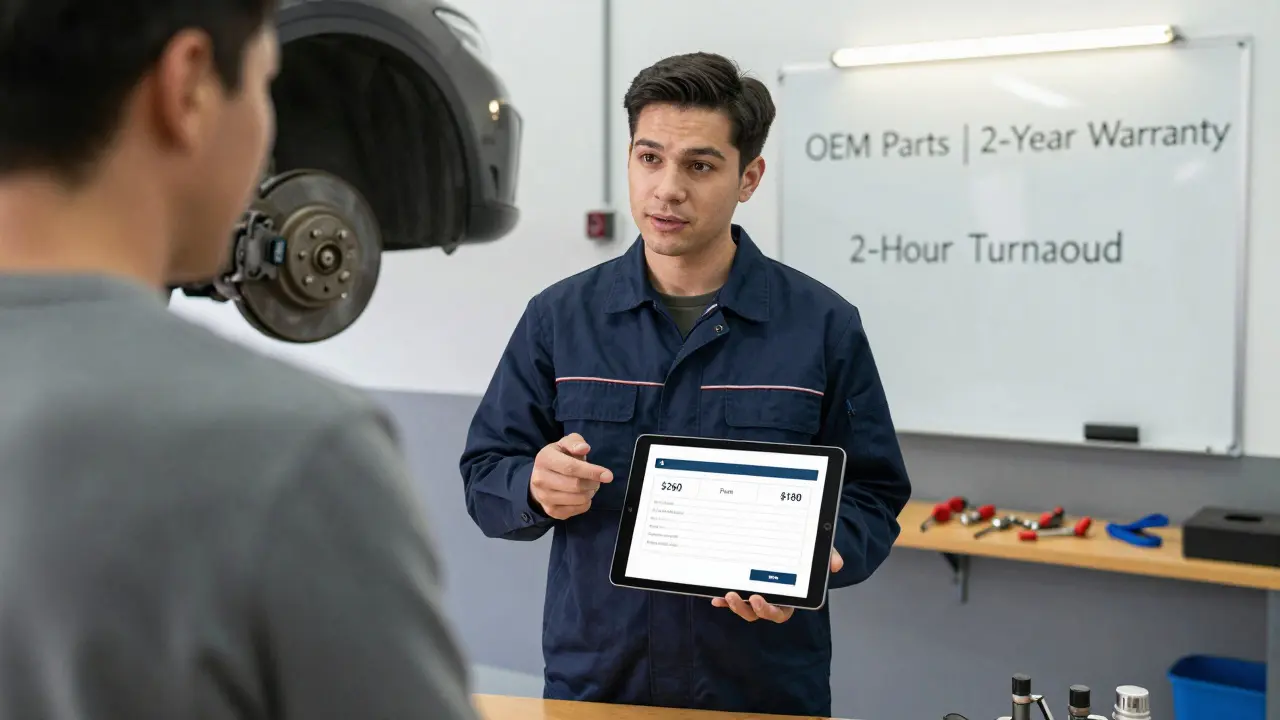
Setting the right price for auto repairs isn’t just about covering costs. It’s about staying in business while keeping customers happy. Too low, and you’re leaving money on the table. Too high, and you lose customers to the shop down the street. The sweet spot? A price that covers your overhead, pays your team fairly, and still feels fair to the customer.
Know Your True Costs
You can’t price what you don’t understand. Many shops guess their costs and end up working for free. Start by breaking down every dollar that goes out the door.
- Labor rate: How much do you pay your technicians per hour? Include wages, taxes, benefits, and training. If you pay $25/hour in wages but spend another $12 on payroll taxes and insurance, your true labor cost is $37/hour.
- Shop overhead: Rent, utilities, insurance, software, cleaning supplies, and even your coffee machine. Divide your monthly fixed costs by the number of billable hours you expect to work. If your overhead is $8,000/month and you bill 400 hours, that’s $20/hour just to keep the lights on.
- Parts markup: You didn’t buy that alternator for $120 to sell it for $120. You need to cover the cost of ordering, stocking, handling, and potential returns. Most successful shops mark up parts 50% to 100% over wholesale.
Example: If your total cost to complete a brake job is $180 in labor and $90 in parts, your break-even point is $270. Anything below that is a loss. Most shops charge $450-$600 for the same job - and they’re still competitive.
Research What Competitors Charge
Don’t guess what the market will bear. Call three shops within 10 miles. Ask for a quote on a common repair - oil change, brake pads, or timing belt. Don’t say you’re a shop owner. Just say you’re researching for your car. Record their prices for labor and parts.
Here’s what you’ll likely find:
| Repair | Lowest Rate | Average Rate | Highest Rate |
|---|---|---|---|
| Oil Change | $45 | $65 | $95 |
| Brake Pads (Front) | $220 | $340 | $520 |
| Timing Belt Replacement | $580 | $780 | $1,100 |
Don’t just match the average. Aim to be slightly above it - but only if you offer something better. Better tools? Faster turnaround? Lifetime warranty on parts? That’s your edge.
Price Based on Value, Not Just Time
Customers don’t care how long it took you. They care about how safe, reliable, and stress-free their car feels after the repair.
Think about this: A customer’s car breaks down on the highway. They’re scared, late for work, and don’t know who to trust. You fix it fast, with a warranty, and even wash the windows. That’s not a $400 brake job. That’s peace of mind. And peace of mind is worth more.
Use this trick: Instead of saying, “Brake pads are $340,” say, “We’ll replace your front brake pads, inspect your rotors, and give you a 2-year warranty on parts and labor. Your total is $340 - and we’ll have you back on the road in under two hours.”
That’s not just pricing. That’s selling confidence.
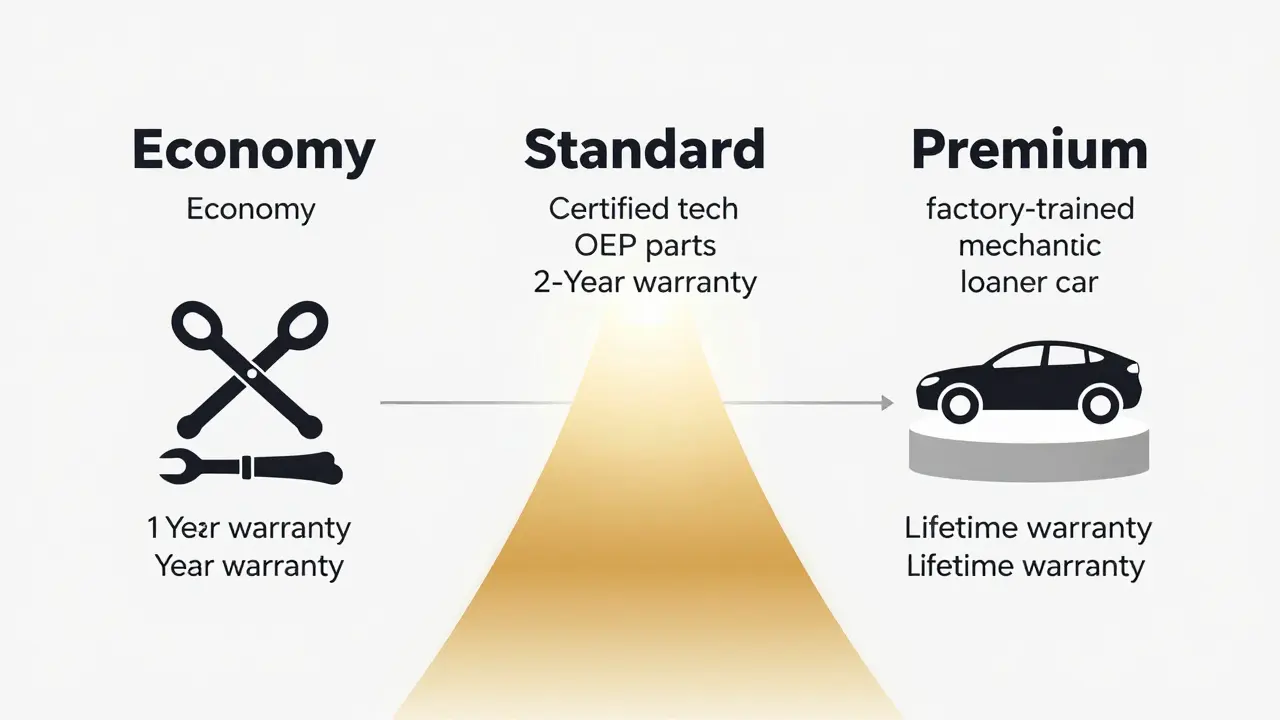
Use Tiered Pricing to Capture Different Customers
Not every customer wants the cheapest option. Some want the best. Others want fast. Others want budget-friendly.
Create three service tiers:
- Economy: Aftermarket parts, standard labor, 1-year warranty. For budget-conscious drivers.
- Standard: OEM or equivalent parts, certified techs, 2-year warranty. This is your sweet spot - most customers pick this.
- Premium: OEM parts, factory-trained techs, lifetime warranty, loaner car access. For high-end vehicles or customers who refuse to compromise.
Most shops only offer one option. You’ll stand out by giving choices. And guess what? Customers who choose Premium spend 3x more than those who choose Economy.
Don’t Underprice Just Because You’re New
New shop? Don’t slash prices to attract customers. You’ll attract the wrong ones - the ones who haggle, complain, and never come back.
Instead, offer a guarantee that makes up for the lack of reputation:
- “If you’re not 100% satisfied, we’ll redo the work - no charge.”
- “We’ll match any local competitor’s written quote.”
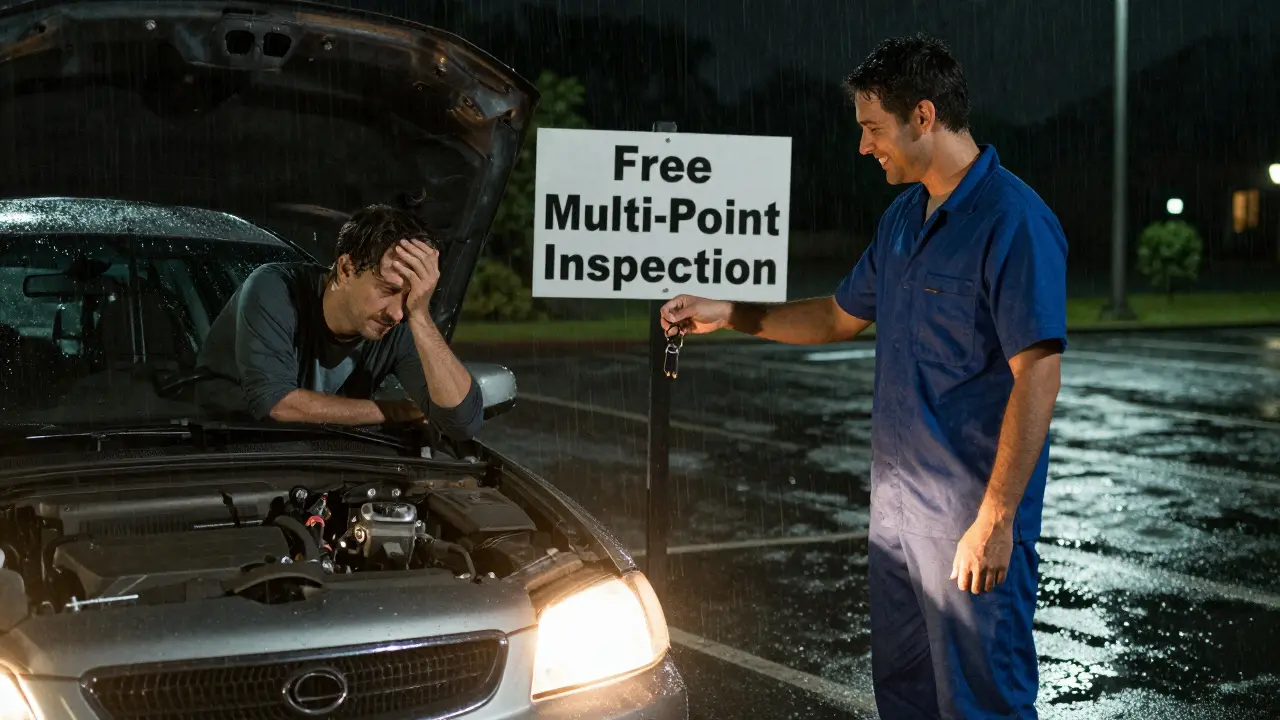
- “Free multi-point inspection with every repair.”
These build trust faster than a 20% discount ever could.
Track Your Profit Margins - Weekly
Profit isn’t what’s left after paying bills. It’s what you keep after every job. Track it for each repair type.
Use a simple spreadsheet:
- Job: Brake Replacement
- Parts Cost: $90
- Parts Sold: $180
- Labor Cost: $148
- Labor Billed: $260
- Total Revenue: $440
- Total Cost: $238
- Profit: $202 (46% margin)
Do this for 20 common repairs. If any job has less than a 35% profit margin, ask why. Is the labor rate too low? Are you using cheap parts that fail? Are you spending too much time on the job?
Adjust. Raise prices. Train your techs to work faster. Switch to better parts. Don’t let a single job drag down your whole shop.
Communicate Prices Clearly - Before Work Starts
Surprise bills are the #1 reason customers leave. Never start a repair without a written estimate.
Use this simple format:
- “We recommend replacing your front brake pads and resurfacing the rotors.”
- “Parts: $180 (OEM, 2-year warranty)”
- “Labor: $260 (1.8 hours at $145/hour)”
- “Total: $440”
- “Estimated time: 2 hours”
- “We’ll call before adding any extra work.”
Get a signature. Even if they say, “Just do it.” This protects you. It builds trust. And it makes them feel in control.
What Happens When You Get It Right?
Shop A charges $300 for a brake job. Shop B charges $440. Who wins?
Shop B. Because they explain why. They show the warranty. They show the quality. They show the speed. They show the peace of mind.
Customers don’t hate paying more. They hate feeling ripped off. Price fairly. Communicate clearly. Deliver consistently. And you’ll not only survive - you’ll thrive.
Common Mistakes to Avoid
- Charging the same for everything: A 2005 Honda Civic and a 2024 BMW need different labor times and parts. Don’t use one flat rate.
- Ignoring parts markup: If you sell parts at cost, you’re losing money. Parts should be your profit engine.
- Not adjusting for location: A shop in downtown Chicago can charge more than one in rural Iowa. Know your market.
- Letting customers negotiate: Once you say “$440,” don’t drop to $400. Offer a free car wash instead.
- Using outdated labor guides: Mitchell1 and AllData update hourly. If you’re still using 2020 labor times, you’re undercharging.
How do I know if my labor rate is too low?
Calculate your true labor cost: wages + taxes + benefits + overhead per hour. If your billed rate is less than 2.5x that number, you’re likely undercharging. For example, if your true cost is $37/hour, you should be billing at least $90/hour to stay profitable. Most successful shops charge $120-$160/hour.
Should I match the lowest-priced shop in town?
No. The lowest-priced shop is either cutting corners, using cheap parts, or losing money. Matching them makes you look like them. Instead, position yourself as the better option - better parts, better warranty, better service. Customers will pay more for peace of mind.
What’s a good parts markup percentage?
50% to 100% over wholesale is standard. For common parts like filters or brake pads, 60-70% works well. For rare or high-end parts (like OEM sensors or ECUs), markup 80-100%. The goal is to cover handling, storage, and risk - not just the purchase price.
How often should I raise prices?
Every 12-18 months is ideal. Small increases - 5% to 8% - are less noticeable than big jumps. Raise prices when your costs go up (rent, insurance, parts), not just when you need more money. Tell customers: “We’ve invested in new tools and training to give you better service.”
Can I charge more for emergency repairs?
Yes - but be transparent. Say: “We’re open 24/7 for emergencies. For after-hours service, we add a $75 fee to cover staffing costs.” Most customers accept this. They’d rather pay a little extra than wait days for a tow.
Comments
Jennifer Kaiser
It’s funny how we treat cars like they’re disposable, but then get mad when a repair costs more than a weekend getaway. The real issue isn’t pricing-it’s trust. If you explain why $440 is fair because your techs have certified training, use OEM parts, and guarantee their work, people don’t blink. They feel safe. And safety? That’s not a cost. That’s a value.
Most shops act like they’re selling widgets. But we’re selling peace of mind. That’s why the guy who drives a 2010 Camry still chooses the $600 shop over the $300 one. He doesn’t want to be stranded again. He wants to know someone who actually knows what they’re doing is under his hood.
February 27, 2026 at 22:43
TIARA SUKMA UTAMA
just charge less and people will come. why overcomplicate?
March 1, 2026 at 09:38
Jasmine Oey
OMG I CAN’T EVEN. I took my car in last month for a brake job and they charged me $320. I was like, ‘but I saw your competitor down the street does it for $220??’ and they were like ‘we use real parts’ and I was like ‘OH MY GOD I’M A FOOL’
Turns out my rotors were warped and they replaced them too. Total? $580. I cried. Then I drove away with a lifetime warranty and a clean interior. I’m never going back to the ‘cheap’ place again. You’re not overcharging-you’re overdelivering. And honestly? The world needs more of that.
March 3, 2026 at 08:44
Marissa Martin
It’s sad how many shops still treat customers like they’re trying to steal from them. If you’re transparent, fair, and consistent, people will pay more. It’s not about being greedy. It’s about being honest. And honestly? The ones who complain about pricing are usually the same ones who skip oil changes for two years and then wonder why their engine blew.
I’ve seen it too many times. You can’t fix ignorance with a discount.
March 3, 2026 at 18:39
James Winter
USA needs to stop letting these overpriced shops run the game. I drove 300 miles to Canada and got the same brake job for half the price. Your ‘premium’ service is just a scam dressed up in certifications.
March 5, 2026 at 18:27
Aimee Quenneville
Wow. So you’re saying if I charge more, people will trust me more?? I’m shocked. Truly. Next you’ll tell me that a mechanic who looks like he’s slept in the last 48 hours is somehow more trustworthy than one who’s clean, organized, and charges $150/hour.
Also, ‘lifetime warranty’? On brakes? You’re either a wizard or a con artist. I’m not sure which.
March 6, 2026 at 18:33
Colby Havard
One must consider the epistemological framework underpinning automotive pricing. The commodification of labor, when divorced from its phenomenological experience, reduces human expertise to a transactional metric. The customer does not purchase brake pads-they purchase ontological security against mechanical failure. Thus, pricing must transcend mere cost-plus models and enter the realm of hermeneutic value construction.
March 7, 2026 at 18:46
michael Melanson
I’ve been running a shop for 18 years. We raised our labor rate by $5/hour every year, never more. Customers noticed the difference-better tools, faster turnaround, cleaner facility. They didn’t complain. They started referring friends. The key isn’t how much you charge. It’s how consistently you deliver.
March 8, 2026 at 09:12
lucia burton
Here’s the thing nobody talks about: your labor rate isn’t just a number-it’s a reflection of your operational maturity. If you’re still using 2020 labor guides, you’re operating in a pre-pandemic economy. You need to factor in inflation, supply chain volatility, technician retention costs, and digital diagnostics overhead. The $145/hour isn’t arbitrary-it’s the minimum viable rate to sustain quality in 2026. And if you’re not tracking profit per job weekly, you’re flying blind with a parachute made of tissue paper.
March 8, 2026 at 14:56
Denise Young
Okay, I’ll admit-I used to be the guy who haggled. Then I had a mechanic who gave me a free car wash, a written estimate with photos, and called me before doing anything extra. I didn’t even know I needed that. But now? I pay premium. I tell all my friends. I even left a 5-star Yelp review. Turns out, people don’t hate paying more. They hate feeling like they’re being played. Be the shop that doesn’t play.
March 9, 2026 at 19:18
Sam Rittenhouse
I’ve mentored new technicians for over a decade. The ones who succeed aren’t the fastest. They’re the ones who explain. Not just ‘your brake pads are worn.’ But ‘here’s how your rotors are scoring because you waited too long. Here’s why we recommend replacing them together. Here’s what happens if you don’t.’ That’s not service. That’s education. And education builds loyalty. Price follows trust.
March 11, 2026 at 09:49
Peter Reynolds
Good post. Solid breakdown. I’ve been doing this for 15 years. The only thing I’d add is that your parts markup should be based on turnover rate. Fast-moving items like oil filters can be 60%. Slow movers like specialty sensors? 90%. It balances inventory risk. Also, never forget: a customer who feels heard will pay more. Always confirm understanding. Always. Even if they say ‘just do it.’
March 12, 2026 at 01:54
Jennifer Kaiser
James, I get where you’re coming from-Canada’s cheaper. But here’s the thing: if you drive 300 miles to save $200, you’re spending gas, time, and stress to avoid paying for expertise. That’s not saving. That’s trading convenience for risk.
I’ve had customers do the same thing. They came back two weeks later with the same problem-because the ‘cheap’ shop used off-brand pads that glazed the rotors. They paid $800 to fix what they could’ve paid $450 to do right the first time.
It’s not about patriotism. It’s about economics. Sometimes the cheapest option is the most expensive.
March 12, 2026 at 20:34