
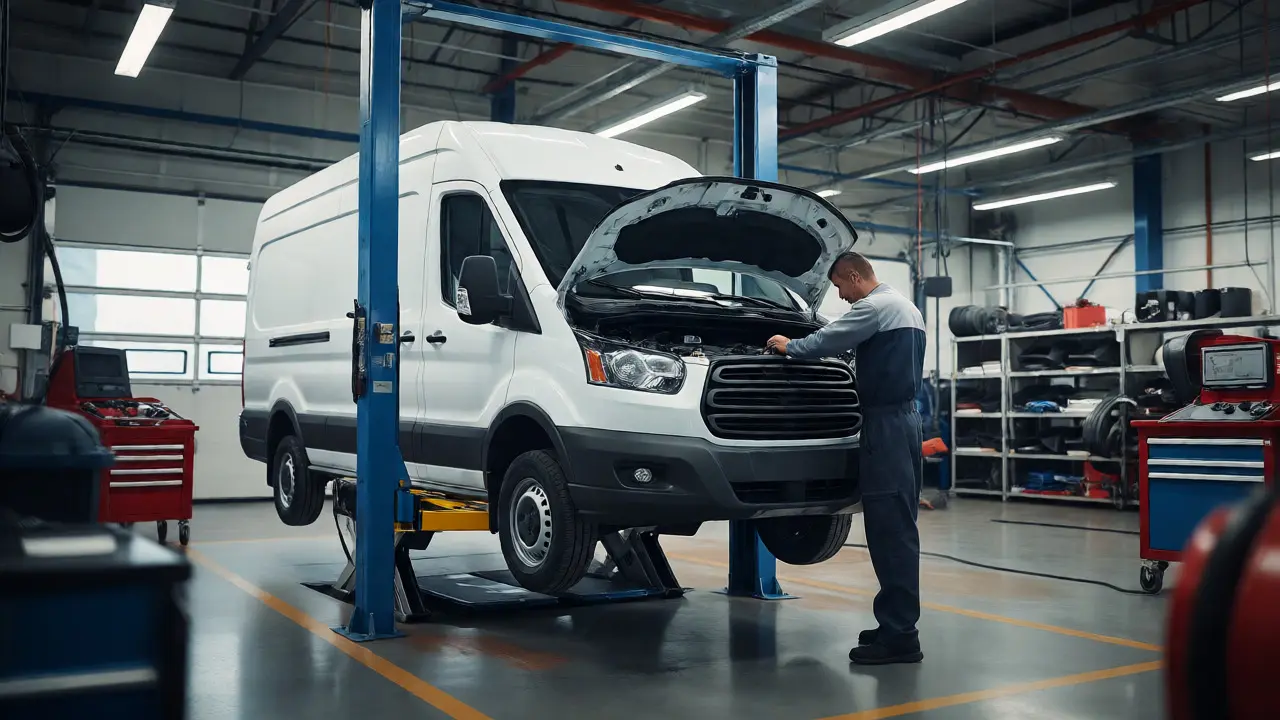
You’re staring at a spreadsheet that doesn’t add up. Your vans are off the road for three days waiting for a garage slot, or worse, your internal mechanics are sitting idle because there’s no work on the bench. It’s the classic fleet manager’s dilemma: do you build your own workshop, or do you hand the keys to an external provider? There is no one-size-fits-all answer here. The right choice depends entirely on your fleet size, vehicle mix, and how much control you need over downtime.
Let’s cut through the noise. This isn’t about which option is "better" in a vacuum. It’s about which model aligns with your operational reality in 2026. With labor costs rising and EV adoption changing service intervals, the math has shifted. We’ll break down the real costs, the hidden risks, and the strategic advantages of both approaches so you can make a decision based on data, not gut feeling.
The Core Difference: Control vs. Flexibility
At its heart, In-House Fleet Maintenance is a model where a company employs its own technicians, owns the workshop space, and purchases all necessary tools and diagnostic equipment to service its vehicles internally. You call the shots. If a delivery truck breaks down at 2 AM, your team handles it (or you pay overtime). Nothing goes out unless you say so.
Third-Party Fleet Maintenance involves outsourcing vehicle servicing to external providers, such as franchised dealerships, independent garages, or specialized fleet management companies. Here, you trade direct control for scalability. You don’t worry about hiring a new mechanic when your fleet grows by 20 units; you just send more cars to the provider.
| Feature | In-House | Third-Party |
|---|---|---|
| Control Over Schedule | High. You prioritize urgent repairs instantly. | Low to Medium. Depends on provider availability. |
| Labor Costs | Fixed salaries + benefits + overtime. | Variable hourly rates or fixed contract fees. |
| Equipment Investment | High upfront CAPEX (lifts, diagnostics). | Zero. Provider owns the tools. |
| Scalability | Slow. Requires hiring/training. | Fast. Just increase volume. |
| Expertise Level | Generalist unless highly specialized. | Often specialist (e.g., EV certified). |
When In-House Maintenance Makes Sense
If you run a large fleet-think 50+ vehicles-and they operate within a tight geographic radius, building your own workshop often wins on pure economics. Why? Because you eliminate the profit margin the third party adds to every hour of labor. You also gain immediate response times. If a refrigerated van fails its compressor during a summer heatwave, you can’t wait two days for an external garage. You need it fixed now, or you lose thousands in spoiled goods.
Consider the case of a regional logistics firm I consulted for last year. They had 120 light commercial vehicles. By bringing maintenance in-house, they reduced average downtime from 48 hours to under 6 hours. The savings on lost revenue outweighed the cost of their new workshop facility within 14 months. But this only worked because their vehicles were mostly identical models, making parts stocking easy and technician training efficient.
However, in-house maintenance comes with heavy administrative baggage. You become an HR department, a health and safety officer, and a procurement manager. You need to manage stock levels of oil filters, brake pads, and tires. If you overstock, you tie up cash. If you understock, your vans sit idle. It’s a logistical headache many fleet managers underestimate until they’re knee-deep in spare parts invoices.
The Case for Third-Party Providers
For smaller fleets (under 30 vehicles) or those with diverse vehicle types, outsourcing is almost always smarter. The capital expenditure required to set up a compliant workshop-ventilation systems, waste disposal contracts, expensive diagnostic scanners like OBDII scanners diagnostic tools used to read vehicle error codes-can easily hit £50,000-£100,000 before you even hire a mechanic. For a small business, that’s money better spent on growth than on hydraulic lifts gathering dust.
Another major advantage is access to specialized expertise. Modern vehicles, especially electric ones, require specific certifications. An in-house generalist mechanic might not be qualified to touch high-voltage battery systems. External providers, particularly franchised dealers or specialist EV garages, already have these certifications. You avoid the risk of voiding warranties or causing safety hazards by trying to DIY complex repairs.
There’s also the liability factor. When a third party works on your car, their insurance covers mistakes. If your in-house mechanic strips a thread or misdiagnoses a fault, you eat the cost of the repair and any resulting damage. Outsourcing shifts that risk away from your balance sheet.
The Hidden Costs Nobody Talks About
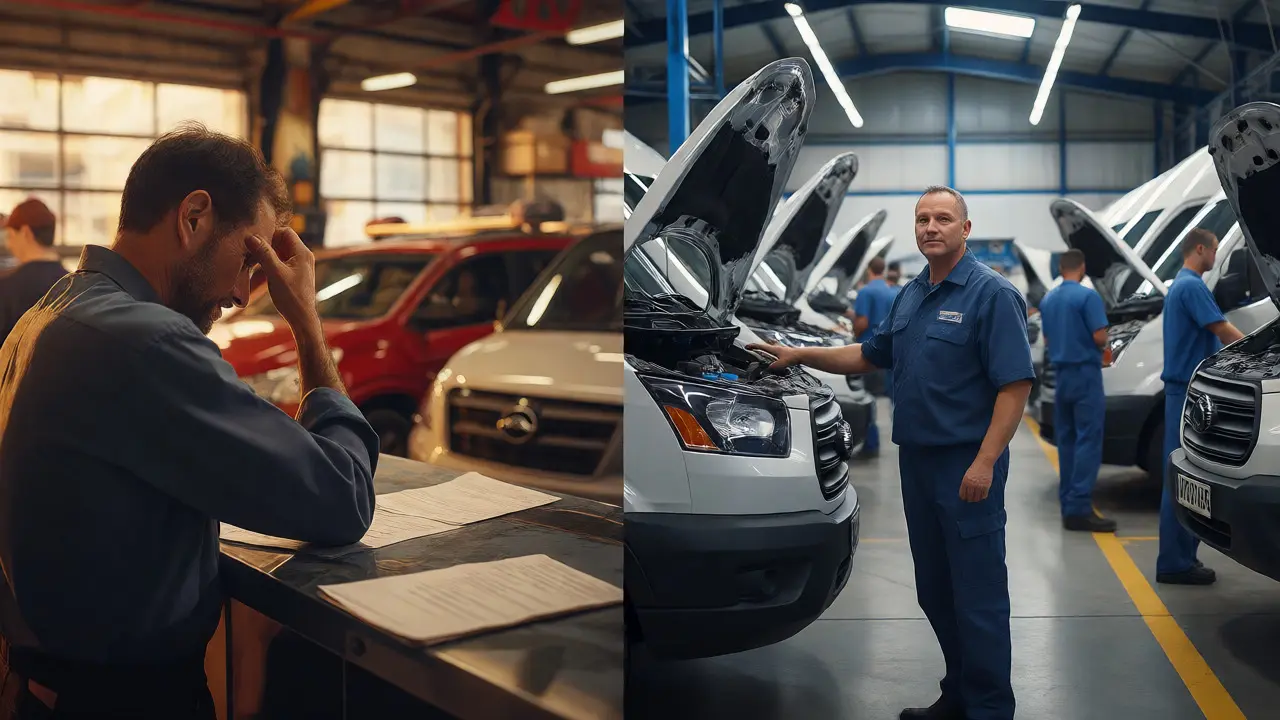
Both models have hidden costs that don’t show up on the initial quote. For in-house teams, the biggest hidden cost is idle time. Mechanics are paid whether they’re turning wrenches or waiting for parts. If your fleet utilization drops seasonally, you still pay full wages. This inefficiency can erode the savings you expected from avoiding third-party markups.
For third-party arrangements, the hidden cost is administrative friction. Coordinating drop-offs, tracking service history across multiple vendors, and chasing invoices takes time. If you use five different garages, you need a robust system to track which car went where and what was done. Without good software, you’re flying blind. Many fleet managers end up spending more on admin staff to manage the vendors than they save on labor rates.
Then there’s the quality variance issue. One day, Garage A does a perfect job. The next week, Garage B uses cheaper parts and skips a step. Consistency is hard to enforce externally unless you have strict SLAs (Service Level Agreements) and regular audits. In-house, you set the standard and enforce it daily.
Hybrid Models: The Best of Both Worlds?
Increasingly, smart fleet operators are moving toward a hybrid approach. They keep minor, routine tasks in-house-oil changes, tire rotations, wiper replacements-and outsource complex mechanical or bodywork repairs. This strategy balances control with flexibility. Your internal team handles the quick-turnaround jobs that keep vehicles moving, while specialists handle the heavy lifting.
This model works well for mid-sized fleets (30-80 vehicles). It reduces dependency on external providers for basic upkeep, ensuring your vehicles are always ready for deployment. Meanwhile, you avoid the massive overhead of maintaining a full-scale workshop capable of engine rebuilds. It’s a pragmatic compromise that acknowledges the strengths of both worlds.
How to Calculate Your Break-Even Point
To decide, you need to crunch numbers specific to your operation. Don’t guess. Use this simple framework:
- Calculate Fixed Costs (In-House): Add rent/mortgage for workshop, equipment depreciation, insurance, and base salaries.
- Calculate Variable Costs (In-House): Estimate parts markup (usually lower than retail), consumables, and overtime.
- Estimate Third-Party Rates: Get quotes for labor per hour and parts supply. Factor in travel time if vehicles must be transported.
- Project Volume: How many service hours will your fleet consume annually?
Plot these on a graph. Typically, the in-house line starts high but flattens as volume increases (because fixed costs are spread over more units). The third-party line starts low but rises linearly with volume. Where the lines cross is your break-even point. If your projected volume exceeds that point, go in-house. If it’s below, stay outsourced.
Remember to include the cost of downtime in your calculation. If in-house maintenance reduces downtime by 20%, value that saved time in lost revenue. Often, this alone tips the scale in favor of internal teams for critical operations.
Future-Proofing Your Decision
By 2026, the landscape is shifting again. Electric vehicles (EVs) require less frequent maintenance but demand higher technical skill. Battery health monitoring and software updates are becoming part of the service checklist. If your fleet is transitioning to EVs, ask yourself: do my current mechanics have the skills to handle high-voltage systems? Or would a specialist provider be safer?
Telematics integration is another game-changer. Modern fleet management software can predict failures before they happen. In-house teams benefit most from this predictive capability because they can schedule proactive repairs during planned downtime. Third-party providers are catching up, but you often lose visibility into the diagnostic data unless your provider integrates directly with your telematics platform.
Ultimately, the trend is toward transparency and data-driven decisions. Whether you choose in-house or third-party, ensure you have visibility into every pound spent and every hour logged. Blind trust in either model leads to budget overruns and surprise breakdowns.
Frequently Asked Questions
Is in-house maintenance always cheaper for large fleets?
Not always. While labor costs may be lower, the overheads (facilities, equipment, management) can outweigh savings if your fleet isn't utilized efficiently. High turnover of mechanics or poor workflow management can make in-house more expensive than a competitive third-party contract.
What happens if my third-party provider raises prices?
This is a common risk. To mitigate it, negotiate multi-year contracts with price caps or index-linked adjustments. Also, maintain relationships with at least two alternative providers so you can switch quickly if costs become unsustainable.
Can I mix in-house and third-party maintenance?
Yes, many companies use a hybrid model. Routine services like oil changes and tire checks are handled in-house, while complex repairs, MOT tests, or warranty work are sent to external specialists. This balances cost control with access to specialized expertise.
How does EV adoption affect this decision?
EVs require fewer moving parts, reducing overall maintenance frequency. However, they need specialized high-voltage safety training. If your in-house team lacks these certifications, outsourcing EV servicing to certified providers is often safer and more cost-effective than retraining staff.
Do I need a dedicated fleet manager for in-house maintenance?
If you have more than 20 vehicles, yes. Managing schedules, parts inventory, compliance records, and technician performance requires significant administrative effort. Without a dedicated person, the efficiency gains of in-house maintenance are often lost to poor coordination.