
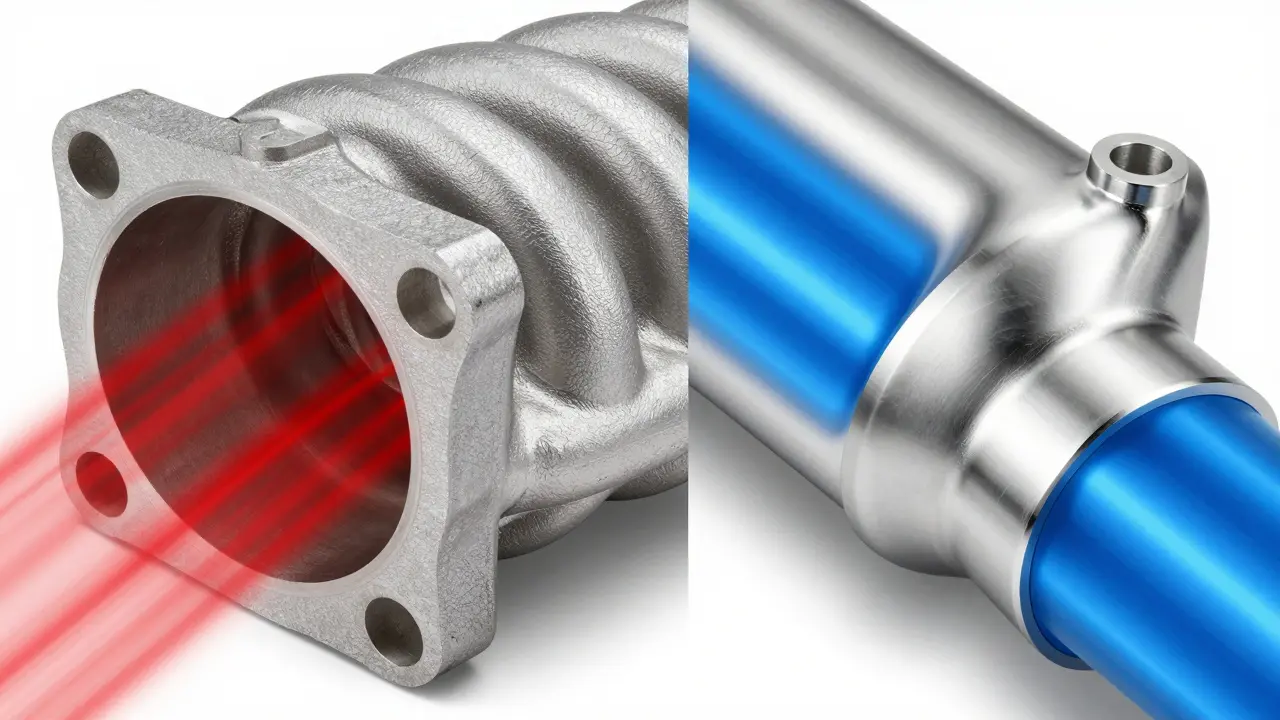
Most people think that swapping a bigger turbo or adding nitrous is the only way to get serious power from an engine. But if you have ever watched smoke pour out of a poorly designed intake runner, you know the truth: air has to get into the combustion chamber before it can do any work. This is where intake manifold porting comes in. It is not just about making holes bigger; it is about smoothing the path so the air moves faster and more efficiently.
When you buy a car off the lot, the factory intake manifold was designed for one thing: compromise. It had to meet emissions standards, run on cheap fuel, last for 200,000 miles, and sound quiet at highway speeds. Those goals are the exact opposite of what you want when you are chasing peak horsepower. The internal passages are often rough, twisted, and filled with sharp corners that disrupt airflow. By porting the manifold, you remove these restrictions, allowing the engine to breathe freely.
Why Factory Manifolds Restrict Airflow
To understand why porting works, you first need to see what is wrong with the stock part. Cast aluminum or plastic manifolds come out of the mold with surface imperfections. Imagine running through a hallway covered in bubble wrap versus a smooth marble floor. The air molecules hit those bumps and create turbulence. While some turbulence helps mix fuel and air at low speeds, too much of it creates drag that slows down the overall volume of air entering the cylinder.
Factory runners also tend to be longer and narrower than necessary for high-RPM performance. They prioritize low-end torque and throttle response because that is what daily drivers need. If you plan to rev your engine past 6,000 RPM, those long, skinny tunnels become a choke point. The air simply cannot fill the cylinder fast enough before the piston reaches top dead center. This results in volumetric efficiency dropping off exactly when you want it to peak.
The Mechanics of Porting and Polishing
Porting an intake manifold involves two main processes: reshaping the runners and polishing the surfaces. Reshaping means removing material from the walls of the intake tract to increase the cross-sectional area. You are not just drilling a bigger hole; you are optimizing the shape to reduce flow separation. When air hits a sharp corner inside a runner, it detaches from the wall and creates eddies. These eddies waste energy. By blending the transitions smoothly, you keep the air attached to the walls, which reduces pressure drop.
Polishing is the second step. After reshaping, you use abrasive pads to smooth the interior surface. A mirror finish is not always the goal-sometimes a slight texture helps atomize fuel in carbureted or port-injected engines-but for direct injection or forced induction setups, smoother is generally better. The key metric here is the coefficient of friction. Lower friction means less energy loss as the air travels from the throttle body to the cylinder head ports.
Matching the Cylinder Head Ports
This is the most critical step that beginners often miss. You can spend hours perfecting your manifold, but if the flange where it bolts to the engine does not match the cylinder head ports, you will lose all your gains. Think of it like trying to connect a garden hose to a fire hydrant using a funnel that is half the size of the outlet. The restriction happens right at the junction.
You must blend the manifold runner into the head port. This process is called 'blending.' You use files and sandpaper to create a seamless transition between the manifold's exit and the head's entrance. Any lip, ridge, or mismatched angle will cause immediate turbulence. For best results, the angle of the manifold runner should align with the angle of the head port. If they diverge, even by a few degrees, you create a shockwave that disrupts laminar flow.
| Feature | Stock Manifold | Ported & Polished Manifold |
|---|---|---|
| Surface Finish | Rough, cast texture | Smooth, blended transitions |
| Runner Shape | Twisted, narrow | Straightened, optimized diameter |
| Air Velocity | Inconsistent, turbulent | Laminar, high velocity |
| Volumetric Efficiency | Drops at high RPM | Maintains or increases at high RPM |
| Horsepower Gain | Baseline | 5-15% depending on engine |
Impact on Volumetric Efficiency
Volumetric efficiency (VE) is the percentage of air an engine can pull into its cylinders compared to its theoretical maximum. A naturally aspirated engine rarely exceeds 85% VE without modification. Porting the intake manifold can push this number closer to 95% or even higher in racing applications. How does this translate to power? More air means more oxygen. More oxygen allows you to burn more fuel. Burning more fuel safely releases more energy, which pushes the piston down with greater force.
The relationship between airflow and horsepower is linear. If you increase airflow by 10%, you can expect roughly a 10% increase in horsepower, provided your fuel system and ignition timing are tuned correctly. This is why porting is such a cost-effective modification. Unlike buying a new supercharger, which costs thousands of dollars and requires major engine upgrades, porting uses the hardware you already have. You are unlocking potential that was trapped behind poor casting design.
Tools and Techniques for DIY Porting
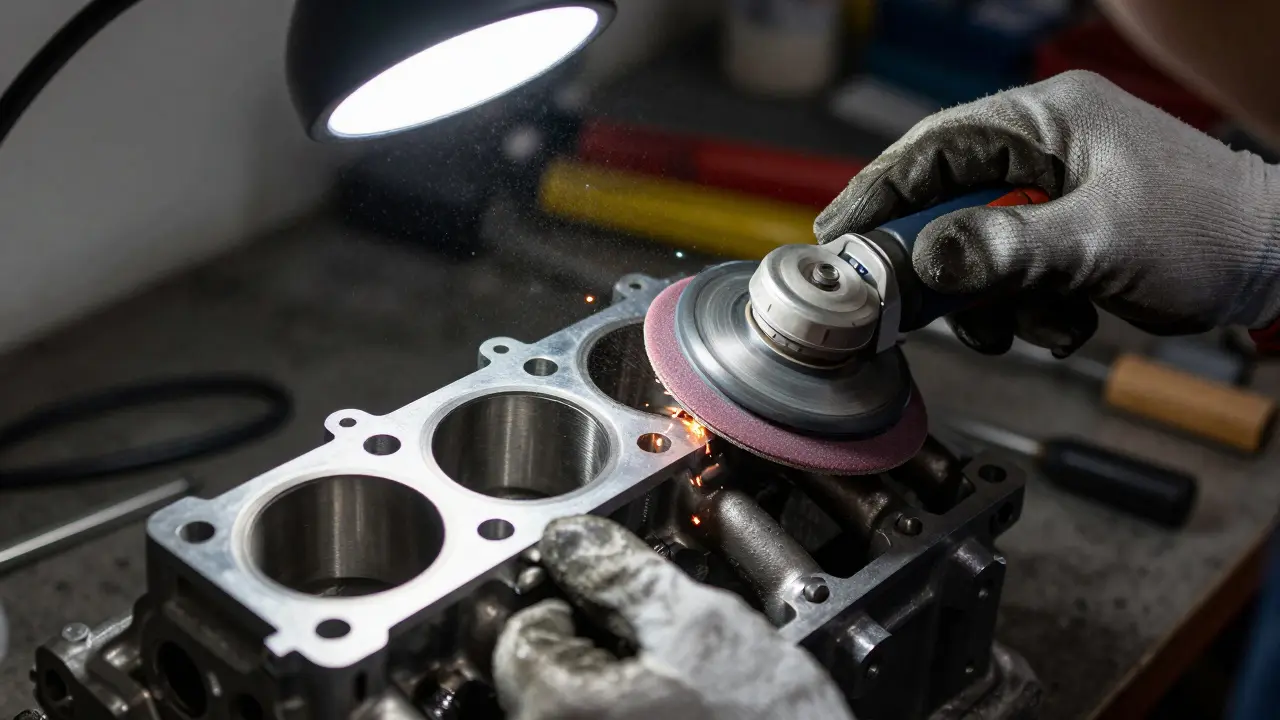
If you are planning to do this yourself, you need the right tools. A Dremel tool with various grinding bits is essential for initial shaping. You will also need flexible shaft attachments to reach deep into the runners. Sandpaper ranging from 80 grit to 400 grit is standard. Start coarse to remove material quickly, then move to finer grits to smooth the surface. Never skip a grit level; jumping from 80 to 400 will leave scratches that act as tiny trip wires for airflow.
Lighting is crucial. Use a bright LED work light to inspect the inside of the runners. Look for any remaining ridges or uneven spots. Your finger can sometimes feel imperfections that your eye misses, but be careful not to introduce oils from your skin into the passage. Wear gloves. Finally, clean the manifold thoroughly after polishing. Even small particles of aluminum dust can damage the engine if they get sucked into the cylinders. Use compressed air and brake cleaner to ensure every trace of debris is gone.
When Not to Port Your Manifold
Porting is not a magic bullet for every situation. If your engine is a low-revving diesel or a large-displacement V8 meant for towing, increasing runner size might actually hurt performance. Larger runners reduce air velocity at low RPMs, which kills torque. Torque is what moves heavy loads. If you need low-end grunt, you want smaller, longer runners to build up momentum. Porting is primarily beneficial for high-RPM engines, such as inline-four race cars, V6 sports sedans, or modified V8s that spin above 7,000 RPM.
Also consider the rest of your setup. If your exhaust system is clogged with a restrictive catalytic converter, improving the intake will yield minimal results. The engine needs to exhale to inhale. Always address both sides of the breathing equation. Porting the intake makes sense when paired with a free-flowing exhaust, upgraded camshafts, and a proper tune. Without these supporting modifications, the gains may be negligible.
Cost vs. Benefit Analysis
Let’s talk numbers. Having a professional shop port your manifold can cost between $300 and $800, depending on complexity. Doing it yourself costs maybe $50 in tools and abrasives. The return on investment depends on your goals. For street cars, you might see 5-10 horsepower gains. For track cars, the gains can be 15-20 horsepower or more. While this might not seem huge compared to a turbo kit, remember that this power comes across the entire RPM range, not just at boost threshold. It improves throttle response and drivability, making the car feel lighter and more responsive.
Furthermore, porting adds value to the engine build. It shows attention to detail. In competitive motorsports, every pound of weight and every dollar spent must justify itself. Porting is one of the few modifications that offers a high reward-to-cost ratio without introducing new failure points. You are not adding belts, pulleys, or compressors that can break. You are simply optimizing existing geometry.
Common Mistakes to Avoid
The biggest mistake is over-porting. Removing too much material weakens the structure of the manifold. Thin walls can crack under heat cycles or vibration. Stick to moderate increases in runner diameter. Another error is ignoring the plenum chamber. The plenum is the large reservoir at the front of the manifold that distributes air to the runners. If the plenum is restricted or poorly shaped, individual runner improvements won't matter. Ensure the plenum has adequate volume and smooth entry points from the throttle body.
Finally, do not neglect the gasket surface. When you port the flange, you must ensure it remains flat and square. If the mating surface is uneven, you will have vacuum leaks. Vacuum leaks cause lean conditions, which can lead to overheating and engine damage. Use a straight edge and feeler gauge to check flatness before reassembling. A good seal is non-negotiable.
How much horsepower can I gain from porting my intake manifold?
Gains vary by engine type and baseline condition. Typically, you can expect 5-15% increase in horsepower. For a 200-horsepower engine, this translates to 10-30 additional horses. High-RPM race engines see the most significant benefits, while low-RPM street engines may see modest gains in throttle response rather than peak power.
Do I need to port the cylinder heads as well?
Ideally, yes. To maximize airflow, the entire path from the throttle body to the combustion chamber should be optimized. If you port the manifold but leave restrictive head ports, the bottleneck remains at the head. Matching the manifold to the heads ensures consistent flow velocity and prevents turbulence at the junction.
Can I port a plastic intake manifold?
Yes, but it requires care. Plastic manifolds are common in modern vehicles. Use low-speed rotary tools to avoid melting the material. Aluminum manifolds are easier to work with and hold their shape better under heat, but plastic can still be smoothed and blended effectively for noticeable flow improvements.
Will porting affect my warranty?
Modifying the intake manifold typically voids the powertrain warranty related to the intake system. Since the manifold is part of the emissions control system in many regions, altering it may also violate local regulations. Check your specific warranty terms and local laws before proceeding.
Is polishing alone enough without reshaping?
Polishing helps reduce friction, but reshaping addresses fundamental flow restrictions. If the runner is twisted or too narrow, polishing will not fix the geometry. For best results, combine both techniques: reshape to optimize the path, then polish to minimize surface drag.