
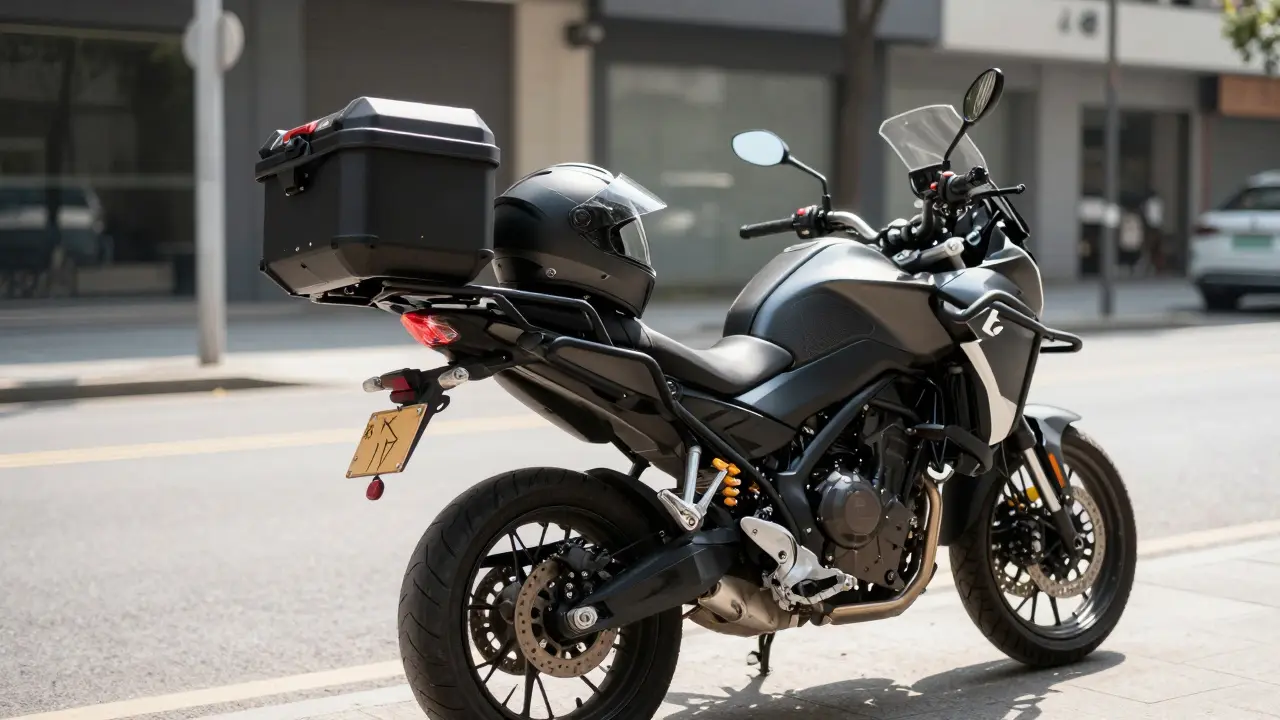
You’ve packed the essentials, zipped up your tank bag, and realized you still have a helmet, a jacket, and maybe even a change of clothes left on the floor. If you ride a naked bike or a sport-tourer without built-in storage, this moment is familiar. It’s the exact point where you start looking at luggage racks and aftermarket mounting systems designed to carry gear securely on motorcycles. But adding storage isn’t just about buying a box and bolting it on. It changes how your bike handles, how much weight you can legally carry, and whether your rear suspension will bottom out on the first bump.
Adding top boxes and tail bags transforms a commuter bike into a touring machine. However, many riders make the mistake of ignoring the physics involved. A heavy load high up on the bike raises the center of gravity, making cornering feel sluggish and braking distances longer. The goal here is to maximize carrying capacity without sacrificing safety or comfort. Let’s break down how to choose the right setup, install it correctly, and ride with confidence.
Understanding Your Bike’s Weight Limits
Before you buy anything, check your owner’s manual. Every motorcycle has a Gross Vehicle Weight Rating (GVWR). This number includes the bike, the rider, the passenger, fuel, and all accessories. Exceeding this limit doesn’t just void your warranty; it compromises structural integrity. Most standard street bikes have a payload capacity of around 150 to 200 kilograms total. If you weigh 80 kg and your bike weighs 200 kg, you only have about 70 to 120 kg left for gear and passengers.
Rear subframes are often the weak link in older or lightweight sports bikes. They were never designed to hold 30 kg of steel luggage. Modern adventure bikes like the BMW R1250GS or Honda Africa Twin have reinforced subframes that can handle heavier loads. For these bikes, the limiting factor is usually the rear shock absorber rather than the frame itself. Always verify the maximum dynamic load rating for any rack you purchase. Static load (when parked) is different from dynamic load (when riding), which can be three times higher due to acceleration and braking forces.
Choosing Between Luggage Racks and Integrated Systems
There are two main approaches to adding storage: universal luggage racks and manufacturer-specific integrated systems. Universal racks bolt onto existing mounting points on the swingarm or subframe. They are cheaper and fit almost any bike, but they often look bulky and may require drilling if your bike lacks pre-drilled holes. Integrated systems, offered by brands like Givi, Shad, and Kappa, use proprietary mounting plates that click directly into the bike’s chassis. These are more expensive but offer a cleaner look and better vibration resistance.
| Feature | Universal Rack | Integrated System (e.g., Givi) | Tail Bag (Soft Luggage) |
|---|---|---|---|
| Cost | Low (£30-£80) | High (£150-£400+) | Medium (£40-£120) |
| Installation Difficulty | Moderate (may need drilling) | Easy (bolt-on plate) | None (straps only) |
| Theft Resistance | Low (easy to unbolt) | High (keyed locks) | Very Low (cut straps) |
| Vibration Control | Poor (needs rubber washers) | Excellent (damped mounts) | N/A |
| Aesthetics | Bulky/Industrial | Sleek/OEM-like | Clean when removed |
If you plan to travel long distances, an integrated system is worth the investment. The quick-release mechanisms allow you to take the box off in seconds, reducing theft risk and keeping the bike looking clean when you don’t need the extra space. Soft tail bags are great for weekend trips where you want a minimalist look, but they lack security and weatherproofing unless you invest in high-end dry bags.
Top Boxes vs. Panniers: Where Does the Weight Go?
The placement of your luggage significantly affects handling. A top box is mounted centrally above the rear wheel. This centralizes weight, which helps with straight-line stability but raises the center of gravity. A large top box (40 liters or more) can make a nimble bike feel like a boat in corners. On the other hand, panniers (side cases) keep the weight lower and closer to the bike’s sides. This lowers the center of gravity and improves cornering agility, but it widens the bike’s profile, making parking tighter.
For most commuters, a 30-liter top box is the sweet spot. It fits a full-face helmet and some gear without overwhelming the bike. If you’re doing multi-day tours, consider a combination: smaller panniers for heavy items like tools and food, and a smaller top box for quick-access items like maps or rain jackets. Avoid putting heavy objects in the top box if possible. Keep the heaviest items low and centered, ideally in panniers or under the seat if space allows.
Installation Tips for Safety and Durability
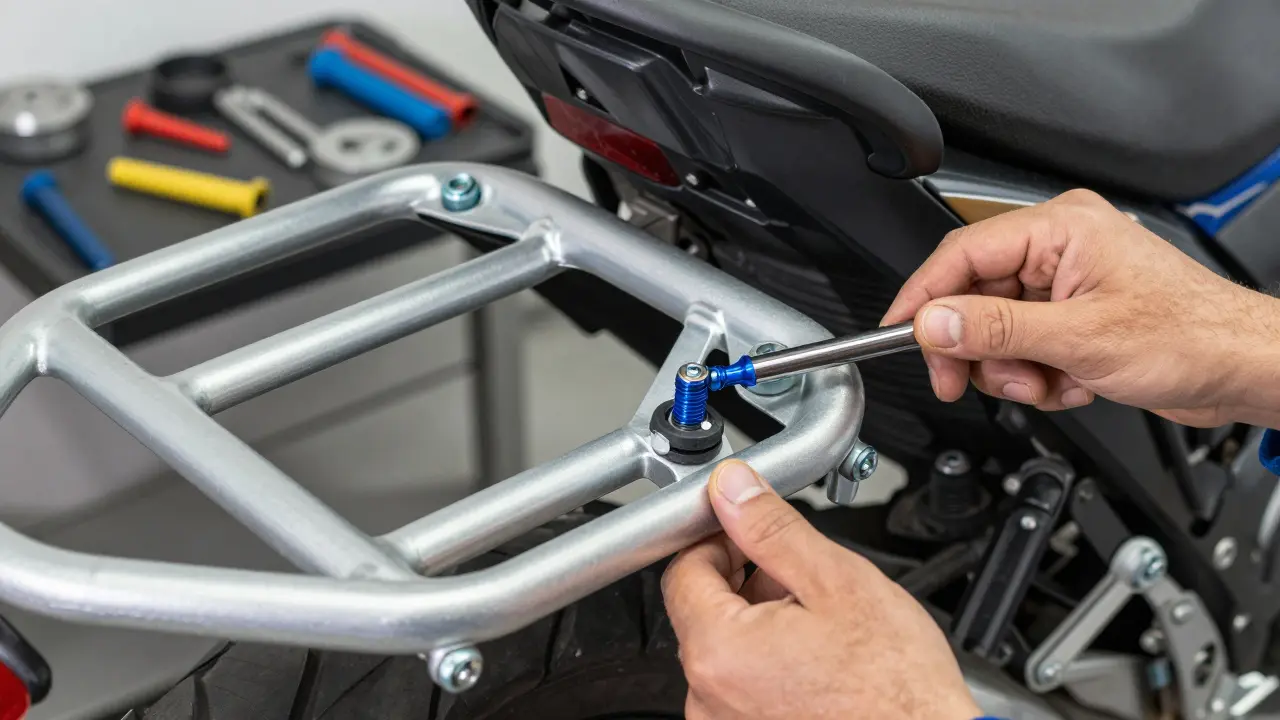
Installing a luggage rack requires attention to detail. First, ensure all mounting bolts are torqued to the manufacturer’s specifications. Under-tightening leads to loosening from vibration; over-tightening can strip threads or crack aluminum subframes. Use thread-locking compound (like Loctite Blue) on critical bolts to prevent them from vibrating loose over time.
Check clearance carefully. When you lean the bike over, does the rack hit the exhaust or the fender? When you fully compress the suspension, does the box touch the ground? You should have at least 5 cm of clearance in both scenarios. Also, ensure the rack doesn’t interfere with the license plate illumination or turn signals. In many jurisdictions, including the UK, obscuring lights or plates is illegal and dangerous.
Don’t forget about wiring. If your top box has integrated brake lights or indicators, you’ll need to tap into your bike’s electrical system. Use inline fuses and waterproof connectors. Poor wiring jobs are a leading cause of electrical fires and battery drain. If you’re not comfortable with splicing wires, hire a professional electrician or mechanic.
Managing Ride Dynamics with Added Load
Once your luggage is on, your bike won’t ride like it did yesterday. Braking distance increases because the added mass carries more momentum. Start braking earlier and apply brakes more progressively. Cornering feels slower because the raised center of gravity resists leaning. Enter turns at a slightly reduced speed and avoid sudden throttle inputs mid-corner, which can upset the balance further.
Your rear suspension will sag under the weight. If you notice the bike squatting excessively when you mount it, consider adjusting the preload on your rear shock. Many modern shocks have a simple click-adjustment collar. Increasing preload helps maintain proper geometry and prevents bottoming out. If your bike has air shocks, add a few PSI of air pressure. Test this on a safe, empty road before heading into traffic.
Tire pressure also needs adjustment. Check your tire sidewall for recommended pressures under load. Generally, increase rear tire pressure by 0.2 to 0.3 bar (3-4 PSI) when carrying significant luggage. This reduces heat buildup and wear, ensuring better grip and longevity. Never exceed the maximum pressure listed on the tire.
Weatherproofing and Security
In the UK, rain is a constant companion. Even hard-shell top boxes aren’t always perfectly watertight if the seals degrade or if water jets into the latch mechanism during high-speed riding. Use silica gel packets inside your box to absorb moisture. For soft bags, invest in high-quality dry bags with roll-top closures. Cheap plastic liners leak eventually.
Security is another major concern. Hard cases are tempting targets for thieves. Use a high-quality disc lock in addition to your case lock. Park in well-lit areas whenever possible. Some integrated systems allow you to remove the mounting brackets entirely, so there’s nothing left to steal. If you’re using a universal rack, consider removing the entire rack when parked overnight in high-risk areas.
Maintenance and Long-Term Care
Luggage racks endure harsh conditions: UV exposure, salt spray, mud, and constant vibration. Inspect bolts every few thousand miles. Look for signs of corrosion, especially on steel racks. Aluminum racks can suffer from galvanic corrosion if they contact dissimilar metals. Use dielectric grease on contact points to prevent this.
Keep latches and hinges lubricated with silicone spray or dry lubricant. Grease attracts dirt, which grinds against moving parts and causes wear. Clean your top box regularly, especially the rubber seals. Dirt trapped in seals breaks down the rubber over time, leading to leaks. Replace worn seals promptly-they’re cheap insurance against ruined electronics.
Can I install a luggage rack on any motorcycle?
Most motorcycles can accommodate a luggage rack, but compatibility varies. Sportbikes often lack mounting points, requiring custom fabrication or drilling. Naked bikes and cruisers usually have exposed subframes that make installation easier. Always check if a specific rack model exists for your bike year and model before purchasing a universal one.
How much weight can a typical motorcycle top box hold?
A standard 30-40 liter top box is rated for 15-20 kg of static load. However, the dynamic load limit (while riding) is often lower, around 10-15 kg, depending on the mounting system’s strength. Never exceed the manufacturer’s specified limit, as this can damage the rack, the box, or your bike’s subframe.
Do I need to adjust my suspension after adding luggage?
Yes, if you’re carrying more than 10-15 kg, you should adjust your rear suspension preload. This prevents excessive sag, maintains proper handling geometry, and protects your shock absorber from premature wear. Air shocks are easiest to adjust; coil springs may require a tool or professional help.
Are soft tail bags safer than hard top boxes?
Safety depends on context. Soft bags are lighter and don’t raise the center of gravity as much, improving handling. However, they offer less protection against impacts and theft. Hard boxes provide superior security and weatherproofing but add more weight and bulk. Choose based on your priority: handling agility vs. security and durability.
Is it legal to use a luggage rack that blocks the license plate?
No, it is illegal in most countries, including the UK and US, to obscure your license plate or rear lights. Ensure your rack and box leave the plate clearly visible and illuminated. Many manufacturers design racks with cutouts or angled mounts specifically to comply with these regulations.
Comments
Patrick Dorion
It is fascinating how we try to impose order on the chaos of travel by bolting metal boxes to our machines. The philosophy of carrying capacity is really about defining what you are willing to leave behind versus what you need to survive the journey. I always tell people that a rack is not just storage, it is an extension of your intent.
That said, the physics part is non-negotiable. If you ignore the center of gravity, you are fighting the bike every time you lean into a corner. It turns a joyride into a wrestling match with momentum.
June 29, 2026 at 20:33
Marissa Haque
OMG! This article is literally EVERYTHING! I have been struggling with this exact issue for MONTHS!! My tank bag is bursting at the seams and I feel like such a clown trying to balance my helmet on my lap while riding!!!
I am so glad someone finally explained the weight limits properly!!! I was just going to buy the biggest box I could find without checking the manual!!! That would have been a disaster!!! Thank you for saving me from potential ruin!!!
June 30, 2026 at 04:03
Keith Barker
the rack is just a tool but the mind must be prepared for the burden
most riders focus on the hardware and forget the software which is their own perception of stability
i prefer soft bags because they breathe with the road
hard cases are prisons for your gear
June 30, 2026 at 20:37
Lisa Puster
another american writing about british standards like they know anything about real engineering
you people cant even build a proper subframe without cracking it in half
i ride a german bike and it handles loads better than any of these cheap american made racks you guys install
stop complaining about weight limits and start buying quality equipment instead of relying on generic advice from bloggers who probably never toured more than fifty miles
July 1, 2026 at 03:02
Joe Walters
lol wow this post is actually pretty decent i guess
i usually hate these types of articles but you got some good points about the suspension preload
i broke my rear shock last year cause i put too much stuff in my top box and didnt adjust anything
stupid mistake but hey thats life right? hope nobody else does that
July 2, 2026 at 07:14
Robert Barakat
there is a silence in the space between the rack and the frame that speaks volumes about trust
we bolt things on hoping they will hold us together when the road gets rough
it is a metaphor for commitment really
but yes tighten the bolts
July 3, 2026 at 22:15
Michael Richards
You are all missing the point here. It is not about the box, it is about discipline. If you cannot pack light enough to fit in a tank bag and a tail bag, you do not deserve to tour.
Adding luggage racks is a crutch for lazy riders who refuse to prioritize their gear. Real riders carry only what is essential. Everything else is dead weight slowing you down and ruining your handling.
Stop making excuses and start packing smarter.
July 4, 2026 at 15:12
Laura Davis
Hey everyone! Let's keep this conversation respectful please! I know we all have different opinions on luggage but let's remember that safety comes first!
I totally agree with the author about checking the clearance. I once had my box hit the ground and it was terrifying! We need to look out for each other on the road!
Who else has had issues with water getting into their boxes? Let's share tips!
July 5, 2026 at 00:08
Lisa Nally
The aerodynamic implications of a poorly mounted top box are quite significant, aren't they? One must consider the drag coefficient increase which can reduce fuel efficiency by up to fifteen percent depending on the wind conditions.
I recently upgraded to a monokey system because the dual-key mechanisms were prone to failure under high vibration frequencies. It is simply superior engineering. Also, ensure your mounting plate is torqued to exactly twenty-five newton-meters or you risk catastrophic structural failure.
Most amateurs fail to understand the importance of dynamic load distribution.
July 5, 2026 at 01:58
Edward Gilbreath
they want you to think you need a rack but its all a conspiracy by the luggage companies to sell more plastic
i use duct tape and it holds everything fine
also the government tracks your gps through the license plate light if you cover it so dont do that
just ride free
July 6, 2026 at 23:35
kimberly de Bruin
weight is just matter resisting change
when you add a box you are adding resistance to the flow of the journey
but sometimes resistance is necessary to define the shape of the trip
i like the idea of keeping heavy items low
it feels more grounded
July 7, 2026 at 11:45
Edward Nigma
actually you are all wrong
top boxes are safer than panniers because they are more visible to cars behind you
panniers make the bike wider which increases the chance of side swipe accidents
so despite what the article says about center of gravity visibility is more important
also spelling matters so fix your grammar
July 8, 2026 at 15:52
Francis Laquerre
In Europe we take this very seriously! A well-fitted Givi system is almost mandatory for any serious touring. It is not just about storage; it is about maintaining the aesthetic harmony of the motorcycle.
I have traveled across France and Italy with full loads and the integrated systems handle the cobblestones beautifully. Universal racks just rattle apart after a few hundred kilometers. You must respect the engineering heritage of these brands.
Do not skimp on quality when your life depends on the integrity of your mounting points.
July 10, 2026 at 12:41
michael rome
It is imperative that one considers the long-term effects of added mass on the drivetrain components. While the article touches on suspension, it fails to adequately address the strain placed on the transmission and final drive.
I recommend consulting with a certified mechanic before installing any aftermarket accessories. Proper torque specifications are critical for ensuring the longevity of your vehicle. Negligence in this area can lead to costly repairs and potential safety hazards.
Please exercise due diligence in your purchasing decisions.
July 11, 2026 at 22:06
Andrea Alonzo
I completely understand the frustration of realizing you have forgotten something essential halfway through your packing process, and it is a feeling that many of us who enjoy the freedom of the open road can certainly relate to on a deeply personal level as we strive to balance our desire for adventure with the practical necessities of modern travel logistics.
When I first started touring, I made the same mistakes you described, and I learned quickly that investing in a high-quality soft luggage system allowed me to maintain a lower center of gravity while still providing ample space for my gear, which ultimately contributed to a much more enjoyable and less stressful riding experience overall.
I hope you find a solution that works perfectly for your specific needs and bike setup, and please remember that every rider's journey is unique, so do not be afraid to experiment with different configurations until you find the one that feels most comfortable and secure for you.
July 12, 2026 at 01:43