
The Reality of the Charging Curve
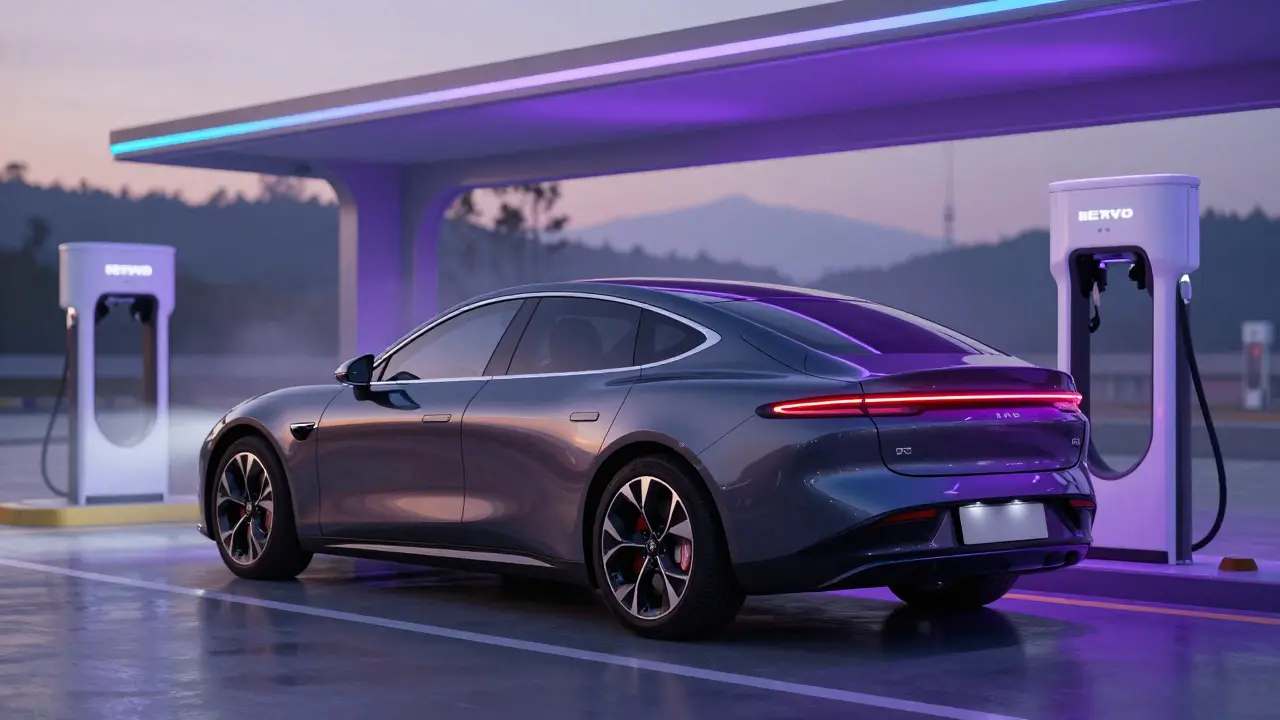
Most people think of charging like filling a gas tank-a steady flow until it's full. But batteries don't work that way. Charging Curves is the graph showing the relationship between the battery's state of charge (SoC) and the power intake (kW) over time. Think of it like a crowded parking lot. When the lot is empty, cars zoom into spots quickly. As it fills up, every new car has to slow down, circle around, and carefully maneuver into the last few remaining spaces.
In a luxury EV, this curve is managed by the onboard Battery Management System (BMS). To prevent the battery from overheating or degrading, the BMS throttles the current as the voltage rises. For example, a Porsche Taycan might pull nearly 270kW when the battery is at 5%, but by the time it hits 80%, that speed might drop to 50kW. This is why the most efficient way to travel is to charge from 10% to 80% and then move on, rather than waiting for that final 20% which can take nearly as long as the first half of the charge.
| State of Charge (SoC) | Charging Speed (kW) | BMS Priority |
|---|---|---|
| 10% - 30% | Peak (Max possible) | Maximum Throughput |
| 30% - 70% | Gradual Decline | Thermal Management |
| 70% - 100% | Sharp Drop (Tapering) | Cell Protection/Longevity |
High-Voltage Architectures: 400V vs 800V
The real divide in Luxury EV Fast Charging today is the voltage of the system. Most older and mid-range EVs use a 400-volt architecture. However, top-tier luxury brands are shifting toward 800-volt architecture is a high-voltage electrical system that allows for faster charging speeds and higher efficiency by reducing current.
Why does this matter? Simple physics: Power equals Voltage times Current (P=VI). To get more power into the battery without melting the cables or overheating the cells, you can either increase the current (which creates a lot of heat) or increase the voltage. By doubling the voltage to 800V, luxury cars can pull massive amounts of power-often over 300kW-while keeping the cables manageable and the heat under control. This is the secret sauce behind the ultra-fast speeds seen in the Lucid Air or the Hyundai Ioniq 6.
Navigating the Premium Charging Networks
Having a car capable of 350kW is useless if the charger only provides 50kW. The network you choose dictates your actual experience. While there are thousands of chargers worldwide, luxury owners generally gravitate toward networks that offer high reliability and high-power output.
Tesla Supercharger is a proprietary and now increasingly open network of high-speed DC chargers known for seamless integration and high uptime. For a long time, this was the gold standard. The integration is flawless; the car communicates with the charger, pre-conditions the battery to the ideal temperature, and handles billing automatically. With the shift toward the North American Charging Standard (NACS), many luxury brands are now gaining access to this network, drastically reducing range anxiety.
On the other hand, networks like Ionity is a joint venture between major European car manufacturers focusing on high-power charging along highways. provide massive 350kW output. If you are driving an 800V vehicle, these are the stations where you actually hit those peak numbers. However, the user experience varies. While the hardware is powerful, the software interface can sometimes be clunkier than Tesla's, and payment options can vary by country.
The Critical Role of Battery Pre-conditioning
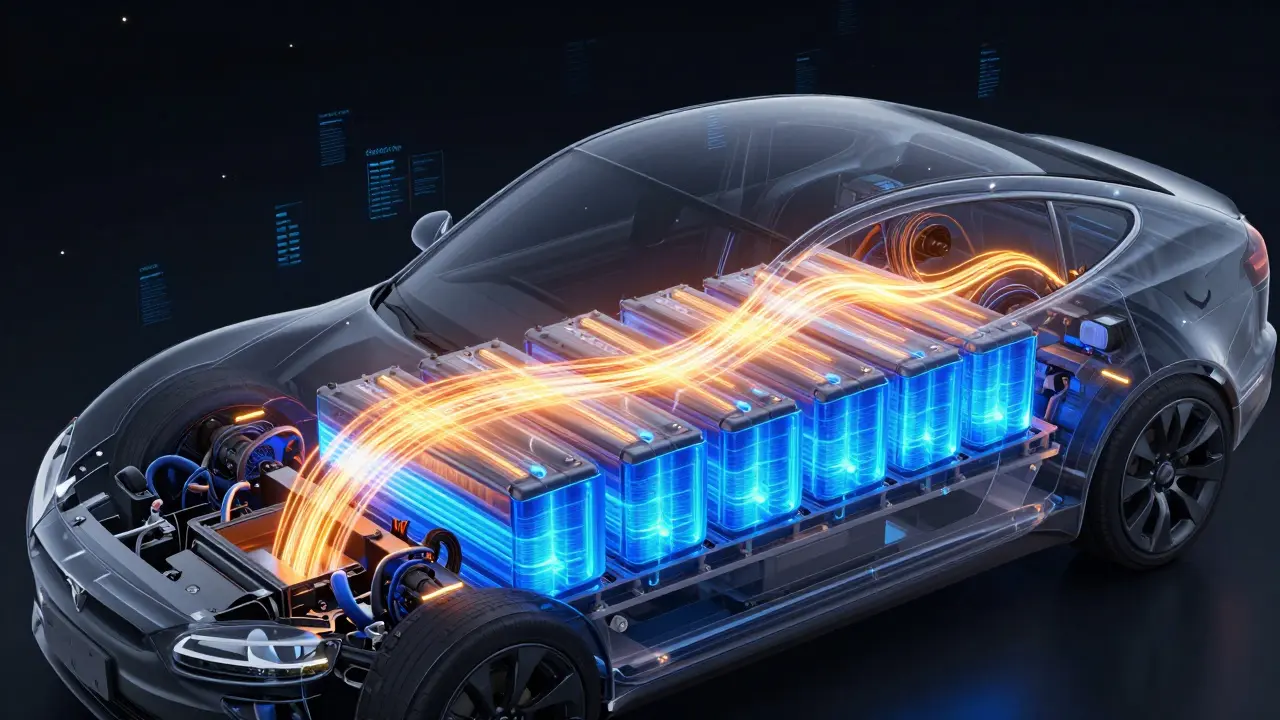
Have you ever noticed that your car charges slower in the winter? Lithium-ion batteries are like humans; they don't like being too cold or too hot. For a battery to accept a high-power charge, the cells need to be at an optimal temperature (usually between 20°C and 40°C).
This is where battery pre-conditioning comes in. When you set a high-power charger as your destination in the car's GPS, the Battery Management System is the electronic system that monitors the state, health, and temperature of an EV battery pack. begins warming (or cooling) the battery pack. If you skip this step and just drive to a charger, you might find your peak charging speed cut in half because the battery is too cold to safely absorb the energy. In luxury vehicles, this process is usually automated, but it's a vital part of the hardware-software handshake.
Common Pitfalls and Pro Tips for Faster Charging
Even with a $100,000 car, you can still run into charging bottlenecks. Here are a few things that often trip people up:
- The 80% Rule: Don't waste time charging to 100% on a road trip. The speed drop-off after 80% is brutal. You'll spend 30 minutes getting to 80% and another 30 minutes getting the last 20%.
- Charger Derating: Not every "350kW" station actually delivers 350kW. If two cars are sharing a split-cabinet charger, the power is often divided. Always check if the station is currently delivering its rated power before you decide on your stop.
- Cable Weight: On the most powerful chargers, the cables are liquid-cooled and incredibly heavy. Ensure you park the car perfectly to avoid straining the connector, which can sometimes cause the charger to trip and stop the session.
The Future: Megawatt Charging and Beyond
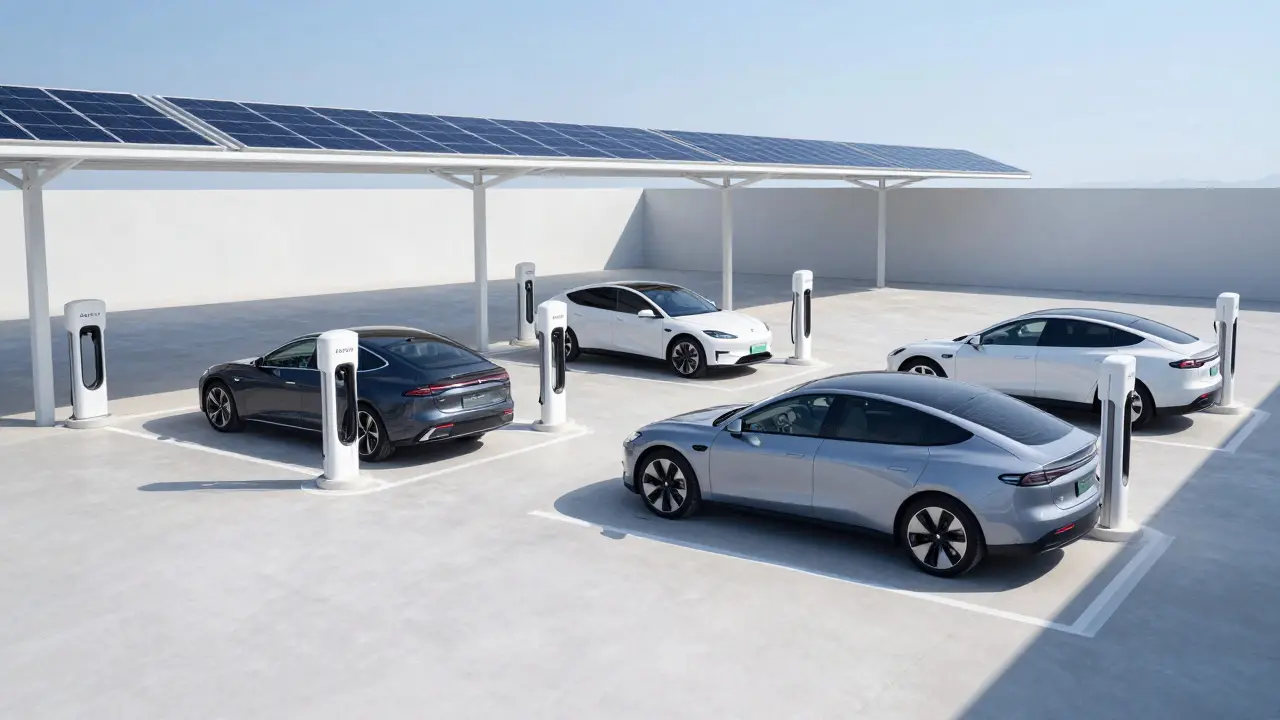
We are moving toward an era where charging takes minutes, not hours. The industry is looking at Megawatt Charging System (MCS) is a standard designed for heavy-duty vehicles to allow charging powers above 1 megawatt. While mainly for trucks, the trickle-down effect will hit luxury cars. We'll likely see a shift toward even higher voltages and more intelligent grid management, where cars communicate with the grid to avoid overloading local transformers during peak hours.
Why does my luxury EV charge slower as the battery gets fuller?
This is due to the charging curve. To protect the battery cells from overheating and permanent damage, the Battery Management System (BMS) reduces the amount of current entering the battery as the voltage increases. It's similar to how you slow down when trying to fit the last few items into a packed suitcase.
What is the difference between 400V and 800V systems?
An 800V system allows the car to accept more power (kW) without increasing the electrical current (Amps). Lower current means less heat generated in the cables and battery, allowing for significantly faster charging speeds-often cutting the time spent at a station in half compared to 400V cars.
Does using fast chargers damage my battery over time?
Frequent use of ultra-fast DC chargers can increase battery degradation due to the heat generated. However, luxury EVs have advanced liquid cooling systems to mitigate this. To maximize battery life, use a Level 2 AC charger for daily driving and save the DC fast chargers for long trips.
What is battery pre-conditioning?
Pre-conditioning is the process of bringing the battery to its ideal operating temperature before it reaches a fast charger. If the battery is too cold, it cannot accept high power. By warming the battery via the navigation system, the car ensures it can hit its peak charging speed immediately upon plugging in.
Which charging network is the most reliable for luxury EVs?
Tesla Superchargers are widely considered the most reliable due to their vertical integration. However, for 800V vehicles, Ionity and Electrify America provide the high-voltage hardware necessary to achieve maximum speeds, though their software reliability can be more varied.
Next Steps for Luxury EV Owners
If you've just bought a high-end EV, start by mapping out your primary routes. Check if your vehicle supports 800V and identify which networks on your path offer 350kW chargers. For those who do most of their charging at home, investing in a high-quality 22kW onboard charger can make a huge difference for overnight top-ups. Finally, always use the built-in navigation to go to chargers; it's the only way to ensure your battery is pre-conditioned and ready for the fastest possible speeds.
Comments
Raji viji
Imagine thinking a flashy brochure tells the whole truth lol. Most of these 'luxury' brands are just slapping a fancy badge on mid-tier tech and praying you don't notice the massive drop-off after 50%. It's all marketing smoke and mirrors to distract from the fact that your expensive paperweight takes an eternity to charge once it's half full.
April 8, 2026 at 21:06
Vishal Bharadwaj
Actully the 800v thing is overhyped... most chargers can't even handle the load properly anyway. its just a way for companies to hike the price by 20k for a 'feature' you'll barely use because the infra is garbage. a total scam if u ask me.
April 10, 2026 at 02:49
Madhuri Pujari
Oh, look at us pretending that 80% is a 'rule'!!! It's a limitation, honey!!! Maybe if people actually understood basic thermodynamics, they wouldn't be so shocked that batteries heat up!!! It's honestly pathetic how some people think a luxury price tag magically deletes the laws of physics!!!
April 10, 2026 at 17:29
Sandeepan Gupta
For anyone struggling with the charging curve, remember that the BMS is there to protect your investment. While the slow-down at the end is frustrating, it prevents lithium plating which would kill your battery capacity permanently. My best advice is to use the onboard navigation for every single trip to ensure the pre-conditioning is active, as it really does make a tangible difference in kW intake.
April 12, 2026 at 14:35
sumraa hussain
OMG!!! the struggle is REAL!!! waiting for that last 20% is literally a nightmare!!! I just sat there staring at the screen like... is it moving??!!! is it even plugged in??!!! absolute madness!!!!
April 13, 2026 at 19:26
Rajashree Iyer
Is the charging curve not a metaphor for life itself? We rush with such passion and hunger in our youth, only to find that as we reach our fullness, the pace of our existence slows to a crawl. We spend the most time in the final stages of a journey, reflecting on the speed of the beginning, wondering where the electricity of our spirit went.
April 15, 2026 at 04:24
Aryan Jain
The 'BMS' is just a way for them to track us. They tell you it's for 'protection' but it's actually a kill-switch for when the government decides your car has too much power. Why else would they hide the real numbers? It's all a big lie to keep us dependent on their 'networks' instead of building our own power sources at home. Wake up people!!
April 16, 2026 at 10:53
anoushka singh
I'm too lazy to even check the GPS, I just plug it in and hope for the best. But honestly, who has the time to read all these charts anyway? Just buy the car and figure it out later, right?
April 17, 2026 at 22:50
Jitendra Singh
Tesla's integration is definitely the most seamless experience currently available.
April 18, 2026 at 23:47
Tarun nahata
This is absolutely electric news! Imagine the freedom of hitting those 350kW peaks on a road trip! It's a total game-changer for luxury travel and I can't wait to see the Megawatt systems roll out. Let's go!
April 20, 2026 at 11:00
Rubina Jadhav
I think the 80% rule is very helpful for keeping the car healthy.
April 21, 2026 at 11:59
Shivani Vaidya
The technical explanations provided here are quite comprehensive. It is indeed prudent to consider the environmental factors like temperature which impact efficiency. Collaboration between network providers could certainly streamline the user experience across different brands.
April 21, 2026 at 13:55
Parth Haz
It is heartening to see the industry moving toward a standardized charging interface like NACS. This will undoubtedly reduce the anxiety for new luxury EV adopters and create a more inclusive ecosystem for all drivers. The transition to 800V architecture is a significant leap forward that we should all be optimistic about.
April 23, 2026 at 02:59