
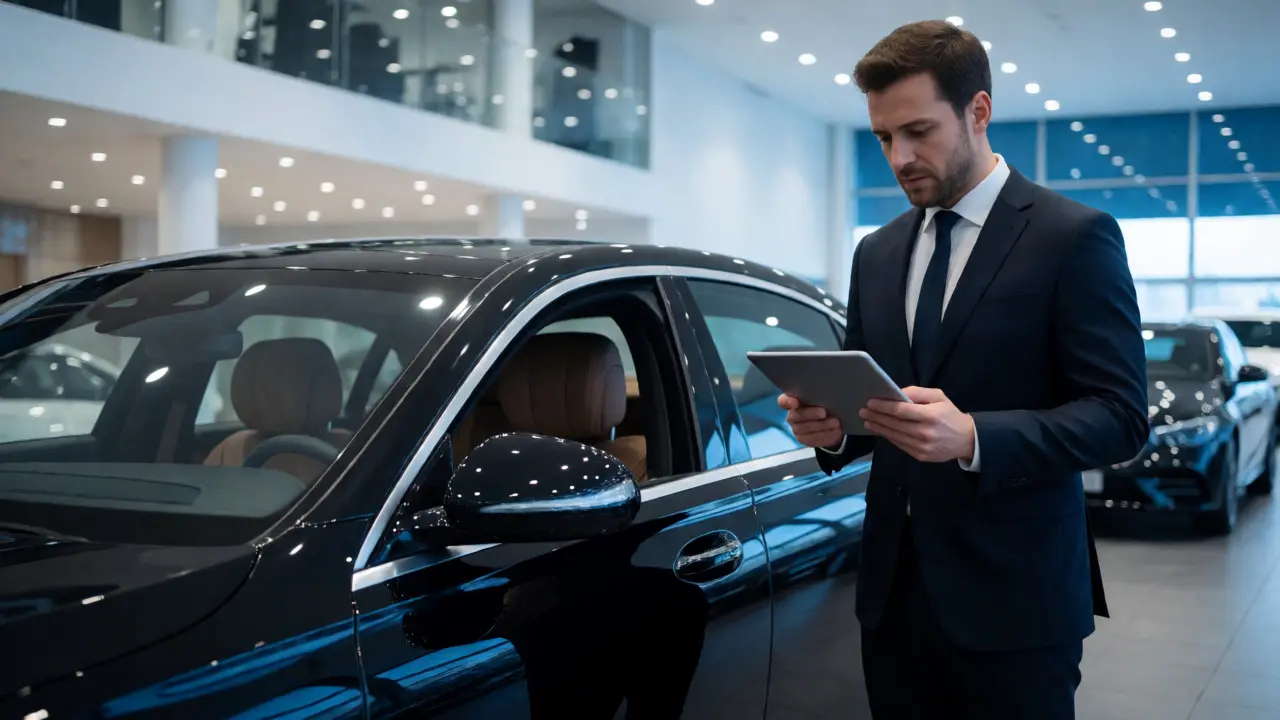
You just signed the papers on a new Mercedes-Benz S-Class, and you’re feeling invincible. The leather smells like money, the engine purrs like a kitten with a throat lozenge, and you’re ready to conquer the world. Then, six months later, you check the trade-in offer at your local dealer, and your heart sinks. You’ve lost £15,000 in equity while barely breaking in the seats. It feels personal, doesn’t it? But here’s the cold hard truth: luxury vehicles are financial black holes for their first owners. Understanding luxury vehicle depreciation patterns isn’t just about saving money; it’s about knowing exactly when to hold ’em and when to fold ’em.
The First Year Cliff: Why New Luxury Cars Lose Value Fastest
Let’s get one thing straight immediately: the steepest drop in value happens the moment you drive off the lot. For most premium brands, you can expect to lose between 20% and 30% of the car’s value in the first twelve months alone. This isn’t a conspiracy by dealerships; it’s basic market mechanics. A brand-new car is a commodity that instantly becomes "used" once registered. In the UK, where we have specific tax structures and registration plate cycles (March and September), this effect is amplified because buyers heavily discount older registrations. Consider the difference between a standard family hatchback and a high-end SUV. A Volkswagen Golf might lose 15% in year one. A Range Rover Sport? That’s closer to 25-30%. Why? Because the initial markup on luxury features-advanced driver assistance systems, bespoke interiors, and performance engines-is huge. Once those features are out of warranty or slightly dated compared to the next model year, their perceived value drops sharply. If you lease, this hurts less because you’re paying for usage, not ownership. But if you buy outright, you are effectively subsidizing the second owner’s bargain.
Brand Hierarchy: Not All Luxury Is Created Equal
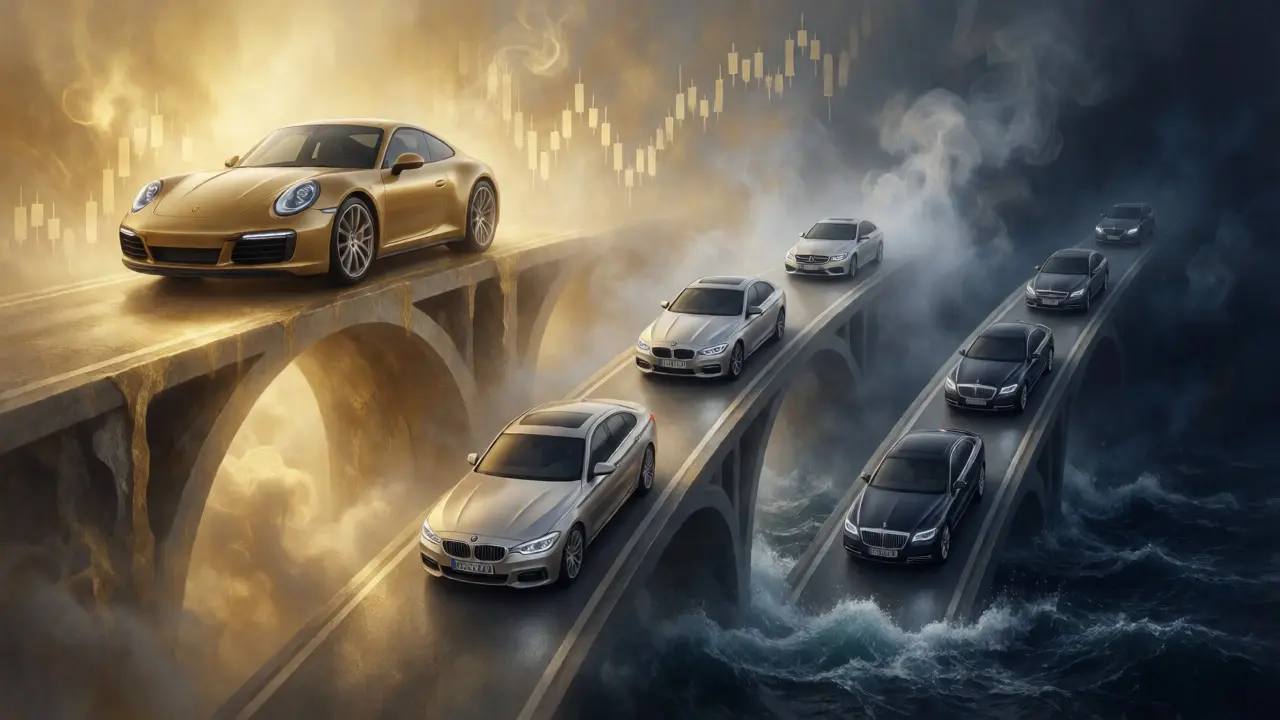
Here is where things get interesting. If you assume all luxury cars depreciate at the same rate, you’re going to lose money. There is a distinct hierarchy of value retention among premium manufacturers. At the top of the food chain sits Porsche. They are the exception to almost every rule in automotive economics. A Porsche 911 often retains over 70% of its value after three years. Some special editions actually appreciate. This is due to limited production runs, high demand, and a cult-like following that keeps secondary market prices robust.
On the other end of the spectrum, you have American luxury brands like Cadillac or Lincoln, which struggle to maintain value in European markets. In the UK, they face stiff competition from established German rivals and lack the heritage cachet that drives resale prices. Between these extremes sit the German giants: BMW, Mercedes-Benz, and Audi. These brands follow a predictable curve. They lose significant value early on but stabilize somewhat in years four through six. However, they never reach Porsche’s level of retention. Japanese luxury, represented by Lexus, offers a middle ground. They don’t command the prestige of a Porsche, but their reliability reputation ensures they hold up better than many European counterparts over the long haul.| Brand Category | Example Model | Year 1 Loss | Year 3 Retention | Primary Driver of Value |
|---|---|---|---|---|
| Ultra-Luxury/Sports | Porsche 911 | 10-15% | 75-85% | Scarcity & Brand Heritage |
| German Premium | BMW 5 Series | 20-25% | 50-60% | Lease Volume & Tech Features |
| Japanese Luxury | Lexus RX | 15-20% | 60-65% | Reliability & Low Maintenance |
| American Luxury | Cadillac CT5 | 25-30% | 40-50% | Discounting & Niche Appeal |
The Technology Trap: When Your Car Becomes Obsolete Too Quickly
We live in an era where cars are becoming computers on wheels. This has fundamentally changed how we view depreciation. Ten years ago, a luxury car aged gracefully. Today, a five-year-old infotainment system can look painfully outdated. Apple CarPlay wasn’t standard everywhere until recently. Over-the-air software updates are now a major selling point. If your luxury vehicle lacks modern connectivity, its value tanks faster than a non-connected economy car would. Think about electric vehicles (EVs). Brands like Tesla and Lucid move so fast with battery technology and range improvements that last year’s model can feel ancient today. A 2024 EV might sell for significantly less than a 2023 model simply because the newer one has 20 miles more range or a faster charging architecture. This rapid technological obsolescence creates a "tech trap." Buyers are wary of buying used luxury EVs because they fear being stuck with inferior tech. Consequently, sellers have to slash prices to compete with new models offering the latest specs. If you want to minimize depreciation loss, avoid buying the absolute newest tech unless you plan to keep the car for a decade. Or, conversely, buy a two-year-old model where the price has already adjusted for the tech gap.
Mileage and Condition: The Hidden Multipliers
Depreciation isn’t just about time; it’s about usage. In the UK, annual mileage caps in leasing contracts (usually 10,000 to 15,000 miles) exist for a reason. Exceeding them triggers hefty penalties, but even when buying privately, high mileage accelerates value loss. For luxury cars, the penalty is steeper per mile than for budget cars. Why? Because potential buyers of a £60,000 sedan expect it to be treated like a museum piece. A 40,000-mile example is desirable; a 80,000-mile example is a risk. Service history is equally critical. Missing stamps in the logbook can knock thousands off the asking price. Luxury vehicles rely on complex electronics and air suspension systems that require specialized maintenance. A buyer sees a missing service record and assumes the worst: neglected oil changes leading to turbo failure, or ignored warning lights hiding transmission issues. Full main-dealer servicing history acts as a shield against steep depreciation. If you skip services to save money now, you’ll pay double when you try to sell. Keep every receipt. Photograph the odometer regularly. Document any stone chips or interior wear. Transparency builds trust, and trust protects value.
Strategic Buying: How to Beat the Depreciation Curve
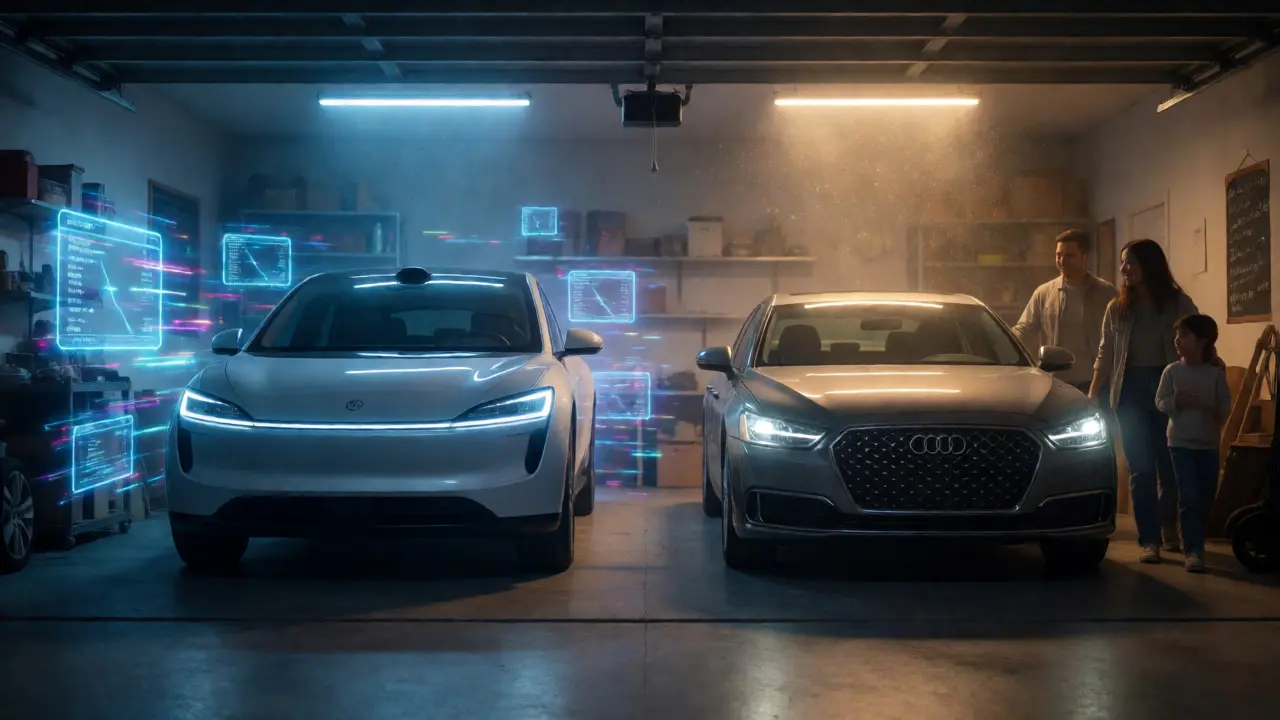
So, how do you navigate this minefield? You have three main strategies, depending on your risk tolerance and cash flow.
- The Lease Strategy: Ideal for those who love the latest tech and safety features. You pay for the steep initial depreciation without owning the asset. When the car is sold at auction, the leasing company takes the hit, not you. Just watch your mileage.
- The Two-Year Rule: Buy a nearly new car (1-2 years old) that has already taken the biggest depreciation hit. You get a car that looks and feels new but costs 25-30% less than the new equivalent. Then, drive it for another 3-4 years. You avoid the cliff edge and still enjoy modern features.
- The Long-Haul Hold: Buy a new car and keep it for 8-10 years. Yes, you take the massive initial hit, but you spread that cost over a longer period. By year eight, depreciation flattens out. You’re driving a reliable luxury car with no monthly payments, and the total cost of ownership per year becomes surprisingly competitive.
Market Volatility and External Factors
Finally, remember that depreciation doesn’t happen in a vacuum. Economic conditions play a huge role. During periods of high inflation or rising interest rates, credit becomes expensive. Fewer people can afford monthly payments on new luxury cars, so demand shifts to the used market. Paradoxically, this can temporarily boost used car values. We saw this post-pandemic, where used luxury cars held value better than usual because new car supply was constrained. Fuel prices also impact specific segments. High petrol costs hurt large-displacement V8s more than efficient inline-sixes or hybrids. If gas hits £2 per litre, a thirsty AMG C63 will depreciate faster than a plug-in hybrid E-Class. Stay aware of broader economic trends. If you see signs of a recession, hold onto your car longer. Selling into a weak market means accepting lower offers. If the economy is booming, consider selling earlier while buyers are flush with cash and willing to pay premiums for status symbols.
Which luxury car brand holds its value best?
Porsche consistently tops residual value charts. Models like the 911 and Cayenne often retain 70-80% of their value after three years. This is due to strong brand loyalty, limited production numbers, and high demand in the secondary market. Lexus is a close runner-up among mainstream luxury brands due to exceptional reliability ratings.
Is it cheaper to buy a new or used luxury car?
It depends on your timeline. Buying new gives you warranty coverage and customization options but suffers the highest immediate depreciation. Buying a 2-3 year old used luxury car is often the sweet spot financially. You avoid the steepest drop-off while still getting modern technology and remaining factory warranty coverage. For short-term ownership (under 3 years), leasing or buying used is almost always cheaper than buying new.
How does mileage affect luxury car value?
Mileage impacts luxury cars disproportionately. While a low-mileage economy car is nice, a low-mileage luxury car is essential for maximizing resale value. Buyers expect well-maintained examples. Generally, exceeding 15,000 miles per year starts to negatively impact the price. Below-average mileage (under 10,000 miles/year) can add a premium to the sale price, sometimes offsetting the age depreciation entirely.
Do electric luxury cars depreciate faster?
Currently, yes. Electric vehicles (EVs) tend to depreciate faster than internal combustion engine cars due to rapid advancements in battery technology and range. Buyers worry about battery health degradation and obsolete charging speeds. However, this trend is stabilizing as the technology matures. Tesla models have shown mixed results, with some holding value well due to software updates, while others suffer from frequent price cuts on new models.
Does color choice really matter for resale?
Yes, especially in the luxury segment. Neutral colors like Black, White, Silver, and Grey appeal to the widest audience and generally fetch higher resale prices. Bold colors like bright yellow or purple limit your buyer pool, forcing you to lower the price to attract someone who specifically wants that shade. Exceptional cases exist for sports cars (like red Ferraris), but for daily drivers, stick to neutrals to protect your investment.
Comments
Quintin Franzese
oh great another article telling me i'm poor for liking nice things
i mean sure porsche holds value but have you seen the price of a used cayenne? it's basically buying a new one with extra steps. also the bit about leasing is classic advice for people who don't want to think about maintenance costs until they hit 100k miles. anyway i'll stick to my beat up civic that runs on hope and duct tape
September 8, 2026 at 04:11
Susan Cole
I appreciate the breakdown of the hierarchy, especially the distinction between Porsche and other German brands. It is helpful to see the data presented this way rather than just anecdotal evidence.
The point about technology obsolescence in EVs resonates with me. I considered buying a luxury EV last year but hesitated because of how quickly the specs change. Knowing that a two-year-old model might be the sweet spot gives me some peace of mind.
September 9, 2026 at 14:10
Tamara Miller
Finally!! Someone says what everyone already knows!!! Luxury cars are money pits... plain and simple...
People spend their life savings on a badge and then cry when it loses half its value in two years?? Pathetic... honestly... if you can't afford the depreciation you shouldn't be driving the car... end of story... no excuses...
Also the table is misleading... you're comparing different classes... a 911 isn't a CT5... apples and oranges much?? Fix your methodology...
September 9, 2026 at 20:00
Savara Gunn
This is such a solid guide for anyone trying to navigate the market right now. The strategy of buying a nearly new car really seems like the smartest move for most people. You get the warranty and the tech without taking the biggest financial hit upfront. Keep those receipts though, seriously, full service history makes such a huge difference when it comes time to sell.
September 9, 2026 at 23:19
Anthony Miller
Let us dispense with the pleasantries and address the elephant in the room which is the utter lack of respect shown toward American automotive heritage in this analysis. To dismiss Cadillac and Lincoln as mere "discounting" vehicles ignores the profound engineering strides made by GM in recent years specifically regarding magnetic ride control and rear-wheel-drive platforms. This bias toward European prestige is a colonial hangover in consumer psychology not an objective reality. Furthermore the assertion that Porsche retains value due to "scarcity" is a fallacy perpetuated by marketing departments to justify inflated MSRPs while production numbers remain robust enough to satisfy global demand. One must question the integrity of residual value charts that fail to account for the hidden costs of air suspension repairs which plague these so-called reliable German marques. We are being manipulated by a system designed to extract maximum wealth from the aspirational middle class under the guise of "luxury." Wake up.
September 11, 2026 at 10:01
michelle veluz
Wait wait wait hold on a second!!!! Did anyone else notice that the author mentions UK tax structures but writes for a US audience?? Is this copy-pasted content from some British blog?? Because I live here and we don't have March/September plate cycles!!! We have calendar years!!! And why does nobody talk about how insurance rates skyrocket for luxury cars?? That's part of the cost too!!! Also I feel like there's a conspiracy here where dealers push leases so they can flip the cars later at auction for profit while we bleed out on monthly payments!!! Don't trust them!!! They know something we don't!!! 🚩🚩🚩
September 12, 2026 at 17:39
Jacob Baby Official
Actually if you look closely at the data the premise is flawed because it assumes rational buyer behavior which doesn't exist in the luxury segment. People buy status symbols irrationally. If a brand like Mercedes cuts prices on new models (which they do constantly) the used market collapses overnight regardless of mileage. The "Two-Year Rule" fails if the manufacturer devalues the inventory aggressively. Plus ignoring the impact of interest rates on lease residuals is a massive oversight. High rates kill the subprime buyers who keep the used market liquid. Without them the liquidity dries up and values tank faster than predicted. This analysis is superficial at best.
September 13, 2026 at 17:41
john randall
Good read. I agree with the sentiment about color choice mattering more than people admit. I tried to sell a bright blue Audi A6 once and it sat for three months before someone finally took it at a steep discount. Black or white would have moved it in a week. Simple fact.
September 14, 2026 at 20:08
Jeff Falcon
I think it is important to remember that while the initial depreciation is steep, the long-term cost of ownership can sometimes be lower for luxury cars if you plan to keep them for a very long time, because the curve flattens out significantly after year six or seven, meaning that if you drive a BMW 7 Series for ten years, the per-mile depreciation cost becomes quite reasonable compared to buying a new economy car every five years, although you do have to factor in the higher maintenance costs and insurance premiums which can eat into those savings, so it really depends on your personal driving habits and how long you intend to hold onto the vehicle, because if you are a high-mileage driver then the luxury car might actually be cheaper overall despite the sticker price, whereas if you drive less than 5k miles a year then the fixed costs of depreciation dominate and you lose money either way, so calculate your own scenario carefully before making a decision based on general rules of thumb that may not apply to your specific situation, especially considering the current economic climate where inflation is affecting parts prices and labor rates across the board, making older luxury cars potentially more expensive to maintain than they were even five years ago, which could shift the break-even point further out into the future, so stay informed and maybe consult a mechanic before signing on the dotted line for a complex European machine that requires specialized tools and knowledge to fix properly, otherwise you might find yourself stranded on the side of the road with a repair bill that rivals the monthly payment of a new Tesla, which is ironic given the reliability issues often cited with electric vehicles, but hey that is just my two cents on the matter and I welcome any corrections or additional insights from others who have lived through the joy and pain of luxury car ownership over the last decade or so, because experience is the best teacher and nothing beats hearing firsthand accounts of what goes wrong when you mix complex electronics with aging rubber hoses and electrical connectors that become brittle over time due to heat cycling and environmental exposure, leading to intermittent faults that are nightmare fuel for diagnostics and frustrating for owners who just want a smooth ride home from work, so proceed with caution and always budget for the unexpected, because in the world of luxury cars, the unexpected is practically guaranteed to happen eventually, usually right after the extended warranty expires, leaving you with a hefty bill and a sense of regret that could have been avoided with better planning and perhaps a slightly less ambitious purchase choice, like sticking to Japanese luxury which tends to be more forgiving in terms of maintenance intervals and parts availability, although the resale value might not be as flashy, but at least you won't be crying over a $2,000 water pump replacement every few years, which is a real thing that happens to certain German engines, so choose wisely and drive safely, because ultimately a car is just a tool to get you from A to B, and if it costs you a fortune to do so, maybe it is worth asking whether the status symbol is worth the stress and financial burden, especially in today's uncertain economic times where job security is not what it used to be and having a large monthly payment hanging over your head can cause significant anxiety, so consider all factors including psychological ones when evaluating the true cost of luxury ownership, because money is not the only resource you are spending, you are also spending your mental energy and time dealing with dealership visits and waiting rooms, which has a value of its own that should be included in the total cost of ownership equation, so think deeply about what truly matters to you and let that guide your purchasing decision rather than just following trends or peer pressure, because at the end of the day you are the one driving the car and living with the consequences of your choices, so make them count and make them sustainable for your lifestyle and budget constraints, which vary wildly from person to person depending on income stability family obligations and geographic location, since rural areas might have fewer specialized mechanics available for European imports compared to urban centers, adding another layer of complexity and potential cost to the ownership experience, so research local resources before committing to a niche brand that might leave you stranded far from a qualified technician, and remember that peace of mind is priceless even if it means paying a little more upfront for a more reliable platform, so weigh your options carefully and don't let salesmen rush you into a deal that looks good on paper but feels heavy in your pocket month after month, because that weight adds up over time and can turn the dream of luxury into a nightmare of debt and disappointment, so stay grounded and realistic about what you can afford and enjoy the journey regardless of the badge on the hood, because happiness is not found in a logo but in the freedom and comfort the vehicle provides, so prioritize function over form if you want long-term satisfaction and avoid the trap of chasing prestige at the expense of practicality, which is a common mistake that leads to buyer's remorse and premature selling, resulting in even greater losses than simply staying put with a sensible choice, so learn from others mistakes and chart your own course based on your unique circumstances and values, which are the true compass for wise financial decisions in the automotive world, so drive safe and happy travels to all who venture forth into the marketplace seeking their perfect set of wheels, whether it be a humble hatchback or a grand tourer, each has its place and purpose in the ecosystem of transportation, so respect all vehicles and their owners and strive for understanding and cooperation rather than judgment and elitism, because we are all just trying to get around in this crazy world, so be kind and share the road, literally and figuratively, as we navigate the ups and downs of car ownership together, supporting each other with tips and tricks and shared experiences that help us all make better choices and enjoy our rides more fully, so let us build a community of informed and empathetic drivers who look out for one another and celebrate the diversity of preferences that exists in our society, rather than tearing down those who choose differently, because diversity strengthens our collective wisdom and helps us adapt to changing times and technologies, so embrace the variety and keep learning and growing as consumers and citizens of the world, and remember that every mile driven is an opportunity for connection and discovery, so make the most of it and drive with intention and awareness, knowing that your choices reflect your values and shape the future of mobility for generations to come, so choose wisely and drive boldly, but always with care and consideration for others, because that is the hallmark of true luxury, not just the price tag but the quality of experience and the positive impact on those around us, so let us aim for excellence in all aspects of our lives, starting with how we treat our vehicles and each other, and may your journeys be safe and your destinations rewarding, so goodbye for now and happy driving to all, until we meet again on the digital highway of discourse and debate, where ideas flow freely and knowledge expands endlessly, enriching our minds and broadening our horizons, so keep thinking critically and questioning assumptions, because that is how progress happens, one conversation at a time, so thank you for reading my lengthy reflection and I hope it added some value to the discussion, even if it was rambling, because sometimes the truth is messy and complicated and cannot be contained in bullet points alone, so forgive me for the verbosity and appreciate the effort to articulate a nuanced perspective, because nuance is often lost in soundbites and headlines, but here we have space to explore the depths, so dive in and swim deep, friends, and emerge wiser and more connected than before, so cheers to that and here's to many more miles of meaningful movement, together, in harmony, on the open road of life, forever moving forward, never standing still, always evolving, always learning, always growing, always driving towards a better tomorrow, one careful step at a time, so let us go forth and conquer the challenges ahead with courage and conviction, knowing that we are not alone in this endeavor, but supported by a vast network of fellow travelers who understand the struggles and joys of the journey, so lean on each other and lift each other up, and let the spirit of camaraderie guide us through the twists and turns of fate, so drive safe and stay strong, my friends, and never forget that the destination is less important than the company you keep and the lessons you learn along the way, so cherish every moment and make every mile count, because life is short and the road is long, so enjoy the ride and drive with passion and purpose, always, forever, amen.
September 15, 2026 at 05:10
Alyson Karson
omg yes!!! the tech trap is so real!! i bought a lexus rx 3 years ago and the infotainment feels ancient now lol. but hey at least it still runs!! 💪💪 dont let the haters tell u ur car is old!! its vintage chic now!! 😂😂 go get em tiger!!
September 16, 2026 at 07:36