
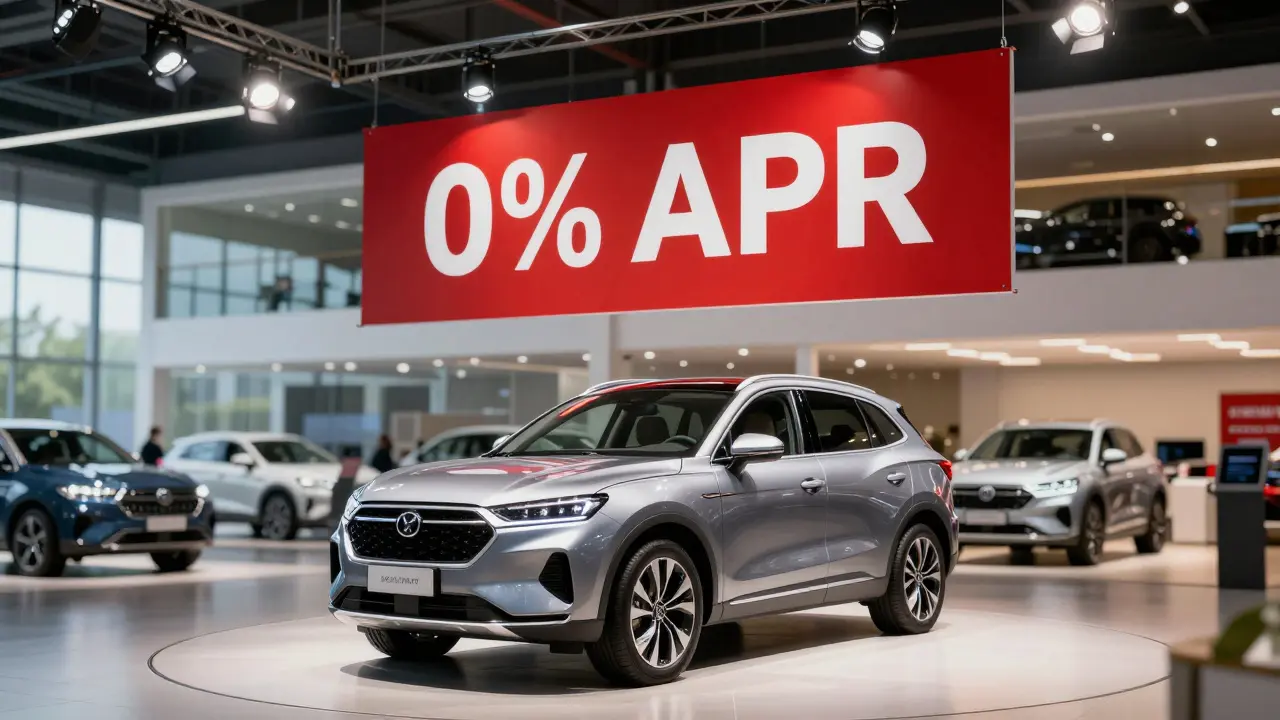
Walk into a dealership in mid-2026, and the first thing you’ll likely see isn’t the car specs. It’s a banner screaming 0% APR. It looks like free money. For many buyers, it is. But for others, it’s a trap that costs thousands more than taking a standard loan. The difference between saving big and overpaying usually comes down to one decision: do you take the low rate, or do you take the cash rebate?
Manufacturer financing offers are not random acts of kindness from car brands. They are strategic tools used by automakers to move inventory, clear out older models, and compete with rivals. Understanding how these programs work-and where the hidden fees hide-is the only way to ensure you’re actually getting a deal.
The Mechanics Behind Manufacturer Subsidized Rates
When you see an offer for 0% interest over 60 months, the car manufacturer is effectively paying the bank to lend you the money. This is different from your personal credit score getting you a good rate. Here, the brand subsidizes the cost of borrowing because they want you to buy their specific vehicle right now.
These offers typically come in two flavors:
- Low-Rate Financing (Subvented Rates): Interest rates significantly below market average, such as 1.9% or 2.9%. These are common on mid-range sedans or trucks.
- Zero-Percent Financing: True 0% APR. This is rare and usually reserved for high-margin luxury vehicles, new SUVs, or models with slow-moving inventory.
The catch? You almost never get both the low rate and a large cash discount. Manufacturers force a choice. If you take the 0% financing, you often lose access to loyalty bonuses, military discounts, or cash-back rebates. You have to calculate which option saves you more money based on your loan term and the size of the rebate.
Who Qualifies for 0% APR Deals?
Not everyone gets the advertised rate. When a brochure says "0% APR," there is always fine print regarding credit tiers. Lenders use a system called "credit-based pricing" to determine your actual rate.
| Credit Tier | FICO Score Range | Offered Rate | Approval Likelihood |
|---|---|---|---|
| Prime Plus / Super Prime | 750+ | 0% - 1.9% | Very High |
| Prime | 680 - 749 | 2.9% - 4.9% | High |
| Near Prime | 620 - 679 | 5.9% - 8.9% | Moderate |
| Subprime | Below 620 | Market Rate + Markup | Low (for special offers) |
If you fall into the "Near Prime" category, you might still qualify for financing, but you won’t get the headline-grabbing 0%. You’ll get a rate that is better than a local bank, but not free. Always ask the finance manager for your specific "tier" before signing anything. Your FICO score is the gatekeeper here.
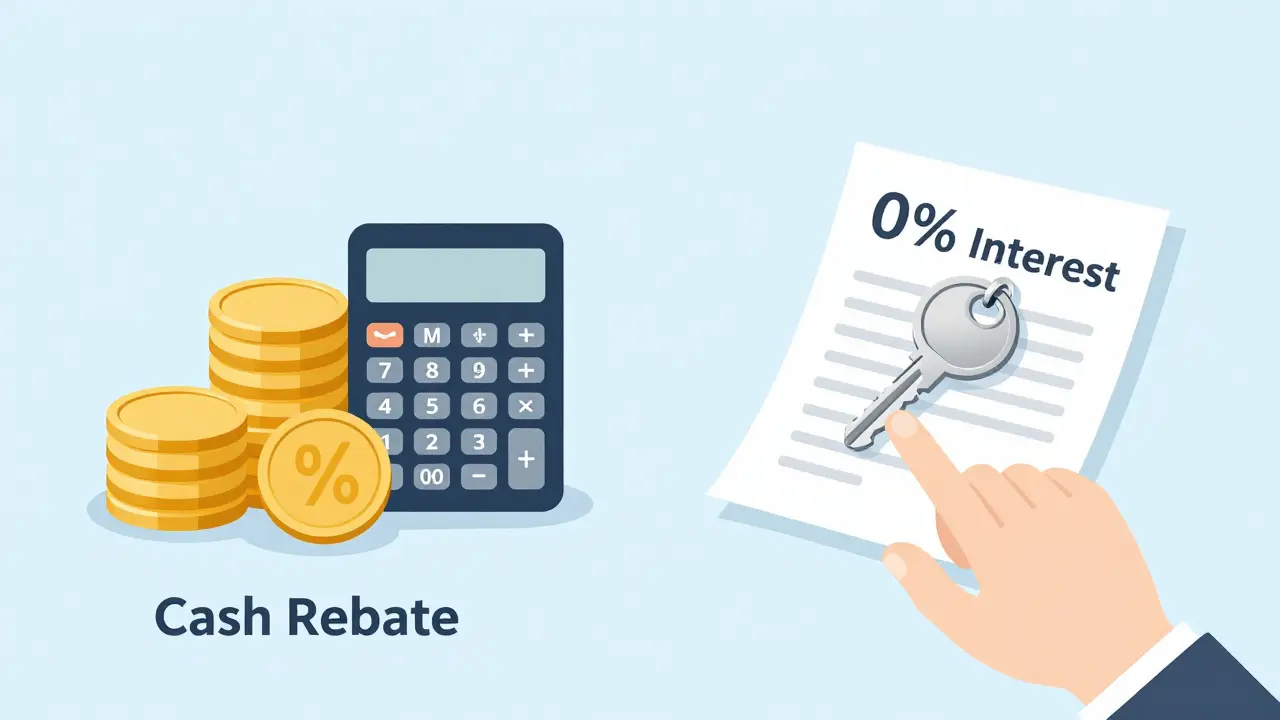
The Math: Cash Rebate vs. Low Interest
This is where most people make mistakes. Let’s look at a real-world scenario. Imagine you are buying a $35,000 SUV. The dealer offers two choices:
- Option A: 0% APR for 60 months. No cash back.
- Option B: $3,000 cash rebate. Standard financing at 6.5% APR for 60 months.
At first glance, Option A seems cheaper because you pay no interest. But let’s run the numbers.
Option A Calculation:
- Loan Amount: $35,000
- Monthly Payment: $583.33
- Total Paid: $35,000
- Interest Cost: $0
Option B Calculation:
- Loan Amount: $32,000 ($35k minus $3k rebate)
- Interest Rate: 6.5%
- Monthly Payment: ~$623
- Total Paid: ~$37,380
- Interest Cost: ~$5,380
- Net Cost after Rebate: $34,380
In this case, Option A saves you roughly $380. However, if the rebate was $5,000 instead of $3,000, Option B would likely win. The rule of thumb? If the cash rebate is less than the total interest you would pay on a standard loan, take the 0% APR. If the rebate is massive, take the cash and shop for the best external loan rate yourself.
Hidden Costs: Dealer Add-Ons and Markups
Even if you secure a 0% rate, dealerships find ways to make up the lost profit margin. Since they aren’t making money on interest, they push "dealer add-ons." These are products sold to you during the financing process that inflate your monthly payment.
Common add-ons include:
- Extended Warranties: Often marked up by 30-50%.
- Paint Protection Films: Sold as mandatory for warranty coverage (which is false).
- Gap Insurance: Can be bought directly from your insurer for much less.
- Nitrogen Tire Fill: A negligible service sold for hundreds of dollars.
Dealers may also add a "doc fee" or "processing fee" that is higher than the state legal limit. When negotiating, insist on seeing the "out-the-door" price before discussing financing. Never agree to a monthly payment number without knowing the exact interest rate and loan term.
Timing Your Purchase for Maximum Incentives
Manufacturer incentives change quarterly, sometimes monthly. Knowing when to buy can save you thousands. Automakers are under pressure to meet sales targets at specific times of the year.
- End of Quarter (March, June, September, December): Salespeople need to hit quotas to keep their commissions. Dealers are more willing to negotiate.
- Model Year Changeover (October - January): As 2027 models arrive, dealers will heavily discount 2026 inventory. This is prime time for 0% offers on outgoing stock.
- Month-End: Similar to quarter-end, daily and monthly targets create leverage for buyers.
Avoid buying in July or August unless there is a specific holiday promotion. Historically, these are slower sales months, and manufacturers are less likely to release aggressive financing deals.

Strategic Tips for Negotiating Manufacturer Finance
To get the best deal, follow these steps:
- Get Pre-Approved Elsewhere: Check your rate with a credit union or online lender. Even if you plan to use the 0% dealer rate, having a backup offer gives you walking power.
- Ask for the "Tier" Sheet: Request to see the credit matrix. Know exactly what score you need for the 0% rate.
- Calculate the Break-Even Point: Use an online auto loan calculator to compare the total cost of the rebate vs. the low rate. Don’t guess.
- Refinance Later: If you take a longer-term 0% loan (e.g., 72 months) to lower payments, consider refinancing after two years once your credit improves and equity builds.
- Read the Contract: Ensure the APR is truly 0% and not a disguised fee structure. Look for "deferred interest" traps, common in subzero promotions where you must pay off the balance by day 60 to avoid all accrued interest.
FAQ: Common Questions About Auto Financing
Can I combine a cash rebate with 0% APR financing?
In most cases, no. Manufacturers explicitly exclude cash rebates from low-rate financing offers. You usually have to choose one or the other. Occasionally, small loyalty bonuses (like $500) may stack, but major cash incentives cannot be combined with subvented rates.
Is 0% APR always the best deal?
Not necessarily. If the cash rebate is substantial, taking the cash and securing a competitive market rate (e.g., 5%) might result in a lower total cost. Additionally, 0% offers often require perfect credit. If you don't qualify, you might end up with a higher rate than expected.
What happens if I miss a payment on a 0% loan?
Missing a payment can trigger late fees and damage your credit score. More importantly, some deferred-interest promotions (common in subzero deals) will charge all accumulated interest if you fail to pay off the balance by the deadline. Always read the terms regarding late payments and early payoff penalties.
Do electric vehicles (EVs) offer 0% financing?
Yes, especially in 2026 as competition heats up. Many EV manufacturers offer low or zero-percent financing to offset the higher upfront cost of batteries. Additionally, federal tax credits can be applied directly at the point of sale, further reducing the financed amount.
How long do 0% APR offers last?
Typical terms range from 36 to 72 months. Shorter terms (36-48 months) are easier to qualify for and result in higher monthly payments. Longer terms (60-72 months) lower the monthly payment but increase the risk of being "upside-down" on the loan (owing more than the car is worth) if you sell or trade in early.
Comments
om gman
oh look another article telling people how to not get screwed by the car industry as if any of you actually read the fine print before signing your lives away. i bought a civic in 2018 and paid extra for nitrogen fill because the salesman looked at me with those dead fish eyes and i just wanted it over with. now i have tires that are slightly less likely to explode on the highway which is great i guess. but sure lets pretend we are all rational actors making calculated decisions based on interest rate differentials when really we are just apes picking shiny objects
June 12, 2026 at 12:25
Oskar Falkenberg
hey there mate, i think you missed the point slightly about the rebates vs the interest rates thing. its actually quite simple once you sit down with a calculator or even just a piece of paper and write out the numbers properly. see what happens is that dealerships will try to hide the doc fees in the monthly payment so you dont notice them but if you ask for the out the door price upfront they cant really pull that trick anymore. i always make sure to get pre approved from my credit union first because it gives me a bit more leverage when i walk into the showroom and the finance manager sees i already have an offer in hand. it doesnt mean i have to take that loan but it helps to know where i stand. also dont forget about the timing aspect mentioned in the post because buying at the end of the quarter can save you a fair bit of cash if the salesperson is desperate to hit their bonus target.
June 14, 2026 at 08:20
Jeanne Abrahams
in south africa we do not have this luxury of choosing between 0% apr and a cash rebate because our banking system is essentially a monopoly run by people who wear suits that cost more than my annual salary. we just pay the interest and smile while doing it because complaining only makes things worse. but i suppose in america you can play these little games with numbers and feel clever about saving three hundred dollars on an suv that will be worth half nothing in five years anyway. charming really.
June 15, 2026 at 10:12
Caitlin Donehue
i was looking at evs recently and noticed that some manufacturers are offering 0% financing on models that have been sitting on lots for months. it seems like they are trying to clear inventory before the new tax credit rules kick in next year. i wonder if taking the longer term loan to lower the monthly payment is actually worth it if you plan to keep the car for ten years or if refinancing later is the smarter move. i havent decided yet but the math does seem to favor the rebate if you can get a decent rate elsewhere.
June 17, 2026 at 07:57
Stephanie Frank
let's be real here the only reason anyone takes 0% financing is because they are too lazy to shop around for a better deal or they have terrible credit and are desperate. the dealers know this and they push the extended warranties like crazy because they know you wont say no when you are staring at a zero percent interest rate. it is psychological manipulation pure and simple. stop letting them win.
June 18, 2026 at 23:11
Bineesh Mathew
the concept of ownership is dying in this era of financial engineering where we are encouraged to lease our existence rather than own it outright. taking a 72 month loan means you are upside down for most of the term which is a form of indentured servitude disguised as consumer freedom. the moral decay of society is evident in our willingness to sign contracts that bind us to debt for six years just to drive a machine made of plastic and steel. we should return to the simplicity of paying cash and walking away free but alas we are slaves to the algorithm of credit scores and tiered pricing structures designed to exploit our insecurities.
June 19, 2026 at 21:15
Marissa Haque
OMG!!! I cannot believe how many hidden fees there are!!! I went to buy a car last week and they tried to add paint protection film that was supposedly mandatory for the warranty which is totally false!!! I was so shocked!!! You guys need to be so careful!!! Always read the contract!!! And don't let them rush you!!! It is so stressful!!!
June 20, 2026 at 23:25
Keith Barker
interest is just time value of money packaged as a social construct. whether you pay 0% or 6% you are still paying for the privilege of using someone else capital to acquire goods that depreciate instantly. the game is rigged regardless of the strategy employed. perhaps the true savings lie in not buying the car at all and accepting public transport as a spiritual journey towards humility.
June 22, 2026 at 01:54