
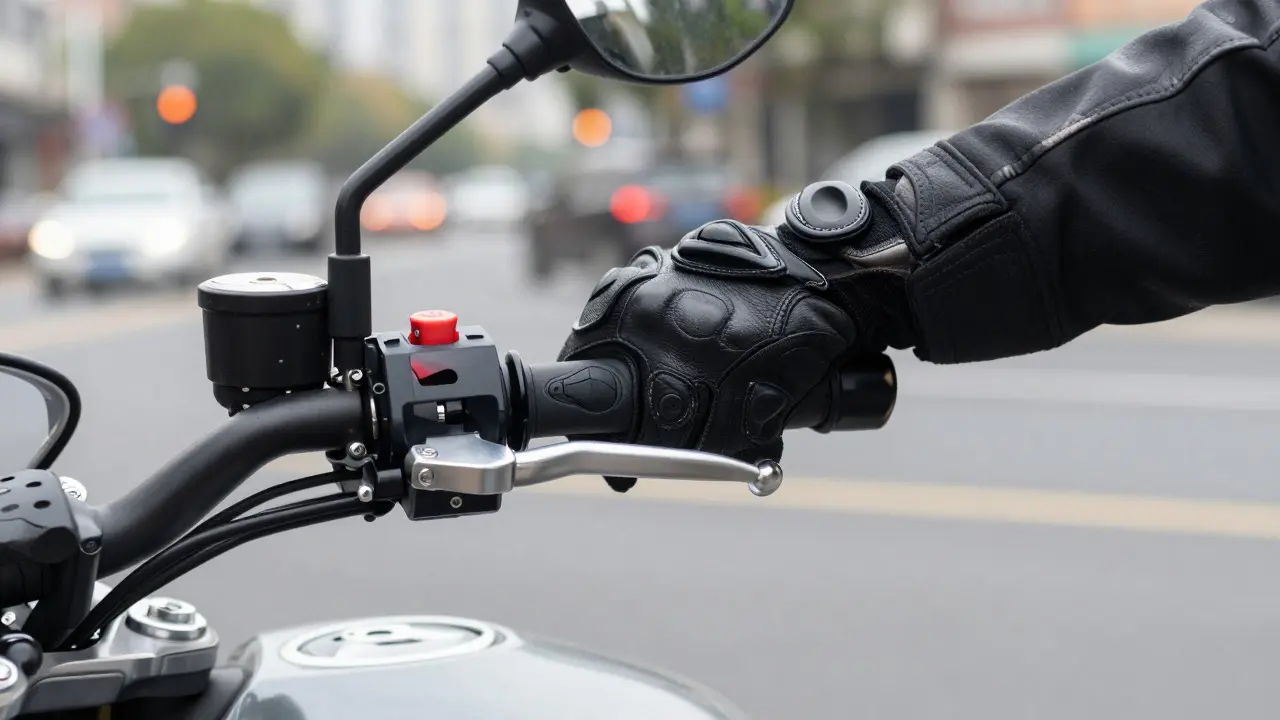
Stalling at a traffic light or lurching forward when merging into slow-moving traffic is the number one complaint from new riders. It’s frustrating, it looks unprofessional, and it can be dangerous if you’re in tight spaces. The culprit is almost always poor clutch control is the precise modulation of the clutch lever to manage power transfer between the engine and transmission. When you get this right, your motorcycle becomes an extension of your body. You glide through parking lots, navigate congested city streets, and execute parallel parks with ease. This guide breaks down exactly how to find that sweet spot, known as the friction zone, and how to use it for confident low-speed maneuvers.
Understanding the Friction Zone
Before you can control the clutch, you need to understand what’s happening inside the gearbox. The clutch consists of a stack of plates that engage to send power from the engine to the rear wheel. There are two states: fully disengaged (lever pulled all the way in) and fully engaged (lever released). Between these two states lies the friction zone is the specific range of lever movement where the clutch plates partially grip, allowing for gradual power transfer.
In this zone, the bike isn’t moving because the throttle is open, but because the clutch is slowly connecting the engine’s rotation to the wheel. If you snap the lever out, the plates lock up instantly, causing a jerk. If you pull it in too far, the bike stalls. The goal is to stay in the middle of this zone for as long as needed. Every motorcycle has a different friction point. On a sportbike, it might be the last inch of travel. On a cruiser, it could be several inches. You have to find yours by feel, not by guesswork.
Finding Your Personal Clutch Point
You cannot memorize the exact millimeter mark for every bike you ride. Instead, you develop muscle memory. Here is a simple drill to find your friction zone on any motorcycle:
- Pull the clutch lever in completely.
- Shift into first gear.
- Slowly release the lever until the front wheel starts to creep forward or the engine note changes slightly.
- Note where your hand is. That is your starting point for engagement.
Once you know where it is, practice holding the lever at that exact position. The bike should hold steady without stalling or moving aggressively. This static hold is the foundation of all smooth riding. If you’re struggling, check your tire pressure. Under-inflated tires increase rolling resistance, making it harder to maintain momentum at low speeds, which often leads to over-compensating with the clutch.
Techniques for Smooth Engagement
Smooth engagement is about timing the throttle and the clutch together. Many beginners think they need to roll the throttle hard to get moving. In reality, excessive throttle causes the rear wheel to spin before the clutch fully engages, leading to a loss of traction and a jerky start.
Here is the sequence for a smooth takeoff from a standstill:
- Find the friction point: Slowly release the clutch until the bike wants to move.
- Add gentle throttle: Open the throttle just enough to keep the engine RPMs around 1,500-2,000. You want a slight lift, not a surge.
- Release gradually: Continue releasing the clutch lever slowly while maintaining that gentle throttle input.
- Full engagement: Once the bike is moving at a walking pace, release the remaining clutch lever quickly but smoothly to fully engage the plates.
The key word here is "gradually." Think of the clutch lever as a dimmer switch for power, not an on/off toggle. If you feel the bike pulling ahead, ease off the throttle slightly rather than yanking the clutch back in. This keeps the transition linear and predictable.
Low-Speed Maneuvers and Tight Spaces
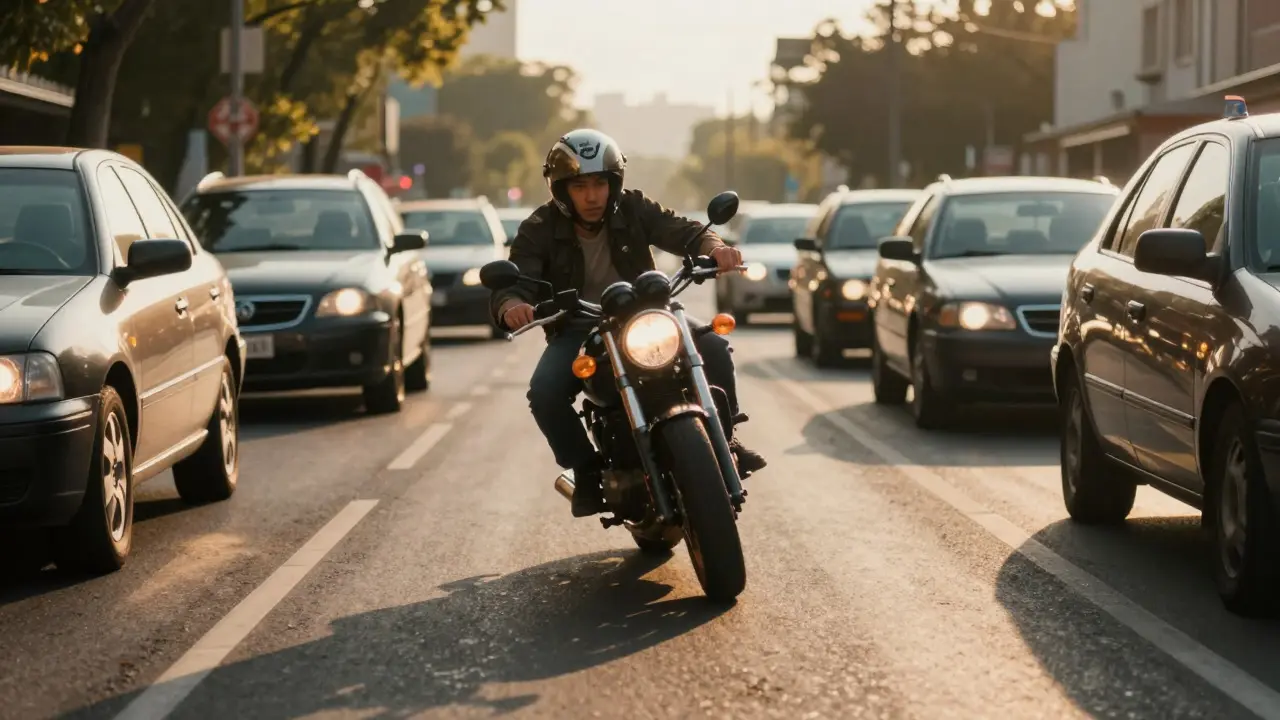
This is where clutch control really shines. Whether you’re navigating a crowded car park, doing a slalom test, or crawling through heavy traffic, you rarely need more than half-throttle. In fact, high RPMs at low speed make the bike twitchy and harder to steer.
For low-speed maneuvers, rely heavily on the friction zone. Keep your left hand active, constantly micro-adjusting the lever to match the desired speed. If you need to go slower, pull the lever in just a fraction. If you need to accelerate gently, release it a fraction and add a tiny bit of throttle. This technique is often called "feathering" the clutch.
Consider the scenario of parallel parking. You need to move backward or forward in very short increments. Use the friction zone to creep forward at a snail’s pace. Stop, put the brake on, and repeat. Do not try to use the gears alone to control speed; the engine braking will be too harsh. The clutch is your primary speed controller below 10 mph (16 km/h).
Common Mistakes and How to Fix Them
Even experienced riders fall into bad habits. Here are the most common issues and immediate fixes:
| Mistake | Symptom | Fix |
|---|---|---|
| Snap engagement | Bike jerks forward, rear wheel hops | Release lever slower; reduce initial throttle input |
| Stalling | Engine cuts out during takeoff | Open throttle slightly earlier; ensure you are in the friction zone |
| Riding the clutch | Burning smell, slipping sensation | Fully release lever once moving; avoid lingering in friction zone unnecessarily |
| Over-revving | Loud noise, vibration, hard steering | Lower RPMs to 1,500-2,000; rely on clutch modulation instead of gas |
"Riding the clutch" is a particular concern. While necessary for low-speed control, keeping the lever in the friction zone for extended periods generates heat. This heat warms the clutch plates, reducing their gripping ability and eventually leading to premature wear. Only use the friction zone when you need precise speed control. Once you are cruising, let the lever go fully.
Practical Drills to Build Muscle Memory
You don’t learn this by reading; you learn it by doing. Set aside 15 minutes in a safe, empty area like a parking lot or quiet residential street. Try these drills:
- The Creep Test: Start from a stop. Try to move forward as slowly as possible without using the brakes. Aim to cover 10 meters in 30 seconds. Focus entirely on the left hand.
- The Slalom: Place cones or markers 5 meters apart. Weave through them at walking speed using only the clutch and minimal throttle. This trains your ability to modulate speed while steering.
- The Stop-and-Go: Practice stopping and starting repeatedly. Focus on eliminating the jerk. The transition from stopped to moving should be imperceptible to a passenger.
Consistency is key. Your brain needs to map the position of your finger to the resulting motion of the bike. After a few sessions, you’ll notice you’re thinking less about the lever and more about where you’re going.
FAQ
What is the ideal RPM for engaging the clutch?
For most standard motorcycles, an idle RPM of 1,500 to 2,000 is ideal for smooth engagement. This provides enough torque to move the bike without causing the rear wheel to spin or the engine to rev excessively. Sportbikes may require slightly higher RPMs due to their lighter weight and higher compression ratios.
How do I prevent my motorcycle from stalling in traffic?
To prevent stalling, ensure you are adding a small amount of throttle before fully releasing the clutch. If the bike feels like it’s dropping in RPMs, open the throttle slightly more. Also, make sure you are not holding the brake while trying to move, as this adds resistance. Practicing in the friction zone builds the sensitivity needed to anticipate stall points.
Is it bad to ride with the clutch lever half-pulled?
Yes, it is generally bad practice to "ride the clutch" for long periods. Keeping the clutch partially engaged generates heat, which can warp the clutch plates and cause premature wear. It should only be used for brief moments during low-speed maneuvers or hill starts. For normal riding, the lever should be fully released.
Why does my bike lurch when I shift into second gear?
Lurching in second gear usually happens if you release the clutch too quickly or if your speed is too low for the gear. Ensure you are moving at a reasonable pace (at least 10-15 mph) before shifting to second. Release the clutch smoothly and add a little throttle to compensate for the change in gear ratio. If the lurch persists, check your clutch cable adjustment; a loose cable can cause incomplete disengagement.
How long does it take to master clutch control?
Most riders develop basic proficiency within the first 10 to 20 hours of riding. However, mastering smooth, intuitive control that requires no conscious thought can take several months of consistent practice. The key is regular, deliberate practice in low-stress environments rather than relying solely on daily commuting traffic.
Comments
tiffany King
Love this breakdown! The part about treating the clutch like a dimmer switch really clicked for me. I used to just guess and pray, but slowing down my hand movement made such a huge difference in how smooth my starts feel now.
August 27, 2026 at 05:50
Brenna Gonedrman
You think you know bikes right? Wrong. You do not. This article is basically telling you that if your bike jerks it is because you are an idiot who cannot hold a lever steady. Simple. It is all about the friction zone. If you stall you failed. If you lurch you failed. There is no other option. Just ride better or sell the bike. That is the truth people ignore.
August 29, 2026 at 01:43
Art HND
Muscle memory is overrated. Technique is everything. If you have to rely on feeling the plate engagement you are doing it wrong. Precision comes from geometry and consistent throttle input not vague sensory feedback. Most riders just get lucky when they don't stall. It is not skill. It is chaos management. Stop romanticizing the process and start engineering your inputs. The bike does not care about your feelings. It cares about torque curves. Read the manual more. Ride less. Think harder.
August 30, 2026 at 13:21
Courtney Wagstaff
Ooh, the 'creep test' sounds like a fun way to spend a Saturday afternoon in an empty parking lot. I love the idea of weaving through cones at walking speed. It makes low-speed riding sound almost like a dance rather than a stressful ordeal. Definitely going to try that next time I am out with the bike. Thanks for the colorful tips!
August 31, 2026 at 07:36
Anthony Miller
Let us be honest here. You are still stalling because you lack discipline. It is not the bike. It is you. Your brain is too slow for the machine. You need to stop being so emotional about the lever. Grip it tighter. Control your fear. If you keep slipping the clutch you are wasting money on parts. Fix your mindset first. Then fix your hands. Do not expect sympathy. The road will punish your hesitation. Get over it.
September 1, 2026 at 15:52
michelle veluz
!!! Wait wait wait... !! Did you say tire pressure?!?! Who would have thought!!?! My mechanic said I was crazy for checking that before every ride but look at him now!! He is probably hiding in his garage shaking in his boots knowing we all saw this tip!! It is obviously a conspiracy to make us buy new tires every month!! But okay... maybe it helps with rolling resistance?? Who knows!! The government wants us to stall so we take the bus!! Stay vigilant riders!!!
September 3, 2026 at 09:57
Jacob Baby Official
Oh, wonderful. Another generic guide that tells beginners to 'feel' their way through physics. Let's dissect this nonsense. The claim that 'excessive throttle causes the rear wheel to spin before the clutch fully engages' is dangerously reductive. In reality, traction limits are dictated by surface coefficient, load distribution, and tire compound, not just RPM. By oversimplifying this, you encourage riders to under-rev, which actually increases heat buildup in the friction zone due to prolonged partial engagement. So technically, your advice to 'keep RPMs low' might be accelerating wear, not preventing it. Bravo. Truly insightful. Or is it just another layer of myth-busting for the masses? Let's find out. The data doesn't lie, but these articles sure do.
September 4, 2026 at 08:15
john randall
Solid points on the slalom drill. I tried something similar last week and it definitely helped with steering stability at low speeds. The key is keeping the body relaxed so the bike can move around you instead of fighting it. Good read overall.
September 5, 2026 at 15:16
Jeff Falcon
Hey there, fellow rider! Just wanted to chime in and say that this whole section on finding your personal clutch point is super helpful, especially since I recently switched from a standard to a sportbike and the lever travel felt totally different, which threw me off completely at first, but after practicing that static hold exercise for about twenty minutes in my driveway, I finally got the hang of it, and now I feel way more confident merging into traffic without worrying about stalling or jerking forward, which used to be my biggest nightmare, so yeah, thanks for laying it out so clearly, it really resonated with my experience!
September 7, 2026 at 12:33
Alyson Karson
OMG yes to the creep test!! I did this last night and could barely move 5 meters in 30 secs lol but its getting better!! dont give up on urself u got this!! the dimmer switch thing is genius tbh. keep it up everyone!!
September 8, 2026 at 08:34
Brandon Olvera
Good advice for Americans. We build our own bikes and we drive them hard. No excuses for bad clutch control. If you cant handle the machine, stay on the sidewalk. Respect the iron horse. It is a tool of freedom, not a toy for wimps. Practice until it is second nature. That is the American way. Don't let the Europeans teach us how to ride our own machines. We invented the open road. Keep it clean. Keep it fast. Keep it controlled.
September 8, 2026 at 13:06