

You’re cruising at 60 mph, spot a red light ahead, and start slowing down. You press the clutch, grab second gear, release the pedal, and-thud. The rear tires hop, your body jerks forward, and that beautiful flow you had going is gone. Sound familiar? This is what happens when you skip rev matching. It’s not just about looking cool; it’s about keeping your car balanced and your drivetrain happy.
Most drivers learn to shift gears in driving school without ever hearing these terms. But once you understand how rev matching and throttle blipping work, you’ll never want to go back to clumsy, jerky downshifts. Let’s break down exactly what these techniques are, why they matter, and how you can master them without wrecking your clutch or your nerves.
What Is Rev Matching and Why Should You Care?
Rev matching is a technique used when downshifting a manual transmission vehicle where the driver raises the engine speed (RPM) to match the rotational speed of the transmission input shaft before engaging the lower gear. Think of it like this: when you’re in fourth gear at 3,000 RPM, your wheels are spinning at a certain rate. If you drop into third gear without adjusting the engine speed, the engine needs to spin much faster-say, 4,500 RPM-to keep up with those same wheel speeds. If you don’t raise the RPMs yourself, the transmission forces the engine to catch up. That sudden jerk? That’s the drivetrain taking the hit instead of your brakes doing their job smoothly.
Why does this matter? First, stability. When you downshift aggressively without matching revs, the rear wheels can momentarily lose traction, especially on wet or slippery roads. This is called "engine braking shock." Second, wear and tear. Every time you force the synchros to slow down the input shaft violently, you’re grinding them down. Do it enough, and you’ll be replacing transmission parts way earlier than necessary. Third, control. A smooth downshift keeps the car planted, letting you carry more speed into corners or stop more predictably.
The Mechanics: How Throttle Blipping Fits In
To rev match effectively, you need to add gas while the clutch is disengaged. This is where throttle blipping comes in. Throttle blipping is the quick, momentary actuation of the accelerator pedal during a downshift to raise engine RPMs. It’s called "blipping" because you aren’t holding the throttle open; you tap it quickly, like a heartbeat, then let it return to idle as you engage the next gear.
Here’s the sequence in plain English:
- Step 1: Press the clutch pedal fully to disconnect the engine from the transmission.
- Step 2: Move the gear lever from your current gear to neutral.
- Step 3: Quickly tap (blip) the throttle to raise RPMs to the target level for the lower gear.
- Step 4: Immediately move the gear lever into the lower gear.
- Step 5: Release the clutch smoothly.
Notice that step 3 and 4 happen almost simultaneously. You’re not waiting for the RPMs to settle. You’re aiming for the sweet spot where the needle hits the right number just as the gear engages. It feels awkward at first, like patting your head and rubbing your belly, but muscle memory kicks in fast.
Heel-Toe vs. Toe-Heel: Which Technique Is Right for You?
If you’re driving a car with a floor-mounted pedal setup, you might have heard of heel-toe shifting. Heel-toe is a advanced foot technique where the driver uses the ball of the left foot on the brake pedal and the side or heel of the same foot to operate the throttle while downshifting. This allows you to brake hard and blip the throttle at the same time, which is crucial for track driving or aggressive street maneuvers.
However, heel-toe isn’t the only way. Many modern cars have wider pedal boxes or different angles that make heel-toe uncomfortable. Enter toe-heel, a variation where the driver uses the toe of the right foot to press the brake and the heel of the right foot to blip the throttle. Some people find this easier because it doesn’t require twisting the ankle as severely.
| Technique | Difficulty Level | Best Use Case | Pedal Setup Required |
|---|---|---|---|
| Basic Rev Match | Beginner | Street driving, mild deceleration | Standard pedals |
| Heel-Toe | Advanced | Track days, hard braking zones | Close pedal spacing |
| Toe-Heel | Intermediate | Cars with wide pedal boxes | Wide pedal spacing |
| Auto-Blip | N/A | Modern performance cars | Electronic throttle control |
For most daily drivers, basic rev matching (without complex footwork) is sufficient. Just practice blipping the throttle with your right foot while your left foot handles the clutch. Save the fancy foot dancing for when you’re actually trying to shave tenths off your lap times.
Finding Your Sweet Spot: Calculating Target RPMs
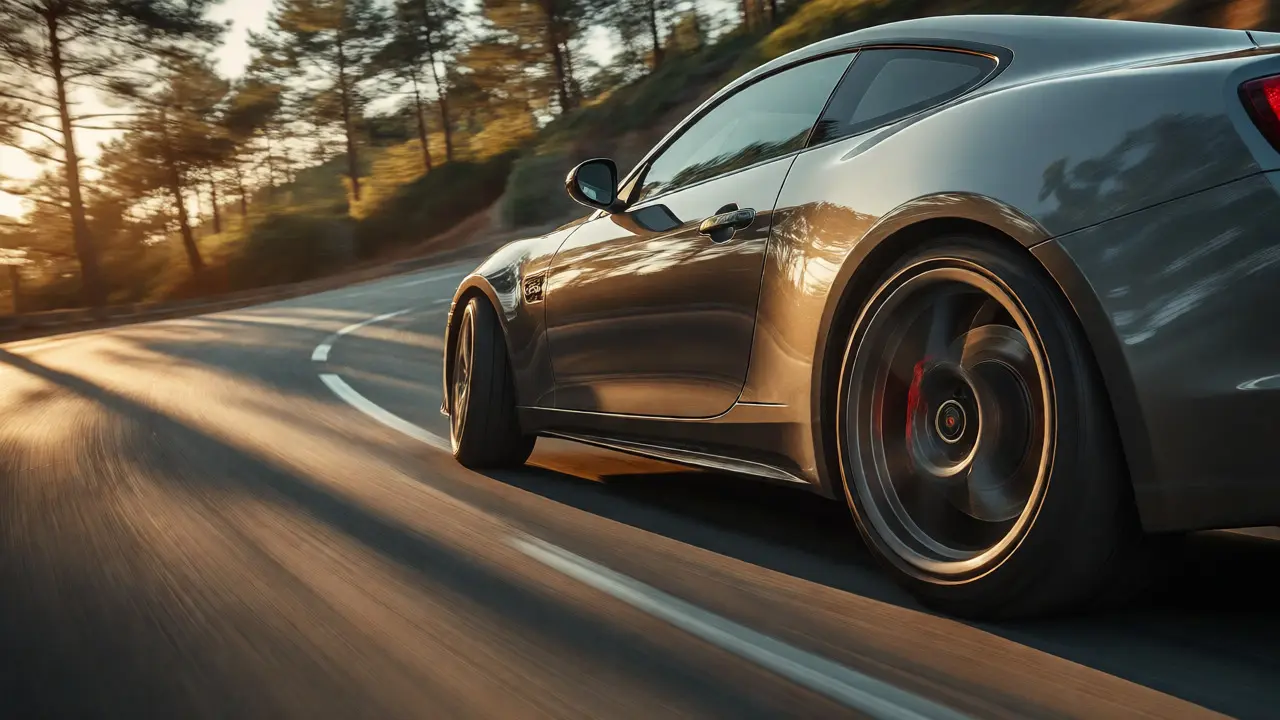
You don’t need a math degree to know where the tachometer needle should point. There’s a simple rule of thumb: each gear ratio typically increases engine speed by about 30-40% when downshifting. For example, if you’re at 3,000 RPM in fourth, third gear will likely require around 4,000-4,200 RPM. Fifth to fourth is similar.
But here’s the pro tip: listen to the engine. Modern engines have distinct sounds at different RPM ranges. Learn what your car sounds like at 4,000 RPM versus 5,000 RPM. Over time, you won’t even look at the tachometer. You’ll hear the pitch change and instinctively know if your blip was too short or too long. If you feel a jerk, your blip was too short. If the revs hang high after the shift, you over-blipped. Both are fixable with practice.
Common Mistakes That Kill Your Flow
Even experienced drivers fall into bad habits. Here are the big ones to avoid:
Blipping too early. If you blip the throttle before you’ve fully moved out of the higher gear, you’re fighting the transmission. Wait until you’re in neutral or just starting to move toward the lower gear.
Releasing the clutch too fast. Rev matching helps, but it doesn’t eliminate the need for smooth clutch engagement. If you dump the clutch, you’ll still get a jerk, no matter how perfect your RPMs were.
Ignoring the brakes. Remember, downshifting is often done while braking. If you’re focusing so hard on the blip that you forget to apply steady pressure to the brake pedal, your stopping distance increases. Keep your eyes on the road, not just the tachometer.
Downshifting too low. Don’t drop from fifth to second unless you really need to. Each skipped gear requires a bigger RPM jump, making it harder to match accurately. Stick to one-gear-down shifts unless you’re coming to a complete stop.
Does Your Car Even Need This?
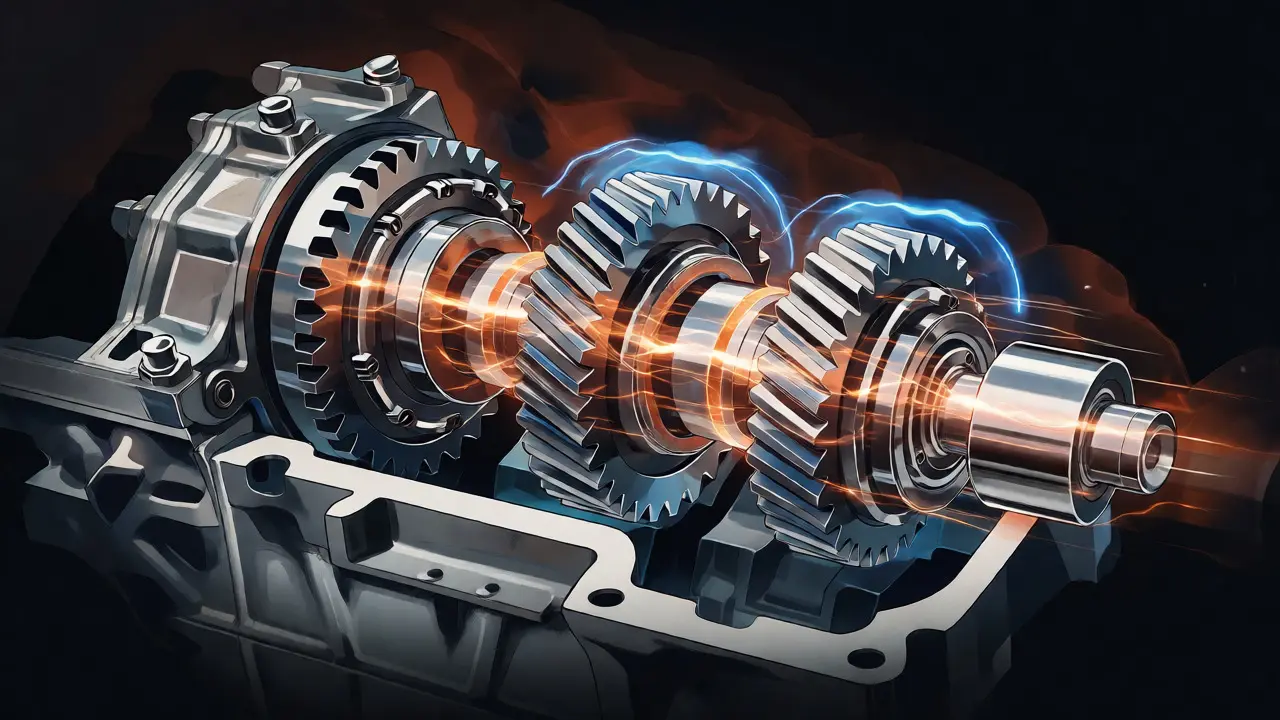
This is the elephant in the room. Many modern cars, like the BMW M Series or Subaru WRX STI, come with automatic rev-matching systems that electronically blip the throttle during downshifts. If you drive one of these, you might wonder if learning manual blipping is worth the effort.
The answer is yes, for two reasons. First, electronic systems aren’t always perfect. They sometimes lag or miss the mark under extreme conditions. Knowing how to do it manually gives you a backup plan. Second, understanding the mechanics makes you a better driver overall. You’ll develop a deeper sense of how your car’s powertrain works, which translates to smoother acceleration and better fuel efficiency in everyday driving.
Plus, there’s the satisfaction factor. Doing it yourself feels rewarding. It connects you to the machine in a way that pressing a button never quite does.
Practice Plan: From Clunky to Seamless
Ready to try it? Start in an empty parking lot or on a quiet residential street. Here’s a step-by-step drill:
- Accelerate to about 30 mph in third gear.
- Decelerate slightly using the brakes until you’re at 20 mph.
- Press the clutch and move to neutral.
- Blip the throttle gently. Aim for a small bump in RPMs, maybe 500-800 RPM.
- Shift into second and release the clutch slowly.
- Evaluate: Did the car lurch? Did the revs hang? Adjust your next attempt.
Repeat this until you can do it without thinking. Then increase your speed and try it from fourth to third. Once you’re comfortable, try it while braking harder. The goal is to make the downshift invisible to your passengers. If they don’t notice the gear change, you’ve nailed it.
Is rev matching bad for my clutch?
No, proper rev matching actually saves your clutch. By matching the engine speed to the transmission speed, you reduce the friction and heat generated when the clutch plates re-engage. Forcing the synchros to do all the work without help from the throttle causes unnecessary wear.
Can I rev match in an automatic transmission?
Not directly, since there’s no clutch pedal to control. However, many modern automatics use torque converters or dual-clutch systems that handle this process electronically. You can influence it by using sport modes or paddle shifters, but the actual blipping is managed by the car’s computer.
Why does my car buck when I downshift?
Bucking usually means your engine speed was too low for the selected gear. When you release the clutch, the transmission tries to force the engine to spin faster, causing a sudden drag on the wheels. To fix it, blip the throttle longer or harder to raise the RPMs before engaging the gear.
Do I need to rev match every single downshift?
Not necessarily. For gentle decelerations, like coasting to a stop sign, skipping it is fine. But for aggressive braking, entering corners, or any situation where you want maximum stability and minimal drivetrain stress, rev matching is highly recommended.
Is heel-toe dangerous for beginners?
It can be if practiced incorrectly. Beginners often accidentally press the brake and throttle at the wrong times, leading to unpredictable behavior. Start with basic clutch-and-throttle coordination first. Only attempt heel-toe once you’re confident with standard rev matching and have a safe, controlled environment to practice in.
Comments
Ian Mason-Laurence
It is technically accurate, though the distinction between heel-toe and toe-heel is often conflated in casual discussion. One must also consider that modern electronic throttle control has largely rendered these manual techniques redundant for the average driver.
October 23, 2026 at 22:42
Lauren Martin
This article is a prime example of gatekeeping disguised as education. You are essentially telling people that if they don't perform a complex foot dance just to save a few pennies on synchro wear, they are driving incorrectly. The market data clearly shows that dual-clutch transmissions have eliminated this need for 90% of performance cars sold today. Stop romanticizing mechanical inefficiency and start acknowledging that engineering evolution solves these problems without requiring the driver to be a circus performer.
October 24, 2026 at 23:07
Anthony .
I appreciate the breakdown here! 🌟 It really helps to understand the 'why' behind the action. I think it’s less about looking cool and more about respecting the machine. When you connect with the car like that, it becomes a partnership rather than just transportation. 😊
October 26, 2026 at 20:52
Shaina Silver-Baird
The assertion that rev matching saves the clutch is fundamentally flawed when one considers the hidden costs. By focusing on the mechanical components, we ignore the psychological manipulation inherent in keeping drivers engaged with manual interfaces. Manufacturers want us to feel this connection so we keep buying manuals instead of efficient automatics. It is a conspiracy of nostalgia designed to distract from the superior reliability of automated systems.
October 28, 2026 at 17:37
Ian Mason-Laurence
That is an oversimplification. While DCTs are efficient, they lack the direct mechanical feedback loop that many enthusiasts value. Furthermore, your claim regarding the 'conspiracy' ignores the fact that many drivers prefer the tactile engagement regardless of efficiency metrics.
October 29, 2026 at 11:48
Shaina Silver-Baird
You are missing the point entirely. The 'tactile engagement' is a manufactured desire. If the system were truly superior, it would not require such elaborate justification. The narrative is being pushed by those who profit from the complexity.
October 30, 2026 at 15:05
evelyn starcher
Finally someone said it!! 🇺🇸 We don’t need fancy European tricks to drive our American muscle cars right. My daddy taught me to dump the clutch and let the tires scream. That’s real power. These rev-matching guys are just trying to make us forget what real driving feels like. 😤
October 31, 2026 at 19:49
Tommy Cahyadi
Oh, absolutely. Because nothing says 'I know how to drive' like jerking your spine out of alignment every time you slow down for a stop sign. Truly majestic. 👏
November 2, 2026 at 12:53
Marisa Marroquin
There is a certain poetry to the rhythm of a well-executed downshift, akin to the cadence of a jazz solo. It requires patience and a deep listening ear, not just mechanical proficiency. The smoothness described here is indeed a form of automotive artistry.
November 4, 2026 at 06:48
Kathy Mccoy
Great advice for beginners! Start slow and don't worry about getting it perfect immediately. Muscle memory takes time, but once it clicks, it feels amazing. Keep practicing and you'll get there!
November 5, 2026 at 14:28
Ejike Ugwu
They hide the truth from us. Rev matching is just a way to keep us busy so we don't notice the fuel economy dropping. Why do you think they made the pedals closer together? To trap your feet! It's all part of the plan to keep us dependent on the transmission shops. Don't fall for it.
November 5, 2026 at 16:09
Kathleen Johnson
While the technical explanation is adequate, the tone is somewhat pedantic. Most people just want to know how to shift smoothly without damaging their gearbox. They do not care about the philosophical implications of the synchros. It is a decent guide, but it tries too hard to sound important.
November 6, 2026 at 00:51
jyotshna Senapati
I tried this yesterday and my boyfriend laughed at me because I stalled. He said I was doing it wrong. Is it really that hard? I feel like everyone expects me to be a race car driver just because I bought a manual. It makes me feel so inadequate. 😢
November 7, 2026 at 05:09
Sundaraiah Kollipara
the idea of matching speeds is fascinating it reminds me of how we try to sync our thoughts before speaking sometimes its all about harmony isn't it maybe we should apply this logic to conversations too
November 8, 2026 at 20:24
Charles Reah
Excellent summary. For those struggling with the coordination, remember that practice makes permanent. Start in a safe environment and focus on the sound of the engine rather than the tachometer initially. It helps build the intuitive sense needed for smooth shifts.
November 10, 2026 at 04:00