
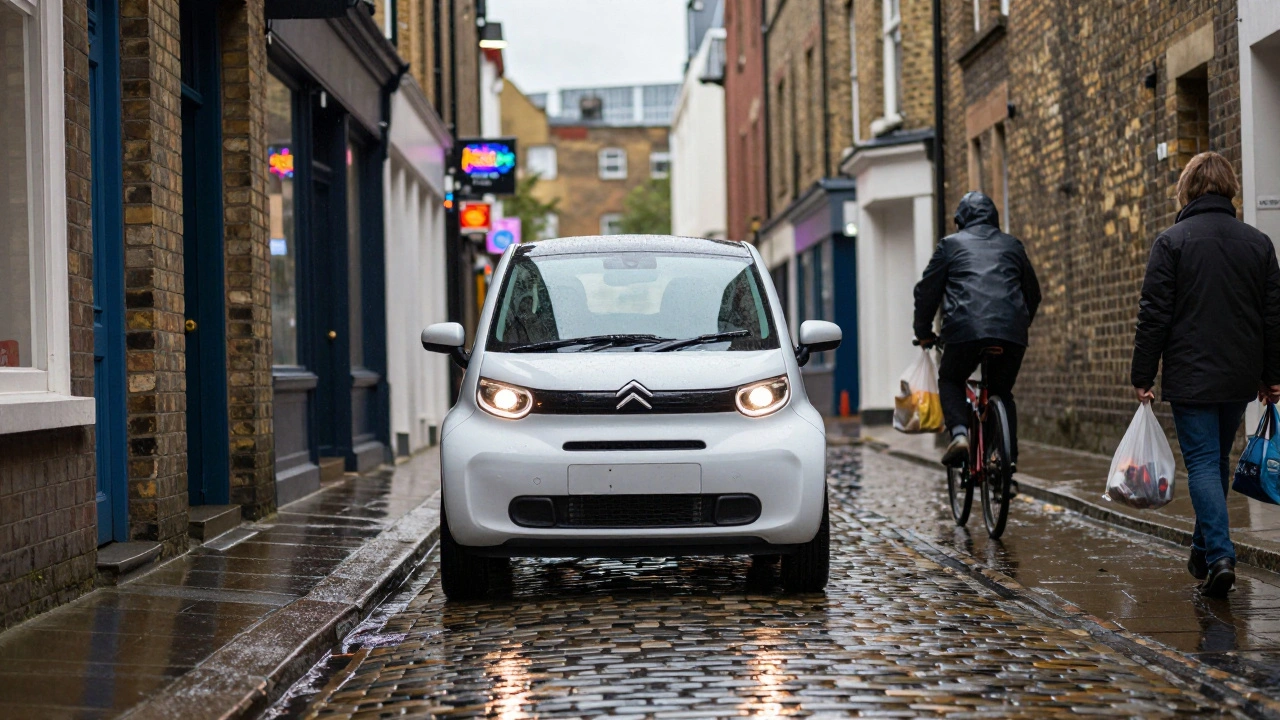
Driving through a crowded city shouldn’t feel like playing bumper cars. But if you’ve ever squeezed into a parking spot that’s barely bigger than your car, or navigated narrow European streets where two cars can barely pass, you know the real value of a tiny vehicle. Microcars and kei-style vehicles aren’t just quirky alternatives-they’re practical tools for modern urban life. And in 2025, with fuel prices still volatile, parking spaces scarcer than ever, and cities pushing for cleaner transport, these little cars are making a serious comeback.
What Exactly Are Microcars and Kei-Style Vehicles?
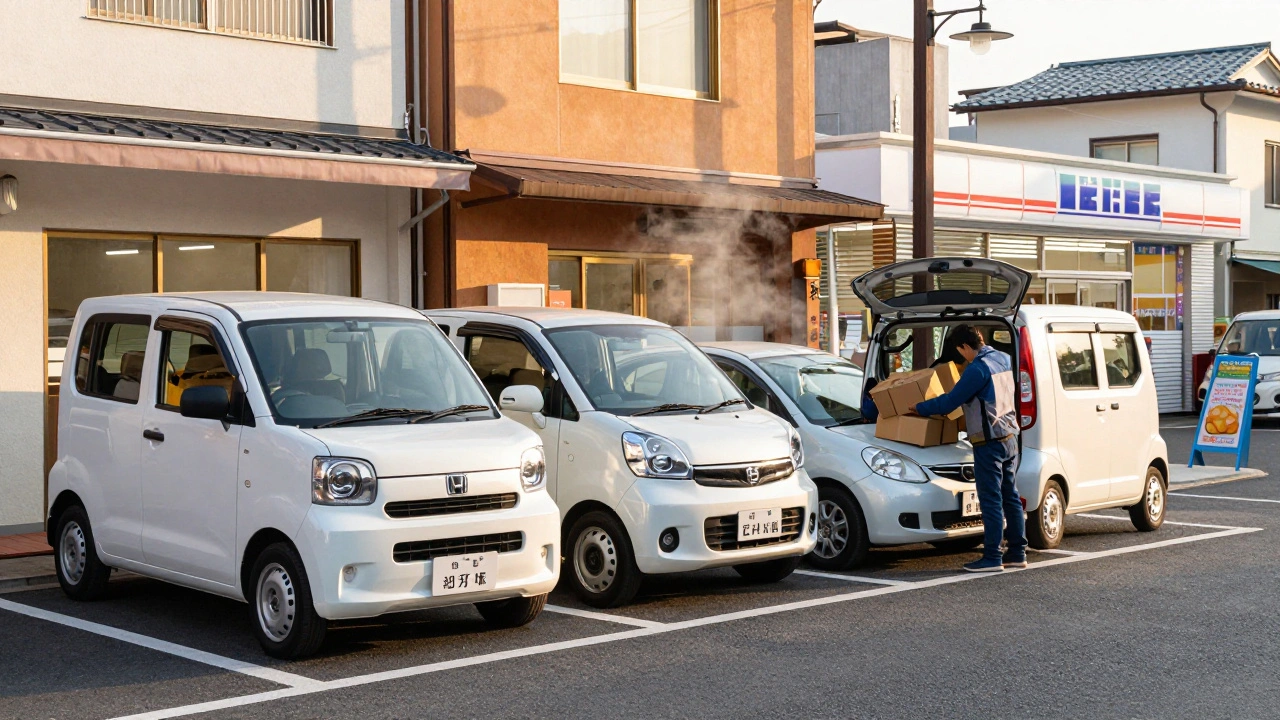
A microcar is any vehicle under 3 meters long, with an engine under 700cc, and a weight under 750 kg. Think of the Smart Fortwo, the Renault Twizy, or the old Fiat 500. They’re built to fit in tight spaces, not to haul gear or people. In Japan, they have a special category called kei cars-literally "light vehicles." These are regulated by strict government rules: max length of 3.4 meters, width under 1.48 meters, engine size capped at 660cc, and power limited to 64 horsepower. The Honda N-Box, Daihatsu Copen, and Suzuki Spacia are all kei cars. They’re not just small-they’re engineered around urban constraints.
What makes kei cars different from regular microcars? Regulations. In Japan, kei cars get tax breaks, cheaper insurance, and even exemption from mandatory parking space proof when buying a car. That’s why over 20% of all new cars sold in Japan are kei vehicles. In Europe, microcars often fall under L6e or L7e classifications, meaning they’re legally treated like mopeds or light quadricycles. You don’t need a full car license in some countries-just a standard motorcycle license.
Why People Are Choosing Them Again
In 2025, London’s Ultra Low Emission Zone charges £12.50 daily for older cars. Paris has banned all diesel vehicles from the city center. Berlin is adding more pedestrian zones. Meanwhile, parking fees in central Bristol hit £7.50 per hour. That’s £60 for a full workday. A kei car like the Suzuki Alto, which gets 60 mpg and emits under 90g/km of CO2, slashes those costs. It’s not just about money-it’s about access.
People who live in dense neighborhoods, work in city centers, or commute short distances are rediscovering these vehicles. Students, delivery drivers, and retirees are the biggest adopters. A 72-year-old woman in Bath uses her Nissan e-NV200 Evalia (a kei-style electric van) to run errands. She says, "I used to dread parking. Now I just pull into the spot next to the bus stop and walk the rest. No stress. No fine. No waiting."
Electric microcars are growing fast. The Renault Twizy, the Citroën Ami, and the Hyundai Ioniq 5 (in its compact form) are all electric. The Ami, for example, costs under £7,000 new, charges on a regular wall socket, and has a range of 75 miles. That’s enough for most urban trips. No need for a public charger.
The Real Tradeoffs: What You Give Up
But these cars aren’t magic. They come with real compromises. If you’ve ever ridden in a Smart Fortwo, you know: you don’t fit two adults over 6 feet tall comfortably. The back seat? It’s more like a storage compartment for grocery bags. Crashing? Not ideal. Most microcars have minimal crash protection. Euro NCAP gives many a one-star rating. They’re not built for highway speeds or head-on collisions.
Legally, they’re often treated like motorcycles. In the UK, you can’t use motorways in a kei car or microcar unless it’s an L7e quadricycle with a full car license. That means longer routes, slower travel, and more frustration during rush hour. And if you need to haul a bike, a pet carrier, or a stroller? Forget it. The trunk on a Citroën Ami holds one standard grocery bag. Two if you’re good at Tetris.
Weather is another issue. Many are open-top or have minimal heating. The Twizy has no doors. The Ami has no climate control. In Bristol’s winter rain, you’re not going to enjoy a 20-minute commute in a plastic shell with a fan blowing.
Cost Comparison: Microcar vs. Small Hatchback
Let’s say you’re comparing a new Citroën Ami (electric microcar) to a new Hyundai i10 (small petrol hatchback). Here’s what you’re actually paying:
| Feature | Citroën Ami | Hyundai i10 |
|---|---|---|
| Starting Price | £7,000 | £12,500 |
| Annual Road Tax | £0 (electric) | £190 |
| Insurance (18-25 driver) | £320 | £1,200 |
| Range (real-world) | 75 miles | 450 miles |
| Charging Time (home) | 3.5 hours | N/A (petrol) |
| Annual Fuel Cost (5,000 miles) | £180 | £750 |
| MPG / MPGe | 110 MPGe | 55 MPG |
| Passenger Capacity | 2 (tightly) | 5 |
| Trunk Space | 170L | 280L |
The Ami saves you over £1,000 a year in running costs. But if you need to take your kids to school, pick up furniture, or go on a weekend trip, the i10 wins every time. The tradeoff isn’t just money-it’s freedom.
Who Should Buy One? Who Should Avoid It?
Buy a microcar if:
- You live in a city center with no parking issues
- You drive under 10 miles a day
- You’re a single person or a couple without kids
- You want to avoid congestion charges
- You’re on a tight budget and don’t need long-distance capability
Avoid one if:
- You regularly drive on motorways
- You need to carry passengers or cargo
- You live in a cold or rainy climate
- You’re worried about safety in mixed traffic
- You plan to keep the car for more than 5 years
There’s also the resale issue. Used microcars depreciate fast. A 2020 Renault Twizy might be worth £2,000 today, but finding a buyer is hard. There’s no big market for them outside cities. In rural areas, they’re seen as toys.
What’s Next for Tiny Cars?
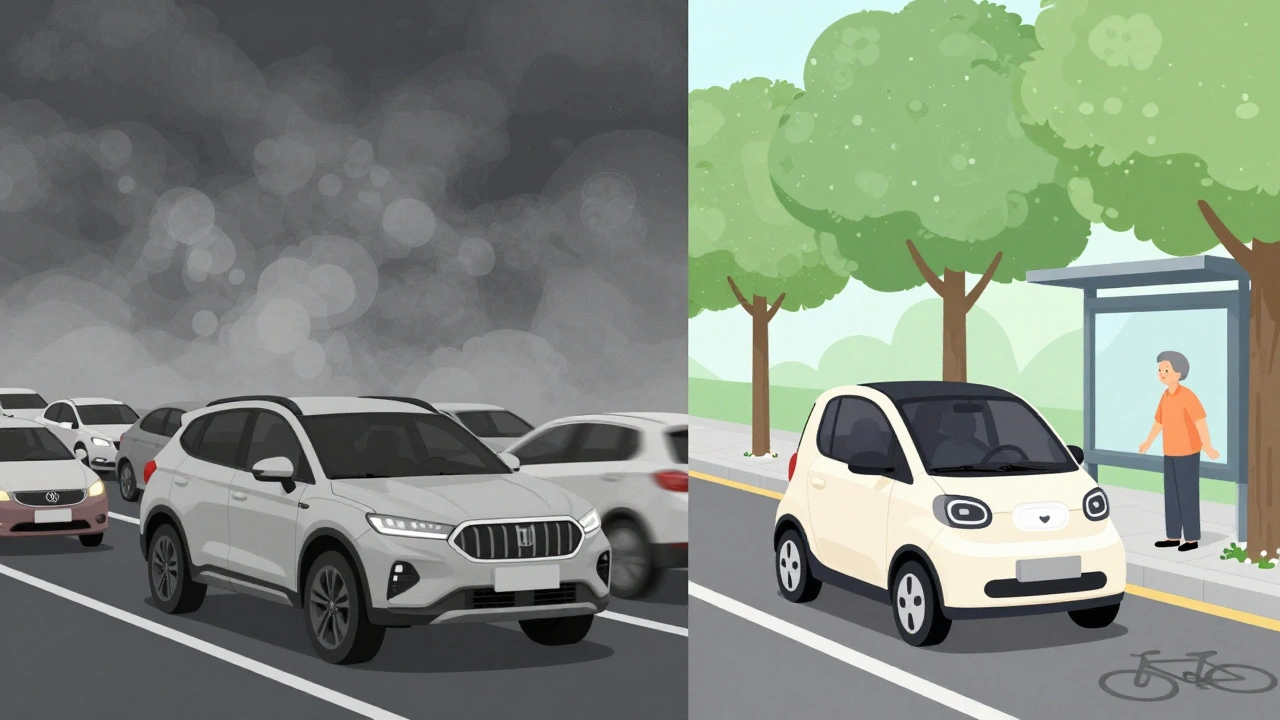
Manufacturers aren’t giving up. BMW is testing a new electric microcar for urban rental fleets. Volkswagen is rumored to be reviving the up! in electric form. In China, companies like Wuling and BYD are selling tiny EVs by the millions. The key shift? They’re no longer just for niche buyers. They’re becoming part of shared mobility-like e-scooters, but with doors.
Some cities are starting to design for them. Paris has dedicated parking bays for microcars. Amsterdam is testing microcar-only lanes. In Bristol, the council is considering discounted parking permits for electric microcars. That’s the future: not replacing your family car, but replacing your second car, your errand car, your city car.
Final Thought: It’s Not About the Car. It’s About the Life.
Microcars and kei vehicles aren’t about being eco-friendly or trendy. They’re about reclaiming time. Time you used to spend hunting for parking. Time you used to pay in congestion fees. Time you used to waste idling in traffic because you had no other option.
If your life fits in 3 meters, then maybe you don’t need a 4.5-meter SUV. You just need a vehicle that fits your life-not the other way around.
Are kei cars legal in the UK?
Yes, but with restrictions. Kei cars imported from Japan must meet UK safety and emissions standards. Most are classified as L6e (light quadricycles) or L7e (heavy quadricycles). L6e vehicles can be driven with a car license, but not on motorways. L7e vehicles require a full car license and can use motorways. Insurance and road tax vary based on classification.
Can I drive a microcar without a full driver’s license?
In the UK, you need at least a full car license (Category B) to drive most microcars. However, if the vehicle is classified as a light quadricycle (L6e), you can drive it with a moped license (AM) if you’re 16 or older. This applies only to very low-powered models like the Citroën Ami. Most kei cars exceed those limits and require a full license.
Are electric microcars cheaper to run than petrol cars?
Yes, significantly. Charging a Citroën Ami costs about £1.50 for 75 miles. A petrol car like the Hyundai i10 would cost over £7 for the same distance. Road tax is £0 for electric models. Insurance is lower than for full-size cars, though not always half. Maintenance is simpler-no oil changes, no exhaust systems. Over five years, you can save over £5,000 in running costs.
Do microcars have enough safety features?
Most microcars have basic safety features: seatbelts, airbags (sometimes only one), and ABS. But crash protection is minimal. Euro NCAP ratings for models like the Renault Twizy and Citroën Ami are typically one or two stars. They’re not designed to survive high-speed collisions. They’re meant for low-speed city use. If you drive in heavy traffic or on fast roads, they’re not the safest choice.
Can I use a microcar for long trips or road trips?
Technically, yes-if it’s an L7e model with motorway access. But practically? No. Range is limited (under 100 miles for most). Charging stations are sparse outside cities. Comfort is poor for long drives. Seating is cramped. Storage is nonexistent. They’re designed for daily errands, not cross-country travel. Use them as your city car, not your family vehicle.
Are there any government incentives for buying microcars in the UK?
There’s no direct national grant for microcars. But if the vehicle is fully electric and under 3.5 tonnes, you may qualify for the Plug-in Car Grant (PICG) if it meets emissions and range criteria. Some local councils offer free parking or reduced congestion charges. Bristol, for example, offers a 50% discount on parking permits for electric microcars.
How do kei cars compare to electric scooters or e-bikes?
Kei cars offer weather protection, cargo space, and passenger capacity that scooters and e-bikes can’t match. They’re faster (up to 60 mph) and more stable. But they cost more, use more energy, and require parking space. Scooters are cheaper and more flexible for very short trips. Choose a kei car if you need to carry groceries, a child seat, or travel in rain. Choose a scooter if you’re going 2 miles to the shops.
For urban dwellers in 2025, the question isn’t whether microcars are practical-it’s whether your life still needs something bigger.
Comments
Bob Buthune
I just bought a Citroën Ami last month and I’m not gonna lie - it’s like driving a toaster with wheels 🤖☕️. I live in downtown Toronto and I used to spend 20 minutes circling the block just to find a spot. Now? I park right outside the coffee shop. No stress. No fines. Just me, my bagel, and this little white bubble of joy. The rain sucks though. I feel like a shrimp in a plastic shell. But hey, at least I’m not paying £7.50 an hour to sit in a garage. Also, my cat loves it. She sleeps in the footwell like it’s a luxury suite. 🐱
December 12, 2025 at 01:15
Jane San Miguel
While the pragmatic appeal of microcars is undeniable, one must consider the broader sociotechnical implications of their proliferation. The normalization of vehicular diminution reflects a pathological capitulation to urban decay rather than a genuine reimagining of mobility infrastructure. We are not solving congestion - we are merely optimizing for its existence. The Citroën Ami, in its charmingly minimalist form, is less a vehicle and more a symptom of neoliberal urban policy failure. One cannot help but wonder: if we had invested in public transit instead of subsidizing plastic pods, would we be having this conversation at all?
December 12, 2025 at 22:51
Kasey Drymalla
Theyre putting cameras in these things and tracking your every move dont let them fool you the government wants you to drive small so they can control your routes and your speed and your life this is how they start the one world car system you think this is about saving money its about control
December 13, 2025 at 17:23
Dave Sumner Smith
You think these little plastic toys are safe? Theyre not even real cars. The government lets them on the road because they dont want to admit they failed at public transit. And dont get me started on the battery recycling. Those lithium cells are gonna poison the earth. Theyre selling you a death trap with a discount sticker. You think youre saving money? Youre just funding the next apocalypse. And they call it progress. Pathetic.
December 14, 2025 at 15:26
Cait Sporleder
It is both fascinating and profoundly telling that the resurgence of microcars coincides with a global recalibration of urban living norms. The economic calculus - reduced taxation, diminished fuel consumption, and lower insurance premiums - is undeniably compelling. Yet, one must also examine the psychological and phenomenological dimensions: the sense of vulnerability while navigating mixed traffic, the tactile alienation of being enclosed in a diminutive, climate-controlled capsule, and the implicit social signaling of choosing utility over presence. These vehicles do not merely transport individuals; they reconfigure the very architecture of urban intimacy. One wonders whether the appeal lies not in efficiency, but in the quiet rebellion against the cultural hegemony of the SUV - a symbol of excess now rendered absurd by its own weight.
December 16, 2025 at 04:07
Paul Timms
My grandma drives a Suzuki Alto. She’s 78. Never had an accident. Saves her $800 a year on parking. She says it’s the first car she’s ever owned that doesn’t make her feel like a giant in a dollhouse. Simple. Smart. Doesn’t need a thesis to explain it.
December 17, 2025 at 23:36
Jeroen Post
They want you to think this is freedom but its just another cage with wheels. The same people pushing microcars are the ones who banned bicycles from sidewalks and made parking illegal. They dont want you to move they want you to be small and quiet and easy to manage. The electric grid cant handle it anyway. You think your Ami is clean? The power comes from coal and lithium mines in the Congo. Youre not saving the planet. Youre just doing your part in the slow genocide of choice.
December 18, 2025 at 06:24
Nathaniel Petrovick
Just had my first road trip in my Ami - 80 miles to visit my sister. It was… fine. Like a really bouncy elevator. The wind was wild, but the music was good. I packed a blanket and a thermos. We stopped at a gas station to charge - took 40 mins. She said I looked like a confused robot. I said, ‘Better than looking like a stressed-out SUV dad.’ We laughed. I’m not gonna lie - I’d never take it to the mountains. But for coffee runs, grocery hauls, and avoiding parking tickets? 10/10. Would recommend to anyone who hates wasting time.
December 19, 2025 at 03:29
Honey Jonson
i just got mine last week and its so cute i love it so much like literally my heart is happy every time i drive it 🥹 the rain is kinda rough but i got a cute little umbrella holder and now i feel like a little urban ninja 🌧️✨ also my neighbor gave me free coffee just because he saw me park in a spot that was too small for his truck lol
December 20, 2025 at 21:26