
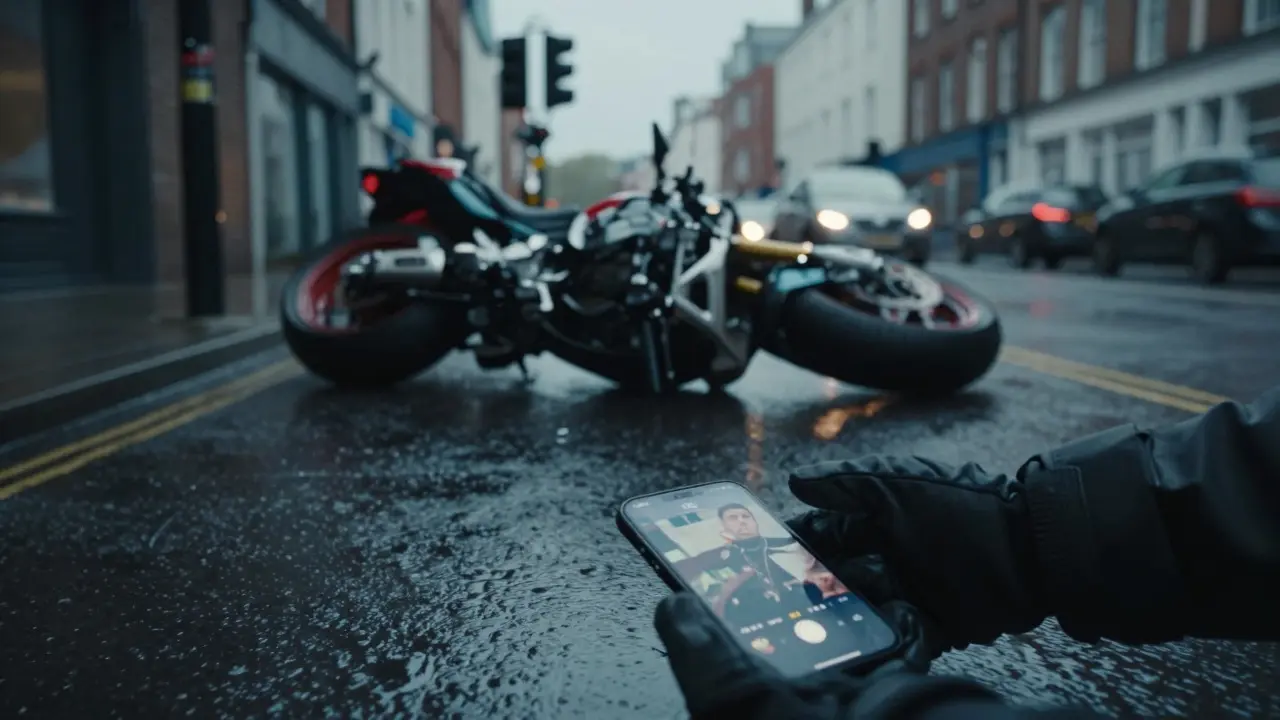
Imagine the screech of tires, the sudden loss of balance, and then silence. You’re on the ground in Bristol, adrenaline pumping, unsure if you’re hurt or just shaken. In those first chaotic minutes after a motorcycle accident, panic can cloud your judgment. But how you act right now determines not just your health, but whether you get fair compensation later. A proper motorcycle accident report isn’t just paperwork; it’s the backbone of your insurance claim and potential legal case.
If you’ve ever wondered what to do when the road turns against you, this guide cuts through the noise. We’ll walk you through exactly what happens from the moment you hit the deck to filing that crucial report with the police and your insurer. No fluff, just actionable steps tailored for UK riders in 2026.
The First Five Minutes: Safety Over Everything Else
Your brain wants to check your bike. Don’t. Your body needs to check itself. The immediate aftermath of a crash is dangerous because traffic doesn’t always stop, and shock can mask serious injuries. If you can move, get off the road. Move to a safe spot away from moving vehicles. If you’re stuck, turn on your hazard lights if the bike allows, or put on high-visibility gear to warn other drivers.
Call 999 immediately if anyone is injured, if the vehicle is blocking the highway, or if there’s a fire risk. Even if you feel fine, internal bleeding or whiplash symptoms might not show up for hours. Let the paramedics assess you. Their medical notes become part of your official record, linking your injuries directly to the incident.
- Check for consciousness: Look at others involved. Are they breathing? Alert?
- Secure the scene: Use warning triangles if you have them. Most riders don’t, so use bright clothing or phone flashlights.
- Avoid admitting fault: Say "I’m okay" or "Let’s wait for the police." Never say "Sorry" or "My bad" at the scene. It can be twisted later.
Gathering Evidence: What You Need Before Leaving
Once safety is secured, shift into investigator mode. Memory fades fast. Photos taken within ten minutes are worth more than any statement given weeks later. You need to prove what happened, who was at fault, and the extent of the damage.
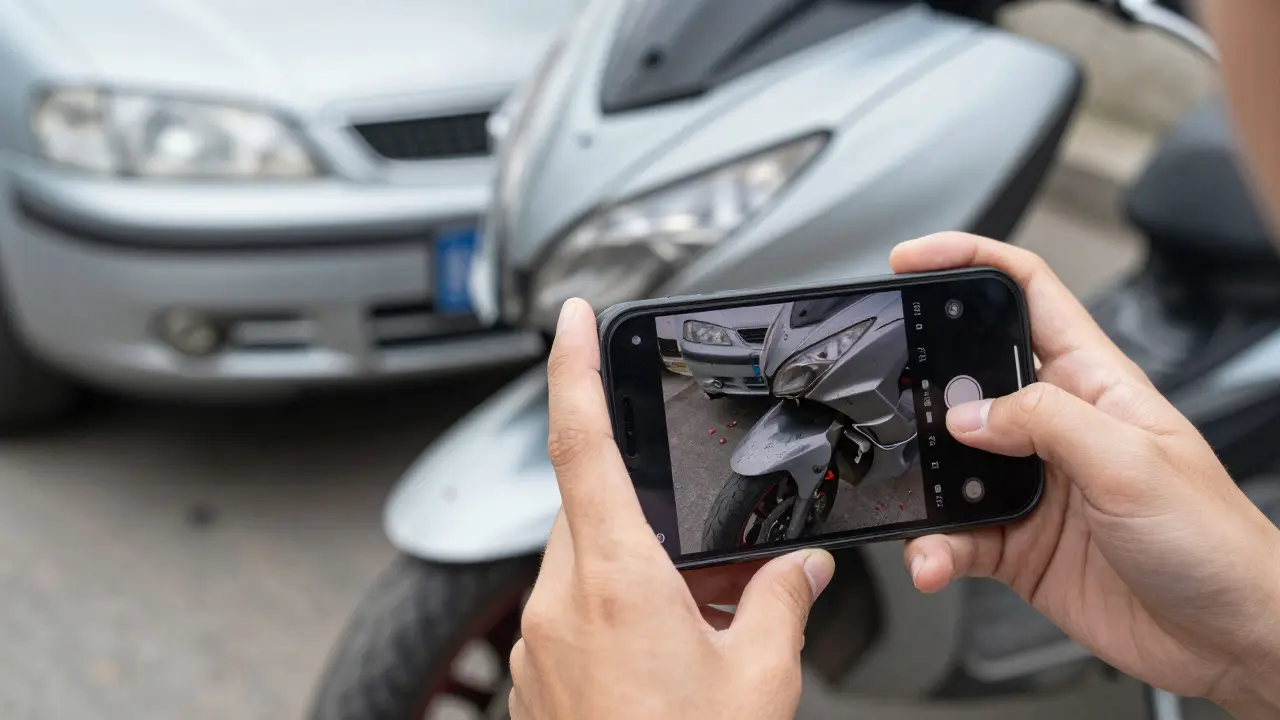
Use your smartphone. Take wide shots showing the position of all vehicles, skid marks, road signs, and weather conditions. Then take close-ups of damage to your motorcycle, the other vehicle, and any debris. If there were witnesses, ask for their names and contact details politely. They aren’t obligated to help, but many will if you approach them calmly.
Exchange details with the other driver. This is mandatory under UK law. You need:
- Name and address
- Vehicle registration number
- Insurance company name and policy number
If the other driver flees-a hit-and-run-note the license plate, make, model, and color of the car. This information is critical for the police investigation.
Filing the Police Report: When Is It Mandatory?
In the UK, you must report an accident to the police within 24 hours if:
- Someone was injured
- You couldn’t exchange details with another party
- The other driver didn’t have valid insurance
- There was damage to property (like a fence or building)
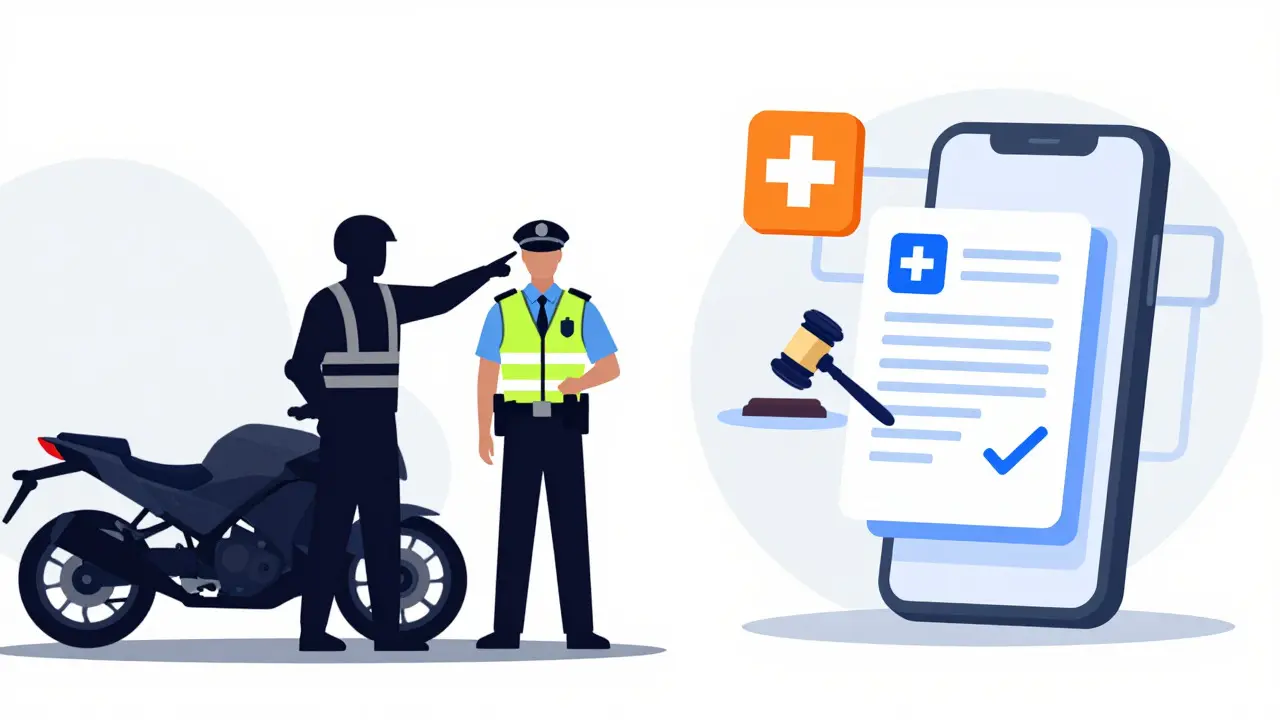
If the police attended the scene, they will create an official report. Get the officer’s name and badge number. Ask for the reference number for the incident. This document carries significant weight with insurers. If they didn’t come, you still need to file a report online via the GOV.UK website or visit your local station. The form is called an Accident Report Form. Fill it out accurately. Stick to facts: time, location, weather, actions taken. Avoid opinions like "He was speeding" unless you have proof.
| Situation | Action Required | Timeframe |
|---|---|---|
| Minor scratch, no injuries, exchanged details | Notify insurance only | Within 14 days |
| Injury to any person | Report to police AND insurance | Within 24 hours |
| Hit-and-run | Report to police immediately | As soon as possible |
| Damaged public property | Report to police | Within 24 hours |
Contacting Your Insurer: The Claims Process
Don’t delay notifying your insurance provider. Most policies require you to report accidents within 14 days, even if you don’t intend to claim yet. Delaying can lead to denied coverage. Call your insurer’s claims line. Have your policy number ready. Provide the basic facts: date, time, location, and a brief description.
Your insurer will assign a claims handler. They may ask for photos, witness statements, and the police report reference. Be honest. Lying about speed or visibility can void your policy. If you’re not at fault, your insurer will pursue the other party’s insurance. If you are partially at fault, understand how comparative negligence works in the UK. Your payout might be reduced based on your percentage of responsibility.
Keep a log of all communications. Note dates, times, and names of representatives you speak with. This creates a paper trail if disputes arise later.
Medical Records: Linking Injury to Incident
Even if you declined ambulance treatment, see a GP or visit an A&E department within 48 hours. Document every symptom: headaches, back pain, bruising, anxiety. These records establish causation. Without them, insurers might argue your injury predated the crash.
If you suffer long-term effects, consider seeing a specialist. Physiotherapy notes, MRI results, and psychological assessments strengthen your personal injury claim. Personal injury lawyers often work on a "no win, no fee" basis in the UK, making professional advice accessible.
Common Mistakes to Avoid
Riders often make costly errors in the heat of the moment. Here’s what to skip:
- Leaving the scene early: Wait until you’ve exchanged details and taken photos. Rushing home means losing evidence.
- Posting on social media: Don’t share photos of your bike or describe the crash on Facebook or Instagram. Insurers monitor these platforms. A casual post saying "My bike is wrecked" can undermine your claim.
- Repairing the bike before assessment: Let the insurer or repair shop inspect it first. Premature repairs destroy evidence of fault.
- Ignoring minor pains: Adrenaline hides pain. What feels like a bruise today could be a herniated disc tomorrow.
Dealing with Fault Disputes
What if the other driver denies hitting you? Or blames you for swerving? This is where your evidence shines. Dashcam footage is gold. If you had one, save the clip immediately. Witness statements also help. If the police report supports your version, stick to it. If not, consult a solicitor specializing in road traffic accidents. They can request CCTV from nearby businesses or traffic cameras.
In Bristol, many shops and street cameras cover major intersections. Acting quickly increases the chance of retrieving this footage before it’s overwritten.
Do I need a lawyer for a motorcycle accident claim?
Not always. For minor claims under £1,000, you can handle it yourself. However, if you have injuries, lost wages, or disputed liability, a solicitor helps maximize compensation. Many offer free initial consultations and work on a conditional fee agreement (no win, no fee).
How long does an insurance claim take?
Simple claims with clear liability take 2-4 weeks. Complex cases involving injuries or disputes can take several months. Keep pushing for updates weekly.
Can I ride my bike while waiting for repairs?
Only if your policy includes hire car cover or alternative transport. Check your terms. Riding a damaged bike might be unsafe and could invalidate your claim if further damage occurs.
What if the other driver has no insurance?
Claim through the Motor Insurers' Bureau (MIB). The MIB compensates victims of uninsured drivers. You’ll need a police report to support your application.
Does reporting an accident increase my premium?
If you’re not at fault, your premium shouldn’t rise. If you are partially at fault, expect an increase. Some insurers offer "no claims discount" protection for a small annual fee.
Comments
Zach Loescher
It is genuinely fascinating how the legal frameworks differ so drastically between the US and the UK regarding these reports. I often wonder if the strict 24-hour rule for police reporting in the UK actually speeds up resolution times or just creates more bureaucratic friction for minor incidents that could be settled privately. The advice about not admitting fault is universal though, which is good to see emphasized here.
July 30, 2026 at 19:09
Quintin Franzese
Oh great, another guide telling us to act like robots after a crash. "Don't check your bike." Sure, because nothing says "I'm okay" like ignoring the fact that your engine is currently on fire while you stand there taking photos of skid marks with your hands shaking from adrenaline. But hey, at least we have our insurance paperwork ready.
August 1, 2026 at 16:45
Susan Cole
I appreciate the clear breakdown of when to involve the police versus just insurance. It can be quite overwhelming in the moment, so having those specific criteria listed helps reduce anxiety. I always feel a bit guilty asking strangers for their contact details, but knowing it is polite and expected makes it easier to approach them calmly.
August 1, 2026 at 17:52
Anthony Miller
You are all missing the point entirely. The real issue is that riders are inherently reckless and this guide is just a band-aid on a bullet wound. You need to stop riding if you cannot handle the road. It is simple logic. Why do we keep enabling this dangerous behavior with detailed guides instead of just banning motorcycles altogether? Think about it.
August 1, 2026 at 19:02
michelle veluz
Wait a minute!!! Does anyone else think the government is using these accident reports to track our movements?! They want our location data under the guise of "insurance claims"! It is a conspiracy! Always carry cash and avoid digital payments after a crash! Stay woke people!!!
August 2, 2026 at 00:50
Jacob Baby Official
The article suggests dashcams are gold, but let us look deeper. Dashcams are actually a liability if they capture something incriminating about you. Most people mount them wrong anyway. The real secret is that witnesses lie constantly. You should never trust a witness statement over your own memory, no matter what the lawyers say. It is all a game.
August 2, 2026 at 00:55
john randall
I suppose the dashcam point is valid, though mounting them correctly does take some effort. I have seen many bikes with cameras pointing at the sky. It is interesting how technology changes the evidence landscape compared to ten years ago. We used to rely solely on police notes.
August 3, 2026 at 08:15
Jeff Falcon
I really liked the section on medical records because it highlights something so many people forget. You really do need to see a doctor even if you feel fine because adrenaline is a powerful drug. I had a friend who ignored a back pain after a minor spill and ended up with chronic issues later. It was a long process dealing with the insurers afterwards, but he had the documentation he needed because he went to the GP immediately. It is definitely worth the trip.
August 4, 2026 at 16:15
Alyson Karson
SO true!! People are always too proud to go to the doctor after a crash. Just do it!! Your health is way more important than saving time. And dont post on social media!! I saw someone do that last week and it was a total disaster for their claim. So annoying when people mess up their own cases like that.
August 4, 2026 at 18:54
Chris Neal
Actually, the MIB process is much slower than most people realize, often taking months longer than standard claims due to the additional scrutiny required to prove the other driver was uninsured. It is not just about having a police report; you need irrefutable proof that the other party fled or lacked coverage, which can be difficult to establish without CCTV. Do not assume it is a straightforward alternative.
August 4, 2026 at 23:41