
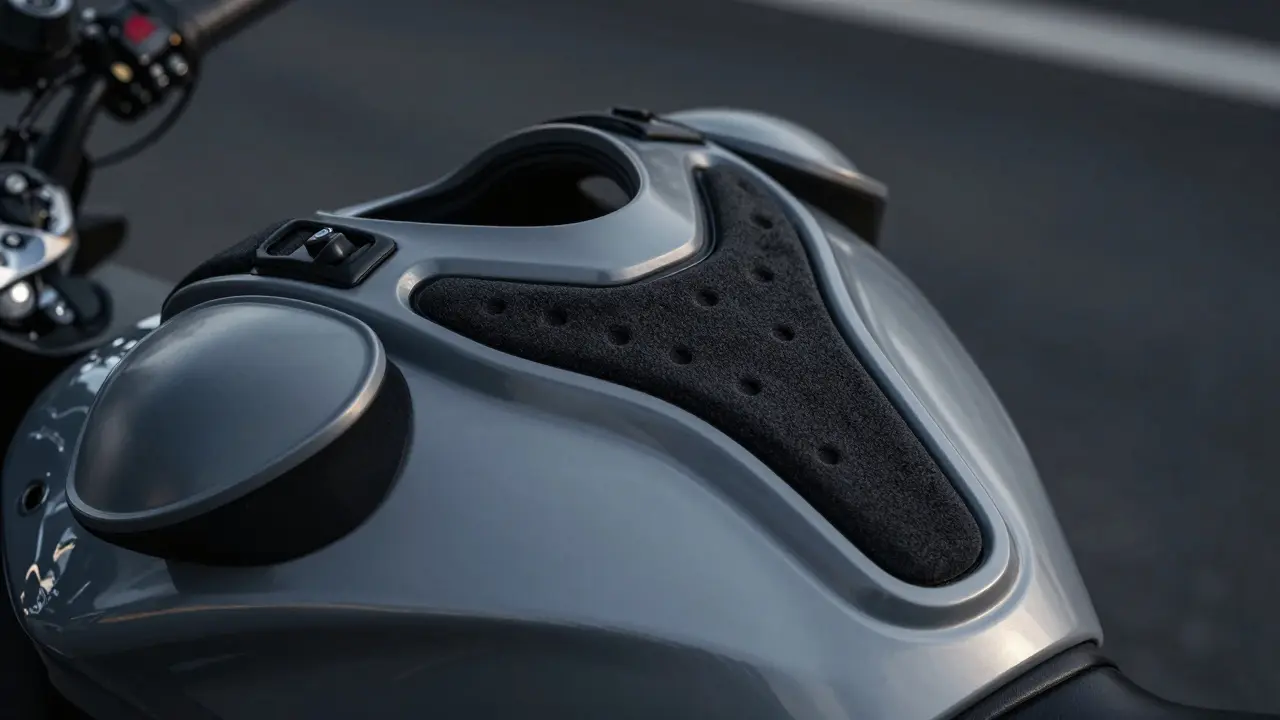
What Exactly is a Back Protector?
A back protector is a dedicated piece of safety gear that shields the vertebrae and the surrounding soft tissue. If you've ever seen a professional racer, they're wearing a rigid shell that looks like a turtle. For the rest of us, it usually comes in two forms: standalone guards and integrated armor. The goal is simple: stop a sharp object (like a guardrail or a curb) from punching a hole in your back and prevent the spine from compressing or hyperextending during a tumble.
When shopping, you'll see CE Certification everywhere. This isn't just marketing fluff; it's a European safety standard that tells you exactly how much force the armor can handle. You'll see Level 1 and Level 2. Level 1 is thinner and more flexible, great for city riding. Level 2 is thicker and absorbs significantly more energy, making it the gold standard for high-speed touring or track days.
| Feature | CE Level 1 | CE Level 2 |
|---|---|---|
| Impact Absorption | Moderate | High |
| Thickness/Bulk | Low (Slim profile) | High (Noticeable bulk) |
| Ideal Use Case | Urban commuting / Summer mesh | Motorway touring / Racing |
| Flexibility | Very High | Moderate |
The Versatility of Impact Vests
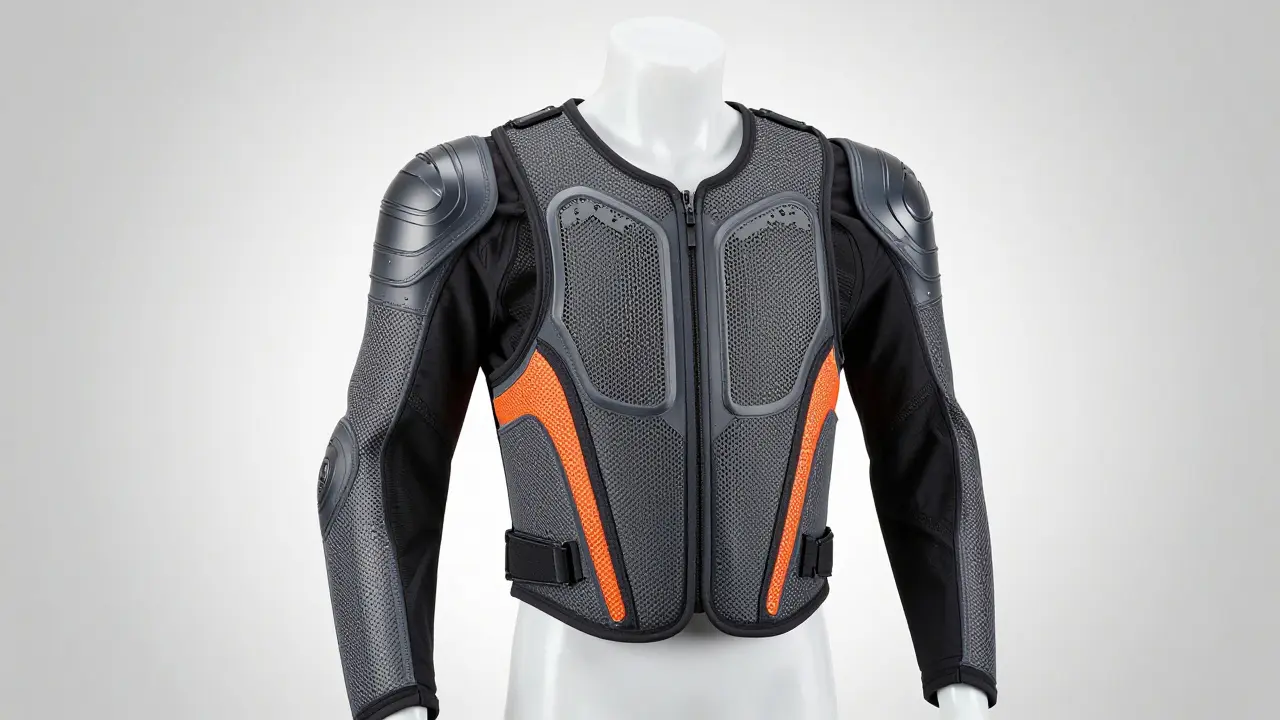
If a back protector is a single tool, an Impact Vest is a full toolkit. An impact vest, often called an armor suit, is a lightweight garment worn under your regular clothes or jacket. It typically bundles protection for the back, shoulders, elbows, and sometimes the chest into one breathable mesh package. This is a game-changer for riders who don't want to wear a heavy leather suit in 30-degree heat but still want professional-grade safety.
The magic of the modern impact vest lies in the material. Many now use Non-Newtonian Fluids, often branded as D3O. This material is soft and pliable when you move, but the moment it's hit, the molecules lock together instantly to create a rigid shield. It's the difference between feeling like you're wearing a cardboard box and feeling like you're wearing a t-shirt that turns into armor during a crash.
Hard Shell vs. Soft Armor: Which One Wins?
You'll notice a divide between hard plastic shells and soft, foam-like inserts. Hard armor is designed for "point impact" and sliding. It spreads the force across a wider area and prevents penetration. Think of it as a shield. It's fantastic for track riding where high-side crashes are common and the slide is long.
Soft armor, on the other hand, is about comfort and "energy dissipation." It conforms to your body, meaning it doesn't shift around as much. If you're a commuter, soft armor is usually the better bet because it doesn't make you look like a robot and fits under a standard denim or textile jacket. However, if you are doing high-speed stints on the motorway, the added rigidity of a hard shell provides a level of puncture protection that soft foam just can't match.
Airbags: The New Frontier of Spine Safety
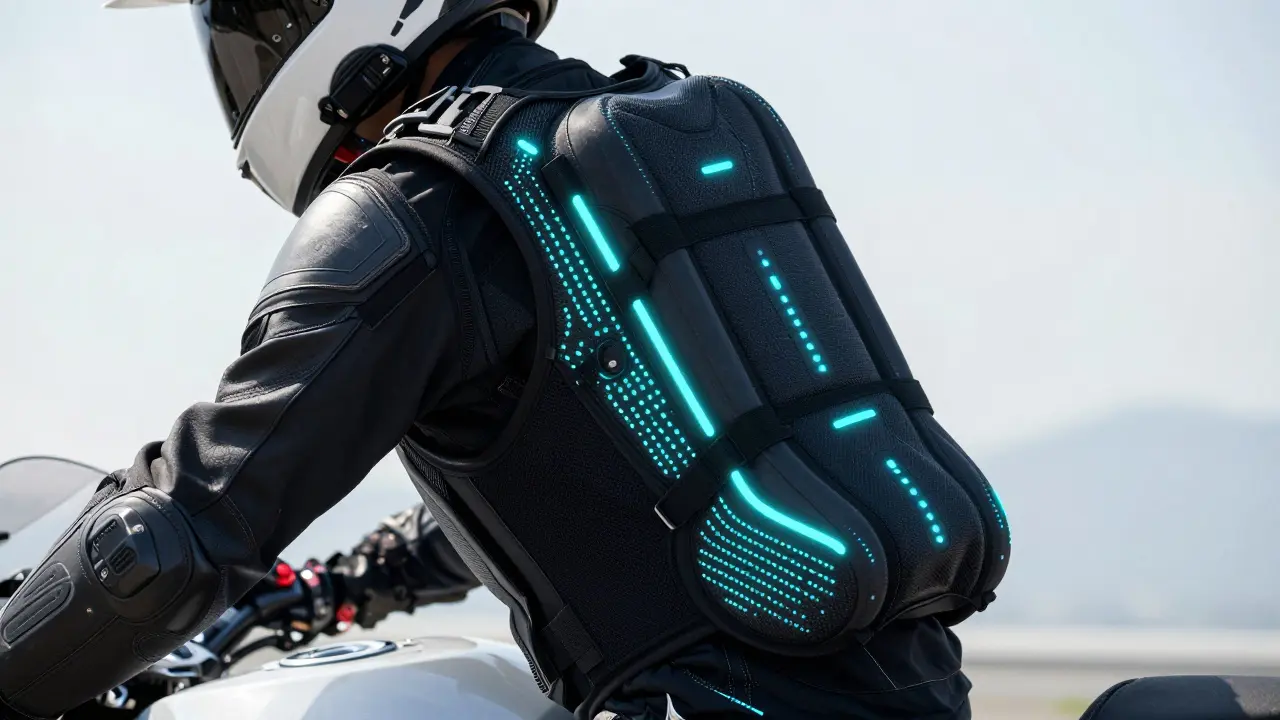
We can't talk about back protection without mentioning Motorcycle Airbag Vests. These aren't your average camping pillows. These systems use accelerometers and gyroscopes to detect a crash in milliseconds, deploying a pressurized bladder around your neck and torso before you even hit the ground.
An airbag vest provides a level of protection that no static piece of foam can achieve. It effectively removes the pressure from the spine and keeps the neck stable. Some are tethered to the bike, while others are completely wireless and electronic. While they are more expensive, the data from accident reports shows a massive reduction in internal organ damage and spinal fractures when an airbag is deployed compared to traditional armor.
How to Fit Your Armor Correctly
Buying the best gear in the world is useless if it's sitting three inches too low on your back. The most common mistake riders make is wearing armor that is too loose. In a crash, armor "shifts." If your shoulder pads are sliding toward your elbows, they aren't protecting your shoulders. To ensure your motorcycle body armor actually works, follow these rules:
- The Spine Alignment: The back protector should start just below your helmet line and extend down to the top of your hips. If there is a gap at the neck, you're vulnerable to cervical spine injuries.
- The Elbow Check: Put on the vest, bend your arm 90 degrees. The elbow protector should stay centered over the joint. If it slides down your forearm, you need a tighter fit or a different size.
- The Layering Test: Wear the armor under the jacket you actually plan to ride in. If the jacket is too tight, it will compress the armor, reducing its ability to absorb energy. If it's too loose, the armor will shift during a slide.
Common Pitfalls and Myths
There is a dangerous myth that "leather is enough." While leather is incredible for abrasion resistance (stopping you from being sanded down by the road), it provides zero impact protection. Leather doesn't stop a bone from breaking; armor does. You need both. Combining a high-quality leather jacket with a CE Level 2 back protector is the only way to ensure you're covered for both the slide and the hit.
Another mistake is neglecting the chest. While the back is the priority, a front-on collision or a tumble over the handlebars puts your ribs and sternum at risk. Many impact vests now offer optional chest protectors. If you ride in an area with a lot of debris or wildlife, a chest guard is a small addition that prevents a collapsed lung.
Can I just buy a separate back protector and slide it into my jacket?
Yes, most motorcycle jackets have pockets for this. However, be careful. Many stock jackets come with "placeholder" foam that isn't CE rated. Always check if the pocket fits a certified Level 1 or Level 2 protector. If the protector bunches up or folds because the pocket is too small, it won't protect you properly.
Does armor expire or wear out over time?
Hard plastic shells can crack over years of use or UV exposure. Soft armor like D3O doesn't "expire," but it can degrade if exposed to harsh chemicals or extreme heat. More importantly, once a piece of armor has taken a significant hit in a crash, it MUST be replaced. The cellular structure is crushed, and it cannot absorb another impact.
Are impact vests too hot for summer riding?
Not if you choose the right one. Look for vests made from 3D spacer mesh. These are designed to allow air to flow between the armor and your skin. When worn under a perforated summer jacket, they are surprisingly breathable. The key is ensuring the vest fits snugly; if it's too loose, it will actually trap heat against your body.
Should I choose a hard back protector or a soft one for city riding?
For city riding, a soft CE Level 1 or 2 protector is usually best. It's more comfortable for the stop-and-go nature of urban traffic and doesn't make you look bulky. Since city accidents often happen at lower speeds, the flexibility and comfort of soft armor outweigh the extreme puncture resistance of a hard shell.
Is an airbag vest a replacement for a back protector?
In many cases, yes, but the best setup is a hybrid. Some airbag vests have integrated back protectors to handle smaller, lower-energy impacts that might not trigger the airbag. If your airbag vest doesn't have a built-in guard, you're still protected against the big hits, but a small slip might not be enough to deploy the system, leaving you with no protection at all.
Moving Forward: Your Safety Checklist
If you're currently riding with nothing but a t-shirt or a non-armored jacket, your first step should be an impact vest. It's the fastest way to get full-body coverage without buying multiple pieces of gear. If you already have a jacket, go to a shop and try on a few CE Level 2 back inserts to see which one fits your spine curvature without digging into your hips. Finally, if your budget allows, look into airbag technology-it's the single biggest jump in safety since the invention of the helmet. Don't wait for a "close call" to start taking your spine seriously.
Comments
John Fox
d3o is the way to go for sure
April 5, 2026 at 03:13
chioma okwara
People always forget that the chest protector is just as vital as the back. I've seen so many riders think they're safe just because they have a CE Level 2 back insert, but then they hit a deer or a pole head-on and their ribs are basically powder. Its honestly embarrassing how many people ignore the front of their body. You gotta get a full vest or at least a dedicated chest plate if you actually care about survival and not just looking cool in a leather jacket. Plus, most of those "included" foam pads in cheap jackets are literally just sponges with a logo on them. Do your research or prepare to spend a month in a hospital bed. Its not that hard to spend an extra fifty bucks for actual protection.
April 6, 2026 at 02:05
amber hopman
I've been eyeing the airbag vests but the price point is just wild. It's an incredible piece of tech, but for someone who mostly does urban commuting, is it really overkill?
April 7, 2026 at 08:14
Jim Sonntag
oh yeah because spending two grand on a wearable balloon is totally the logical move for a 20mph trip to the grocery store lol
April 8, 2026 at 22:46
Christina Morgan
Actually, the peace of mind is worth it! I started with a basic Level 2 back protector, and while it's great, the leap to an airbag is just a different league of safety. If you can't swing the cost right now, just focus on getting that high-quality impact vest first. It's a great middle ground that keeps you safe without breaking the bank.
April 10, 2026 at 01:09
Deepak Sungra
Everything here is just a marketing ploy to make us buy more gear. I've been riding for ten years with just a denim jacket and I'm still kicking, though my back does hurt a bit after long rides. This whole "CE Level" thing feels like a way to justify charging triple for a piece of plastic that you'll hopefully never even use in your entire life.
April 10, 2026 at 18:42
Samar Omar
The sheer audacity of suggesting that a mere denim jacket suffices for the complexities of modern vehicular velocity is truly staggering, and while I find the discourse around the non-Newtonian fluids to be somewhat pedestrian, one cannot deny that the tactile experience of high-grade armor is an essential component of the riding aesthetic, provided one possesses the refined taste to choose a silhouette that doesn't resemble a clumsy galactic trooper from a low-budget science fiction epic.
April 11, 2026 at 09:58
Anuj Kumar
The airbag vests are probably tracking us. Why do they need gyroscopes? They just want to know exactly where we are and how we fall so the insurance companies can raise rates. Trust me, the foam is enough. Don't put a computer on your chest.
April 13, 2026 at 01:06
Tasha Hernandez
Oh look, another conspiracy theorist in the wild. Absolutely precious. While you're worrying about the government tracking your 30mph wobble, some of us actually prefer not having our spines turned into a jigsaw puzzle by a rogue curb. Imagine thinking a piece of sponge is a viable substitute for actual engineering in a world where drivers treat stop signs as optional suggestions. Truly a masterclass in delusions.
April 14, 2026 at 14:10