
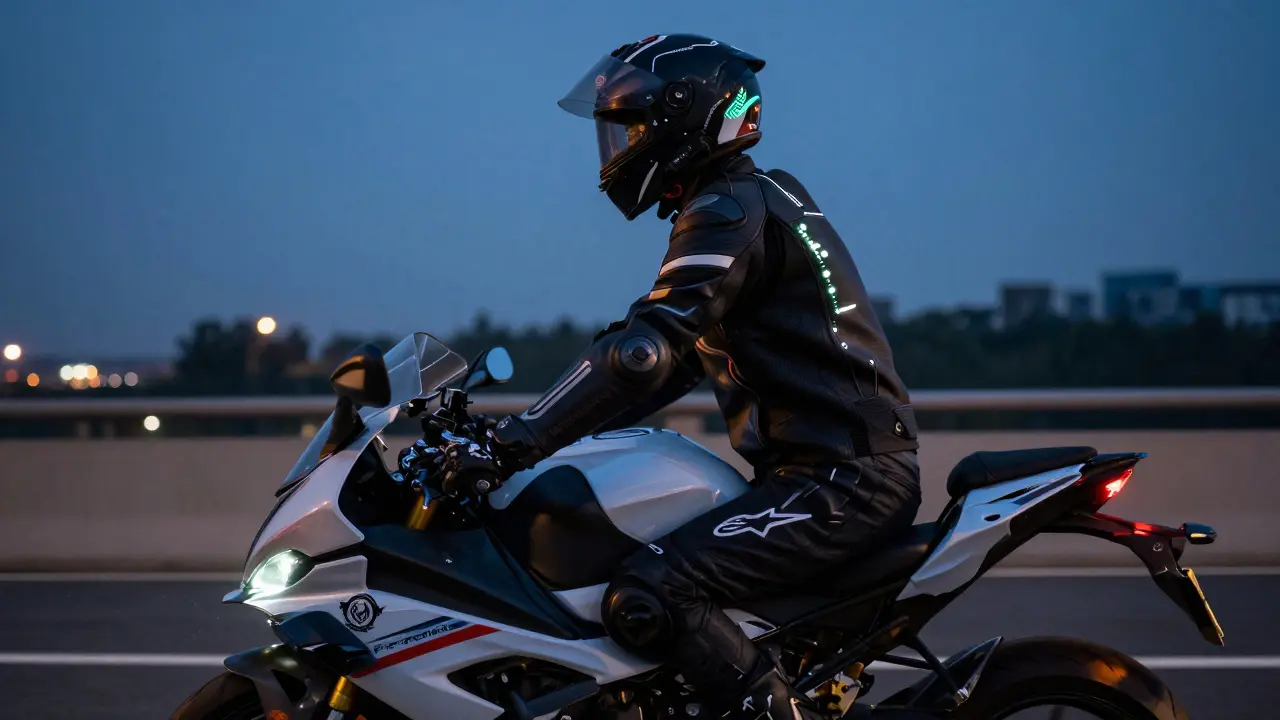
When you see a rider on a Harley-Davidson with a custom helmet that glows at night, or a Ducati rider wearing a jacket that tracks their heart rate and warns of fatigue, you’re not just seeing cool gear-you’re seeing the result of deep brand partnerships. Motorcycle companies aren’t just building bikes anymore. They’re teaming up with tech startups and outdoor apparel brands to turn riding into a smarter, safer, and more connected experience.
Why Motorcycle Brands Are Partnering Up
Motorcycle sales have flatlined in many markets, but rider engagement is climbing. People aren’t just buying bikes-they’re buying lifestyles. That’s why brands like KTM, BMW Motorrad, and Indian Motorcycle are moving beyond engine specs and paint jobs. They’re partnering with companies that make tech wearables, smart helmets, and weather-resistant fabrics to create full ecosystems around the ride.
Take the partnership between BMW and Garmin. In 2024, they launched the BMW Motorrad Navigator VII, a GPS system built into the bike’s dashboard that syncs with Garmin’s Edge cycling computers. Riders can now plan routes on their phones, send them to the bike, and get turn-by-turn voice prompts without ever touching a screen. It’s not just convenience-it’s safety. A 2025 rider survey by the Motorcycle Industry Council found that 68% of riders under 35 now consider integrated tech a deciding factor when buying a new bike.
Tech Partnerships: From Helmets to Heart Rate
The biggest leap in motorcycle tech isn’t happening in the engine-it’s happening on your head. Bell Helmets, a brand with 70 years of history, partnered with Australian startup NeuroSensory in 2023 to build the first helmet with real-time brainwave monitoring. The helmet’s inner lining has sensors that detect drowsiness and distraction, then vibrate gently to alert the rider. It’s not science fiction. Over 12,000 units were sold in 2025, mostly to riders on BMW and Triumph models.
Then there’s the collaboration between Alpinestars and Fitbit. Their SmartRide jacket, released in late 2024, tracks heart rate, body temperature, and G-forces during cornering. If the system detects a crash, it automatically sends your location and vital signs to emergency contacts. The jacket doesn’t just monitor-it learns. After 50 hours of riding, it starts suggesting optimal tire pressure based on your riding style and local weather. That kind of personalization used to cost $3,000 in aftermarket systems. Now it’s built into a jacket that retails for $599.
Apparel Collabs: When Fashion Meets Function
Motorcycle gear used to be all about leather, zippers, and visibility stripes. Now, it’s about materials that breathe, stretch, and self-repair. Dainese, the Italian gear maker, teamed up with Gore-Tex to create the D-TEC Pro Suit, which uses a new membrane that adapts to temperature changes. In 90°F heat, it vents moisture like a sports jersey. In 40°F rain, it becomes waterproof without bulk. Riders report 40% less sweat buildup on long rides compared to older models.
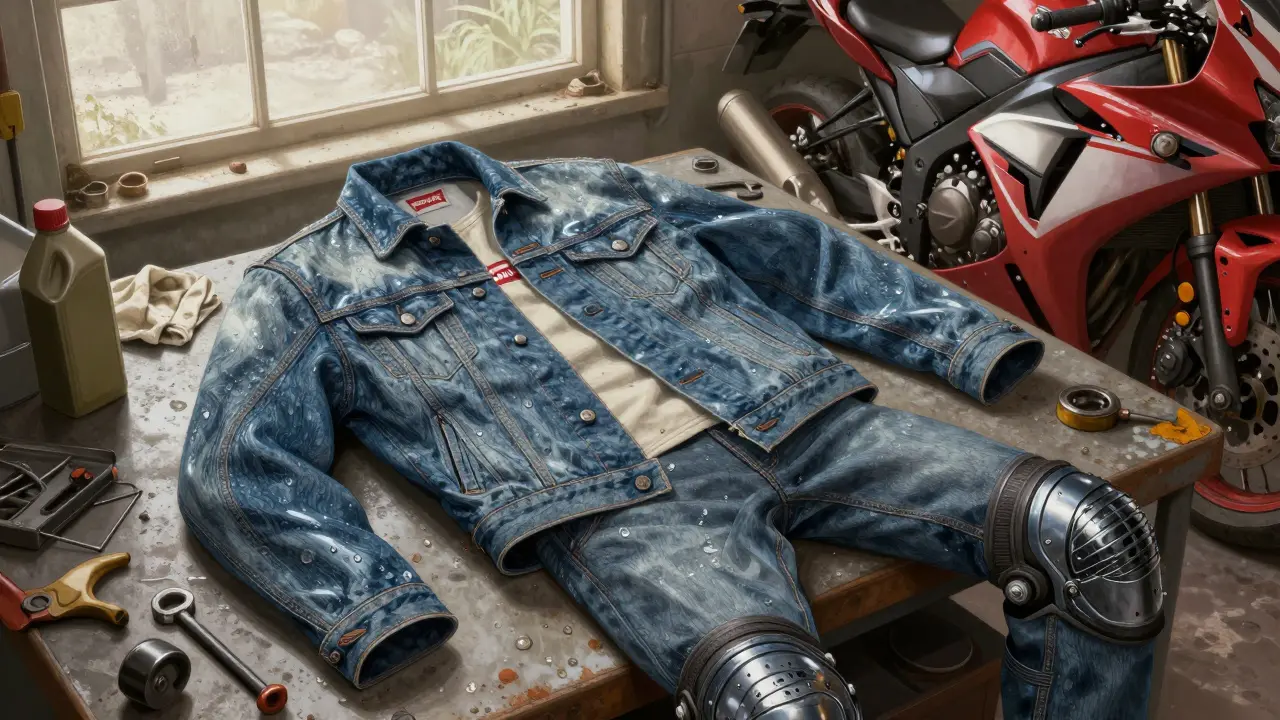
Even streetwear brands are jumping in. Levi’s partnered with Honda in 2024 to launch the RideReady Denim line. These jeans have hidden armor in the knees and hips, certified to EN 1621-1 standards, but look just like regular 501s. The fabric is treated with a nano-coating that repels oil, water, and road grime. And yes-they’re machine washable. Sales hit 85,000 pairs in the first six months, mostly among urban commuters in London, Berlin, and Portland.
The Hidden Cost of These Partnerships
These collabs aren’t free. A single tech integration can add $200-$500 to a bike’s price. Apparel partnerships often require brands to invest in R&D, testing, and certification. But the payoff? Higher margins and stronger loyalty.
A 2025 study by McKinsey showed that riders who own gear from the same brand as their motorcycle are 3.2 times more likely to buy their next bike from the same manufacturer. That’s why Harley-Davidson now sells its own line of Bluetooth-enabled gloves-$149 a pair-that sync with the bike’s infotainment system. You can answer calls, change music, or get navigation alerts through haptic feedback in your fingers. It’s not just gear. It’s an ecosystem.
But not all partnerships last. In 2023, KTM teamed up with a startup called RideAI to build an AI assistant that learned your riding habits and predicted road hazards. The tech worked-but the app was clunky, and customer support was nonexistent. After 18 months, KTM quietly dropped it. The lesson? Tech without user experience fails. Even the best sensors won’t save a bad app.
What’s Next? The Future of Riding Ecosystems
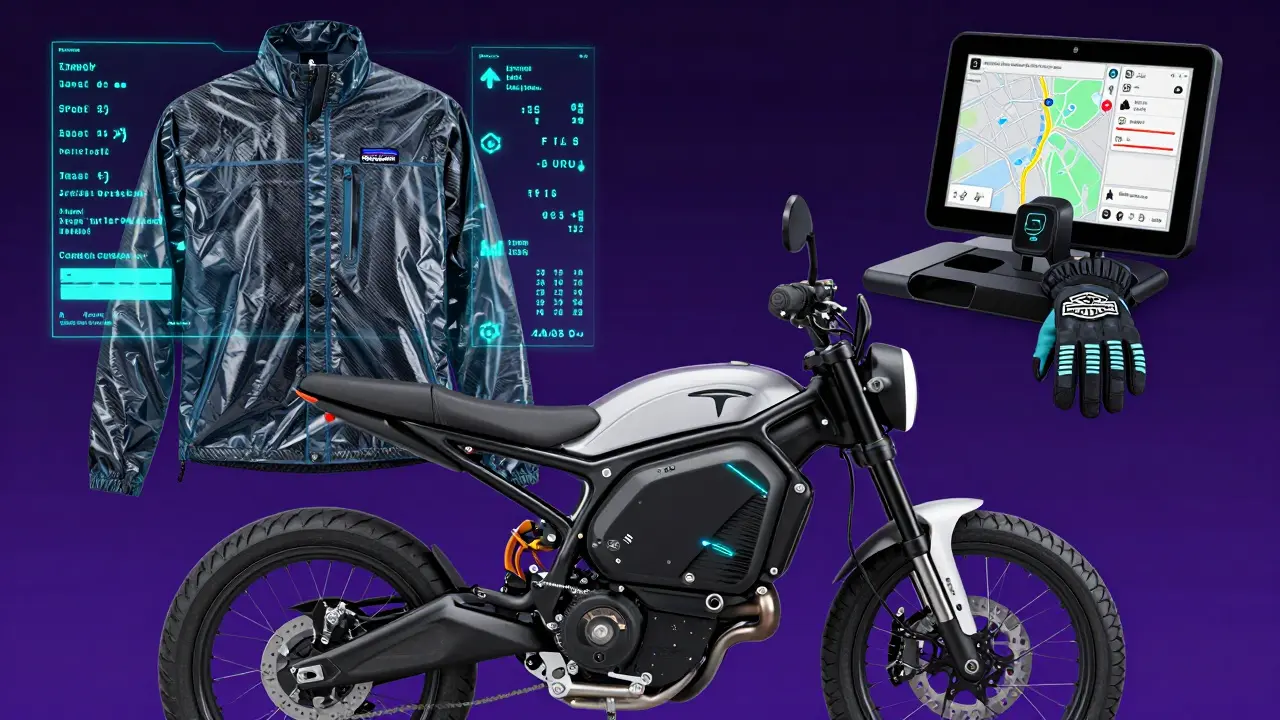
The next wave of partnerships is moving into AI and sustainability. In late 2025, Yamaha announced a collaboration with Patagonia to create the first carbon-neutral motorcycle jacket made from recycled ocean plastic. The jacket includes a QR code that tracks its entire lifecycle-from factory to landfill-and lets you trade it in for credit on your next ride.
Meanwhile, Ducati is testing a partnership with Tesla’s battery division to develop swappable lithium packs for electric motorcycles. Imagine pulling into a station, swapping your depleted battery for a fully charged one in 90 seconds-no charging wait. It’s not a prototype anymore. Test runs are happening in Italy and California.
And the biggest shift? Riders are starting to buy gear and tech before they buy bikes. A 2026 survey found that 51% of new riders choose their helmet or jacket first, then pick a bike that works with it. The bike is no longer the star-it’s part of a larger setup.
What You Should Look For
If you’re shopping for a new ride or gear, here’s what to check:
- Does the gear sync with your bike’s system? (Bluetooth, CAN bus, app integration)
- Is the tech certified? (Look for EN 1621-1 for armor, IP67 for water resistance)
- Is the brand known for updates? (Some jackets get firmware upgrades; others don’t)
- Can you return or trade in gear? (Sustainable brands now offer take-back programs)
- Does the partnership have real reviews-not just ads? (Check Reddit, motorcycle forums, YouTube)
Don’t be fooled by flashy names. A helmet with a “Tesla-cooled lining” might just mean it has a small fan. Ask for specs. Demand proof. The best partnerships don’t just sound cool-they make you safer and more confident on the road.
Real Riders, Real Stories
Emma, a 29-year-old nurse in Manchester, rides a Triumph Street Triple. She wears the Alpinestars-Fitbit jacket and Bell NeuroSensory helmet. “I used to get dizzy on night shifts and ride home exhausted,” she says. “The helmet warned me twice last winter that I was zoning out. I pulled over both times. I don’t know if I’d be here if it hadn’t flagged that.”
James, 41, a bike mechanic in Bristol, bought the Levi’s RideReady jeans after his old leather pants tore during a low-speed fall. “I didn’t want to look like a tourist,” he says. “But now I wear them to work, to the pub, and on the bike. I didn’t even notice the armor until I had to get it checked after a crash. It held up.”
These aren’t gimmicks. They’re tools. And the brands that get this right aren’t selling motorcycles-they’re selling peace of mind.
Are motorcycle brand partnerships worth the extra cost?
Yes-if the tech or gear improves safety, comfort, or connectivity in a way that fits your riding style. A $600 jacket with crash detection and temperature control might save your life. A $1,200 GPS system that syncs with your phone can cut ride planning time in half. The cost isn’t just in dollars-it’s in how much more confident and prepared you feel on the road.
Can I use gear from one brand with a bike from another?
Most standalone gear-helmets, jackets, gloves-works with any bike. But integrated tech like Bluetooth audio, navigation sync, or biometric alerts usually only works with specific models. For example, the Alpinestars-Fitbit jacket only connects to BMW’s RideConnect app. Always check compatibility before buying. Third-party adapters exist, but they’re often unreliable.
Do these partnerships make motorcycles more expensive?
Yes, but not always on the bike itself. The tech is often built into the gear, not the motorcycle. A $1,500 helmet with brainwave sensors adds cost, but you can buy it separately. Some bikes now come with tech-ready wiring harnesses that make adding accessories easier and cheaper. You’re paying for future-proofing, not just features.
Are there any motorcycle brands avoiding these partnerships?
Some traditionalists still stick to pure mechanics-like Moto Guzzi and certain custom builders. But even they’re starting to offer Bluetooth-ready mounts or compatible accessory ports. The market is shifting. Brands that ignore tech risk losing younger riders who expect their gear to work like their phones.
How do I know if a tech partnership is legit?
Look for third-party certifications: CE, EN 1621, IP ratings. Check if the app has regular updates and user reviews. Avoid products that only have marketing videos and no real-world testing data. If the brand doesn’t list technical specs or warranty terms for the tech, walk away. Real partnerships document everything.
Motorcycle brand partnerships aren’t about logos on jackets. They’re about merging decades of riding culture with modern safety and convenience. The best riders aren’t the ones with the loudest pipes-they’re the ones who know their gear has their back.
Comments
Amy P
Okay but the Bell NeuroSensory helmet just saved my cousin’s life last winter-he was riding home from a double shift and the helmet buzzed him twice before he nodded off. He didn’t even realize how tired he was until it screamed at him. I used to think this stuff was for nerds. Now I’m begging my boyfriend to get one.
January 11, 2026 at 11:09
Ashley Kuehnel
Hey if you're new to this whole tech gear thing, dont stress! Start simple-like the Levi’s RideReady jeans. They look normal, feel normal, and you dont even notice the armor until you wipe out (which, trust me, happens). Plus they wash fine. I got mine last year and still wear them to coffee shops. No one knows its tech gear unless you tell em. Perfect intro to the ecosystem.
January 13, 2026 at 03:47
adam smith
While the integration of advanced technological components into motorcycle apparel represents a significant evolution in rider safety infrastructure, one must not overlook the fundamental principles of mechanical reliability and human autonomy. The overreliance on digital feedback systems may inadvertently diminish the rider’s proprioceptive awareness, which has historically been the cornerstone of safe two-wheeled operation.
January 14, 2026 at 01:37
Teja kumar Baliga
Back home in India, we still ride with just a helmet and a smile. But I get it-when you’re riding through monsoon rains or traffic that never sleeps, tech like this isn’t luxury. It’s survival. My cousin got a smart jacket last year. He says he sleeps better now. Not because it’s fancy. Because he knows someone will know if he crashes.
January 14, 2026 at 22:29
k arnold
Of course Harley’s selling Bluetooth gloves. Next they’ll sell a jacket that texts your mom when you’re late for dinner. $149 for gloves that vibrate? I could buy a decent pair of winter gloves and a cheap Bluetooth headset for less and actually hear the music. This isn’t innovation. It’s corporate greed with a VR filter.
January 15, 2026 at 20:58
Tiffany Ho
I love that the Alpinestars jacket learns your style. I ride a lot on backroads and it totally adjusted my tire pressure tips after a few weeks. Also the emergency alert thing? I was scared to turn it on at first but now I leave it on all the time. Feels like having a safety net you dont even have to think about
January 17, 2026 at 01:50
michael Melanson
There’s a real shift happening here. It’s not just about the bike anymore. It’s about the entire experience-how you connect, how you’re protected, how you adapt. The fact that riders are choosing gear first and bikes second? That’s a cultural pivot. The industry finally gets that we’re not just buying metal-we’re buying confidence.
January 17, 2026 at 19:16
lucia burton
Let’s talk about the future of sustainable mobility ecosystems. The Yamaha-Patagonia carbon-neutral jacket isn’t just a product-it’s a paradigm shift in circular design philosophy. By embedding lifecycle tracking via QR code and instituting a trade-in credit model, they’re creating closed-loop consumer engagement that directly incentivizes environmental accountability. This isn’t greenwashing-it’s systemic reengineering of post-purchase behavior. And the fact that they’re integrating it with Ducati’s swappable battery architecture? That’s the holy grail of modular, scalable, rider-centric infrastructure. We’re witnessing the birth of a new mobility taxonomy where ownership is redefined as stewardship. The rider isn’t a consumer anymore. They’re a node in a distributed, intelligent, ecological network.
January 18, 2026 at 06:41