
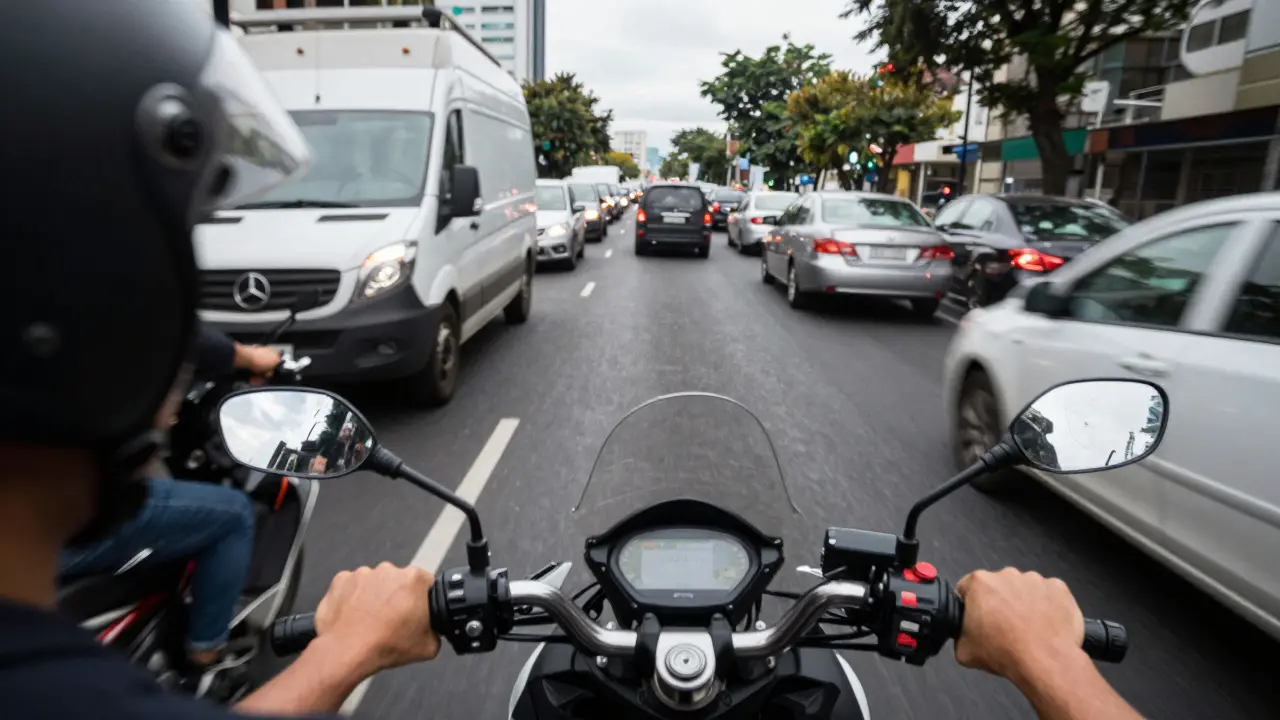
You are riding through heavy traffic in Bristol. A delivery van is drifting into your lane, and the driver hasn’t noticed you. You press the stock horn on your handlebars. It makes a polite 'beep.' The van keeps moving. In that split second, a weak horn isn't just an annoyance; it’s a potential accident waiting to happen.
Upgrading your motorcycle horn is one of the most effective safety modifications you can make. It doesn't require complex mechanical skills, but it does require knowing the difference between a legal signal and a noise violation. If you want to be heard without getting fined or having your bike fail its MOT, you need to understand voltage, decibels, and wiring diagrams.
Why Your Stock Horn Is Failing You
Most manufacturers equip motorcycles with stock electric horns that prioritize cost over volume. These units typically produce around 100 to 110 decibels (dB) at one meter. While that sounds loud in a quiet garage, city noise levels often sit between 70 and 85 dB. Your horn needs to cut through that background roar.
The problem isn't just volume; it's frequency. Human ears are most sensitive to frequencies between 2,000 and 4,000 Hz. Many cheap aftermarket horns blast high-pitched tones that feel annoying but don't penetrate car cabin insulation effectively. A proper upgrade focuses on both sound pressure level (SPL) and a lower, more penetrating tone that travels further.
| Horn Type | Average Volume (dB) | Power Draw | Legal Status (UK/EU) |
|---|---|---|---|
| Stock Electric | 100-110 dB | Low (3-5 Amps) | Legal |
| Premium Electric (e.g., Hella) | 110-115 dB | Medium (5-8 Amps) | Legal if single-tone |
| Electric Air Horn | 120-130 dB | High (10-15 Amps) | Risky for MOT |
| True Air Horn (Compressor) | 130+ dB | Very High + Compressor Power | Illegal for road use |
Understanding the Legal Limits in the UK
In the United Kingdom, the law regarding vehicle horns is strict. Under the Road Vehicles (Construction and Use) Regulations 1986, your horn must have a continuous note. This means no musical horns, no sirens, and no multi-tone "air horn" effects that mimic trucks. The key phrase inspectors look for during an MOT is "continuous note."
There is no specific maximum decibel limit written in stone for motorcycles in the same way there is for industrial machinery, but the horn must not be "excessively loud" or "unnecessarily noisy." In practice, this means staying under 115-120 dB at one meter is generally safe. Anything louder risks being flagged as a defect during an MOT test. If your local council receives complaints about noise nuisance from your horn, they can issue a fine regardless of MOT status.
Always check the manufacturer's specifications. Brands like Hella and Blaupunkt often label their products as "MOT compliant" or "E-marked." An E-mark indicates the product meets European safety standards, which gives you peace of mind during inspections.
Choosing the Right Upgrade: Electric vs. Air
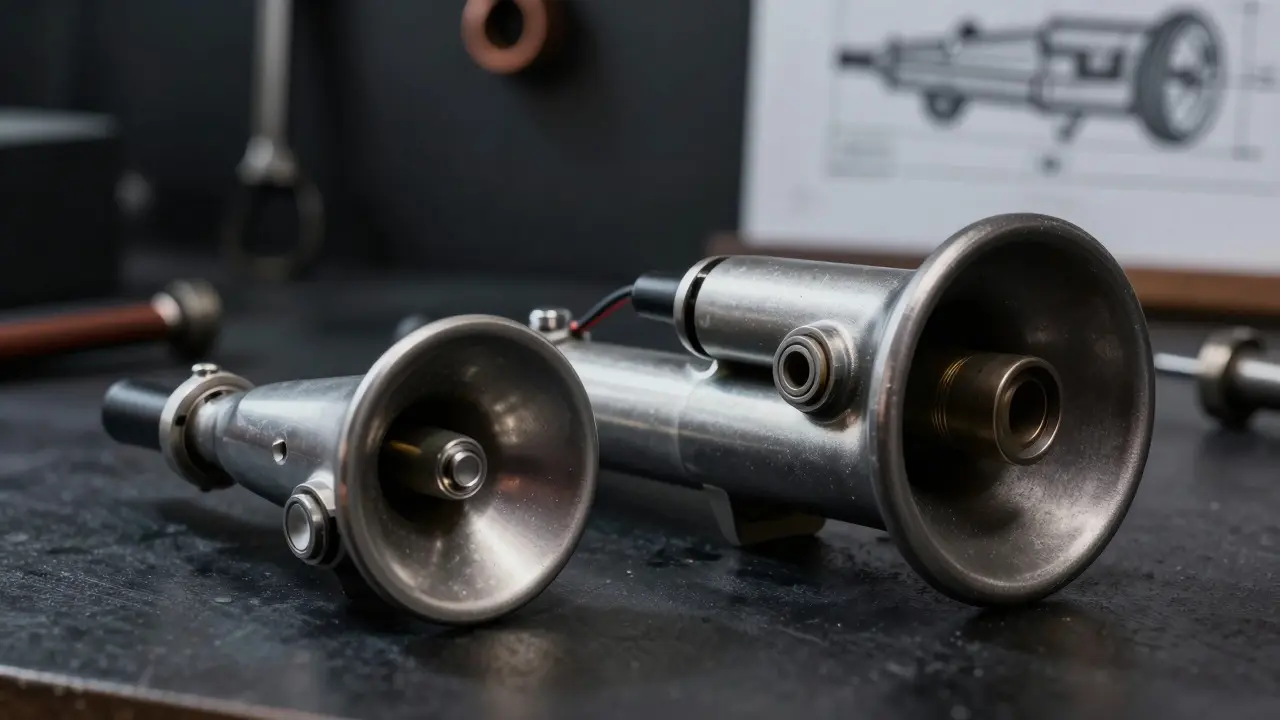
You have two main paths for upgrading: high-performance electric horns or electric air horns. True air horns require a compressor tank and significant space-impractical for most street bikes. However, "electric air horns" are compact diaphragm-style horns that simulate the sound of an air horn using only electrical power.
Premium Electric Horns: These are direct replacements for your existing unit. They plug into your current wiring harness. They are reliable, weather-resistant, and legally safer because they maintain the single-tone requirement. Look for models with a dual-chamber design, which produces a richer, deeper sound that cuts through wind noise better than single-chamber units.
Electric Air Horns: These offer significantly higher volume, often reaching 125 dB. They draw more current, so you may need to add a dedicated relay and fuse. The downside is the tone. Many electric air horns have a slightly modulated sound. While some pass MOTs, others get flagged for not having a "pure" continuous note. If you choose this route, listen to audio samples carefully and ensure the seller guarantees road legality.
Wiring Your New Horn Safely
Installing a new horn is straightforward, but doing it wrong can drain your battery or blow a fuse. Never wire a high-amperage horn directly to the switch on your handlebars. The switch is designed for low-current signals, not the 10+ amps a loud horn might draw.
Follow this standard wiring logic:
- Power Source: Connect the positive wire from the horn to a fused power source. Use an inline fuse rated for the horn's amperage plus 20% (e.g., if the horn draws 8A, use a 10A fuse). Place the fuse close to the battery.
- Ground Connection: Connect the negative wire from the horn to a clean, bare metal point on the frame. Paint prevents conductivity, so scrape away any rust or coating at the grounding point.
- The Relay: Use a 4-pin automotive relay. Pin 87 connects to the horn. Pin 30 connects to the fused power. Pin 85 is ground. Pin 86 connects to the original horn trigger wire from your handlebar switch.
- Trigger Wire: Tap into the existing wire that used to go to your old horn. When you press the button, it sends a small signal to the relay, which then closes the circuit and powers the horn directly from the battery.
This setup protects your handlebar switches from overheating and ensures the horn gets full power from the battery, resulting in maximum volume.
Placement Matters for Sound Projection
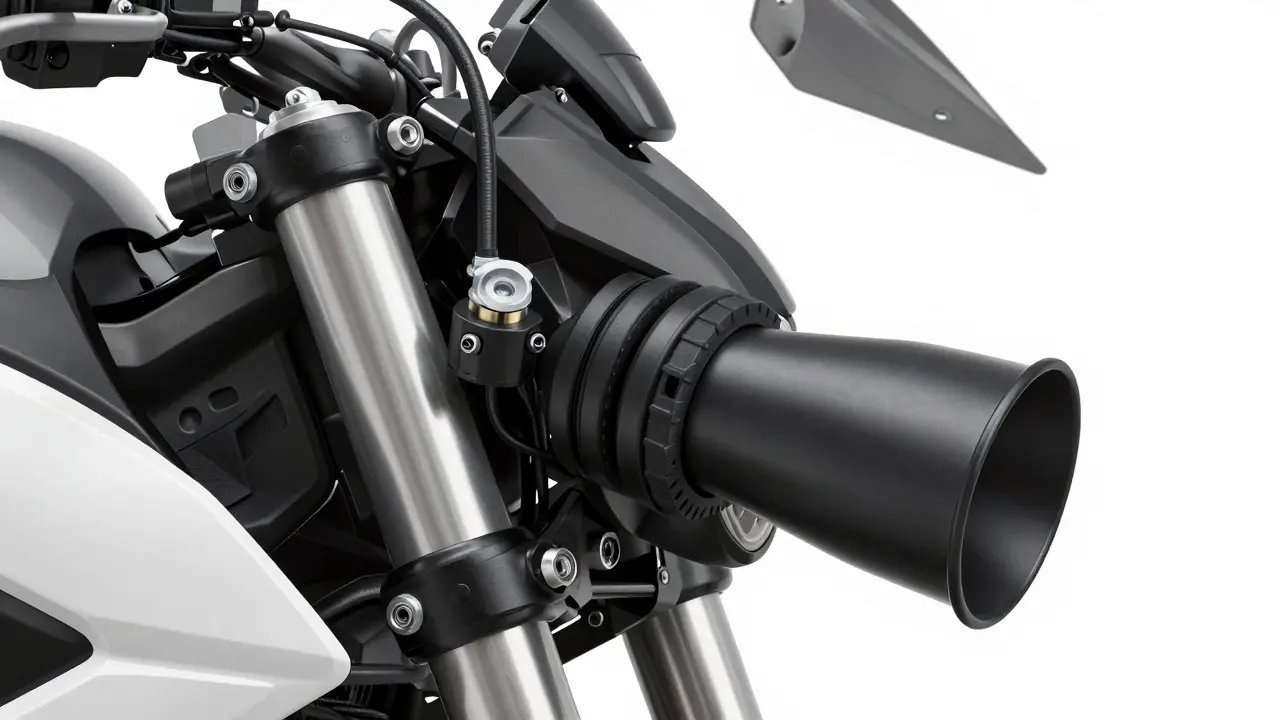
Where you mount the horn affects how well it projects. The goal is to aim the sound forward and slightly upward, away from the rider's ear and toward oncoming traffic or vehicles ahead.
- Avoid Plastic Covers: Don't mount the horn inside a fairing cavity unless there are large grilles. Plastic absorbs sound waves, reducing volume by up to 10 dB.
- Windshield Proximity: Mounting near the windshield can cause resonance issues or rattle. Keep at least 2 inches of clearance.
- Vibration Dampening: Motorcycles vibrate. Use rubber grommets or vibration-dampening washers when bolting the horn to the frame. Metal-on-metal contact can cause the horn to crack over time or create distracting rattles.
Testing and Troubleshooting
After installation, test the horn immediately. If it clicks but doesn't sound, check your ground connection. A poor ground is the most common cause of failure. If the horn works but is quieter than expected, verify that the fuse is the correct rating and that the relay is engaging fully.
If you hear a buzzing or warbling sound instead of a clear tone, the horn may be defective or the voltage drop across the wiring is too high. Ensure your wires are thick enough (at least 14 AWG) to handle the current without resistance.
Is a 120 dB motorcycle horn legal in the UK?
Yes, provided it emits a continuous single tone. There is no strict decibel cap in the regulations, but it must not be deemed "excessively noisy" by an MOT tester. Most premium electric horns stay within 110-115 dB, which is universally accepted. Electric air horns hitting 120+ dB may risk failing if the tone is perceived as non-standard.
Can I install a truck air horn on my motorcycle?
Technically yes, but practically no. Truck air horns require a compressor and air tank, taking up valuable space and weight. More importantly, many multi-tone truck horns do not meet the "continuous note" requirement for UK road vehicles, leading to MOT failures and potential fines.
Do I need a relay for a new motorcycle horn?
For standard electric horns drawing under 5 amps, you might not strictly need one, but it is highly recommended. For any horn drawing more than 5 amps (including most upgrades), a relay is essential to prevent overheating your handlebar switches and to ensure consistent power delivery from the battery.
What is the best brand for motorcycle horns?
Hella and Blaupunkt are widely regarded as top choices due to their durability, water resistance, and compliance with European safety standards. They offer a good balance of volume (around 110-115 dB) and legal safety for UK roads.
Will a louder horn help me pass my MOT?
Not necessarily. The MOT checks that the horn works and has a continuous note. A very loud horn could theoretically fail if the tester deems it excessively noisy or if the tone is irregular. Stick to E-marked, single-tone electric horns for the highest chance of passing.