
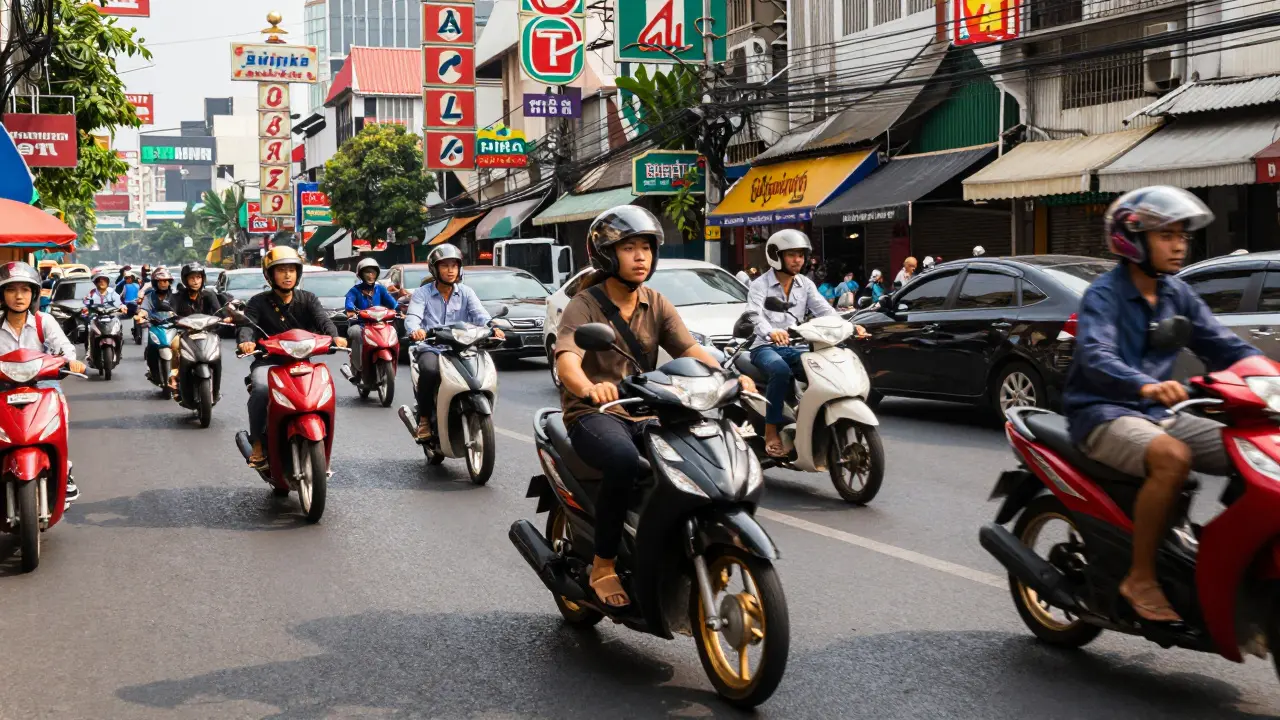
Motorcycle sales in 2025 hit 62 million units worldwide - a 4.3% jump from the year before. That’s not just a number. It’s the clearest sign yet that two-wheelers aren’t fading into history. They’re evolving. And the data shows who’s buying, why, and where the next big wave is coming from.
Global Sales Breakdown: Who’s Riding More?
Asia still dominates, accounting for 71% of all motorcycle sales. India alone sold 18.7 million units last year. Most of those are small-displacement bikes under 125cc - the kind you can ride to work, park on the sidewalk, and refill for less than $2. In Southeast Asia, countries like Indonesia and Vietnam saw double-digit growth. Why? Urban congestion, rising fuel prices, and cheap financing.
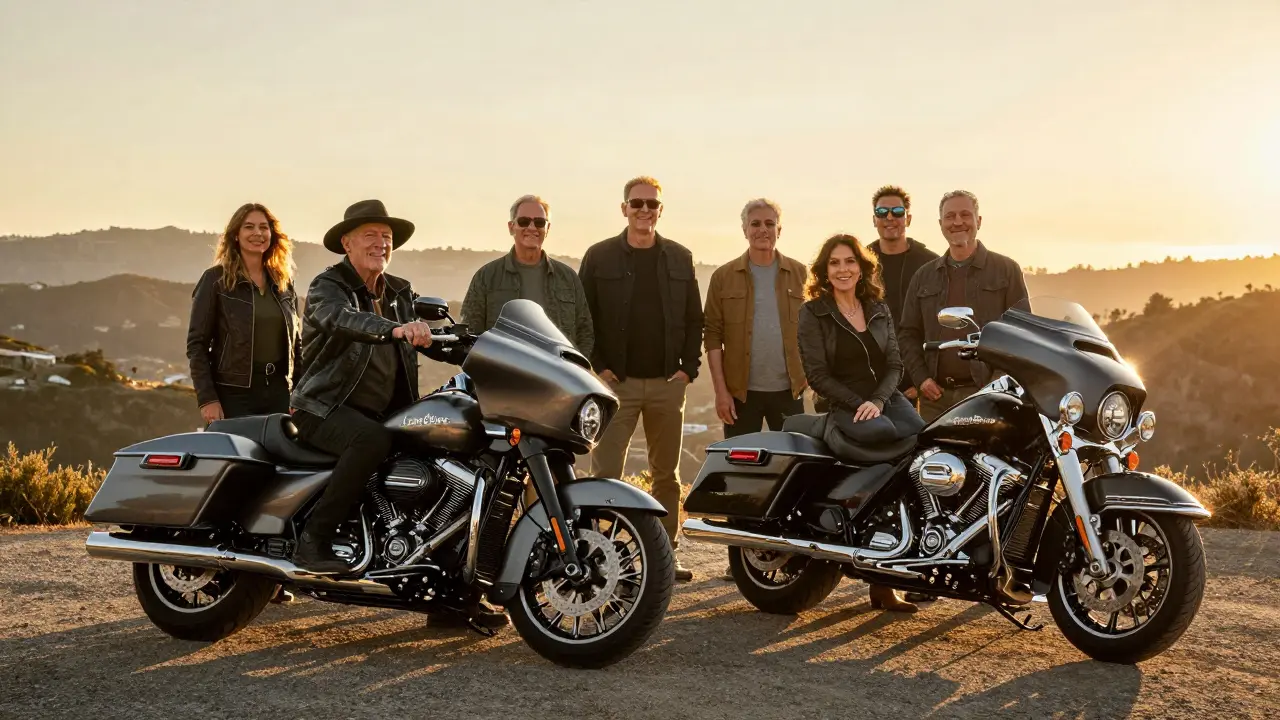
In North America, sales climbed 5.8% to 1.2 million units. Not because of young riders, but because of older buyers. The average age of a new motorcycle owner in the U.S. is now 51. That’s up from 42 in 2015. Harley-Davidson’s Touring and Cruiser lines led the charge, but electric models from Zero and Harley’s own LiveWire are gaining traction, especially in California and Oregon.
Europe’s numbers are steadier. 3.1 million units sold, mostly in Germany, Italy, and France. But here’s the twist: electric motorcycles made up 12% of all sales in the EU last year. That’s up from 6% just two years ago. The EU’s 2035 internal combustion engine ban is pushing riders to test electric options - and many are sticking with them.
What’s Driving the Growth?
It’s not one thing. It’s a mix.
First, commuting. With cities getting more crowded and public transit still unreliable in many places, motorcycles offer a faster, cheaper alternative. In Bangkok, a rider can cut 45 minutes off a 90-minute commute. In London, a 250cc bike can slip through traffic jams that trap cars.
Second, lifestyle. Motorcycles aren’t just transport anymore. They’re identity. Social media has turned riding into a visual culture. Instagram reels of canyon runs, custom builds, and weekend group rides are drawing in people who never thought they’d own a bike. TikTok’s #MotorcycleLife hashtag has over 12 billion views.
Third, affordability. A new entry-level motorcycle now starts at $3,500. That’s less than a used compact car. And maintenance? A full service costs under $200 a year. Compare that to a car’s $1,200 average. For first-time buyers, especially Gen Z and millennials, that’s a no-brainer.
Fourth, electric shift. Companies like Zero, Energica, and even Honda are pushing lightweight, high-torque electric bikes. The Zero SR/F, for example, hits 60 mph in 3.3 seconds and has a 160-mile range. Charging at home? Plug it in overnight. No gas station trips. No oil changes. And in cities with clean air zones, electric bikes often get free parking and lane access.
The Rise of the Electric Motorcycle
Electric motorcycles aren’t a niche anymore. In 2025, they accounted for 8.7% of global sales - up from 3.1% in 2021. That’s a compound annual growth rate of over 30%.
Why now? Battery tech improved. Lithium-ion packs are lighter, last longer, and charge faster. A 2024 Zero SR/S can recharge to 80% in 45 minutes using a standard Level 2 charger. That’s close to refueling a gas bike.
Performance is no longer a concern. The Lightning LS-218 can hit 218 mph. The Harley LiveWire One goes 0-60 in 3.0 seconds. These aren’t toys. They’re serious machines.
And the cost? Prices have dropped. The entry-level Electric Motion MXE is now $4,999. That’s under $1,000 more than a gas-powered 300cc bike - and you save hundreds each year on fuel and maintenance.
Where the Market Is Headed
By 2030, analysts expect electric motorcycles to make up nearly 25% of global sales. That’s not a guess. It’s based on policy, infrastructure, and consumer behavior.
China is leading the charge. Over 40% of motorcycles sold there in 2025 were electric. The government subsidizes them, and cities like Shanghai and Shenzhen are banning gas bikes from downtown zones.
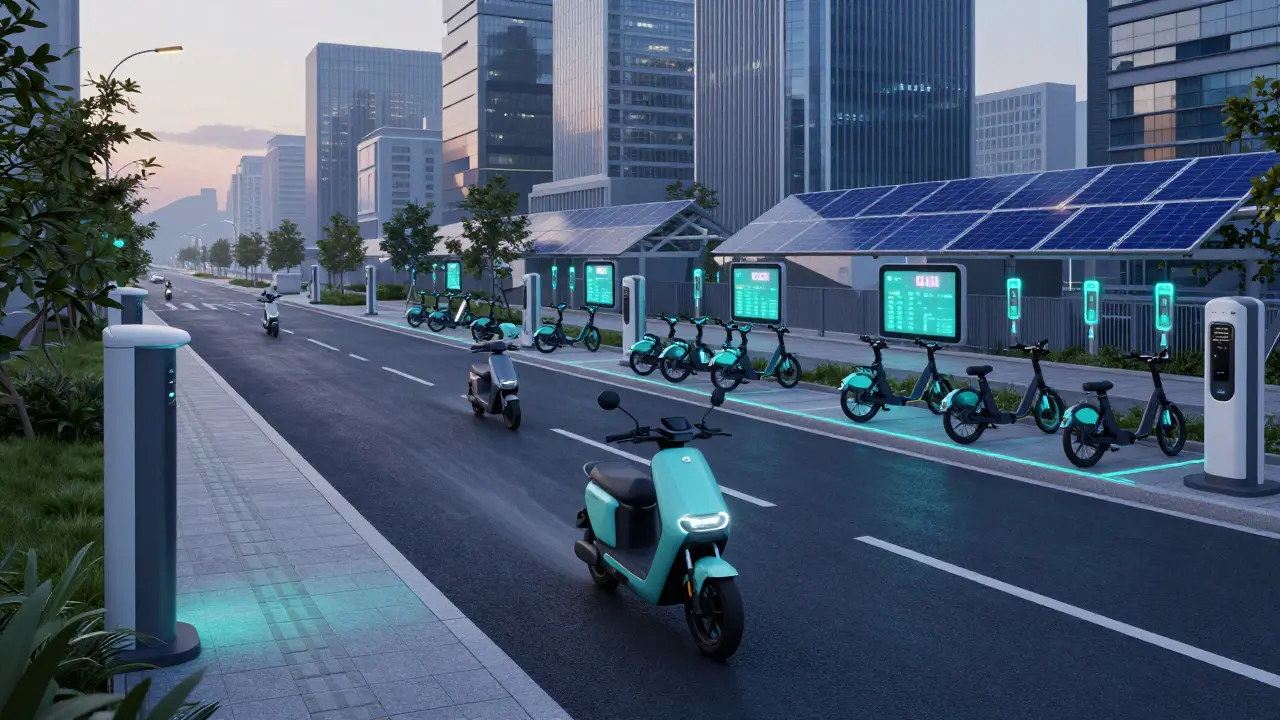
North America will follow, but slower. Charging infrastructure is patchy outside major cities. But that’s changing. Tesla’s Supercharger network now accepts electric motorcycles. In the U.S., 12 states have passed laws requiring new parking lots to include EV bike spots.
Meanwhile, emerging markets are skipping gas altogether. In India, startups like Ather and Ola Electric are selling more electric scooters than traditional ones. And in Africa, where fuel imports are unstable, solar-charged e-bikes are becoming a rural transport staple.
Pitfalls and Challenges
It’s not all smooth riding.
Supply chains are still shaky. Rare earth metals for batteries - like lithium, cobalt, and nickel - are concentrated in just a few countries. Geopolitical tension can spike prices overnight.
Insurance is another hurdle. In the U.S., electric motorcycle premiums are 20-30% higher than gas models. Why? Insurers don’t have enough data on crash rates or repair costs. That’s starting to change as more bikes hit the road.
And then there’s perception. Many riders still think electric bikes are slow, weak, or too expensive. But test rides are changing minds. Dealerships that offer demo days see 3x more conversions than those that don’t.
What This Means for Buyers
If you’re thinking about buying a motorcycle in 2026, here’s what to consider:
- **For city commuting**: Go electric. Lower cost of ownership, no emissions, and easy parking.
- **For long-distance touring**: Stick with gas - for now. Range anxiety is still real on highways with sparse chargers.
- **For beginners**: Start with a 250-300cc gas bike. They’re forgiving, cheap to insure, and easy to resell.
- **For performance lovers**: Test an electric sportbike. The torque delivery is instant, and the silence is unnerving - in a good way.
Don’t wait for the perfect bike. The market is moving fast. The best time to ride was five years ago. The second best time is now.
Are motorcycle sales really growing in 2026?
Yes. Global motorcycle sales hit 62 million units in 2025, up 4.3% from 2024. Growth is strongest in electric models and emerging markets like India and Southeast Asia. Even in mature markets like the U.S. and Europe, sales are rising due to urban commuting needs and lifestyle shifts.
Why are electric motorcycles gaining popularity?
Electric motorcycles are becoming more practical. Battery range has improved - many now exceed 150 miles on a charge. Charging is faster, and prices have dropped. In cities with emissions restrictions, they’re often exempt from fees. Maintenance is cheaper (no oil, filters, or exhaust systems), and performance is competitive with gas bikes. Riders are discovering that electric doesn’t mean slow - it means instant torque and silent power.
Which regions are driving motorcycle sales growth?
Asia leads with 71% of global sales, led by India and Indonesia. North America saw a 5.8% rise, mostly from older riders upgrading. Europe’s growth is driven by policy - the EU’s 2035 ICE ban is accelerating adoption of electric models. China is the fastest-growing electric market, with over 40% of its motorcycle sales now electric. Emerging economies are skipping gas entirely, jumping straight to e-bikes.
Is now a good time to buy a motorcycle?
Yes - especially if you’re looking for value. Entry-level gas bikes start under $3,500, and electric models are now under $5,000. Insurance and maintenance costs are lower than cars. With rising fuel prices and urban congestion, motorcycles offer real savings. Dealerships are offering more test rides and financing deals. Waiting won’t make it cheaper - it’ll make it harder to find inventory.
What’s the average age of a motorcycle buyer today?
The average age of a new motorcycle buyer in the U.S. is 51. In Europe, it’s around 48. That’s up from the early 2000s, when most riders were under 35. The shift is due to midlife riders returning to riding, or buying their first bike after selling a car. But younger riders are also coming back - especially in urban areas where e-bikes are practical and affordable.
Comments
Zelda Breach
Let's be real. 62 million units? That's not growth, that's population density in Mumbai and Jakarta being crammed onto two wheels. And don't get me started on calling a 125cc scooter a 'motorcycle.' It's a motorized grocery cart with a seat. The data doesn't lie - this isn't a renaissance, it's desperation dressed up as freedom.
March 13, 2026 at 04:01
Alan Crierie
I appreciate how this post highlights the quiet revolution happening in urban transport. 🌍 The fact that electric bikes are now making up 12% of EU sales tells me we're finally moving beyond the 'gas vs. electric' debate and into practical adoption. Small steps, but meaningful ones. For many, this isn't about trends - it's about dignity, mobility, and survival.
March 13, 2026 at 13:04
Nicholas Zeitler
I just want to point out - and I mean this with all sincerity - that the phrase 'no oil changes' is technically inaccurate. Electric motorcycles still require periodic maintenance: brake fluid, tire wear, chain tension (if applicable), battery health checks, and cooling system inspections. It's not 'zero maintenance.' It's 'different maintenance.' And that's okay. We just need to stop pretending it's magic.
March 14, 2026 at 17:20
Teja kumar Baliga
In India, we don't just ride bikes - we live on them. My uncle uses his 110cc scooter to deliver vegetables, drop kids at school, and pick up his wife from work - all in one day. It's not a hobby. It's survival. And now with electric scooters under ₹60,000, even rickshaw drivers are switching. This isn't a market trend - it's a lifeline.
March 15, 2026 at 10:37
k arnold
So let me get this straight. You're telling me people are buying $5,000 electric bikes because 'no oil changes'? Meanwhile, my 2003 Honda Shadow runs on $3 gas and I've spent $150 on maintenance in 12 years. This isn't progress. It's a marketing scheme for people who think 'zero emissions' means zero responsibility.
March 17, 2026 at 01:35
Tiffany Ho
I think it's really cool how more people are riding again. I got my first bike last year and it changed everything. The wind, the freedom, the way people wave at each other on the road. It's simple but it feels real. I didn't know I needed this until I had it.
March 17, 2026 at 20:36
michael Melanson
The electric shift is real. I rode a Zero SR/F last weekend. The torque hit like a punch. No revving. No noise. Just forward. It felt like driving a spaceship that happens to have two wheels. I didn't believe it until I tried it. Now I'm looking at used gas bikes like they're relics.
March 18, 2026 at 09:46
lucia burton
The macroeconomic implications of this paradigm shift cannot be overstated. We're witnessing a systemic realignment in last-mile mobility infrastructure, driven by conjoined forces of regulatory pressure, lithium-ion energy density breakthroughs, and sociocultural reorientation toward micro-mobility as a status-neutral utility. The combustion engine's obsolescence is no longer a prediction - it's an engineered inevitability, accelerated by urban policy architecture and consumer behavioral entropy.
March 19, 2026 at 07:45
Denise Young
Oh please. 'Affordable' at $3,500? That's the price of a used Toyota Corolla from 2010. And you think Gen Z is rushing to buy these? Most of them can't afford rent, let alone insurance. And don't get me started on 'free parking' - that's only in Portland. In most cities, you still get ticketed for parking on the sidewalk. This article reads like a dealer brochure written by someone who's never actually ridden one.
March 20, 2026 at 14:43
Peter Reynolds
I live in rural Ohio. We don't have EV chargers. But we do have dirt roads, deer, and potholes that swallow cars whole. My 2007 Kawasaki Ninja 250 gets me to the next town in 20 minutes. It's not about trends. It's about getting there. And if that means riding a gas bike for another 10 years? So be it.
March 20, 2026 at 19:10
Fred Edwords
The data is compelling, but let's clarify terminology: 'Motorcycle' refers to vehicles with displacement greater than 150cc, according to ISO 3833. Many of the units counted as 'motorcycles' in Asia are, technically, mopeds or motorized scooters. This conflates markets and misrepresents trends. Precision matters.
March 21, 2026 at 07:25
Sarah McWhirter
You know who really controls the motorcycle market? The same people who control oil, lithium mines, and the global supply chain. This whole 'electric revolution' is just a rebrand. They're not saving the planet - they're locking you into a new dependency. Next thing you know, your bike will need a subscription to unlock top speed. And they'll charge you per mile. You think this is freedom? It's a gilded cage with a charger.
March 21, 2026 at 15:15
Ananya Sharma
You call this growth? In India, 90% of these 'sales' are financed through predatory microloans. Young men take on 24% interest rates just to own a scooter. They're not choosing freedom - they're being trapped by a system that sells them mobility as a dream while keeping them in debt. And you call this progress? Meanwhile, the electric scooters you praise? Made in China. Owned by Indian startups funded by American venture capital. It's not innovation - it's extraction dressed up as empowerment.
March 22, 2026 at 20:39
kelvin kind
I ride a 1998 Suzuki. It's loud, it's clunky, it leaks oil. I love it. I don't need a 160-mile range or app integration. I just need to get out of the house. This post feels like it's trying to sell me something I never asked for.
March 23, 2026 at 20:43
Nicholas Zeitler
Just to clarify - the comment I made earlier about maintenance? I stand by it. But I also want to say: if you're riding a bike, regardless of fuel type, you're part of something bigger. It's not about the tech. It's about the ride. And that part? That part is timeless.
March 25, 2026 at 13:12