
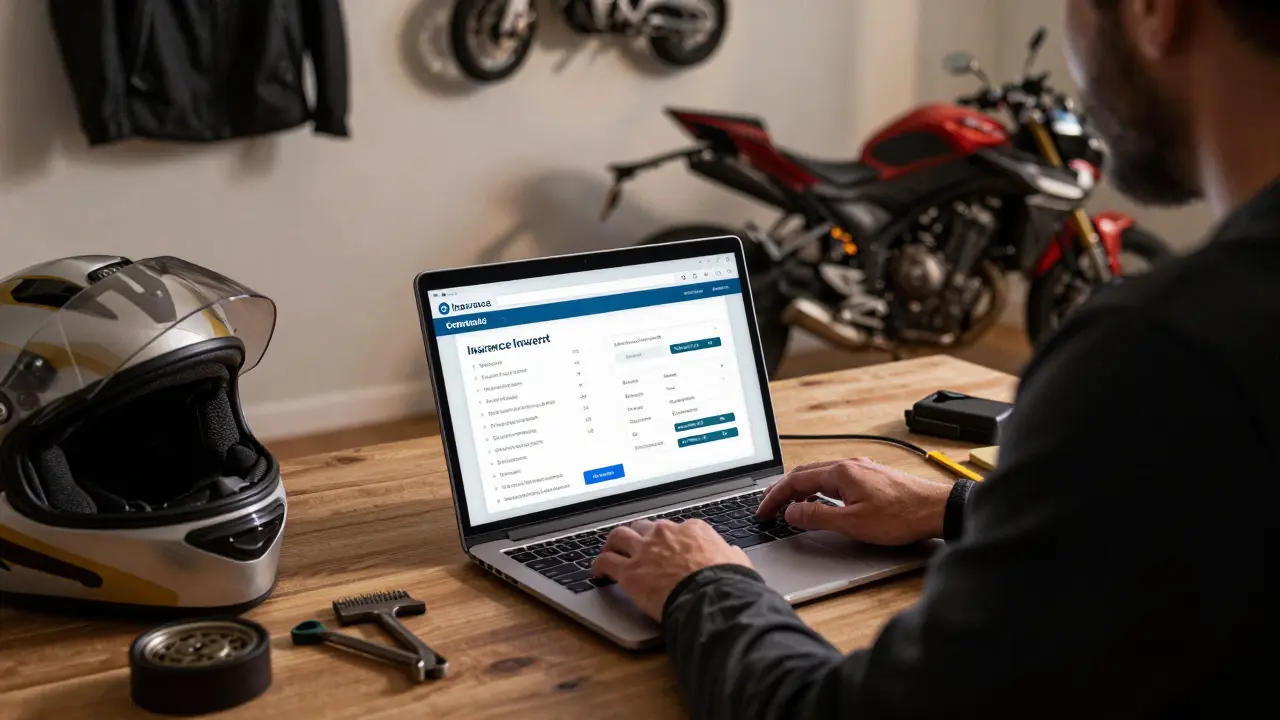
Getting a motorcycle insurance quote online feels simple-until you realize how different the offers are. One company says you’ll pay £320 a year. Another says £780. Same bike, same rider, same postcode. What’s going on? The truth is, not all motorcycle insurance quotes are created equal. Some hide fees. Some cut coverage. Others just don’t understand your riding habits. If you pick the cheapest quote without checking the details, you could end up paying way more when you need to make a claim.
Why motorcycle insurance quotes vary so much
Motorcycle insurance isn’t like car insurance. You’re not just insuring a machine-you’re insuring a lifestyle. Insurers look at how often you ride, where you store it, what kind of gear you wear, and even your riding experience. A 25-year-old with a 125cc scooter and a full license pays less than a 19-year-old with a 600cc sportbike and a provisional. But even two riders with identical profiles can get wildly different quotes because insurers use different models to calculate risk.Some companies assume you ride only on weekends. Others assume you commute daily. One might give you a discount for taking a CBT course. Another won’t even offer a quote unless you’ve had your license for two years. That’s why comparing quotes isn’t about finding the lowest number-it’s about finding the right fit.
What you need before you start comparing
Before you click ‘Get Quote’ on any site, gather these five things:- Your motorcycle’s make, model, year, and engine size (CC)
- Your full driving license number and issue date
- Your postcode (this affects theft risk and repair costs)
- How many miles you ride per year (estimate if unsure)
- Any no-claims bonus or previous insurance history
Missing one of these? You’ll get a quote that doesn’t reflect reality. I’ve seen riders get £200 quotes, then find out their bike’s engine size was listed as 250cc instead of 450cc. When they tried to claim after an accident, the insurer refused-because the policy didn’t match the bike. Always double-check the details before submitting.
Compare the coverage, not just the price
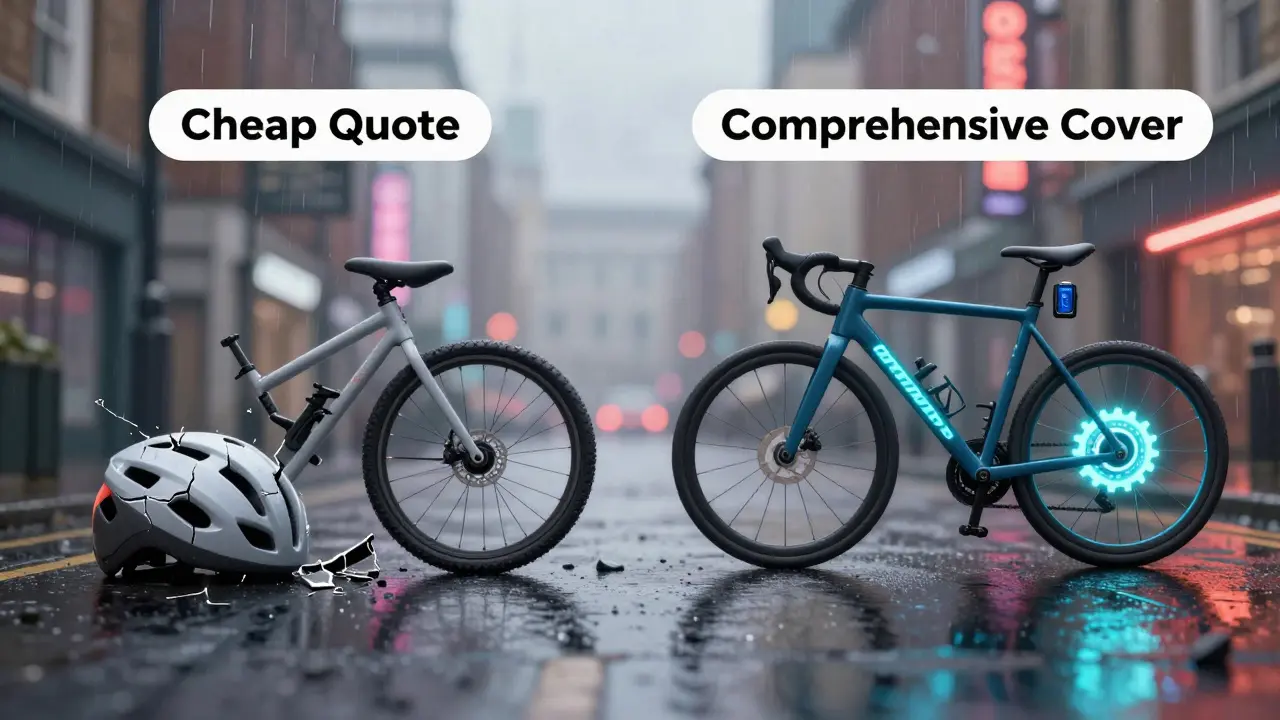
The cheapest quote might look great-until you read the small print. Here’s what actually matters:- Third-party only (cheapest): Covers damage to others, nothing to your bike. If you crash and total your bike, you’re out of luck.
- Third-party, fire and theft: Adds coverage if your bike is stolen or catches fire. Still won’t pay for accident damage to your own bike.
- Comprehensive: Covers everything-including damage to your bike, theft, fire, and sometimes personal injury or riding gear. This is what most riders actually need.
Many riders think comprehensive is too expensive. But in the UK, the difference between third-party and comprehensive on a 300cc bike is often under £100 a year. And if your bike gets stolen (which happens to over 12,000 motorcycles in the UK each year), you’ll wish you had it.
Also check what’s included:
- Legal expenses cover
- Breakdown assistance
- Protection for helmets and riding gear
- Windscreen repair
- European cover (if you ride abroad)
Some policies give you £500 for gear. Others give you nothing. One company includes free European cover. Another charges £25 extra. These add up.
Discounts that actually save you money
Don’t just take the discount the quote shows. Ask if you qualify for more:- No-claims discount: Every year without a claim saves you 20-30%. Some insurers let you protect it for a small fee.
- Approved security: Installing a Thatcham-approved alarm or tracker can cut your premium by 15-25%.
- Restricted rider: If you’re under 25, some insurers offer lower premiums if you limit your bike to 33bhp (a legal requirement for A2 license holders).
- Pay annually: Monthly payments often include interest. Paying upfront can save 10-15%.
- Multi-bike discount: If you own more than one bike, you can save up to 20%.
One rider in Bristol saved £180 a year just by adding a GPS tracker. Another saved £90 by switching from monthly to annual payments. These aren’t myths-they’re real savings.
Use comparison sites wisely
Sites like Confused.com, ComparetheMarket, and GoCompare are useful-but they don’t show everything. Many smaller insurers (like Bennetts, MCE, and Direct Line Motorcycle) don’t appear on these platforms. They offer better rates, better service, and more tailored cover.Here’s how to use them right:
- Get quotes from 2-3 comparison sites
- Write down the top 3 offers
- Go directly to the insurer’s website and get a quote again
- Call them. Ask: ‘Is there a better deal if I pay yearly?’ or ‘Do you include gear cover?’
One rider found a £120 difference between a comparison site quote and the insurer’s own website. The site had listed the wrong riding mileage. The insurer fixed it and lowered the price.
Read reviews-not ratings
A 4.7-star rating doesn’t mean much if the reviews say, ‘They denied my claim because my helmet wasn’t on the policy.’ Look for patterns:- Are people complaining about slow claims?
- Do they mention hidden fees?
- Is customer service responsive?
Check Trustpilot, Reddit’s r/motorcycles, and independent forums. Bennetts has a 4.4 rating on Trustpilot-but the top reviews praise their quick claims process for gear damage. Admiral gets high ratings but has dozens of complaints about policy cancellations after minor incidents.
Don’t forget the extras
Some insurers offer free rider training. Others give you a free helmet with a new policy. One company in the Midlands offers free roadside assistance even if you’re on a 125cc bike. These aren’t gimmicks-they’re value.Also, ask about:
- Accident forgiveness (first claim doesn’t raise your premium)
- Flexible payment during winter (pause payments if you don’t ride)
- Guaranteed replacement value (not market value) if your bike is written off
One rider in Bristol had his 2018 Yamaha R3 stolen. His policy paid out £4,200-the full replacement value. His friend with a different insurer got £2,800 because theirs paid ‘market value’. That’s a £1,400 difference.
What to do after you pick a policy
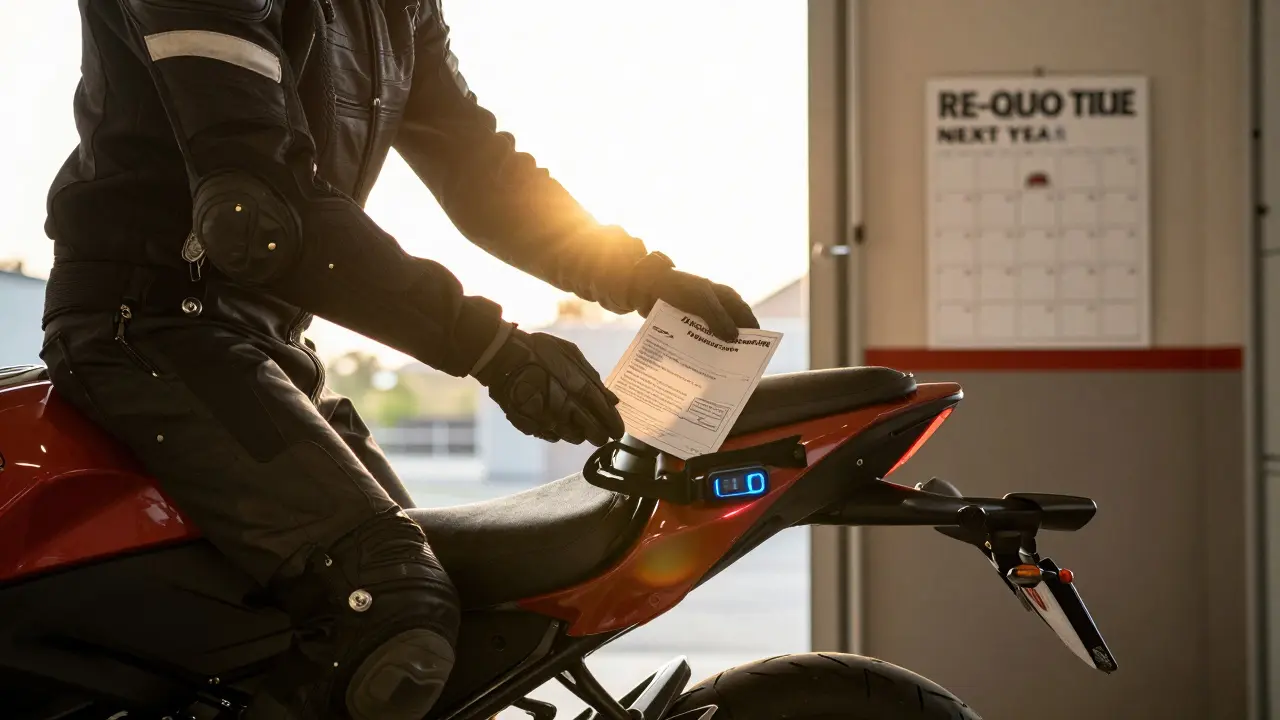
Don’t just click ‘Buy’ and forget it.- Save the policy documents in your phone and email
- Take a photo of your insurance certificate and keep it in your riding gear
- Set a calendar reminder to review your policy every 12 months
- Update your mileage if you ride more than you estimated
One rider forgot to update his annual mileage from 3,000 to 6,500. When he crashed, the insurer reduced his payout because he’d ‘overstated’ his risk. He lost £700. Don’t let that be you.
Final tip: Re-quote every year
Your premium doesn’t stay the same just because you’ve been loyal. Insurers know that. Every year, get new quotes-even if you’re happy with your current provider. You might find:- A better deal from your current insurer (they often have loyalty discounts)
- A new competitor offering lower rates
- A change in your circumstances (new bike, lower mileage, better license) that lowers your risk
Last year, a rider in Bath saved £210 just by re-quoting. His bike was the same. His license was the same. But the market had changed. He got a better deal.
Motorcycle insurance isn’t about the lowest price. It’s about the right coverage, the right service, and the right peace of mind. Take the time to compare properly. Your next ride-and your wallet-will thank you.
Comments
NIKHIL TRIPATHI
Had a similar thing happen last year. Got a £280 quote online, bought it, then got hit by a car. Turns out my helmet wasn't covered and the insurer said 'not listed in policy'. Took three weeks and three calls to get £400 back. Lesson learned: read the small print like your life depends on it-because it kinda does.
January 31, 2026 at 02:45
Aryan Jain
They’re all in on it. Insurance companies, comparison sites, even the government. They want you to think it’s about safety, but it’s really about locking you in. They know you won’t check the fine print. They count on your trust. That’s why they hide gear coverage, change terms mid-policy, and laugh all the way to the bank when you crash and they deny you. Wake up. This isn’t insurance-it’s a rigged game.
January 31, 2026 at 13:38
Rakesh Dorwal
Bro, you think this is bad? Wait till you try claiming after a monsoon slide. My bike got stolen last year and the insurer said 'you didn’t use the chain lock they recommended'-even though I used a different one that’s Thatcham approved. They still paid out, but only after I threatened to post the whole conversation on Reddit. Trust no one. Always record everything.
February 1, 2026 at 21:12
Nalini Venugopal
Just a quick note: 'motorcycle' is spelled with two L’s, not one. Also, 'it’s' vs 'its' trips up a lot of people. Small things matter, especially when you’re dealing with legal documents. Just saying. 😊
February 3, 2026 at 03:52
Aditya Singh Bisht
YESSSS! This is exactly what I needed to hear. I was about to go with the cheapest quote-£220-but then I read this and thought, 'nah, that’s a trap.' I went direct to Bennetts, asked about gear cover, paid yearly, and got £310 with full comprehensive + free helmet. Best decision ever. My bike’s safe, I’m safe, and I sleep at night. You guys are the real MVPs. 🙌
February 3, 2026 at 10:35
Agni Saucedo Medel
soooo true!! 🤍 i got my insurance last year and forgot to update my mileage from 2k to 5k… then i crashed and they gave me half the payout 😭 i cried for 3 days. now i set a reminder every 3 months. also, get the european cover. trust me. one time i rode to france and my chain snapped. they fixed it for free. 🇫🇷🏍️
February 4, 2026 at 22:56
Shivani Vaidya
While the advice provided is largely sound, I would like to emphasize the importance of verifying insurer credibility through independent regulatory bodies such as the Financial Conduct Authority. Many online platforms prioritize commission-driven results over consumer protection. A policy’s value lies not merely in its price, but in its enforceability and the insurer’s historical claim settlement rate. Proceed with due diligence.
February 5, 2026 at 21:29
Pramod Usdadiya
bro i just wanna say… i love this post. real talk. i had no idea about the thatcham thing. i bought a tracker and saved £150. also, pay yearly. i was paying monthly and didn’t even realize i was paying extra interest. oops. 🤦♂️ thanks for the reminder. i’m gonna requote next week. 🏍️💛
February 6, 2026 at 14:25
Rubina Jadhav
I just got my first bike. This helped a lot. Thank you.
February 8, 2026 at 00:10
Tarun nahata
LOOK. I was skeptical. Thought this was just another boring guide. But then I read the part about replacement value vs market value. My friend lost his 2020 GSX-R last year and got £3,200. I got mine stolen this year-same model, same year-and I got £4,800 because I picked the right policy. I didn’t just save money. I saved my ride. This isn’t just advice. This is a lifeline. THANK YOU. 🙏🔥
February 8, 2026 at 00:32