
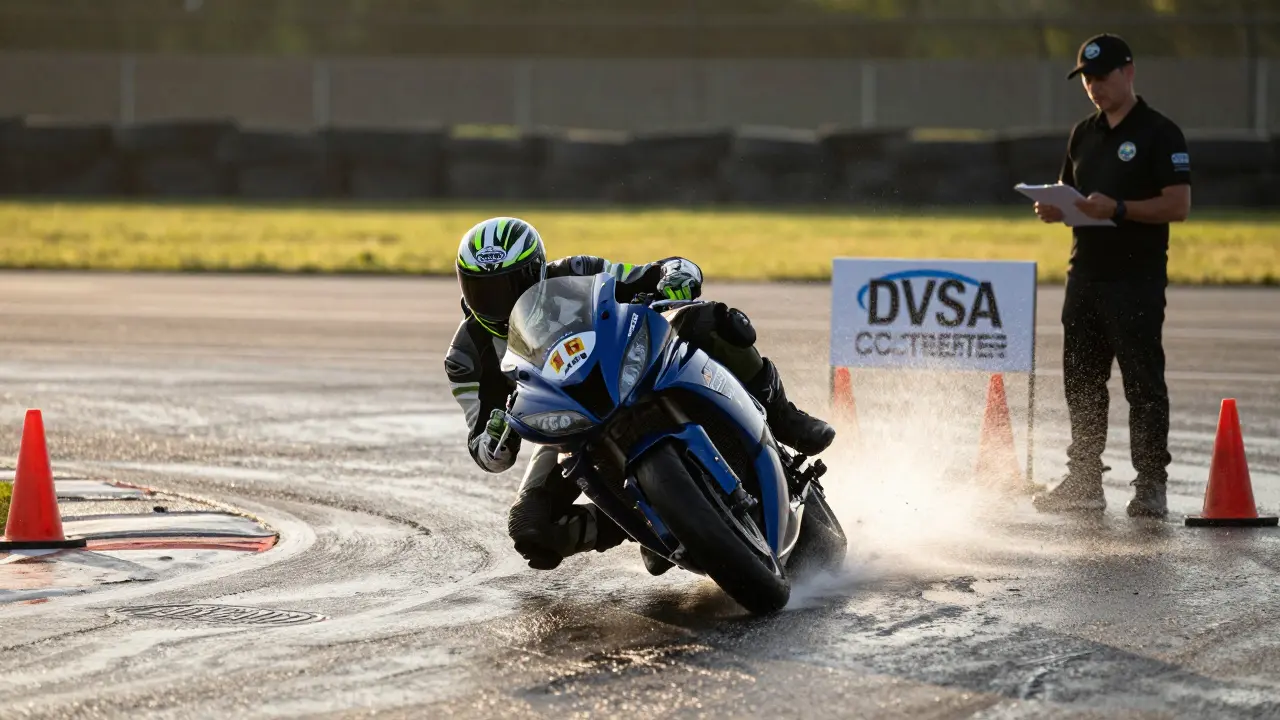
Spending hours on a motorcycle doesn’t make you a better rider. It just makes you more experienced. And experience without proper training? That’s where most accidents happen. If you’re thinking about taking a motorcycle safety course, you’re not just signing up for a few hours of classroom time and range drills-you’re investing in your life, your wallet, and your confidence on the road.
Insurance Discounts Are Real-And They Add Up
Most UK insurers offer discounts for riders who complete an approved safety course. It’s not a gimmick. It’s a statistical fact: riders who’ve taken formal training are 30% less likely to be involved in a crash, according to the Department for Transport’s 2024 motorcycle safety report. That drop in risk translates directly into lower premiums.
Companies like Admiral, Direct Line, and Aviva all list rider training as a qualifying factor for discounts. The average reduction? Between 10% and 20% on your annual premium. For someone paying £600 a year, that’s £60 to £120 back in your pocket. Some insurers even offer multi-year discounts if you complete an advanced course later on.
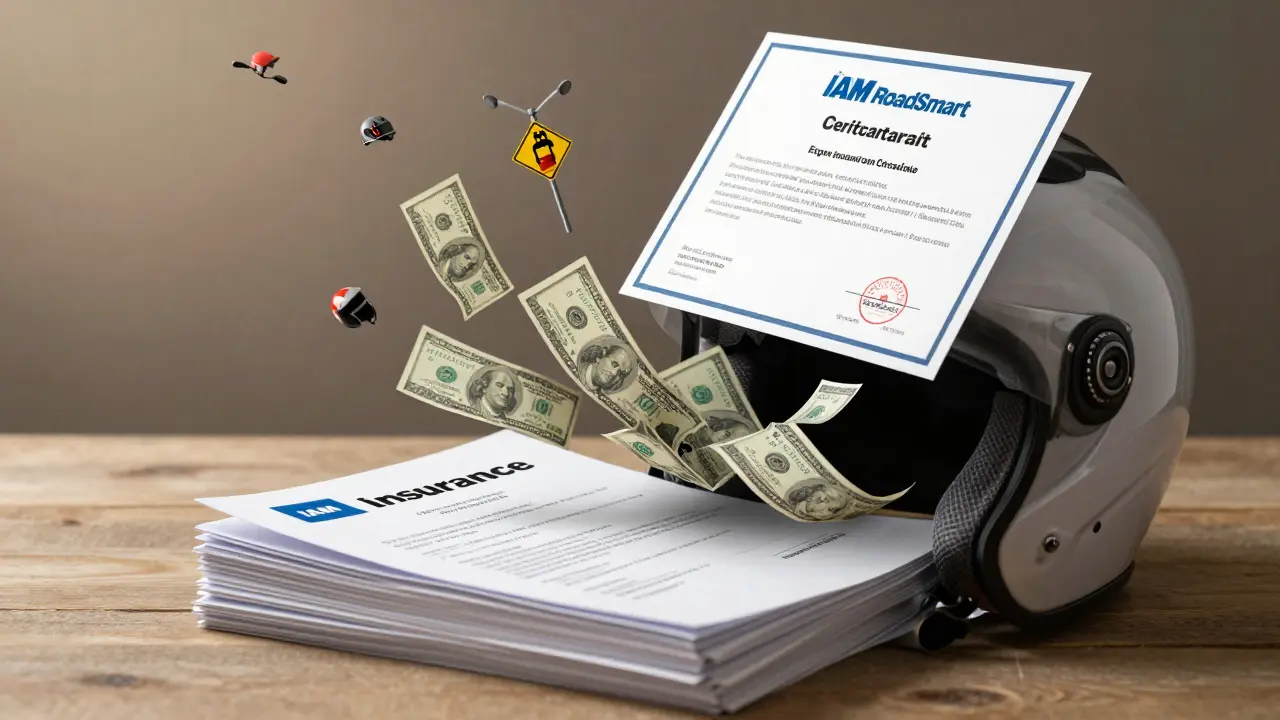
Here’s the catch: you have to prove you took the course. Most insurers require a certificate from a DVSA-approved provider like the Motorcycle Industry Association (MIA) or the Institute of Advanced Motorists (IAM). Don’t assume they’ll know you completed it-send the certificate the same day you get it. Some policies even let you lock in the discount for up to three years if you complete a Level 2 or 3 course.
It’s Not Just About Avoiding Crashes-It’s About Controlling the Bike
Most new riders think the biggest danger is other cars. It’s not. It’s themselves. Over 60% of single-vehicle crashes in the UK involve the rider losing control, not a collision, according to the Royal Society for the Prevention of Accidents (RoSPA). These crashes happen because riders don’t know how to brake properly, how to lean correctly, or how to react when the rear wheel slides.
A safety course teaches you how to use both brakes together, how to countersteer at low speeds, and how to read road surfaces before you hit them. You’ll learn how to scan ahead like a pro-looking 12 seconds down the road, not just at the car in front. You’ll practice emergency stops on gravel, wet pavement, and uneven surfaces. You’ll learn how to use your body weight to help the bike turn, not just your handlebars.
One rider in Bristol told me he’d been riding for five years before taking his course. He’d never realized he was braking too hard with the front wheel, causing his bike to nosedive. After the course, he stopped wiping out on corners. That’s the kind of change you don’t get from YouTube videos or reading forums.
Real Skills, Not Just Theory
There’s a big difference between knowing what to do and being able to do it under pressure. That’s why every approved course includes hands-on riding. You’ll start on a closed course with cones, then move to simulated traffic scenarios. Instructors use real-time feedback, not just lectures.
Here’s what you’ll actually do in a typical 8-hour course:
- Learn how to position yourself on the bike for maximum control
- Practice slow-speed maneuvers-figure eights, tight U-turns, and balance stops
- Do emergency braking drills from 30mph down to a full stop
- Practice swerving around obstacles without losing control
- Learn how to read road conditions: oil patches, manhole covers, wet leaves
- Receive personalized feedback on your posture, throttle control, and head movement
You won’t just leave with a certificate. You’ll leave with muscle memory. Your body will remember how to react before your brain even has time to think.
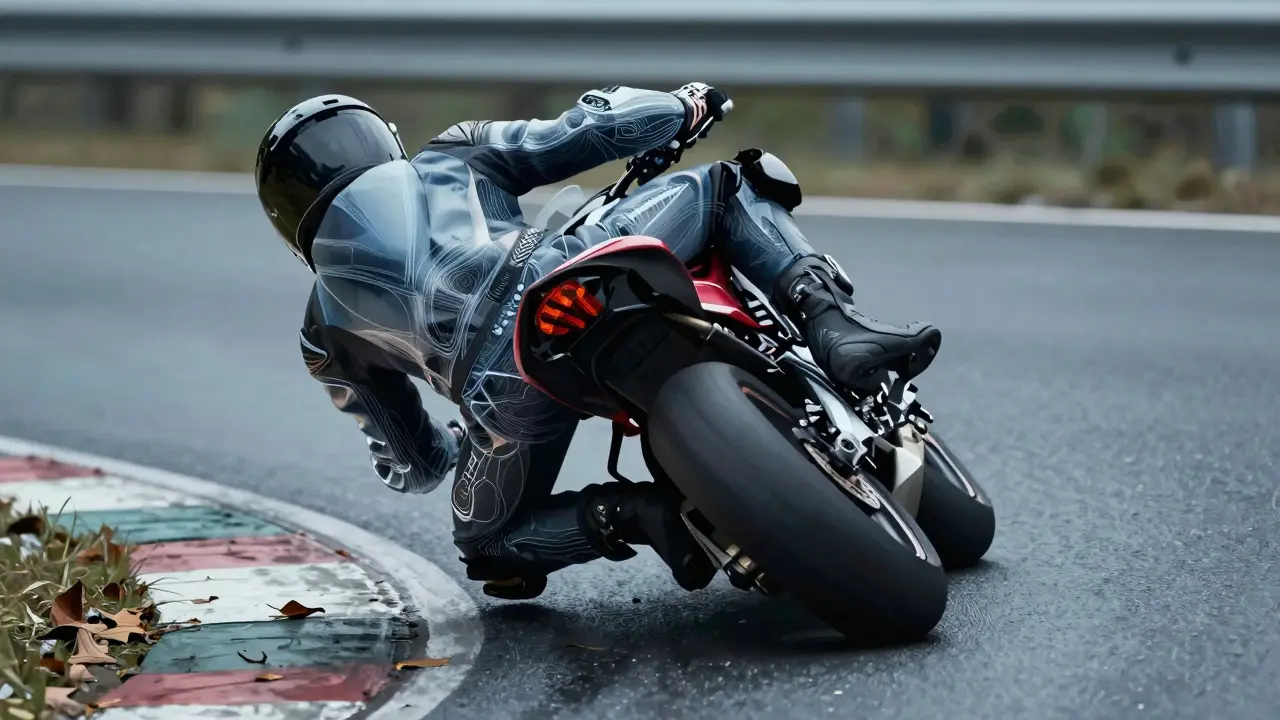
It’s Not Just for Beginners
Many riders think safety courses are only for new riders. That’s a myth. In fact, riders with 5+ years of experience benefit the most. They’ve developed bad habits-leaning too far, over-relying on the front brake, staring at the ground instead of the horizon. These habits become automatic. And automatic habits are dangerous when conditions change.
Advanced courses like the IAM RoadSmart or RoSPA Advanced Rider Test focus on high-speed cornering, defensive riding in heavy traffic, and night riding. These aren’t for show. They’re for survival. One rider in Bath told me he avoided a head-on collision last winter because he remembered his course drill on how to spot a car running a red light from a hidden driveway. He didn’t brake-he swerved. And he did it without panicking.
What Happens If You Don’t Take a Course?
It’s not that you’ll crash. It’s that you’ll be more likely to. Riders without formal training are twice as likely to be involved in a serious accident, according to the UK’s National Motorcyclist Safety Survey. And the cost isn’t just physical. It’s financial.
If you get hurt, your medical bills, lost wages, and bike repairs can run into tens of thousands. Insurance won’t cover everything if you’re found at fault. And if you don’t have a certificate, you won’t get the discount that could’ve paid for the course in the first place.
Plus, without training, you’ll spend more time second-guessing yourself. You’ll avoid certain roads. You’ll ride slower than you want to. You’ll feel less in control. That’s not freedom-that’s fear.
Where to Find Approved Courses in the UK
Not all courses are created equal. Only those approved by the DVSA or endorsed by IAM or RoSPA qualify for insurance discounts. Here’s where to look:
- IAM RoadSmart - Offers Basic Rider Training and Advanced Rider Test. Highly respected nationwide.
- RoSPA Advanced Motorcyclists - Focuses on defensive riding and hazard perception. Great for experienced riders.
- Motorcycle Industry Association (MIA) - Runs the government-approved Compulsory Basic Training (CBT) and advanced modules.
- Local riding schools - Check if they’re DVSA-certified. Ask for the course code on your certificate.
Prices range from £80 for a basic CBT to £200 for a full advanced course. Some local councils even subsidize courses for riders under 25. Ask your insurer-they often have partnerships with approved providers.
What to Bring and How to Prepare
You don’t need fancy gear, but you do need the right stuff:
- Full-face helmet (must be UK-approved, not just any helmet)
- Sturdy gloves (leather or textile with knuckle protection)
- High-visibility jacket or vest (some courses provide these)
- Boots that cover your ankles (no sneakers)
- Long pants (jeans are okay, but riding pants are better)
Don’t ride to the course on your bike unless you’ve passed CBT. Most schools have training bikes you can use. And if you’re nervous? That’s normal. Every instructor has seen it. They’re there to help you feel safe, not to judge you.
It’s Not a One-Time Thing
The best riders never stop learning. After your first course, consider moving to an advanced level. Many insurers reward riders who take multiple courses with increasing discounts. Some even offer free refresher sessions if you’ve been accident-free for two years.
Think of it like car maintenance. You don’t just change your oil once and forget it. You keep doing it. Same with riding skills. The road changes. Your body changes. Your bike changes. You need to change with it.
Final Thought: Safety Isn’t a Cost-It’s a Return
Take a motorcycle safety course and you’ll save money on insurance. You’ll ride better. You’ll feel more confident. You’ll avoid injuries. You’ll live longer. And you’ll enjoy the ride more.
There’s no other investment on two wheels that gives you this kind of return. Not a new helmet. Not a fancy exhaust. Not a custom paint job. Just one day of training-and it could change everything.
Do motorcycle safety courses really lower insurance premiums?
Yes. Most UK insurers, including Admiral, Direct Line, and Aviva, offer discounts of 10% to 20% for riders who complete a DVSA-approved course. You must provide a certificate from an approved provider like IAM or RoSPA to qualify.
Is the course only for new riders?
No. Experienced riders benefit even more. Many develop bad habits over time-like braking too hard or staring at the ground. Advanced courses help fix those habits and teach defensive riding techniques that prevent accidents in complex traffic situations.
What kind of bike do I need for the course?
You can use your own bike if it’s road legal and you’re licensed to ride it. Most training providers also offer loaner bikes, especially for CBT or if you’re learning on a larger machine. You don’t need a sportbike-standard or cruiser bikes work fine.
How long does a motorcycle safety course take?
Basic courses like CBT take one full day-around 6 to 8 hours. Advanced courses, like IAM or RoSPA, can take a full day or be split over two days. Some include a follow-up assessment ride.
Can I take the course if I’ve never ridden before?
Absolutely. The Compulsory Basic Training (CBT) is designed for complete beginners. It’s the first step toward getting your full motorcycle license and is required before riding on public roads in the UK.
Comments
Patrick Sieber
Just did my IAM course last month. Was skeptical at first - thought I knew everything after five years on the road. Turns out I was braking with one finger and staring at the curb instead of the horizon. Instructor didn’t even yell. Just handed me a coffee and said, 'You’re lucky you didn’t kiss a tree.' Now my premium’s down 18%. Best £160 I ever spent.
January 15, 2026 at 02:34
Kieran Danagher
Oh great. Another ‘train to save money’ post. Next you’ll tell me yoga reduces tire wear. Look, if you’re crashing because you didn’t take a course, maybe you shouldn’t be on a motorcycle at all. But hey, if the insurance company wants your cash, fine. I’ll keep learning from the road - no certificate needed.
January 15, 2026 at 05:16
OONAGH Ffrench
Training doesn’t make you safe. Awareness does. The course just gives you a framework to notice what you’ve been ignoring. I used to think countersteering was for racers. Now I do it without thinking. That’s the real win. Not the discount. The quiet confidence.
January 16, 2026 at 22:15
poonam upadhyay
Ugh, this is so typical! People think a stupid certificate makes them a ‘real rider’? Meanwhile, I’ve been riding since I was 14, no course, no insurance discount, and I’ve never even scraped a knee! You people are so obsessed with paperwork and discounts you forget what riding is supposed to be - freedom! Not some corporate-approved choreography with cones!
January 17, 2026 at 10:56
Shivam Mogha
Course saved my life. Front brake too hard. Nosedive. Now I use both. Simple.
January 18, 2026 at 11:09
mani kandan
There’s a quiet truth here: the best riders aren’t the fastest or the loudest. They’re the ones who’ve admitted they don’t know everything. That’s why the IAM course works - it doesn’t teach you tricks. It teaches you humility. And humility, in this context, is the ultimate safety feature.
January 20, 2026 at 08:38
Rahul Borole
It is imperative to recognize that formalized rider education constitutes a statistically significant mitigating factor in the incidence of motorcycle-related trauma. According to the UK Department for Transport’s 2024 report, the reduction in crash probability among certified riders is not merely anecdotal but empirically validated. Furthermore, the economic return on investment in such training is demonstrably favorable when compared to the average cost of a single serious incident. It is therefore not merely advisable, but ethically responsible, to pursue accredited training without delay.
January 20, 2026 at 23:42
Sheetal Srivastava
Let’s be real - these courses are just a gateway for the insurance-industrial complex to monetize your fear. They don’t care if you ride better. They care if you pay more upfront for a ‘certificate’ that lets them lower your premium by 15% and then raise it again in three years when you forget what a countersteer is. The real danger isn’t lack of training - it’s corporate manipulation disguised as safety.
January 22, 2026 at 06:05
Sheila Alston
Oh my god, I’m so glad someone finally said this. I took the course last year after my cousin got totaled because he ‘knew how to ride.’ He didn’t. He just thought he did. I cried when I got my certificate. Not because I was proud - because I realized how many people die because they never learned to brake properly. And now my insurance is cheaper. So I’m not just saving my life. I’m saving money. And honestly? That feels like justice.
January 23, 2026 at 16:05
Rakesh Dorwal
UK says this, UK says that. What about Indian riders? We don’t have these fancy courses, we ride on roads with cows and trucks and potholes the size of wells - and we’re still alive. You think a British cone course teaches you to dodge a bull at 60? Nah. Real riding is learned on the street, not in some sterile training yard with a clipboard guy telling you to ‘look ahead.’
January 24, 2026 at 00:06
sampa Karjee
How quaint. You think a day spent dodging cones and reciting ‘look 12 seconds ahead’ qualifies you as a competent rider? I’ve ridden through monsoons in Delhi without a helmet (not recommended, but I did) and never needed a certificate to know that throttle control isn’t taught in classrooms. This is performative safety - a ritual for people who need external validation to feel safe on two wheels. The real riders? They’re the ones who don’t need to prove it.
January 25, 2026 at 06:27
Bhavishya Kumar
Correction: The Department for Transport’s 2024 report states a 28.7% reduction in crash incidence among certified riders, not 30%. Also, ‘DVSA-approved’ is correct, but the acronym should be spelled out on first use. And ‘MIA’ is not the sole provider - it’s one of several. Minor errors, but accuracy matters when discussing public safety.
January 25, 2026 at 14:13