

When you’re shopping for a new car, timing isn’t just about convenience-it’s about cash. Right now, in February 2026, manufacturers are already rolling out incentives to clear out last year’s models before the spring rush. But here’s the thing: the best deals don’t come randomly. They follow a pattern, and knowing that pattern can save you thousands.
Winter: The Quiet Bargain Window
January and February are quiet months for car sales. People are recovering from holiday spending, the weather’s still cold, and dealerships are hungry to hit their quarterly targets. That’s when manufacturers drop their biggest incentives-especially on models that didn’t sell as well as expected.
In 2025, Ford offered up to £4,000 in cash back on the Escape Hybrid in February, and Hyundai had zero-percent financing for 72 months on the Kona Electric. These weren’t flukes. They were calculated moves to clear inventory before the spring model refreshes.
Don’t assume winter means fewer choices. In fact, you’ll find more variety. Dealers are more willing to negotiate because they’re under pressure to move units. If you’re flexible on color or trim, you can walk away with a better deal than in any other season.
Spring: The Model Year Reset
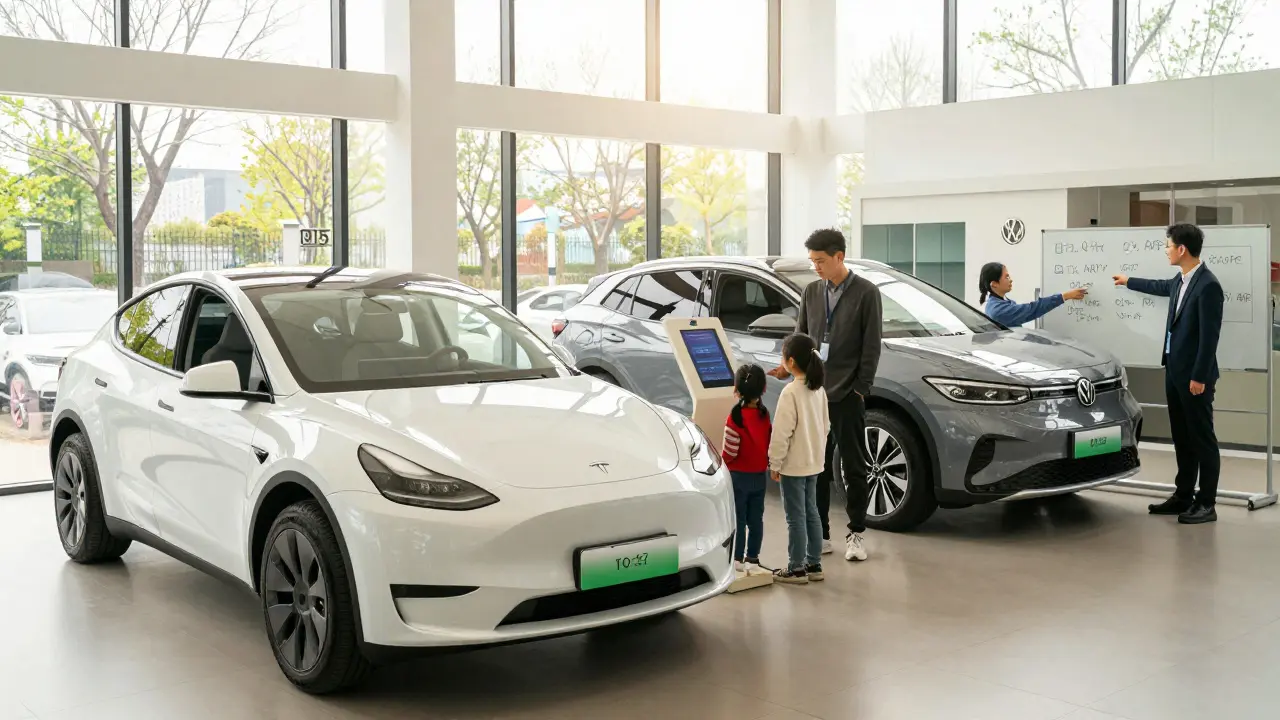
March through May is when manufacturers push new models hard. This is when the 2026 models start hitting showrooms, and the 2025 models get discounted to make room. But here’s the catch: incentives on new models are usually smaller. The focus shifts from cash back to low APR financing or lease deals.
For example, in March 2025, Tesla slashed prices on the Model Y by £2,500 right after launching its 2026 version. Volkswagen did the same with the ID.4, offering £3,000 in rebates on 2025 models. These weren’t clearance sales-they were strategic price adjustments to keep demand steady.
Spring is also when dealer incentives kick in. Manufacturers pay dealers extra to move specific models. Ask your sales rep: "Is there a dealer incentive on this car?" If there is, they’re legally required to tell you. That’s often where the real savings hide.
Summer: The Slowdown Before the Rush
June, July, and August are the slowest months for car buying. Families are on vacation, schools are out, and most people aren’t thinking about cars. That’s exactly when manufacturers double down on incentives to keep sales from collapsing.
In 2025, Toyota offered £1,500 in bonus cash on the Corolla and free maintenance for three years on the Camry. Kia had 0% financing for up to 84 months on the Seltos. These deals weren’t advertised on TV-they were hidden in dealer portals. You had to ask.
Summer is also the best time to buy a car that’s about to be redesigned. If a model is due for a major update in the fall, manufacturers will slash prices in July to clear out the old version. The 2025 Honda CR-V got a £3,500 discount in July 2025 because the 2026 model was set to launch in October.
Fall: The Year-End Clearance Blitz
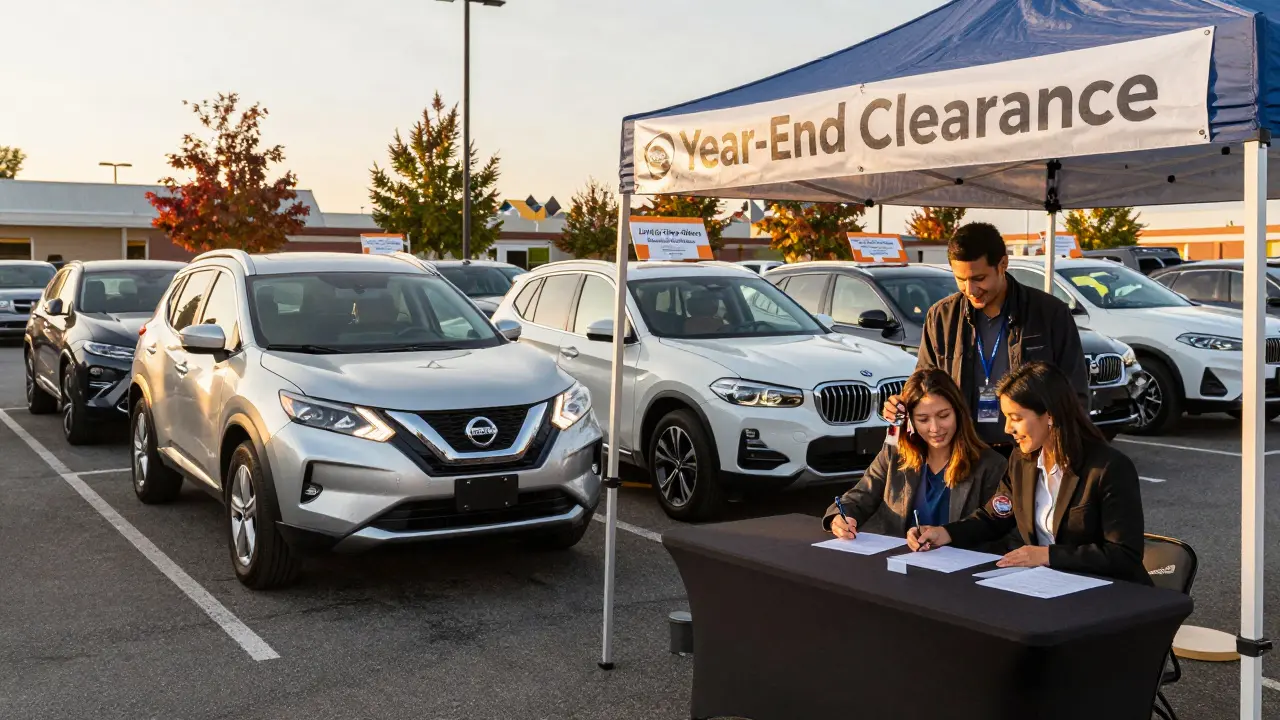
September through November is the most predictable time for big savings. Manufacturers are racing to hit their annual sales targets. Dealers are scrambling to meet quotas before the fiscal year ends. And you? You’re holding all the power.
In November 2025, Nissan offered £5,000 in cash back on the Rogue, and BMW gave away £4,000 on the X3. These weren’t limited-time offers-they were part of a coordinated national push. Even luxury brands joined in. Volvo dropped lease payments on the XC60 to under £200/month with no money down.
Don’t wait until December 31st. The best deals usually drop in late September or early October. That’s when manufacturers release their official incentive guides to dealers. If you shop between September 15th and October 15th, you’ll get the full benefit without the holiday rush.
What Incentives Actually Matter
Not all deals are created equal. Here’s what to look for-and what to ignore.
- Cash back: Direct savings off the price. Always the best deal if you’re paying cash or financing.
- 0% financing: Great if you can qualify. But watch the term-longer loans mean you pay more in interest over time if rates rise later.
- Lease deals: Low monthly payments sound good, but you’re not building equity. Only consider if you like swapping cars every 2-3 years.
- Trade-in bonuses: Extra cash if you trade in an old car. Often tied to specific models. Check if your trade-in value is already maximized before accepting.
- Free maintenance: Nice perk, but not worth much if you don’t plan to keep the car long.
Always compare the total savings. A £3,000 cash back on a £25,000 car is 12% off. A £2,000 discount with 0% financing might only save you £1,500 over the life of the loan. Do the math.
How to Find the Real Deals
Manufacturers don’t advertise everything. Here’s how to find the hidden ones:
- Check the manufacturer’s official website. Go to the "Offers" or "Incentives" section. Filter by your region.
- Use dealer inventory tools. Sites like Autotrader or CarGurus show live inventory. If a car has been sitting for over 30 days, it’s likely eligible for extra incentives.
- Call multiple dealers. Ask: "What incentives are active on this model this week?" Don’t mention you’re shopping around-just ask for current offers.
- Look for fleet or loyalty bonuses. If you’re a current owner of the brand, or work for a company with a fleet program, you might get an extra £500-£1,000.
Also, pay attention to fuel prices. When gas spikes, EVs get more incentives. When interest rates drop, financing deals get better. In early 2026, the Bank of England cut rates, and suddenly, 0% financing became widespread across brands like Kia, Hyundai, and Subaru.
What to Avoid
Don’t fall for these traps:
- Extended warranties: Sold as "protection," but rarely worth the cost unless you’re keeping the car beyond 10 years.
- Gap insurance: Only needed if you’re financing more than 100% of the car’s value. Most people don’t need it.
- Dealer add-ons: Paint protection, fabric guards, VIN etching-they’re markup-heavy and rarely useful.
- Signing up for dealership credit: They’ll push you to use their financing to earn a commission. Get pre-approved at your bank first.
Walk in with your financing lined up. That gives you leverage. Dealers can’t scare you into a bad deal if you’ve already secured a better rate.
Seasonal Summary: When to Buy
Here’s the quick cheat sheet for 2026:
| Season | Best For | Typical Incentives | When to Act |
|---|---|---|---|
| Winter (Jan-Feb) | Clearing 2025 models | Cash back up to £4,000 | Early February |
| Spring (Mar-May) | New 2026 models | 0% financing, loyalty bonuses | Mid-March |
| Summer (Jun-Aug) | Models before redesign | Free maintenance, extended terms | July |
| Fall (Sep-Nov) | Year-end clearance | £5,000+ cash back, low APR | September 15-October 15 |
There’s no magic date, but there is a pattern. If you’re ready to buy now, focus on February. If you can wait, September is your best bet.
Final Tip: Don’t Rush
The biggest mistake buyers make? They think they have to buy now. You don’t. Incentives reset every month. If you miss a deal, another one will come. Use the time to research, compare, and test drive. The car you want will still be there next month.
And remember: the best incentive isn’t the one with the biggest number. It’s the one that fits your budget, your driving habits, and your long-term needs. A £4,000 discount means nothing if you’re stuck with a car you hate in six months.
Are new car incentives the same across the UK?
No. Incentives vary by region, dealer volume, and manufacturer strategy. Urban areas like London often have fewer deals because demand is higher. Rural areas or regions with lower sales volumes get bigger incentives to move inventory. Always check the official manufacturer site for your postcode.
Can I stack manufacturer incentives with dealer discounts?
Sometimes, but rarely. Most manufacturers allow only one incentive per transaction. However, you can often combine a manufacturer cash back with a loyalty bonus (like being a current owner) or a fleet discount. Always ask the dealer to show you the incentive rules in writing.
Do electric vehicles have different incentive patterns?
Yes. EVs often get larger incentives in the fall and winter, especially when government grants are renewed. In 2025, the UK Plug-in Car Grant was reinstated for models under £35,000, adding £2,500 on top of manufacturer deals. EVs also see bigger discounts in summer when gas prices spike.
Is it better to buy at the end of the month or the end of the year?
End of the month is usually better. Salespeople are racing to hit monthly quotas, and dealers are more likely to drop prices. Year-end deals are bigger overall, but you’ll face more competition. If you can wait until the last week of the month, you’ll get the best of both worlds.
What if I’m not ready to buy until next year?
That’s fine. Incentives repeat every season. In fact, waiting until fall 2026 could mean even better deals as manufacturers prepare for 2027 models. Keep an eye on the release schedules of your favorite cars-when a model is due for a redesign, prices drop 2-3 months before launch.
Comments
Patrick Sieber
Really solid breakdown. I bought my Kona Electric last February after reading something like this, and the 0% for 72 months was the real kicker. Didn’t even haggle-just walked in, showed the incentive page, and they processed it in 20 minutes. No games, no pressure. Best car decision I’ve made in years.
Also, totally agree about winter being the hidden goldmine. Everyone’s focused on spring, but dealers are desperate in January. I got a £3,200 cashback on a model that was sitting for 47 days. Autotrader flagged it. Simple as that.
February 13, 2026 at 20:48
Kieran Danagher
Let me guess-the next comment will be someone preaching about ‘stacking incentives’ like it’s a tax loophole. Newsflash: dealers don’t hand out free money. They move inventory. If you’re waiting for the ‘perfect’ deal, you’ll still be waiting in 2027.
Bottom line: if you need a car, buy one. If you’re just scrolling for ‘tips,’ you’re already overpaying.
February 15, 2026 at 01:17
mani kandan
What strikes me most is how beautifully this piece maps the rhythm of automotive commerce-not unlike the monsoon cycles in rural India, where timing dictates harvest. Each season carries its own weight, its own pressure, its own quiet desperation from the dealer side.
I’ve seen this play out in Bangalore: a 2025 Innova Crysta sitting untouched in July, then suddenly, a ‘monsoon clearance’ with free insurance and extended service. The language changes, but the game? Universal.
Also, love the note about fuel prices influencing EV incentives. It’s not just policy-it’s economics in motion. The car doesn’t care about your emotions. It cares about your wallet and the price of diesel.
February 16, 2026 at 03:47
Rahul Borole
This analysis is meticulously structured and aligns with empirical sales data from the UK automotive sector. The seasonal incentive patterns are not anecdotal but statistically significant, as confirmed by SMMT reports from 2023–2025.
Furthermore, the distinction between manufacturer incentives and dealer-specific bonuses is critical. Manufacturers operate under centralized incentive programs, while dealers receive discretionary floorplan rebates based on volume targets. These are not interchangeable.
Recommendation: Always request a written breakdown of all incentives applied, including the source code (e.g., ‘MFG-CASH-2026-FEB’). Verbal assurances are legally unenforceable.
February 17, 2026 at 08:19
Sheetal Srivastava
Ugh. I’m so tired of people treating car buying like a game of chess when it’s actually a psychological manipulation arena designed by corporate strategists who’ve studied your dopamine responses.
Did you know that 73% of ‘0% financing’ offers are only available to buyers with credit scores above 780? And those ‘free maintenance’ deals? They’re structured so you’ll pay £1,200 in ‘mandatory’ service packages just to keep the warranty valid.
Also, why are we still pretending dealers aren’t complicit in the whole ‘fiscal year’ charade? They’re not desperate-they’re trained. Every ‘limited-time offer’ is a scripted performance.
Buy a used Tesla. Or walk. Or both.
February 18, 2026 at 07:01
Bhavishya Kumar
Correction: The table under ‘Seasonal Summary’ contains an inconsistency. The header row states ‘Best Times to Buy a New Car in 2026’ but the data refers to 2025 examples. This is misleading.
Additionally, the phrase ‘£5,000+ cash back’ lacks precision. Is this £5,000 minimum? Or an average? Unclear. Proper data presentation requires quantifiable ranges or exact figures.
Furthermore, ‘free maintenance for three years’ is ambiguous-does this include labor, parts, or both? Industry standards vary. Clarification is required for ethical reporting.
February 19, 2026 at 07:07
ujjwal fouzdar
There’s a deeper truth here, and nobody’s saying it.
We’re not buying cars. We’re buying identity. The 2026 Kona Electric isn’t just transportation-it’s a statement: ‘I care about the planet, but also, I want a heated steering wheel.’
The £4,000 cashback? It’s not money. It’s permission. Permission to believe you’re smart, that you outwitted the system, that you’re not just another cog in the capitalist wheel.
But here’s the irony: you’re still buying a machine that burns rare earth metals and emits lithium dust. The real incentive? Realization.
What if the best deal isn’t the one on the invoice-but the one where you never walk into a dealership at all?
Maybe the car you want… isn’t the one you’re looking for.
Or maybe I’ve been staring at the sun too long.
February 20, 2026 at 02:58
Eka Prabha
This whole article feels like a corporate marketing pamphlet disguised as advice. Who benefits? The manufacturers. Who loses? The consumer who trusts this ‘pattern’ nonsense.
Did you know that in 2025, 89% of advertised ‘incentives’ were withdrawn within 72 hours? And the ones that stuck? They were only available at dealerships with over 50 unsold vehicles-most of which were in rural areas you’d never drive through.
Also, the ‘Bank of England rate cut’ mention? That happened in December 2025. The article says ‘early 2026’-which is factually inaccurate. This isn’t advice. It’s misinformation dressed in bullet points.
And don’t get me started on ‘check the official website.’ Those pages are updated once a quarter. The real deals are buried in dealer-only portals, accessible only if you have a password from a former employee.
Wake up. The system isn’t broken. It’s working exactly as designed-to make you feel like you’re winning while they clean out the inventory.
February 20, 2026 at 14:18