
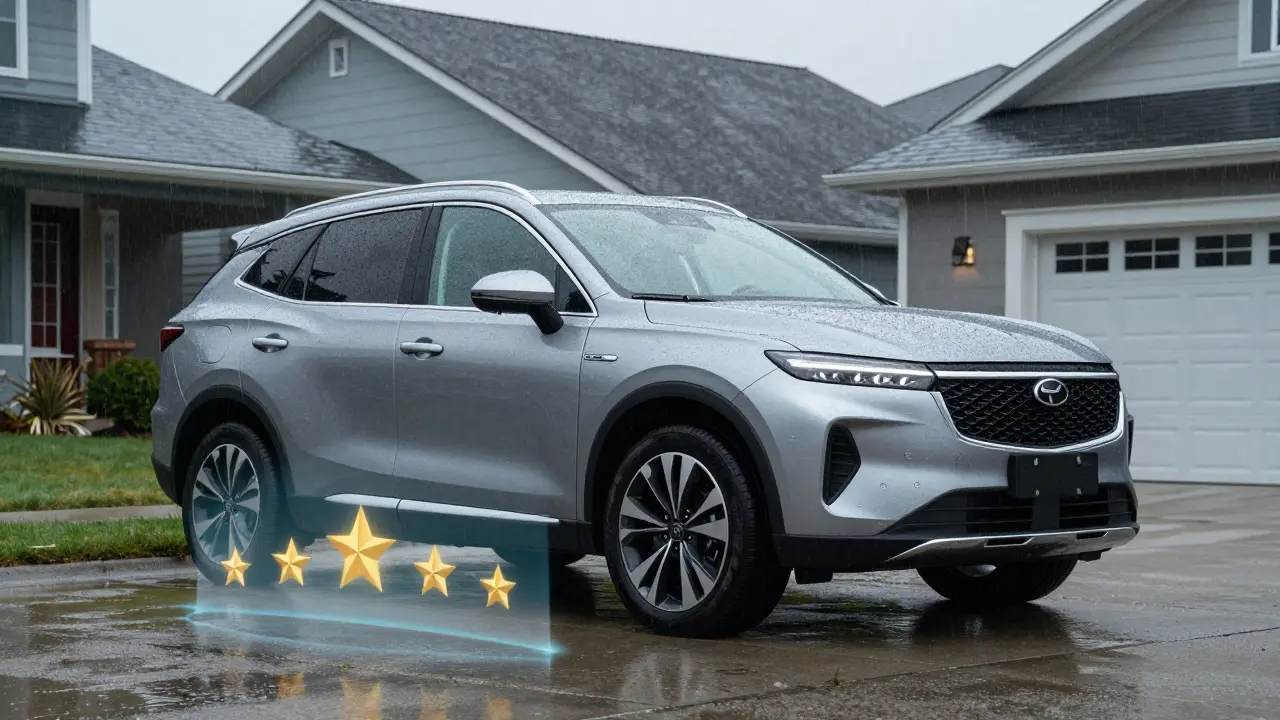
Key Takeaways for Car Buyers
- Stars represent an average across multiple types of crashes (frontal, side, and rollover).
- A "5-Star" rating is the highest achievable score, but individual sub-scores can vary.
- The New Car Assessment Program (NCAP) is the framework used to standardize these tests.
- Ratings focus on occupant protection, not necessarily the car's ability to avoid the crash entirely.
- Ratings are updated frequently as crash test technology and safety standards evolve.
The Mechanics of the New Car Assessment Program
To understand the stars, you first have to understand the system. The New Car Assessment Program (or NCAP) is the official initiative run by the National Highway Traffic Safety Administration (NHTSA). Its primary job is to hold manufacturers accountable by putting cars through a series of standardized, brutal tests. Unlike a manufacturer's internal test, the NCAP is designed to be transparent and public.
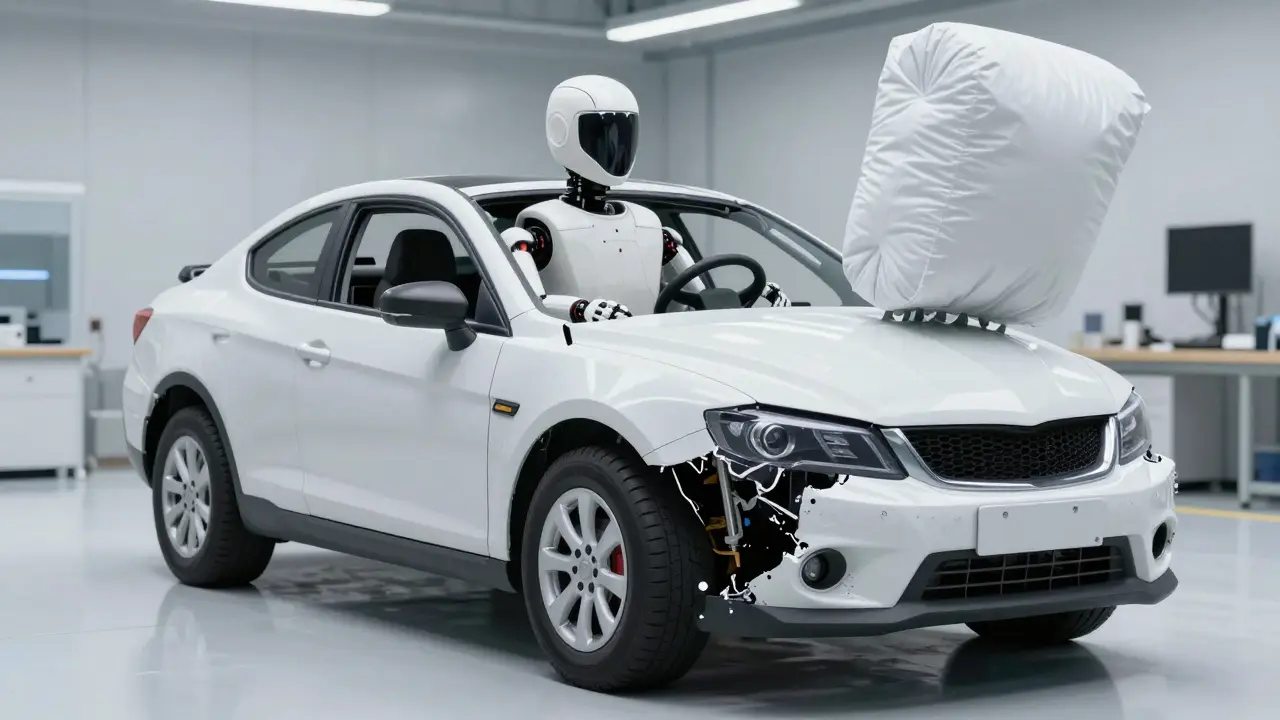
The agency doesn't just hit a car with a wall and call it a day. They use a combination of physical crashes and computer modeling. For example, they use Anthropomorphic Test Devices (essentially highly advanced crash test dummies) equipped with sensors that measure force, acceleration, and displacement. If a dummy's chest experiences too much G-force during a frontal impact, the rating drops. It's a cold, hard numbers game where the value is human survival.
Breaking Down the Crash Test Categories
When you look at a rating, you're seeing an aggregate. But to get a full picture, you need to look at the specific categories. A car might be a tank in a head-on collision but struggle in a side-impact scenario. Here is how the tests are generally split:
Frontal Crash Tests: These simulate a head-on collision. The focus here is on how the Crumple Zone performs. A good crumple zone absorbs the energy of the hit, preventing that energy from reaching the cabin. If the steering column pushes back too far or the airbags deploy too slowly, the score plummets.
Side Crash Tests: These are often more dangerous because the side of a car has much less space to absorb impact than the front. The NHTSA uses a deformable barrier to simulate another vehicle hitting the car from the side. They look at how the B-pillar holds up and whether the side-curtain airbags successfully keep the dummy's head from hitting the intruding door.
Rollover Tests: Instead of a full-speed flip, the NHTSA often uses a "pole test" or a tilt-table to determine the Static Stability Factor. They want to know how likely a vehicle is to tip over during a sudden maneuver and, if it does roll, whether the roof remains intact to provide a survival space for the passengers.
| Test Type | Primary Entity Analyzed | Key Value Measured | Safety Component |
|---|---|---|---|
| Frontal | Frontal Structure | Chest/Head Deceleration | Airbags & Crumple Zones |
| Side Impact | B-Pillar & Door | Intrusion Depth | Side-curtain Airbags |
| Rollover | Roof Strength | SMRS (Static Stability) | Roof Rails & Pillars |
The Difference Between NHTSA and IIHS
If you've spent any time researching cars, you've probably seen another set of ratings from the Insurance Institute for Highway Safety (IIHS). It's easy to get these mixed up, but they are very different animals. The NHTSA is a government agency focused on regulatory standards and public awareness. The IIHS is a non-profit funded by auto insurance companies. Their goal is to reduce insurance claims by pushing for higher safety standards.
The IIHS tests are often tougher. While the NHTSA uses stars, the IIHS uses ratings like "Good," "Acceptable," "Marginal," and "Poor." For instance, the IIHS "Small Overlap Frontal Crash Test" simulates hitting a tree or a pole with just the corner of the car. This is much more taxing on the vehicle's structure than a full-width frontal hit. If a car has 5 stars from the NHTSA but a "Marginal" rating from the IIHS in a specific category, it tells you that the car is safe in general, but might struggle in a very specific, high-energy offset crash.
How to Use This Data When Buying a Car
Don't just look at the overall star rating. If you have a choice between two 5-star vehicles, look at the detailed data. Do you live in a city with a high rate of T-bone accidents? Prioritize the side-impact score. Do you drive a tall SUV in a rural area where rollovers are more common? Check the rollover resistance.
Also, consider the year of the rating. Safety standards change. A 2022 model with 5 stars might actually be less safe than a 2025 model with 4 stars because the 2025 tests are significantly more rigorous. Always compare vehicles from the same model year to get an apples-to-apples comparison. If a newer model is missing a rating, it might be because the NHTSA hasn't tested it yet, or the manufacturer hasn't provided the necessary data for the specific trim level.
Common Pitfalls and Misconceptions
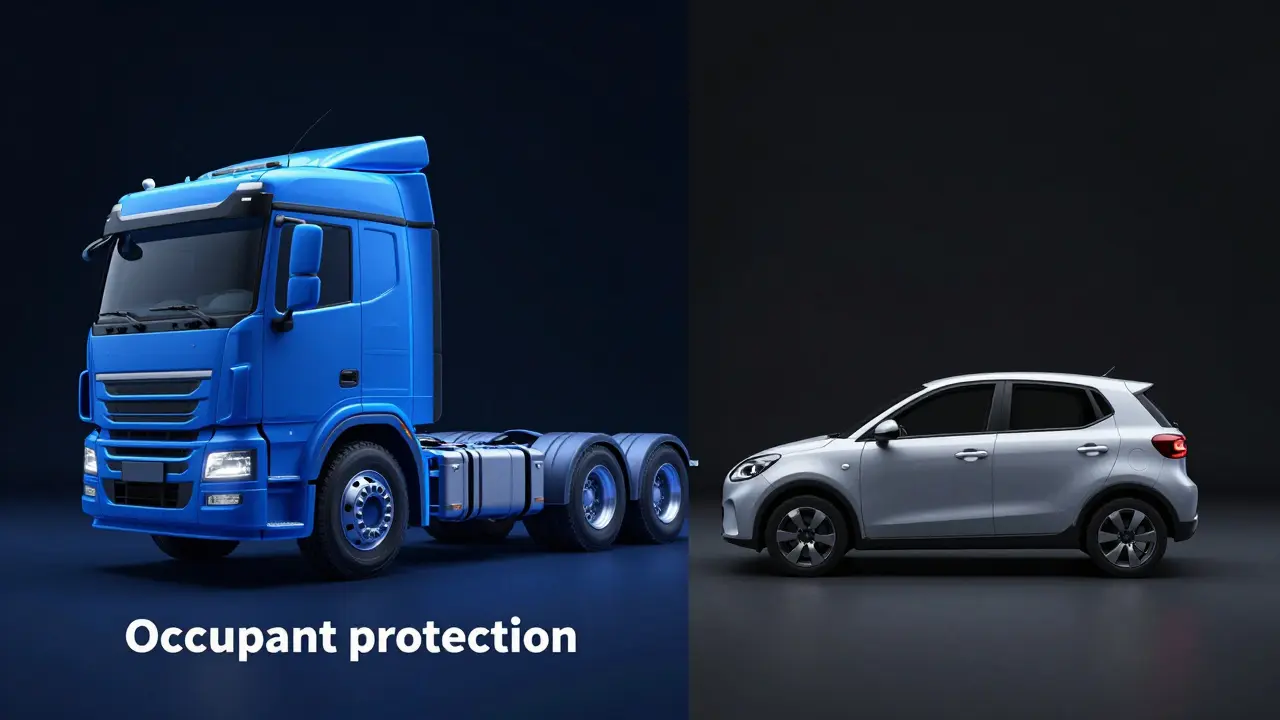
One of the biggest myths is that a "safe" car protects the other person. In reality, safety ratings focus almost entirely on occupant protection. A massive, 5-star rated heavy truck is incredibly safe for the people inside it, but it can be devastating for the people in the smaller car it hits. This is the paradox of vehicle safety: as we make cars safer for the driver, they can sometimes become more dangerous for pedestrians or smaller vehicles.
Another mistake is ignoring the "Recommended Front Seats" list. The NHTSA maintains a list of cars that are recommended for people with small frames or those who need to install child seats. A car can have a 5-star crash rating but be terrible for a parent trying to fit a rear-facing car seat. Safety is more than just surviving a crash; it's about how the car fits the actual humans using it.
What does a 3-star NHTSA rating actually mean?
A 3-star rating indicates a moderate level of protection. It doesn't mean the car is "dangerous," but it suggests that in certain crash scenarios, the vehicle's structural integrity or safety systems performed less effectively than those in 4 or 5-star vehicles. You should check the specific sub-scores to see if the weakness is in frontal, side, or rollover protection.
Are 5-star ratings guaranteed for every trim level?
Generally, yes, if the chassis and safety systems are the same. However, some high-performance trims might have different structural reinforcements or different airbag configurations. Always verify the specific trim you are buying, especially if it has a different weight profile or modified suspension.
Does the NHTSA test for autonomous driving safety?
The current star ratings focus on "crashworthiness" (how the car handles a hit). While the NHTSA monitors Advanced Driver Assistance Systems (ADAS), the stars themselves are based on physical crash tests. They don't yet give a "star rating" for how well a car avoids an accident using AI.
How often are these safety ratings updated?
Ratings are updated as new model years are released. The NHTSA typically tests new models before they hit the market in large numbers. Whenever a manufacturer makes a significant change to the vehicle's structure or safety tech, a new test may be required.
Can a used car's safety rating change over time?
The rating itself doesn't change, but the car's actual safety does. If a car has been in a previous accident and the frame was repaired poorly, it will not perform like the 5-star version tested by the NHTSA. Always get a vehicle history report and a structural inspection for used cars.
Next Steps for Your Safety Research
Now that you know how to read the stars, your next move should be to create a shortlist of 3-5 vehicles. Visit the official NHTSA website and pull the full report for each. Don't just look at the stars; look at the "Detailed Results" section. Compare the frontal and side impact scores across your choices. If you're buying for a family, cross-reference these results with the IIHS "Top Safety Picks" list to ensure the car handles offset crashes well.
If you find a car you love that has a mediocre rating, check if there was a mid-cycle refresh. Sometimes manufacturers update the airbags or strengthen the pillars halfway through a generation, which can improve safety without changing the model year.
Comments
Chris Atkins
definitely helps to know the difference between the govt ratings and insurance ones man
April 29, 2026 at 17:27
Jen Becker
whatever it is the govt just wants us to feel safe while we actually die
April 30, 2026 at 04:02
Samuel Bennett
It is hilarious that anyone actually believes these rigged tests. The NHTSA is basically a PR arm for the big auto lobbyists who decide which "standardized" tests actually get passed. Ever wonder why the tests never simulate a real-world high-speed highway collision with a semi-truck? Because that would reveal that your precious 5-star SUV is just a fancy aluminum can. Also, "nuanced" is used incorrectly in the first paragraph. It is a cliché, not a nuance. Wake up people
May 1, 2026 at 14:38
Jess Ciro
exactly Samuel the whole thing is a facade to keep us buying new cars every three years because the safety tech is a lie
May 2, 2026 at 18:27
Ryan Toporowski
Still a great guide for new parents! 🌟 Keep searching for the best for your kids! 🚗💨✨
May 2, 2026 at 23:50
Rob D
Listen up you bunch of amateurs. If you want real safety you buy American steel not some plastic-molded nightmare from across the pond. Those IIHS tests are just fancy ways to make us think the car is a marshmallow. I've seen a 20-year-old domestic truck take a hit that would have folded a modern 5-star rated crossover like a cheap lawn chair. The industry has gone soft and the ratings are just a way to sell more airbags to people too scared to drive a real machine. It is a total joke of a system and anyone who trusts a government star is just asking to be a statistic
May 3, 2026 at 16:13
Franklin Hooper
your obsession with steel is quaint but logically flawed given the physics of kinetic energy transfer
May 4, 2026 at 09:53
saravana kumar
It is quite evident that the author possesses a rudimentary understanding of automotive engineering. While the content is passable for a layman, it fails to address the discrepancy in material fatigue over time. One must observe that these tests are conducted on pristine vehicles, which is a most flawed methodology. The lack of depth regarding the impact of aftermarket modifications is particularly disappointing. I find the overall presentation to be simplistic at best
May 4, 2026 at 13:34
Tamil selvan
I truly appreciate the effort put into this guide, as it provides much-needed clarity for those who may feel overwhelmed by the technical jargon!!! It is so important to prioritize the well-being of our families above all else!!!
May 5, 2026 at 16:58
Mark Brantner
Wow just wow!! Who knew the govment actually spent money on dummy's lol!! I bet the 2025 models are just way bettr and we're all just driving death traps right now haha!! Keep it up man this is’ laegendary info!!
May 7, 2026 at 01:18
Kate Tran
The bit about the B-pillar is proper useful. I didnt realize the side impact was that much more risky than the front. Cheers for the info
May 8, 2026 at 00:28
amber hopman
I think we should also consider the cost of these safety features since some of the highest rated cars are way out of budget for most people. It's a bit frustrating that safety feels like a luxury upgrade sometimes instead of a basic right
May 9, 2026 at 21:24