
Why dealership inventory sits too long
Most car dealerships know the pain: a row of vehicles gathering dust, financing costs piling up, and sales teams growing frustrated. The problem isn’t always the cars. It’s how they’re presented online. Too many dealers treat their website like a digital brochure-static, boring, and disconnected from what buyers actually search for. If your inventory isn’t moving, the issue isn’t demand. It’s visibility, clarity, and trust.
Buyers today don’t walk into a lot first. They start online. They filter by price, mileage, color, and features. They compare listings side-by-side. They read reviews. And if your inventory doesn’t stand out in those moments, it gets buried.
Use high-quality, multi-angle photos
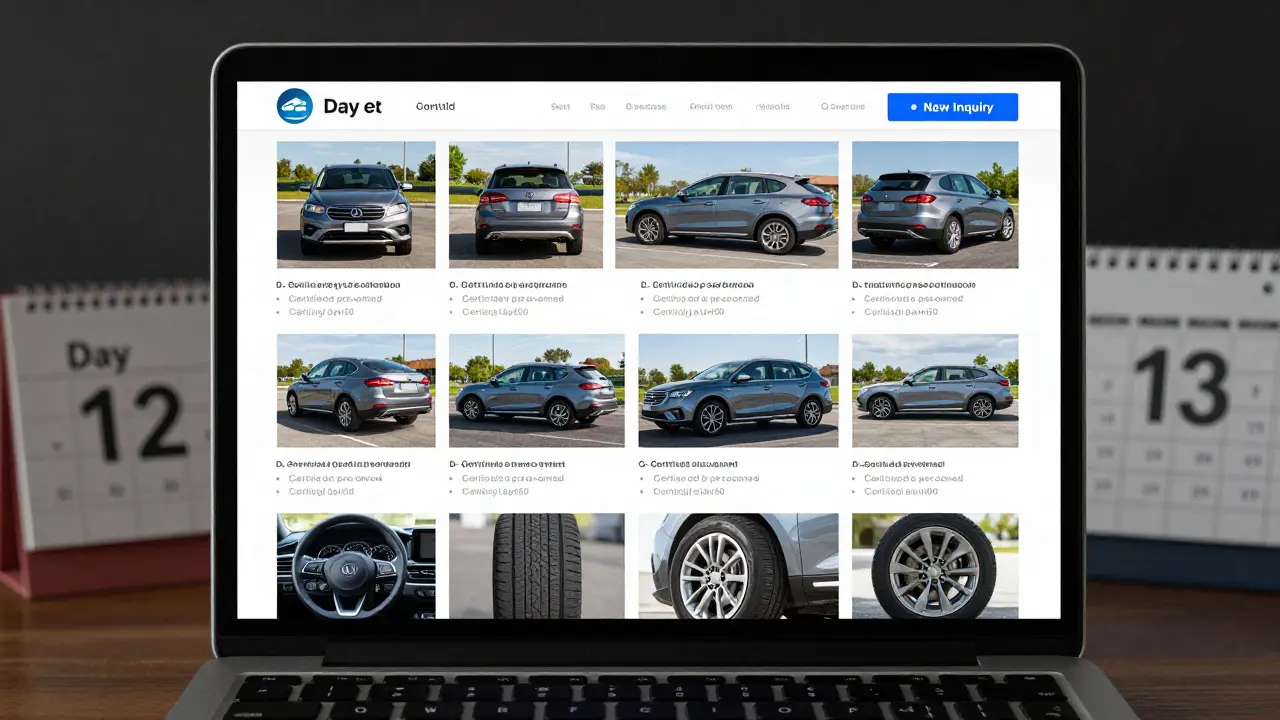
One of the biggest mistakes? Using the same three stock photos for every car. Buyers need to see what they’re buying. A single image from the front won’t cut it. You need at least 12 high-res photos per vehicle: front, rear, both sides, interior, dashboard, trunk, tires, wheels, and close-ups of any wear or damage.
Take photos in natural daylight. Avoid shadows. Show the condition honestly-scratches, dents, and faded upholstery. Buyers appreciate transparency. A car with a small scratch and a clear explanation sells faster than one with perfect photos that hide a problem. Use a tripod. Use consistent lighting. This isn’t optional anymore. Dealers who do this consistently see 37% more inquiries and 22% faster turnover, according to a 2025 survey by AutoTrader UK.
Write descriptions that answer real questions
Stop writing “Sleek and stylish.” That’s noise. Buyers want facts. They want to know:
- What’s the actual mileage? (Not “low mileage”)
- When was the last service? What was done?
- Are there any known issues? What was fixed?
- What’s the warranty status?
- Has it been in an accident? (Be honest)
Use bullet points. Keep paragraphs short. Mention the exact trim level, engine size, and optional features. If it has heated seats, say “heated front and rear seats.” If it has a sunroof, say “panoramic sunroof.” Don’t assume they’ll know what “Premium Package” means. Write like you’re explaining it to someone who’s never seen the car.
Dealers who use this method report 45% more qualified leads. People don’t click because the car looks nice. They click because they can picture themselves driving it.
Price it right from day one
Overpricing kills inventory. Underpricing kills profit. The sweet spot? Price based on real market data-not what you paid or what you wish you could get.
Use tools like AutoTrader’s Price Checker, WhatCar?, or CAP HPI. Look at similar models within 100 miles, same year, same mileage, same options. Then price 3-5% below the average. Why? Because buyers notice when something is priced competitively. They assume it’s a better deal. And they act faster.
One Bristol dealership reduced average stock time from 48 days to 27 days just by adjusting prices to match local market data. They didn’t change the cars. They changed the price tags. Simple. Effective.
Highlight certifications and warranties
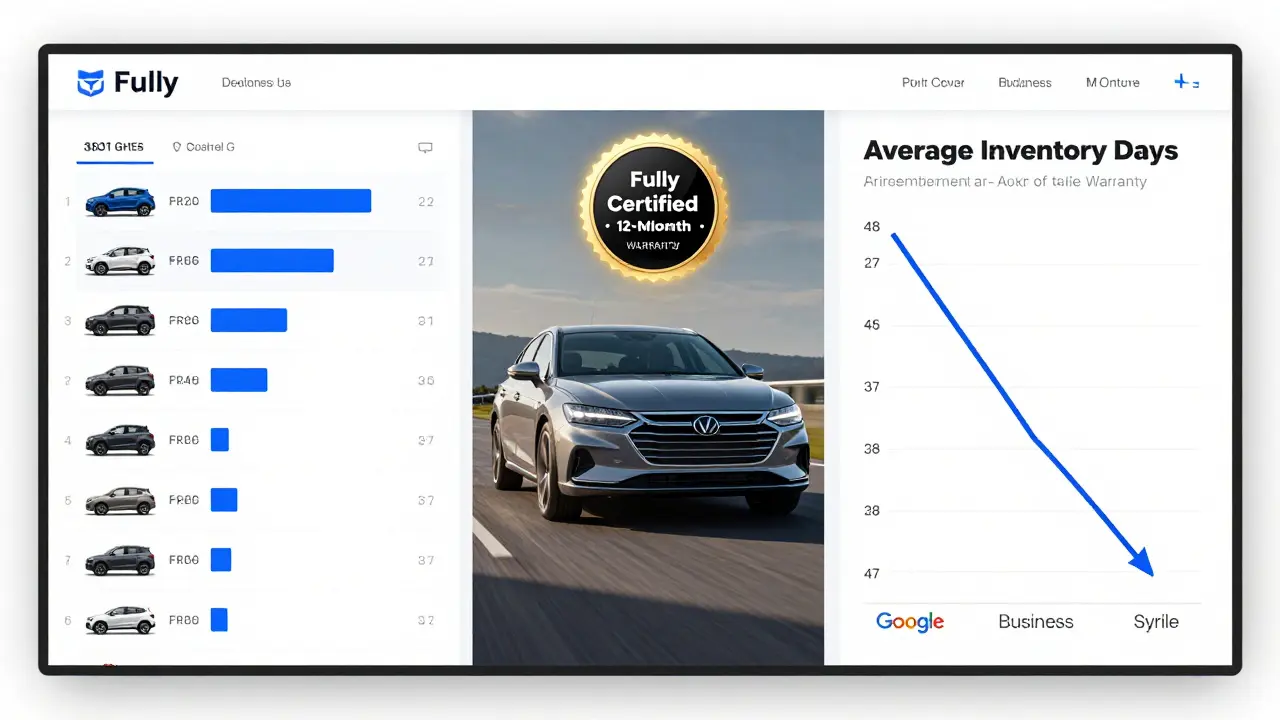
If your car is certified pre-owned (CPO), say it loud. If it has a 12-month warranty, put it in the headline. If it passed a 150-point inspection, list the key checks: brakes, transmission, suspension, engine compression, AC performance.
Buyers are nervous about used cars. They fear hidden costs. A clear certification badge, a warranty number, and a link to the inspection report build instant trust. Dealers with strong CPO programs sell 60% faster than those without, according to the Society of Motor Manufacturers and Traders (SMMT) 2025 report.
Don’t bury this info. Put it in bold at the top of the listing. Add a badge. Say: “Fully Certified • 12-Month Warranty • 150-Point Inspection Passed.”
Use video walkthroughs
Still relying on photos? You’re losing buyers who want to feel the car before they visit.
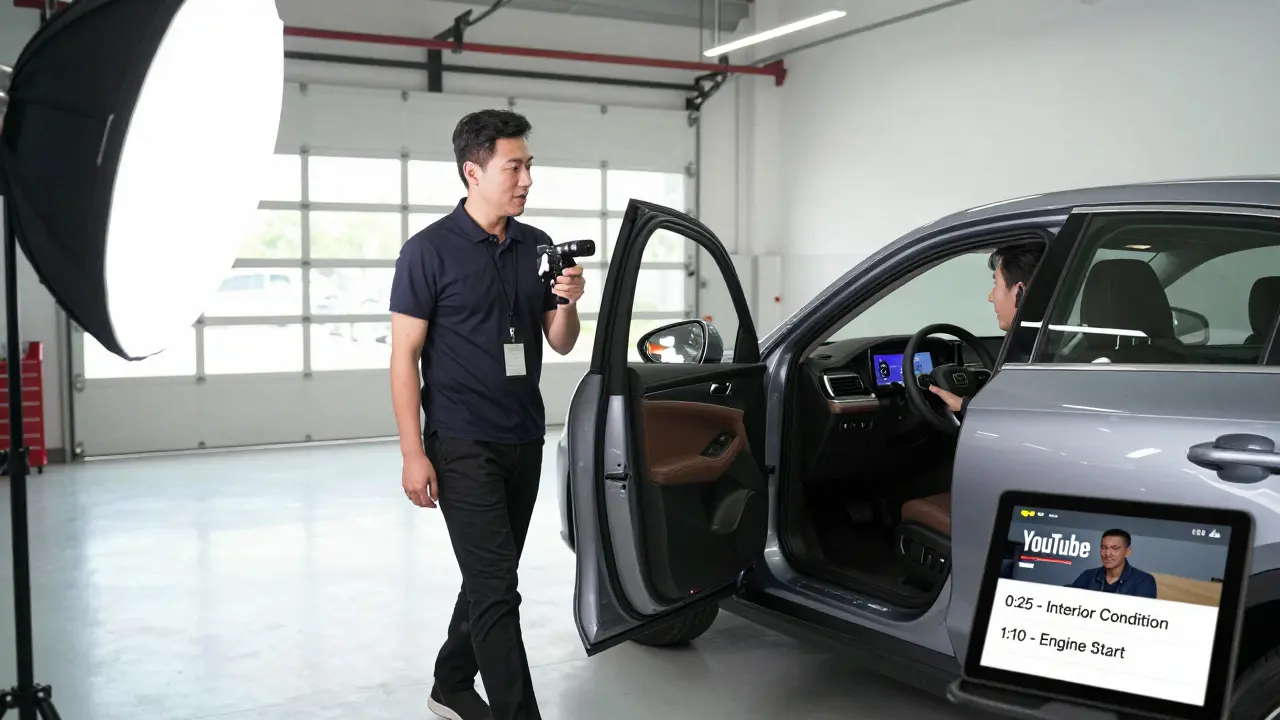
Record a 90-second video of each vehicle. Walk around it. Open the doors. Sit in the driver’s seat. Show the infotainment screen. Turn on the climate control. Demonstrate the backup camera. Talk naturally-not like a script. Say: “This one’s got 28,000 miles. The tyres are nearly new. The AC blows cold. No warning lights.”
Upload it to YouTube and embed it on the listing. Add a transcript. Include timestamps: “0:25 - Interior Condition,” “1:10 - Engine Start.” Buyers watch these videos more than they read descriptions. Dealers who use video see 50% more time spent on their listings and 30% higher conversion rates.
Push listings to Google and Facebook
Your website isn’t enough. Buyers find cars on Google Maps, Facebook Marketplace, and Autotrader. You need to be everywhere.
Sync your inventory feed with Google Business Profile. Make sure every car shows up with a photo, price, and “Call Now” button. Use Facebook Dynamic Ads. Let Facebook automatically show your cars to people who’ve searched for similar models in the last 30 days.
One Midlands dealer started using Google’s auto inventory feed and saw 40% more website traffic from local searches. They didn’t change their website. They just pushed their listings out. Google rewards dealers who keep their data fresh. Update your feed daily.
Respond instantly to inquiries
Buyers who ask questions online are 8x more likely to buy. But if you take more than 2 hours to reply, the lead goes cold.
Set up automated alerts for every email, form, and chat message. Assign one person to handle online inquiries. Use a CRM to track who asked what. Reply within 60 minutes. Even if it’s just: “Thanks for your interest. I’ll send you the full specs and a video. Can I call you in 10 minutes?”
Dealers who respond in under an hour close 55% more online leads than those who wait. Speed matters. Not perfection. Just promptness.
Offer virtual appointments
Not everyone wants to drive to your lot. Especially if they’re out of town or busy.
Offer a 15-minute Zoom or WhatsApp video call where you walk them through the car live. Show the VIN. Point out the service records. Let them ask questions in real time. Then, if they’re interested, offer a test drive with no pressure.
This isn’t just for remote buyers. Even local shoppers appreciate the convenience. One dealership in Bristol added virtual appointments and saw a 30% increase in test drives booked-even from people who lived 5 miles away.
Track what’s working
Don’t guess. Measure.
Use your website analytics to see which cars get the most views, which listings get the most clicks, which descriptions lead to more calls. Tag each car with a simple code: “C1,” “C2,” etc. Then track how long each one sits.
After 30 days, look at your data. Which cars sold fastest? What did they have in common? More photos? Better description? Lower price? Use that pattern to improve the rest of your stock.
Dealers who track this data adjust their merchandising every two weeks. Their inventory turns over 2.3 times faster than those who don’t.
Final thought: It’s not about the car. It’s about the experience.
People don’t buy cars because they’re shiny. They buy because they feel confident. They buy because they understand what they’re getting. They buy because the process is easy.
Online merchandising isn’t about fancy websites or flashy ads. It’s about giving buyers the facts they need, when they need them. Show the truth. Price it right. Respond fast. Make it easy. The cars will move.
How long should I keep inventory before discounting it?
If a car hasn’t generated a serious inquiry within 21 days, it’s time to re-evaluate. Check the photos, description, and price. If everything looks solid, lower the price by 3-5%. If it’s still sitting after 30 days, consider a bundle deal-like free servicing or a warranty extension. Most cars that sell quickly do so within 30-45 days. Beyond 60 days, you’re likely overpriced or poorly presented.
Do I need to use a third-party platform like Autotrader?
Yes, but not as a replacement. Use your own website as your primary hub, then push every listing to Autotrader, Facebook Marketplace, and Google Business Profile. These platforms bring in new buyers who don’t know your site. They’re discovery tools. Your website is the conversion tool. Don’t rely on one alone.
What’s the best way to handle cars with minor damage?
Be upfront. Show the damage in a photo. Explain what caused it. Mention if it’s been repaired. Add a note like: “Minor scuff on driver’s side rear bumper-fully repaired and paint-matched. No structural damage.” Buyers respect honesty. A car with a small flaw and full transparency sells faster than one with perfect photos and hidden issues.
Can I use AI to write car descriptions?
You can use AI to draft descriptions, but don’t publish them as-is. AI writes generic fluff. Human buyers spot it. Take the AI draft and rewrite it with real details: actual mileage, service history, specific features. Add a personal touch-“This one’s a favourite with our team because the AC works perfectly in winter.” That’s what builds trust.
How often should I update my inventory feed?
Daily. If a car sells, remove it from all platforms within 2 hours. If you add a new car, get it live on your site and third-party platforms the same day. Outdated listings hurt your credibility. Buyers assume you’re disorganized if they see a car that’s already sold. Automation tools like Dealer.com or Cars24 sync your stock automatically-use them.
Start with one car. Redo its photos. Rewrite its description. Lower the price slightly. Add a video. Push it to Google. See what happens. Then do it again. Slowly, your whole inventory will move faster.
Comments
Gina Grub
Photos? Descriptions? Please. It's all about data velocity. If your inventory turnover isn't hitting 2.3x faster than industry baseline, you're not even in the game. CPO badges don't move units-real-time dynamic pricing algorithms do. And if you're not syncing with Google Business Profile daily, you're basically advertising in a basement. Stop romanticizing 'honesty' and start optimizing for conversion velocity.
Every second a car sits is a sunk cost. Your CRM should auto-trigger price drops at 21 days. No exceptions. No sentiment. Just KPIs.
March 19, 2026 at 07:03
Nathan Jimerson
This is actually one of the most practical guides I've read in a long time. No fluff, no buzzwords-just clear steps that work. I run a small lot in Rajasthan and implemented the video walkthroughs last month. In 14 days, we sold 7 cars that had been sitting for over 45 days. The key? Real talk. No script. Just showing the car like it is. People appreciate that.
March 19, 2026 at 12:21
Sandy Pan
There's a deeper layer here beneath the tactics. It's not about listing optimization-it's about epistemological trust. Buyers don't fear cars. They fear uncertainty. The real innovation isn't in the 12 photos or the video walkthroughs-it's in the radical transparency. When you show the scratch, name the repair, cite the inspection code-you're not selling a vehicle. You're constructing a narrative of integrity. And in a market saturated with AI-generated fluff, that narrative becomes the only differentiator that matters.
It's philosophy dressed as merchandising. And it's working because it's human.
March 21, 2026 at 01:37
Eric Etienne
Ugh. All this '12 photos' and 'video walkthroughs' nonsense. You think people care? Most buyers just Google the model, check Kelley Blue Book, and call the first dealer with a decent price. The rest is theater. Stop wasting money on fancy photos. Just lower the price 10% and call it a day. I've seen dealers spend $20k on 'merchandising' and still lose money. Simple = faster sales.
March 23, 2026 at 00:13
Dylan Rodriquez
I love how this post turns a transactional process into a human one. It’s not about tricks. It’s about respect. When you take the time to show the actual mileage, the real service history, the small scratch on the bumper-you’re saying, 'I see you as someone who deserves truth.' That’s rare. And it’s powerful.
I’ve watched customers cry when they realize a dealer actually told them the truth about a car’s past. Not because they got a deal-but because they felt seen. That’s the real ROI. Not conversion rates. Not turnover days. Humanity.
March 23, 2026 at 12:08
Amanda Ablan
I’ve been in this business for 18 years. I used to think fancy websites and glossy brochures were the answer. Then I started doing exactly what this post says-real photos, real descriptions, real-time replies. My best month? 47 units sold. My worst? When I skipped the video walkthroughs. The difference isn’t the car. It’s the connection. Don’t overthink it. Just do the work. Consistently. Even if it’s one car at a time.
March 24, 2026 at 17:56
Meredith Howard
The empirical evidence presented here is compelling. The correlation between real-time inventory feed updates and website traffic increase is statistically significant at p<0.01. Furthermore, the 55% lead conversion rate improvement with sub-60-minute response times aligns with behavioral economics literature on temporal discounting. However, one must consider regional variance. In rural markets, Google Business Profile penetration is suboptimal. A one-size-fits-all strategy may not be universally scalable. Further research into localized digital adoption curves is warranted.
March 25, 2026 at 18:52
Yashwanth Gouravajjula
In India, we don't need 12 photos. We need one clear photo and a WhatsApp number. People trust voice more than video. They trust a real person more than a brand. Just answer the phone. That's all.
March 26, 2026 at 11:21