
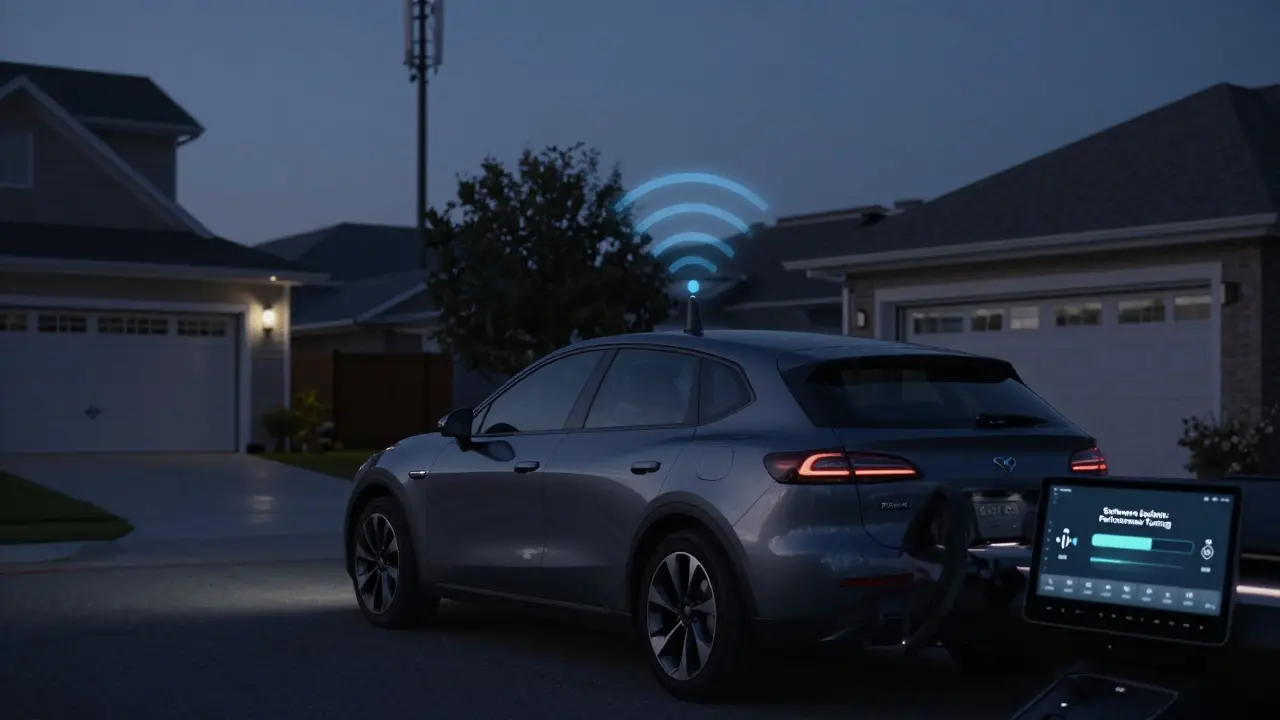
Modern cars don’t need a garage, a mechanic, or a wrench to get faster. All they need is a Wi-Fi signal. Over-the-air (OTA) tuning is changing how vehicles perform-no physical parts, no downtime, just a software update that makes your car accelerate harder, shift smoother, or even improve fuel economy. This isn’t science fiction. It’s what’s happening right now in garages, driveways, and parking lots across the UK and beyond.
What Exactly Is Over-The-Air Tuning?
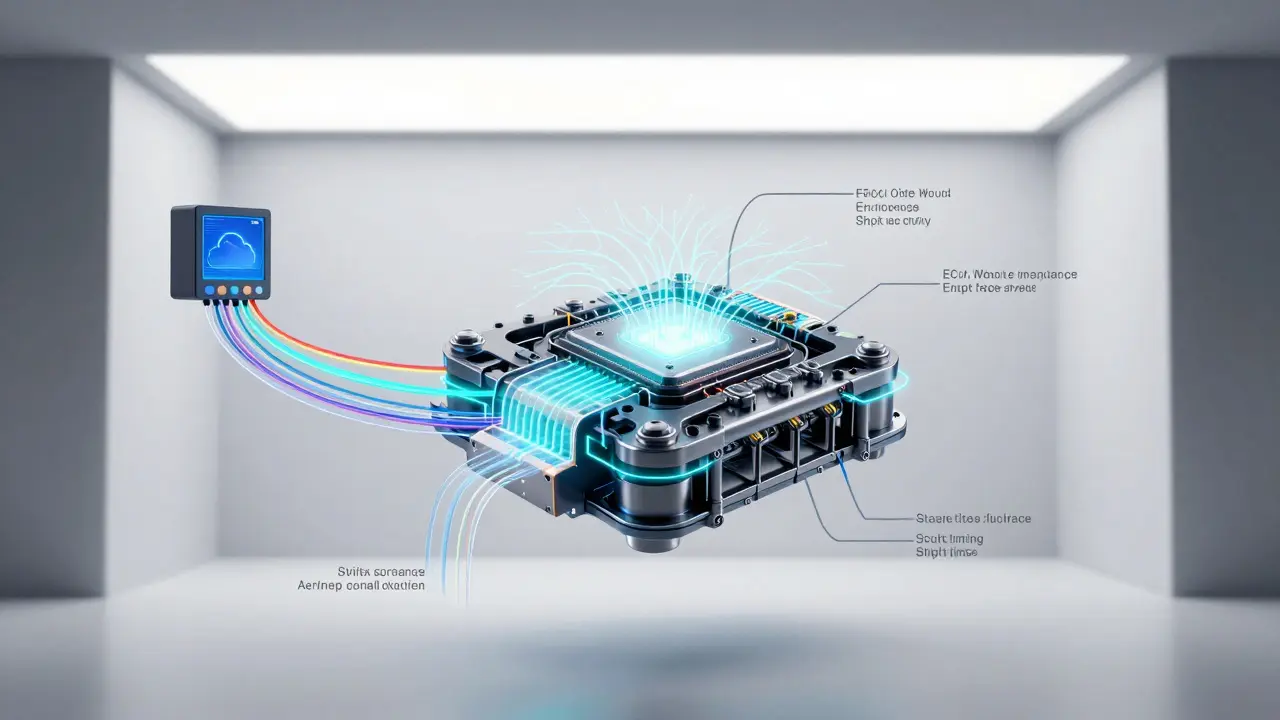
OTA tuning means updating your car’s engine control unit (ECU) and other onboard systems wirelessly. Think of it like updating your smartphone, but instead of fixing bugs or adding emojis, you’re changing how your engine behaves. The ECU controls everything from fuel injection timing to turbo boost pressure, throttle response, and transmission shift points. When automakers push a new software version, they’re essentially reprogramming the brain of your car.
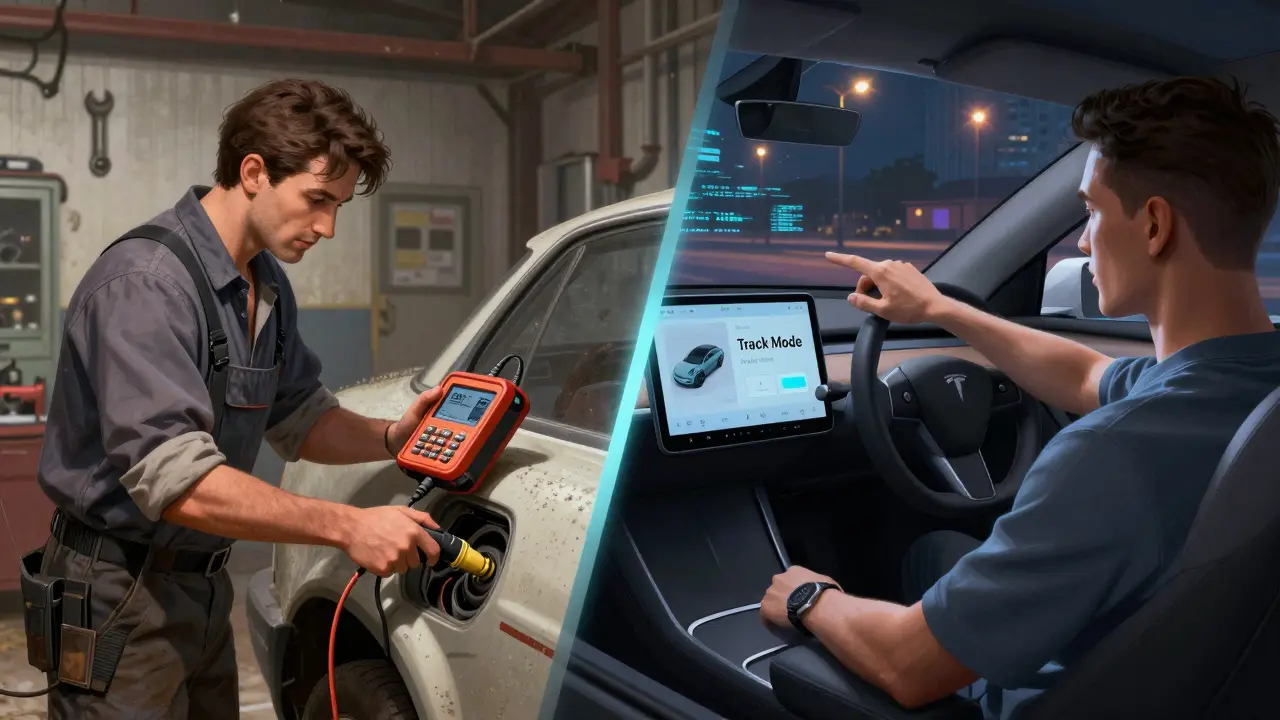
Before OTA, tuning meant taking your car to a specialist. They’d plug in a device, flash a new tune, and sometimes even swap hardware. That cost hundreds, took hours, and wasn’t always reversible. Now, your Tesla, BMW, or even a Ford Mustang can receive a performance update while parked outside your house. In 2025, over 60% of new vehicles sold in Europe had the hardware to support OTA tuning-up from just 12% in 2020.
How It Works: The Hidden Tech Inside Your Car
Every modern car has dozens of electronic control units (ECUs). The main one, the engine ECU, is what gets tuned. It runs on firmware-code that tells it how to interpret sensor data and control actuators. OTA tuning replaces this firmware remotely.
Here’s the simple version: Your car connects to the internet via cellular modem (like a built-in SIM card). The automaker’s server checks if a new tune is available. If so, it sends a compressed update. Your car downloads it overnight, verifies it’s legitimate (using encrypted signatures), then installs it during a safe window-usually when the engine is off and the battery is fully charged.
Some manufacturers, like BMW and Tesla, let you choose between different performance profiles. You might have a "Comfort" mode, a "Sport" mode, and a "Track" mode-all stored on the same ECU. Switching between them is as easy as tapping a button in the infotainment screen. No tools. No visits. Just software.
Real Performance Gains You Can Actually Feel
OTA doesn’t just tweak numbers on a screen. It changes how your car drives. Here’s what owners are reporting:
- 5-12% increase in horsepower-on models like the Audi S4 and Volkswagen Golf GTI, updates have added 15-25 hp without touching the engine.
- Faster throttle response-many users say their cars feel more alive after an update. The delay between pressing the pedal and the engine reacting is cut in half.
- Smarter gear shifts-automatic transmissions now learn your driving style. A 2024 update for the BMW 3 Series made downshifts quicker and more aggressive on winding roads.
- Better fuel efficiency-some updates optimize fuel injection timing for real-world driving, not just lab conditions. One fleet operator in Bristol saw a 4.7% drop in fuel use after an OTA tune.
These gains aren’t magic. They come from recalibrating parameters that were set conservatively at the factory. Automakers often limit performance to meet emissions standards, ensure long-term reliability, or simplify production. OTA lets them fine-tune those limits later, based on actual usage data.
Who’s Doing It-and How
Not all brands are equal when it comes to OTA tuning. Here’s who’s leading the pack:
| Brand | OTA Tuning Available? | Performance Upgrades | Customization Options |
|---|---|---|---|
| Tesla | Yes | Up to 15% power increase, improved regen braking | Full dashboard control: suspension, acceleration, steering |
| BMW | Yes (2018+ models) | Up to 10% power boost, sport exhaust tuning | Multiple driving profiles, individual settings |
| Ford | Yes (Mustang, F-150) | 10-12% torque gain on EcoBoost engines | Track mode, towing mode, off-road settings |
| Audi | Yes (2020+) | Throttle response, shift timing improvements | Driver-selectable modes via MMI |
| Toyota | Partially | Only emissions and efficiency tweaks | None for performance |
| Hyundai/Kia | Yes (2022+) | 10% power boost on N models | Track mode, sound tuning, suspension firmness |
Notice a pattern? European brands lead in performance customization. American brands focus on utility-like improving towing or off-road behavior. Japanese brands are slower, often limiting OTA to emissions fixes or infotainment updates.
Why This Matters More Than You Think
OTA tuning isn’t just about speed. It’s about ownership. Before, if you wanted better performance, you either bought a new car or spent thousands modifying yours. Now, your car can get better over time-like a smartphone.
That changes the value of used cars. A 2022 BMW with 40,000 miles might now have the same power as a brand-new 2024 model, thanks to a free software update. Dealerships are starting to advertise "OTA-ready" as a selling point.
It also means repairs are changing. If your throttle response feels sluggish, it might not be a sensor-it could be outdated software. Mechanics now ask, "Has your ECU been updated?" before replacing parts.
Downsides and Risks
It’s not all perfect. OTA tuning has risks:
- Updates can fail-if your car loses power during installation, the ECU can brick. Most automakers now require a full battery and stable connection to prevent this.
- Loss of warranty-some manufacturers void warranty if you install third-party tunes. Even if you revert later, the update log may still show tampering.
- Privacy concerns-your driving habits, location, and speed are sent to the automaker. Some users disable OTA to avoid data collection.
- Not all cars are equal-older models or budget brands often lack the hardware. You can’t OTA-tune a 2015 Honda Civic. It just doesn’t have the modem or memory.
And while updates are free for now, some experts predict automakers will start charging for performance upgrades-like premium software subscriptions. Imagine paying £50 a year for "Track Mode" on your Ford Bronco.
What You Should Do Now
If you own a relatively new car (2018 or later), here’s what to check:
- Look in your infotainment system for a "Vehicle Update" or "Software Update" option.
- Connect to Wi-Fi or ensure your cellular signal is strong.
- Check the automaker’s website-many list recent OTA updates and what they changed.
- Don’t ignore update notifications. Some updates fix safety issues, others improve performance.
- If you’re unsure, call your dealership. They can check your ECU version and tell you if an update is pending.
For enthusiasts: Keep an eye on aftermarket developers. Companies like HP Tuners and Cobb Tuning now offer OTA-compatible tuning tools that let you customize your tune without visiting a shop. Just be warned-using third-party software may void your warranty.
The Future: Your Car Gets Better Every Year
This is just the beginning. In 2026, we’ll see OTA tuning expand to suspension damping, steering feel, even brake balance. Imagine your car learning your favorite corners and adjusting its handling automatically. Or your EV adjusting regenerative braking based on traffic patterns ahead.
Electric cars are leading the way-Tesla’s updates are legendary-but even combustion engines are catching up. With stricter emissions rules, automakers need a way to fine-tune performance without redesigning hardware. OTA is the answer.
One day soon, your car won’t just be a machine. It’ll be a smart device that evolves with you. And the best part? You don’t have to buy a new one to get there.
Can I do OTA tuning myself on my car?
Only if your car’s manufacturer allows it. Most OEMs lock the ECU to prevent user modifications. You can’t just download a tune from the internet and install it like a phone app. Some brands, like Tesla and BMW, let you switch between factory profiles, but you can’t create custom tunes without third-party tools-which often void your warranty.
Does OTA tuning affect my car’s warranty?
Factory updates from the automaker do not affect your warranty. But if you use third-party software-even if you later revert it-the update log stored in your ECU may show signs of tampering. Most manufacturers can detect this, and they may deny warranty claims on engine or transmission components. Always stick to official updates unless you’re prepared to lose coverage.
Which cars support OTA tuning in 2026?
Most cars from 2018 onward from BMW, Tesla, Ford, Audi, Hyundai, and Kia support OTA tuning. Older models, budget brands like Nissan and Chevrolet (outside of high-end trims), and non-luxury vehicles often lack the necessary hardware. Check your owner’s manual or the manufacturer’s website for confirmation.
Do OTA updates cost money?
Right now, most performance updates are free. Automakers use them as a way to improve customer satisfaction and keep vehicles competitive. But with growing demand, some companies are testing paid upgrades-like £39 for a "Track Package" on a Ford Mustang. Expect subscription-style pricing to grow by 2027.
Can OTA tuning improve fuel economy?
Yes. Many updates optimize fuel injection timing, reduce engine idle speed, or adjust transmission shift points for efficiency. In real-world tests, fleet operators saw up to 5% better fuel economy after a single OTA update. For daily drivers, that means one extra tank of fuel per year.