
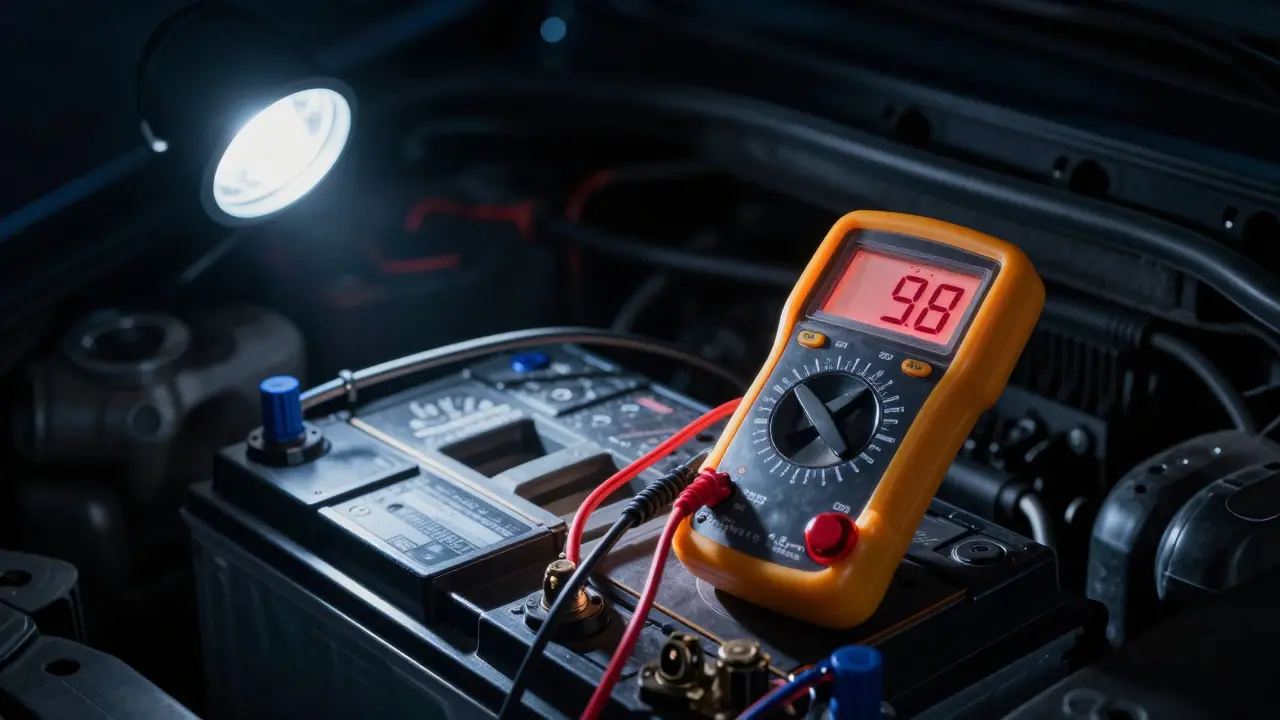
There is nothing quite as frustrating as turning the key in your ignition only to hear a pathetic click instead of an engine roar. You didn’t leave the headlights on. You didn’t forget to close the trunk. Yet, your car battery is completely dead after just one night. This isn't bad luck; it’s parasitic battery drain, also known as excessive current draw. It is a silent thief that saps power from your vehicle while you sleep, leaving you stranded when you need to go.
Modern cars are essentially computers on wheels. Even when the engine is off, dozens of modules stay awake to remember settings, maintain security systems, and sync with key fobs. A small amount of drain is normal-usually between 20 and 50 milliamps (mA). But when that number climbs higher, something is wrong. A faulty relay, a shorted module, or a aftermarket accessory can keep drawing amps instead of milliamps, killing your battery in hours rather than days.
Understanding Normal vs. Abnormal Drain
Before you start pulling wires out of your dashboard, you need to know what "normal" looks like. Every vehicle has a baseline electrical consumption when parked. In older cars, this might be near zero. In modern vehicles with remote start, telematics, and complex infotainment systems, the standby draw is higher.
- Normal Range: 20-50 mA (0.02-0.05 Amps). This keeps the clock running, memory seats saved, and alarm system armed.
- Suspicious Range: 50-100 mA. Your battery will last longer, but if left for several days, it may not start.
- Problematic Range: Over 100 mA. This will likely kill a standard lead-acid battery within 24 to 48 hours.
- Critical Drain: Over 500 mA (0.5 Amps). This indicates a major fault, such as a stuck relay or a short circuit.
The goal of testing is not to get the reading to exactly zero. That is impossible in most post-1990 vehicles. The goal is to bring the draw down to that safe, sub-50 mA zone so your battery can recharge fully during your next drive.
Gathering Your Tools for the Job
You don’t need a professional diagnostic scanner to find a parasitic drain, though one helps later. What you absolutely need is a reliable digital multimeter. Cheap meters often struggle to read low currents accurately. Look for one that can measure down to at least 0.001 Amps (1 mA) clearly. A clamp meter can work, but traditional inline measurement with a multimeter is more precise for these tiny currents.
You’ll also need:
- A set of basic hand tools (wrenches and sockets) to remove the battery terminal.
- A flashlight or headlamp because you’ll be working under the hood and possibly in dark wheel wells.
- Paper towels or rags to clean any corrosion on the terminals.
- Your vehicle’s service manual or a wiring diagram online. Knowing where your fuses are located saves time.
Step-by-Step: Testing for Parasitic Draw
The process involves inserting your multimeter into the circuit so it measures the flow of electricity leaving the battery. Here is how to do it safely and correctly.
1. Prepare the Vehicle Turn off all lights, locks, and electronics. Close all doors and the trunk firmly. Wait at least 15 to 30 minutes after locking the car. Modern cars have a "sleep mode" delay. If you test immediately, the Body Control Module (BCM) and other computers are still active, giving you a false high reading. Let the car go to sleep.
2. Set Up the Multimeter Set your digital multimeter to measure DC Amperage. Most meters have two ports for the red probe: one for high amps (10A or 20A) and one for lower amps (often labeled 200mA or mA). Start with the high amp setting to avoid blowing the fuse inside the meter if there is a massive short. If the reading is stable and low, switch to the milliamp setting for better precision.
3. Disconnect the Negative Terminal Using the correct size wrench, loosen and remove the negative (-) battery cable. Clean the terminal if it’s corroded. Leave the cable hanging free, away from the battery post.
4. Connect the Meter Inline Connect the black probe of your multimeter to the negative battery post. Connect the red probe to the negative battery cable you just removed. You are now creating a bridge. The electricity flowing from the battery to the car must pass through your meter.
5. Read the Value Look at the display. Ignore initial spikes as capacitors discharge. Wait for the number to stabilize. If it reads 0.045 A, that’s 45 mA, which is healthy. If it reads 0.500 A, that’s 500 mA, and you have a problem.
Identifying the Culprit Circuit
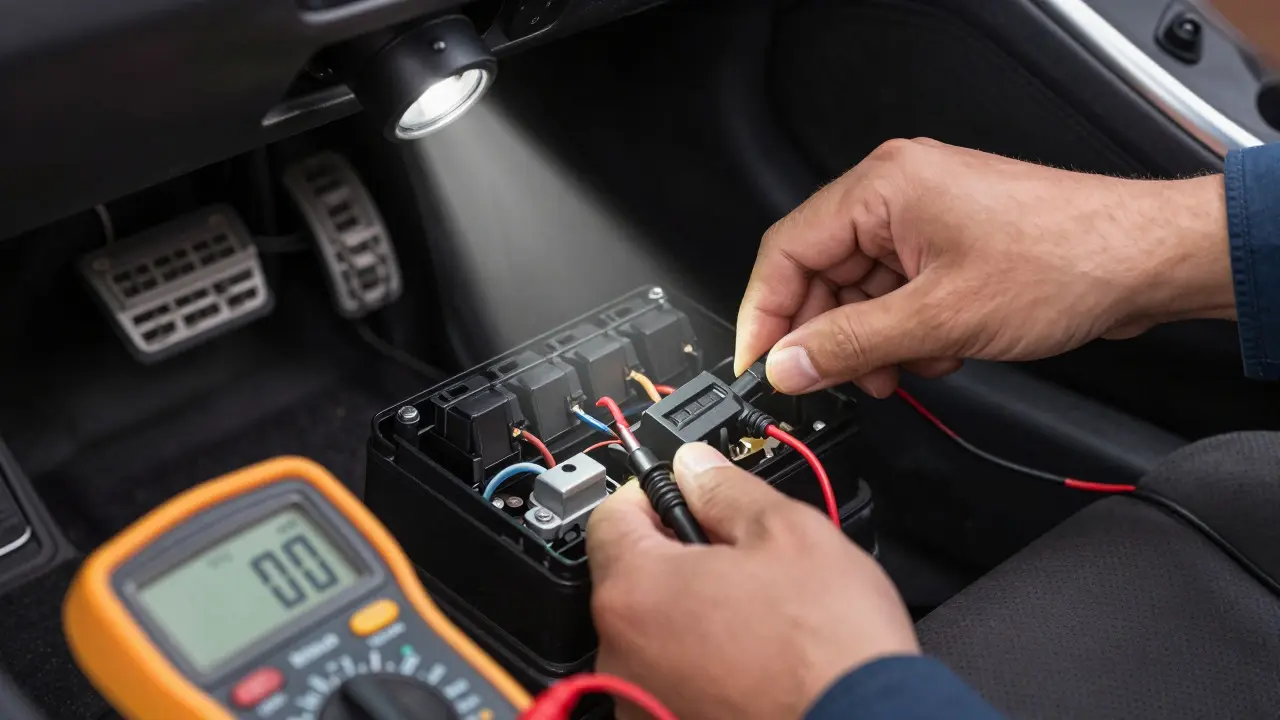
Once you’ve confirmed excessive drain, you need to find which circuit is responsible. This is done by pulling fuses one by one while watching the multimeter.
Start with the interior fuse box, usually located under the dashboard or in the glove compartment. Refer to your owner’s manual to identify what each fuse protects. Pull a fuse, wait a few seconds, and watch the multimeter. If the current drops significantly, you’ve found the problematic circuit. For example, if pulling the "Radio" fuse drops the draw from 400 mA to 20 mA, the issue lies in the audio system or its connected components.
If the interior fuses don’t change the reading, move to the engine bay fuse box. Common culprits here include the fuel pump relay, alternator regulator, or engine control module. Be careful: pulling certain fuses in the engine bay might trigger warning chimes or reset modules, temporarily increasing the draw. Give it a moment to settle.
Common Causes and Fixes
Not all drains are created equal. Some are easy fixes; others require professional diagnosis. Here are the most frequent offenders.
| Component | Symptoms | Likely Cause | Fix Difficulty |
|---|---|---|---|
| Aftermarket Accessories | Drain started after installing dash cam or tracker | Wired directly to battery without a relay or switched power source | Easy |
| Interior Lights | Dome light stays on or flickers | Faulty door switch, stuck trunk switch, or misaligned map light | Easy |
| Relays | Hissing sound under hood when parked | Stuck fuel pump or cooling fan relay keeping circuit closed | Moderate |
| Body Control Module (BCM) | No specific fuse drops the draw | Internal short in the computer controlling lights/locks | Hard |
| Alternator Diode | Battery dies overnight even when disconnected | Leaking diodes sending AC back into the battery | Moderate |
Aftermarket Electronics: This is the #1 cause today. Dash cams, GPS trackers, and upgraded stereos are often wired incorrectly. They should be connected to a switched power source (power that turns off with the key) or use a dedicated relay. If they are hardwired to constant 12V, they will drain the battery flat every night.
Stuck Relays: Listen closely to your car when it’s parked. Do you hear a faint buzzing or hissing? That’s often a relay that has welded shut. The fuel pump relay is notorious for this. Replacing the relay is cheap and easy.
Door and Trunk Switches: Sometimes, the simple act of closing the trunk doesn’t trigger the switch properly. The car thinks the trunk is open, so it keeps the interior lights and sensors active. Check if your dome light turns off when you lock the car.

When to Call a Professional
If you pull every fuse and the draw remains high, the problem might be internal to a control module like the BCM or the instrument cluster. These components are expensive and complex to repair. Additionally, if you suspect the alternator itself is leaking current due to failed diodes, you’ll need a mechanic to perform a ripple test. Trying to diagnose deep electronic faults without a wiring diagram and oscilloscope can lead to accidental shorts that damage sensitive computers.
Also, consider the age of your battery. If your battery is older than three years, it might simply be weak. A weak battery shows a higher voltage drop under load, which can sometimes mimic symptoms of a drain. Have the battery load-tested at an auto parts store before tearing apart your car’s electrical system.
Preventing Future Drains
Once you’ve fixed the immediate issue, take steps to prevent recurrence. Avoid hardwiring accessories directly to the battery unless you understand relay circuits. Use OBD-II powered devices whenever possible, as they draw minimal power and cut off when the car sleeps. Regularly check that your trunk and hood latches are engaging fully. And if you plan to leave your car parked for more than two weeks, consider using a battery maintainer or disconnecting the negative terminal entirely.
How much current draw is too much for a car battery?
Anything above 50 milliamps (0.05 Amps) is considered excessive for most modern vehicles. While some newer cars with advanced telematics may run slightly higher, sustained draws over 100 mA will likely kill a standard battery within a day or two.
Can a bad alternator cause parasitic drain?
Yes. If the diodes inside the alternator fail, they can allow alternating current to leak back into the battery even when the engine is off. This acts like a continuous drain and can also prevent the battery from charging properly while driving.
Do I need to wait for the car to go to sleep before testing?
Absolutely. Modern vehicles have multiple control modules that stay active for 10 to 30 minutes after you lock the doors. If you test immediately, you’ll see a high reading that is actually normal behavior. Waiting ensures you are measuring the true resting draw.
What if pulling fuses doesn’t reduce the draw?
If no single fuse reduces the current, the problem may be in a component that is fused differently, such as the alternator, starter motor, or a direct wire from the battery. It could also indicate an internal short in a major control module like the Body Control Module, requiring professional diagnosis.
Is it safe to leave my multimeter connected for a long time?
It is generally safe for short periods, but avoid leaving it connected for hours. If the current exceeds the meter's limit (e.g., 10 Amps), it will blow the internal fuse instantly. Always start with the highest amp setting and switch to milliamps only after confirming the current is low.