
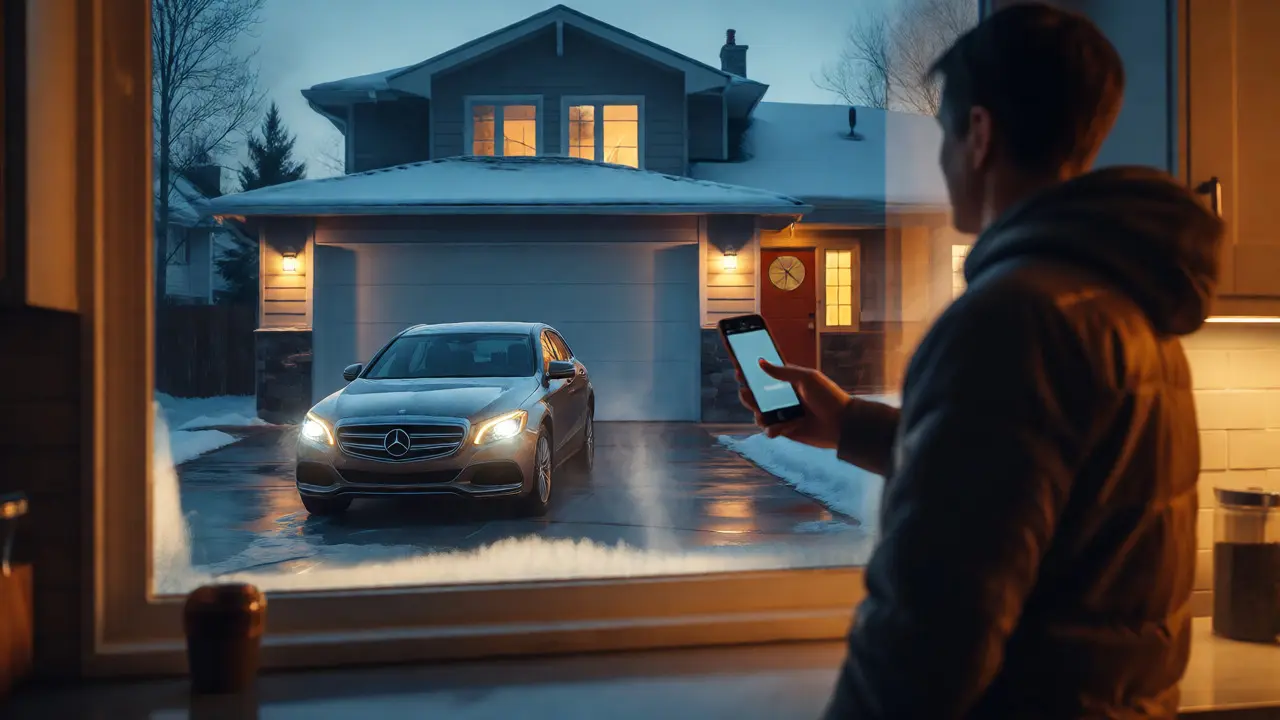
You know that feeling. It’s a freezing January morning in Bristol, or maybe a sweltering July afternoon. You slide into your driver’s seat, and the cabin is already at a comfortable temperature because you hit the remote start button from your kitchen window. Or perhaps you’re walking toward your car with your hands full of groceries, and the doors unlock automatically as you approach. This level of convenience feels like magic, but it comes with a price tag that isn’t printed on the sticker. The battle between remote starters and smart keys isn’t just about comfort; it’s a complex trade-off involving battery life, theft vulnerabilities, and insurance premiums.
The Comfort Factor: Why We Love Remote Starts
Let’s be honest: nobody wants to scrape ice off a windshield while shivering in a coat. In colder climates, a remote starter is a game-changer. By warming up the engine and turning on the heater for ten minutes before you enter, you save yourself the hassle of waiting for the defroster to work. This isn’t just luxury; it’s practical. For people with arthritis or mobility issues, getting into a warm car reduces stiffness significantly. Plus, modern systems often integrate with smartphone apps, letting you check fuel levels or lock status from anywhere in the house.
But here’s the catch most people ignore: running an engine unnecessarily consumes fuel and increases wear on components like the alternator and spark plugs. If you leave your car idling for twenty minutes every morning, you’re burning through gas faster than you think. Over a year, that idle time adds up to gallons of wasted fuel. So, while the comfort is real, the environmental and financial cost is too. Use it wisely-ten minutes is usually enough to clear frost and warm the seats.
Smart Keys: The Invisible Handshake
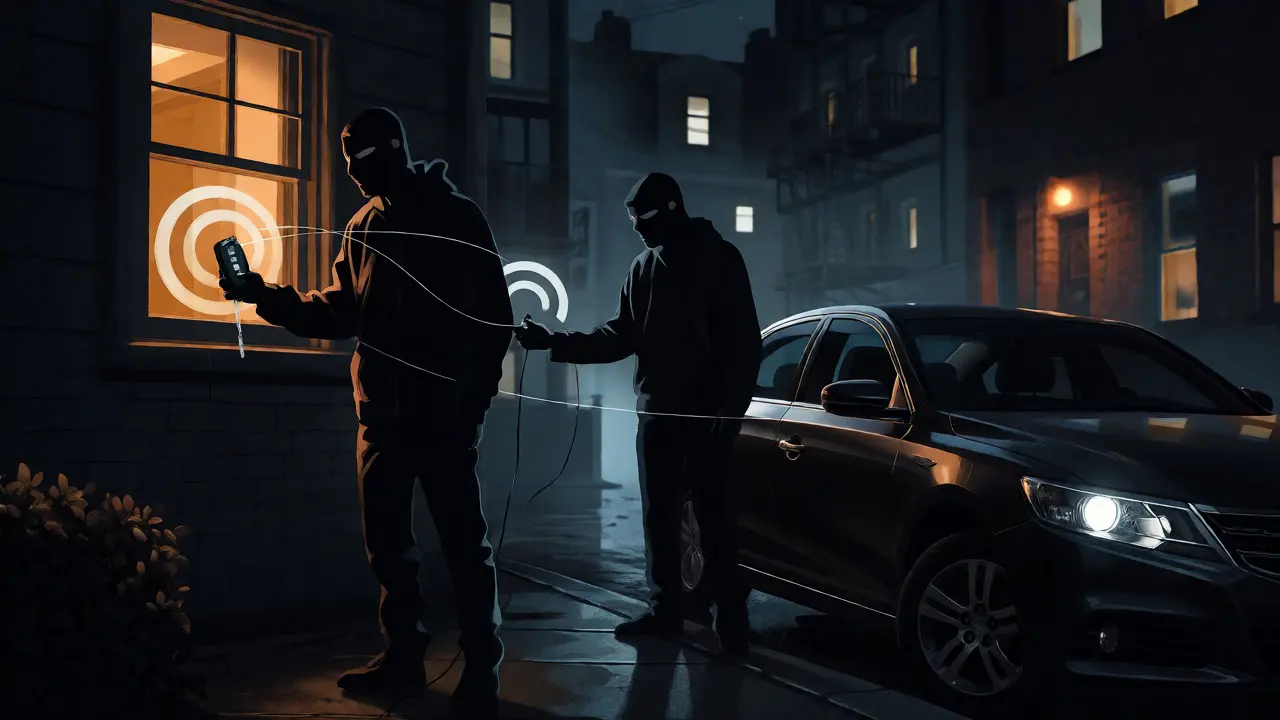
Smart Key Systems, also known as passive entry systems, use RFID technology to communicate with the vehicle. When the key fob is within proximity (usually under six feet), the car recognizes its unique code and unlocks the doors without you pressing a button. Push-button start then allows you to ignite the engine once inside. This seamless interaction removes the fumbling for keys in dark parking lots. However, this convenience introduces a specific type of vulnerability known as "relay attacks." Thieves don’t need to break your window; they just need to amplify the signal from your key sitting on your kitchen table to the car outside. A simple device held near the door tricks the car into thinking the key is present. Once inside, they can drive away in seconds. This has led to a surge in car thefts in urban areas where cars are parked close to homes.
Security Risks: What Thieves Are Doing Now
If you own a car with push-button start, you need to understand how relay attacks work. Imagine two thieves: one stands by your front door with a signal amplifier, and the other stands by your car with another amplifier. The first thief boosts the weak signal from your key inside the house, sending it to the second thief, who relays it back to the car. The car thinks the key is right there. Boom. Unlocked. Driven away.
This method is silent and fast. Traditional locking mechanisms are useless if the car thinks the authorized key is present. To combat this, manufacturers have started adding motion sensors to key fobs. If the key doesn’t move for a few minutes, it goes into sleep mode, stopping the signal transmission. But not all older models have this feature. If you drive a car made before 2018, you might still be vulnerable. Check your owner’s manual or contact your dealer to see if a software update can enable sleep mode.
Battery Life and Maintenance Realities
Both remote starters and smart keys rely heavily on batteries. A standard CR2032 coin cell in a key fob lasts about three to five years. But if you use your remote start daily, you drain the fob battery faster because each command sends a strong signal. When the battery dies, you’re stuck with a dead car. Most smart keys have a backup mechanical key hidden inside the fob, but accessing it can be tricky when you’re in a hurry.
For remote starters, the main concern is the vehicle’s battery. Starting the engine remotely draws significant power. If your car sits unused for weeks, the repeated remote starts could drain the main battery, leaving you unable to start the car manually. Always ensure your vehicle battery is healthy if you plan to use remote start frequently. A quick multimeter check once a month can save you a jump-start headache.
Insurance Implications: Does It Raise Your Premium?
Here’s a question many drivers overlook: does having a remote starter or smart key affect your insurance rates? Historically, advanced security features lowered premiums. Today, the story is more nuanced. Insurers view smart keys as higher risk due to relay theft statistics. Some companies charge extra for vehicles equipped with push-button start unless you add additional anti-theft devices, such as a steering wheel lock or a GPS tracker.
Conversely, aftermarket remote starters installed professionally might qualify for discounts if they include immobilizers. An immobilizer prevents the engine from starting unless the correct chip is detected, adding a layer of security that basic remote starters lack. Always ask your insurer specifically about your make and model. Don’t assume; verify. One policyholder in London saved £40 annually by installing a certified tracking system alongside his smart key setup.
Installation: DIY vs. Professional
Adding a remote starter to an older car isn’t as simple as plugging it in. Modern vehicles have complex computer networks called CAN buses. Incorrect wiring can cause electrical gremlins, dashboard warnings, or even damage the ECU. While DIY kits exist, they require soldering skills and patience. Mistakes are common and expensive to fix.
Professional installation costs between £150 and £400 depending on the car’s complexity. This fee includes programming the module to talk to your car’s existing systems. For smart keys, replacement is rarely a DIY job. If you lose your primary key, dealerships charge upwards of £200 for a new programmed fob. Aftermarket locksmiths can sometimes do it cheaper, around £100-£150, but quality varies. Test any third-party fob thoroughly before relying on it.
Future Trends: Phone-as-Key Technology
The future is ditching the fob altogether. Brands like BMW, Tesla, and Hyundai now offer digital keys via smartphones. Using Bluetooth Low Energy (BLE) and Near Field Communication (NFC), your phone becomes the key. This eliminates the risk of losing a small plastic object. However, it introduces new risks: what happens if your phone battery dies? Most systems have NFC fallbacks that work even when the phone is off, but reliability varies by manufacturer.
Digital keys also allow easy sharing. Need to let a friend borrow your car? Send them a temporary digital key via email. No need to meet up and hand over a physical fob. Yet, cybersecurity experts warn that digital keys expand the attack surface. Hackers could potentially intercept signals or exploit software bugs. Keep your car’s firmware updated to patch these vulnerabilities promptly.
Practical Tips for Maximum Security
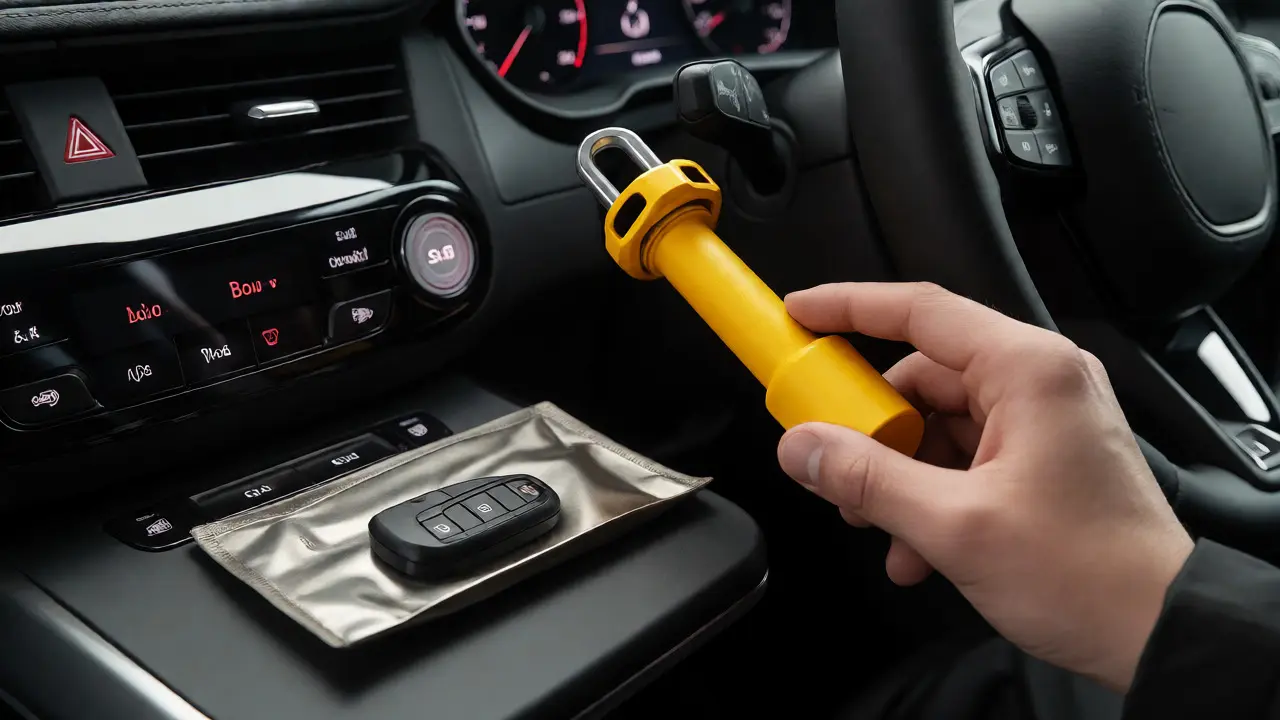
- Store keys away from doors: Keep your key fob in a metal box or a Faraday pouch at night. This blocks signals completely, preventing relay attacks.
- Use motion-sensing fobs: If your car supports it, enable the sleep mode feature to stop signal broadcasting when stationary.
- Install a steering wheel lock: It’s visible, cheap, and acts as a deterrent. Thieves prefer easy targets; a big yellow bar makes yours less appealing.
- Check your warranty: Improperly installed aftermarket remotes might void parts of your powertrain warranty. Always keep receipts from professional installers.
| Feature | Remote Starter | Smart Key System |
|---|---|---|
| Primary Benefit | Cabin pre-heating/cooling | Hands-free access and ignition |
| Main Security Risk | Engine runs unattended (fuel/wear) | Relay attacks (signal amplification) |
| Battery Dependency | Vehicle battery + Fob battery | Fob battery (critical) |
| Insurance Impact | Neutral to Positive (with immobilizer) | Potentially Negative (higher theft risk) |
| Cost to Add/Replace | £150-£400 (installation) | £100-£300 (replacement) |
Frequently Asked Questions
Can a remote starter drain my car battery?
Yes, especially if used excessively. Each remote start cycle requires significant power from the vehicle’s main battery to crank the engine. If your battery is old or the alternator is weak, frequent remote starts can lead to a dead battery. Limit usage to necessary times and monitor battery health regularly.
Are smart keys safe from theft?
They are convenient but vulnerable to relay attacks. Thieves can amplify the signal from your key inside your home to unlock and start your car. To enhance safety, store keys in a Faraday bag or a metal container overnight, and consider adding a physical steering wheel lock as a visual deterrent.
Do I need to reprogram my car after installing a remote starter?
Usually, yes. Modern cars use complex communication networks. A professional installer will connect a diagnostic tool to program the new remote starter module so it communicates correctly with the car’s computer. Attempting this without proper tools can result in error codes or malfunctioning electronics.
What happens if my smart key battery dies?
Most smart keys have a mechanical key blade hidden inside the fob. You can use this to manually unlock the door. Once inside, hold the fob against the start button (often marked with a key symbol) to start the car using induction. Replace the fob battery immediately to restore full functionality.
Is it worth buying a smartphone app for remote start?
If you already have a compatible vehicle, yes. Apps provide longer range than standard fobs and offer extra features like location tracking and service reminders. However, they rely on cellular data and your phone’s battery life. Ensure your subscription remains active, as some manufacturers charge annual fees for app connectivity.
Comments
Ejike Ugwu
they are listening to us through the fob signal, that is why they want you to buy the new ones with longer range so they can track your location even when you are asleep in bed, do not trust the manufacturers, they work for the government
October 6, 2026 at 18:25
Ian Mason-Laurence
The article accurately reflects current industry standards regarding relay attacks. It is worth noting that while Faraday pouches are effective, many users fail to realize that modern key fobs often have a 'sleep mode' that activates after a period of inactivity, which mitigates this risk without additional hardware. Furthermore, the insurance implications mentioned are largely dependent on whether the vehicle has an aftermarket immobilizer installed alongside the smart key system.
October 8, 2026 at 15:45
Tommy Cahyadi
Great read. I guess my only advice is to stop relying on technology and start using a steering wheel lock like our grandparents did. Simple solutions are usually the best ones.
October 10, 2026 at 02:16
Lauren Martin
This analysis lacks depth. The author fails to address the fundamental flaw in passive entry systems: the lack of mutual authentication during the initial handshake phase. Most consumer-grade RFID implementations rely on unidirectional signal propagation, making them inherently susceptible to amplification exploits. Until we see widespread adoption of UWB (Ultra-Wideband) technology with time-of-flight calculations, these systems remain security theater rather than robust security protocols. The financial impact on premiums is also oversimplified; actuarial data suggests that high-theft urban areas see a disproportionate increase in claims specifically related to push-button ignition vehicles, regardless of added deterrents.
October 10, 2026 at 13:08
jyotshna Senapati
I cannot believe people still think their cars are safe. You are all just sheep waiting to be sheared by thieves who know more about your car than you do. If you don't keep your keys in a metal box, you deserve to lose your car. It's that simple. Why do people insist on convenience over safety? It shows a lack of discipline.
October 11, 2026 at 07:54
Kathy Mccoy
Hey everyone! Just wanted to add that remote starters have been a lifesaver for me during winter mornings. It’s not just about comfort; it helps with joint pain too. But definitely agree on the battery maintenance tip-checking it monthly saved me from being stranded last year!
October 13, 2026 at 03:11
Kathleen Johnson
While the points raised are valid, the tone is unnecessarily alarmist. Relay attacks require specific equipment and proximity; they are not as ubiquitous as suggested. Moreover, the comparison between remote starters and smart keys conflates two distinct technologies with different use cases. A more nuanced approach would acknowledge that for many users, the convenience outweighs the marginal increase in risk, especially when standard precautions are taken.
October 13, 2026 at 15:57
Shaina Silver-Baird
The omission of cellular connectivity risks in smartphone-as-key scenarios is glaring. We are essentially handing over our digital identities to automotive corporations who share data with third parties. This isn't just about theft; it's about surveillance capitalism. Every unlock event is logged, analyzed, and monetized. We should be far more concerned about data privacy than physical theft at this point.
October 14, 2026 at 02:08
evelyn starcher
Finally someone said it! These fancy features make us lazy and vulnerable. In America, we used to respect our machines, now we treat them like disposable toys. Keep your keys away from the door or get robbed. :-(
October 14, 2026 at 02:30
Sundaraiah Kollipara
i wonder if the convenience we seek is actually eroding our ability to interact with the physical world
when we no longer need to touch the key or turn the ignition, do we feel less connected to the act of driving itself? perhaps the security risks are just a metaphor for how disconnected we have become from our tools and our environment
October 14, 2026 at 17:28
Sabrina Silvani
the real question is whether the convenience justifies the existential dread of losing control over your own property
we trade autonomy for ease and then complain when the ease becomes a vulnerability
it is a cycle of dependency that mirrors broader societal trends where we surrender agency for comfort
October 15, 2026 at 01:56