
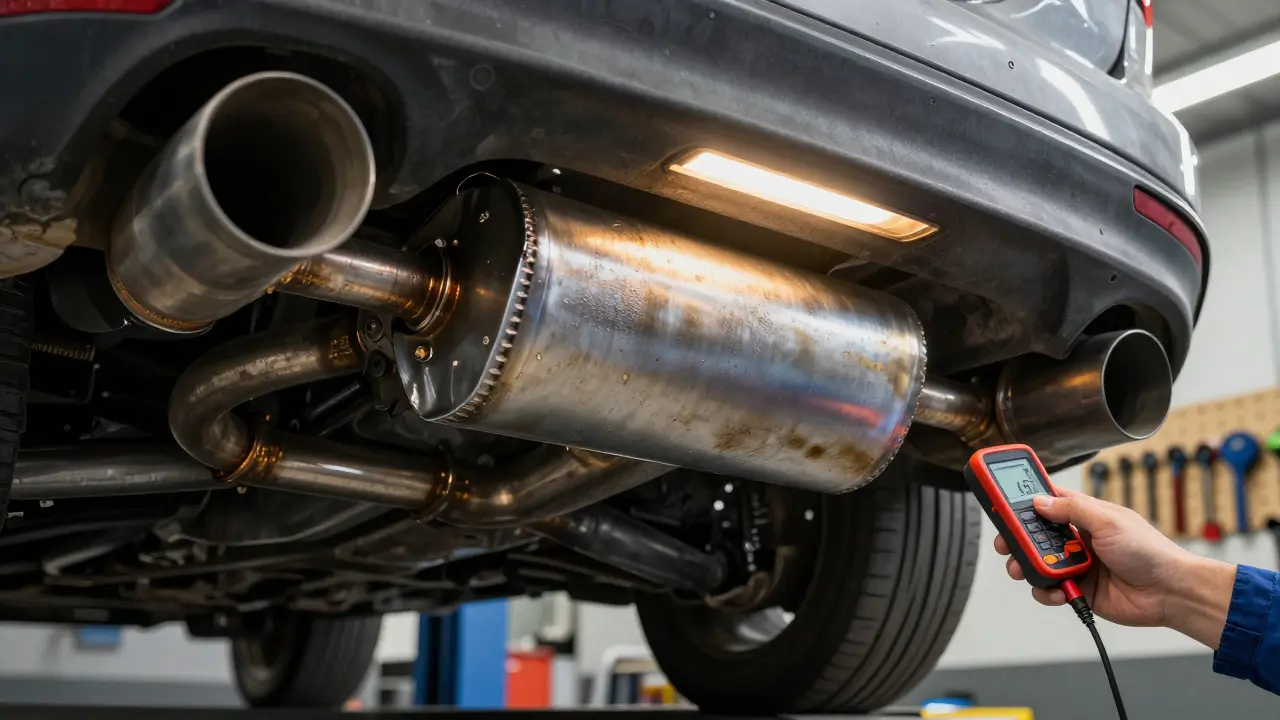
There is nothing quite like the roar of a modified exhaust. It wakes you up in the morning and turns heads at stoplights. But there is a dark side to that aggression. If you get it wrong, your cabin turns into a pressure cooker of noise, and every highway drive becomes a test of endurance. This is where the debate between a resonator delete and a muffler delete gets heated. One gives you volume; the other gives you tone. Knowing which one to pull-or keep-is the difference between a satisfying growl and a headache-inducing rattle.
The Anatomy of Your Exhaust System
Before you grab an angle grinder, you need to understand what these parts actually do. Most people think the muffler is the only thing keeping the noise down. That is a common misconception. The exhaust system is a chain of components working together to manage gas flow and sound waves.
Your engine burns fuel, creating high-pressure gases. These gases exit through the headers, merge into the catalytic converter (which cleans them), and then travel down the mid-pipe. Here is where the magic happens for sound control. The Resonator is a chamber designed to cancel out specific low-frequency sound waves, particularly the annoying drone heard at cruising speeds. Think of it as noise-canceling headphones for your car. It uses destructive interference to kill the hum that builds up around 2,000 to 3,000 RPMs on the highway.
Further back sits the Muffler is the final stage of exhaust treatment that reduces overall decibel levels by using baffles and chambers to absorb and reflect sound energy. Its job is simple: make the car quiet enough to meet legal standards and comfortable enough for long trips. It handles the broad spectrum of noise, from the low rumble to the high-pitched hiss.
When you remove either component, you are breaking this chain. The question is, which link breaks first without ruining the ride?
What Happens When You Delete the Resonator?
A resonator delete is often called the "safe" modification. Why? Because you are removing a component that specifically targets low-frequency resonance, not the general volume. If you cut out the resonator but leave the muffler intact, you will notice a distinct change in character rather than just raw loudness.
The sound becomes deeper and more aggressive. You lose some of the refined, factory-tuned smoothness, replacing it with a burbly, sporty tone. For many drivers, this is the sweet spot. It sounds fast without sounding broken. However, the risk here is subtle. If your car’s muffler is already thin or poorly designed, deleting the resonator can expose those weaknesses. The remaining muffler might struggle to handle the altered sound wave frequencies, leading to a slight increase in drone, though usually less severe than a full muffler delete.
This modification is popular among owners of turbocharged vehicles. Turbochargers create backpressure, and the resonator adds to that restriction. Removing it can slightly improve airflow, though the horsepower gains are negligible-often less than 1-2 wheel horsepower. You are doing it for the ear candy, not the dyno sheet.
The Reality of a Muffler Delete
Now let’s talk about the nuclear option. A muffler delete involves removing the entire muffler assembly. In many cases, this also means removing the resonator, as they are often integrated or connected in series. The result is immediate and drastic. Your car will be significantly louder. We are talking about a noticeable jump in decibels, especially under acceleration.
But here is the catch: volume is not the same as quality. Without the muffler’s baffles to scatter and absorb sound energy, the exhaust note becomes flat and tinny. Instead of a deep V8 rumble, you might get a sharp, piercing crackle that lacks depth. More importantly, you invite the dreaded drone.
Exhaust drone occurs when the frequency of the exhaust pulses matches the natural resonance frequency of your cabin. At idle, it’s fine. At 55 mph, it’s manageable. But hit 70 mph on the interstate, and that steady hum can become a vibrating wall of noise. It fatigues your ears and makes conversation impossible. Many enthusiasts who start with a muffler delete end up installing a straight pipe or a high-flow cat-back system within six months because the daily drivability became unbearable.

Sound Comparison: Tone vs. Volume
To help you decide, let’s break down the acoustic differences. Imagine two scenarios:
| Feature | Resonator Delete | Muffler Delete |
|---|---|---|
| Loudness | Moderate increase | Significant increase |
| Tone Quality | Deeper, sportier, refined | Flat, tinny, aggressive |
| Highway Drone | Low risk | High risk |
| Legality | Often passes inspection | Usually fails noise tests |
| Reversibility | Easy (weld resonator back) | Harder (need new muffler) |
If you want your car to sound mean but still want to listen to your music on long drives, the resonator delete wins. If you live in a rural area, rarely drive on highways, and want maximum attention, the muffler delete might appeal to you. But be warned: neighbors will notice.
The Drone Problem Explained
Why does drone happen? It’s physics. Sound waves bounce around inside your metal box-on-wheels. Certain frequencies resonate with the glass, the roof, and the seats. Factory engineers spend thousands of hours tuning the exhaust to avoid these resonant frequencies. The resonator is their primary tool for this.
When you delete the resonator, you remove the filter that blocks those specific low-end frequencies. If your car has a naturally aspirated engine, the effect is minimal. But if you have a turbocharged four-cylinder or a modern direct-injection engine, the exhaust pulses are sharper and more frequent. Without the resonator to tame them, those pulses can amplify in the cabin.
A muffler delete makes this worse. Not only do you lose the low-end filtering, but you also lose the broadband absorption of the muffler. The result is a cacophony of unfiltered noise that hits every sensitive frequency in the cabin. Some cars, like certain Ford F-150s or Dodge Chargers, are notorious for developing severe drone after a muffler delete. Others, like older Japanese sports cars, handle it better due to simpler exhaust designs.

Legal and Social Consequences
Let’s talk about the real world. In the UK, where I’m based, and in many US states, noise ordinances are strictly enforced. A muffler delete almost guarantees you will fail an MOT or state inspection. The penalties can range from fines to having your vehicle impounded until it’s fixed. A resonator delete is a gray area. Since the muffler remains, the overall decibel level might stay within legal limits, but inspectors with good ears can sometimes detect the change in tone.
Socially, consider who shares your space. Roommates, family members, and neighbors appreciate peace. A muffler delete can be heard from blocks away. Early morning starts become public announcements. While the thrill of the modification is real, the social cost can be high. Many enthusiasts find themselves apologizing repeatedly or parking further away from homes to avoid complaints.
Alternatives to Deletion
You don’t have to choose between factory silence and delete chaos. There are middle-ground options that offer better engineering:
- High-Flow Mufflers: Brands like Borla, MagnaFlow, and Flowmaster design mufflers that reduce backpressure while maintaining a tuned sound. They often include built-in resonators to prevent drone.
- Bypass Valves: These electronic valves open at high RPMs to let more air out, giving you a loud race track sound when you want it and a quiet commute sound when you don’t.
- Resonator Baffles: Instead of deleting the resonator entirely, you can remove the internal baffles. This creates a mild sporty tone without the extreme changes of a full delete.
These solutions cost more than cutting a pipe, but they save you from regretting the modification three months later. They provide a balanced experience that respects both your desire for performance and your need for comfort.
How to Decide What’s Right for You
Ask yourself these questions before making a cut:
- Do I drive on highways regularly? If yes, avoid muffler deletes.
- Is my car used for daily commuting with passengers? If yes, prioritize low drone.
- Do I live in an area with strict noise laws? If yes, stick to resonator deletes or high-flow systems.
- Am I willing to reverse the modification? If no, choose the safer resonator delete.
If you answer "yes" to most of these, a resonator delete is your best bet. It offers a noticeable upgrade in sound character without the drawbacks of excessive noise or drone. If you answer "no" and you’re looking for maximum impact, a muffler delete might work, but prepare for the consequences.
Will a resonator delete void my warranty?
In the US, the Magnuson-Moss Warranty Act protects consumers. Dealers must prove the modification caused the damage to deny a warranty claim. However, if you delete the resonator and later have exhaust-related issues, the dealer may argue causation. In the UK, modifications can affect insurance and warranty terms more directly. Always check your specific policy.
Does deleting the resonator increase horsepower?
Technically, yes, but negligibly. Removing restrictions improves exhaust flow, which can yield 1-3 wheel horsepower. You won’t feel this difference in daily driving. The primary benefit is sound, not performance. Do not expect dramatic gains.
Can I fix exhaust drone after a muffler delete?
It is difficult. Once the muffler is gone, you’ve lost the primary noise-dampening component. You would need to install a new aftermarket muffler or add a resonator back into the system. This often costs more than just buying a complete cat-back system initially.
Is a resonator delete illegal in the UK?
Modifications that alter the exhaust system beyond manufacturer specifications can fail an MOT if they cause excessive noise or smoke. While a resonator delete is quieter than a muffler delete, it still changes the exhaust note. Inspectors use decibel meters and visual checks. If the sound is deemed "abnormal," you will fail.
Which is better for turbocharged cars?
Turbocharged cars benefit more from reduced backpressure. A resonator delete helps slightly with flow and improves sound quality without introducing too much drone. A muffler delete can lead to significant drone in turbos due to the sharp exhaust pulses. High-flow downpipes combined with a quality muffler are usually the best route.