
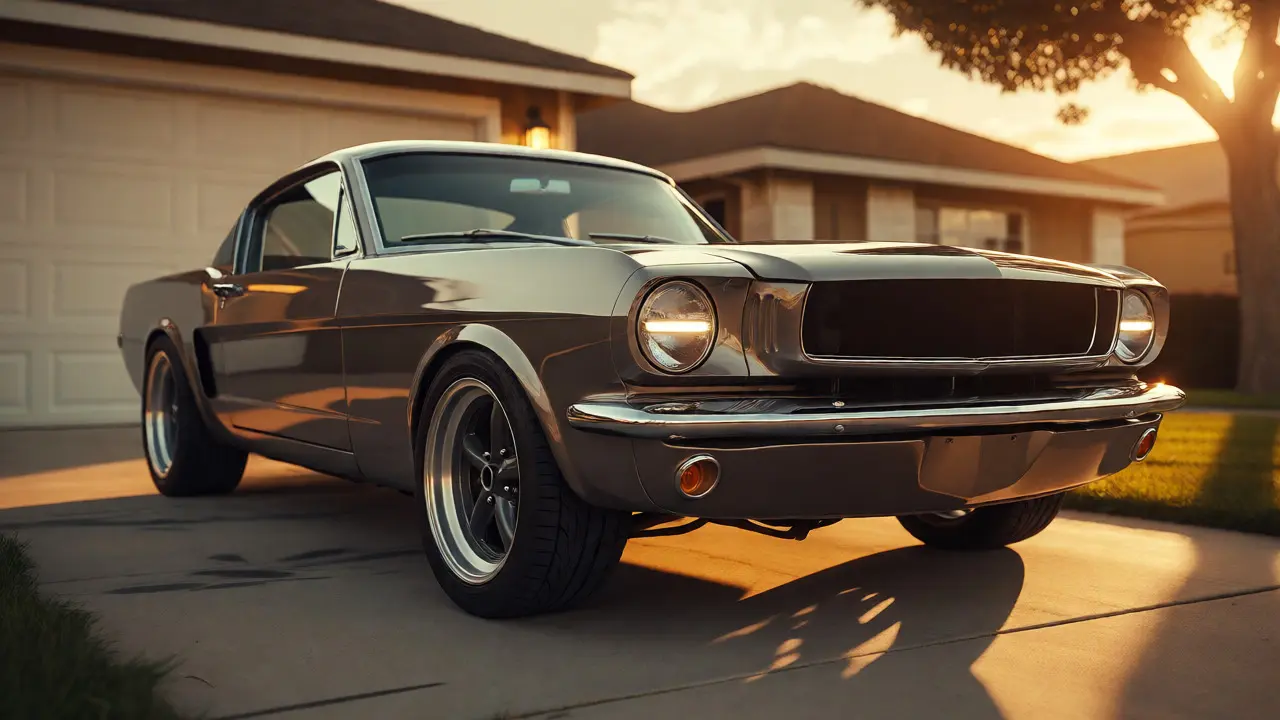
Imagine driving a 1965 Ford Mustang that looks exactly like it did when it rolled off the assembly line in Dearborn, but handles corners like a modern sports sedan and starts on the first try every single morning. That’s not a fantasy; it’s the core promise of the restomod movement. It is a cultural shift in how we value old metal, moving away from strict historical preservation toward personal enjoyment and daily drivability.
You might be wondering why anyone would take a perfectly good piece of history and tear it apart to stuff it with parts from a 2024 BMW or Tesla. The answer lies in the friction between nostalgia and reality. Classic cars are beautiful, but they were built for a world without GPS, air conditioning that actually works, or tires that grip wet pavement. A restomod bridges that gap. It keeps the soul of the original design while injecting the reliability and performance we’ve come to expect from modern engineering.
Defining the Restomod vs. Restoration
Before you start hunting for donor parts, you need to understand where your project sits on the spectrum. This isn’t just semantics; it dictates your budget, your timeline, and how the community judges your build.
| Feature | Concours Restoration | Restomod | Hot Rod / Rat Rod |
|---|---|---|---|
| Goal | Factory perfection | Daily drivable performance | Style or raw speed |
| Parts Sourcing | NOS (New Old Stock) only | Mixed vintage & modern | Junkyard & custom fab |
| Engine | Original spec | Modern crate engine or EV | V8 swap or stock hot-rodded |
| Resale Value | High if perfect | Stable, growing niche | Variable, often lower |
A traditional restoration aims to return a car to its exact state when new. If the factory used cloth seats, you find cloth seats. If the radio was AM-only, you don’t add Bluetooth. It’s museum work. A hot rod, conversely, prioritizes speed over aesthetics, often chopping roofs or removing fenders entirely.
The restomod lives in the sweet spot. You keep the exterior silhouette intact-no chopped roofs, no weird paint jobs-but underneath, you upgrade the chassis, suspension, brakes, and powertrain. The goal is a car you can drive to work, sit in traffic, and still feel excited about when you get home. It’s about usability, not just showmanship.
The Heart of the Build: Engine Swaps and Powertrains
The biggest decision you’ll make is what goes under the hood. For decades, this meant dropping in a small-block Chevy V8 because they were cheap, powerful, and everywhere. But times have changed. Today, you have three distinct paths, each with different implications for weight, balance, and maintenance.
The Crate Engine Route: Companies like LS Performance or Ford Racing offer bolt-in kits that turn an old frame into a modern powerhouse. An LS3 engine, for example, produces around 430 horsepower out of the box, weighs less than many original inline-sixes, and runs on regular unleaded fuel. The advantage here is simplicity. Parts are available at any auto shop, and mechanics know them inside out. However, fitting these into tight engine bays requires custom fabrication, which adds cost.
The OEM Swap: This involves taking an entire subframe and engine from a newer car. Think of putting a Honda K-series engine into an old MG Midget, or a BMW N54 twin-turbo six into a Jaguar E-Type. This approach preserves the original manufacturer’s engineering philosophy better than a generic crate motor. It feels more integrated. The downside? Integration headaches. Wiring harnesses rarely match, and electronics can become a nightmare if you aren’t careful.
The Electric Conversion: This is the fastest-growing segment. Converting a classic to electric eliminates the transmission, exhaust, and radiator issues entirely. Instant torque changes the character of light-weight classics like the Porsche 356 or Alfa Romeo Giulia Sprint. Brands like Lunaz and EV West specialize in this. The challenge is weight distribution. Batteries are heavy. If you pack them poorly, you ruin the handling dynamics that made the car special in the first place. Plus, range anxiety is real if you plan long road trips.
Chassis and Suspension: Why Your Car Needs to Stop Better Than It Goes
Most people obsess over horsepower. Smart builders obsess over stopping distance and cornering stability. Original drum brakes from the 1960s fade quickly under hard use. They require constant adjustment and feel vague through the pedal. Upgrading to cross-drilled ventilated discs with four-piston calipers transforms confidence levels immediately.
Suspension upgrades go hand-in-hand with brakes. Leaf springs, common in trucks and older muscle cars, are tough but harsh. They transmit every crack in the road directly to your spine. Coil-over shocks allow for adjustable ride height and damping stiffness. You can soften them up for cruising or stiffen them for track days. Independent rear suspension swaps, though complex, drastically improve tire contact during cornering.
Don’t forget steering. Recirculating ball steering boxes, standard on most pre-1980s cars, suffer from excessive play. Switching to a rack-and-pinion system provides direct feedback. You feel the road texture through the wheel. It makes parking easier and highway driving less fatiguing. These mechanical improvements contribute more to the "modern" feel than any amount of horsepower ever could.
Interior Comfort and Technology Integration
This is where the rubber meets the road for daily drivers. Sitting in a bucket seat from 1970 after two hours feels like punishment. Modern memory foam padding, lateral support, and heating elements change everything. But it’s not just about comfort; it’s about connectivity.
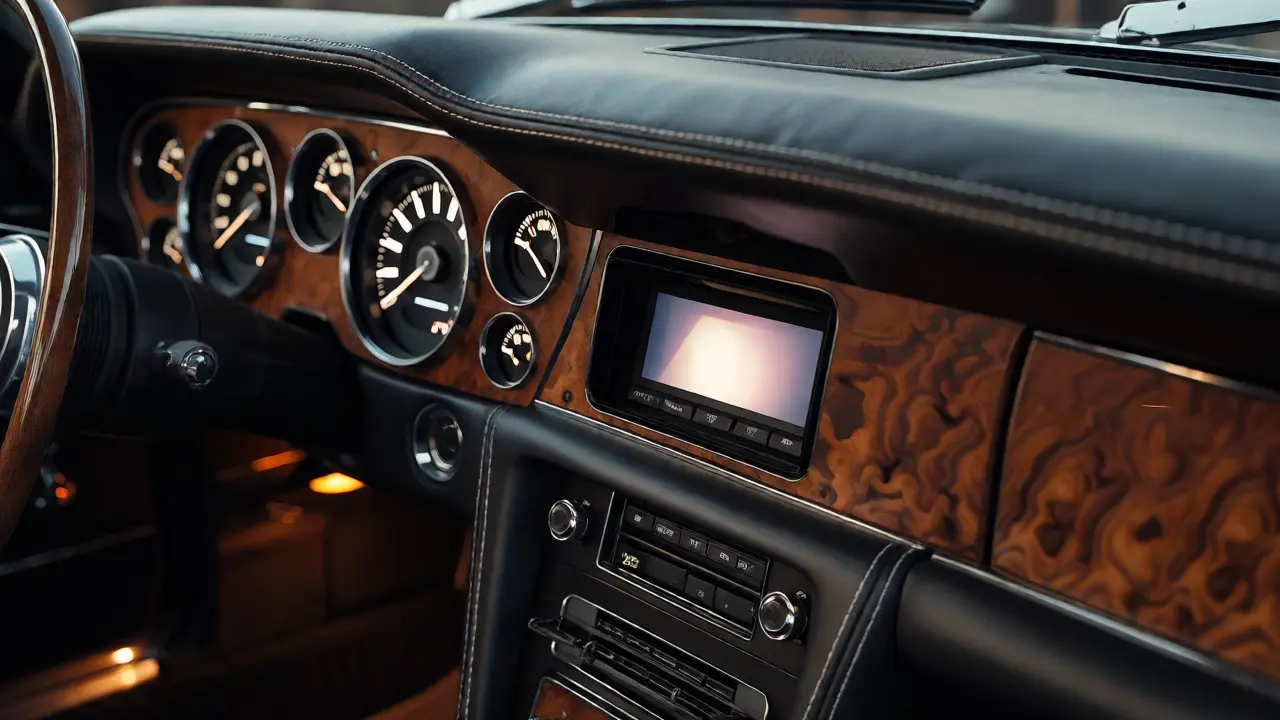
Integrating technology without ruining the aesthetic is an art form. You want Apple CarPlay or Android Auto, but you don’t want a giant tablet glued to your dashboard. Hidden head units behind period-correct bezels solve this. Digital gauges disguised as analog dials provide accurate speed and RPM readings without looking out of place. Climate control systems that fit behind gloveboxes ensure you’re not sweating through your shirt in summer or freezing in winter.
Sound insulation is another critical factor. Old cars are loud. Wind noise, tire roar, and exhaust drone dominate the cabin. Adding modern sound-deadening materials like Dynamat reduces fatigue significantly. You can listen to podcasts or music clearly without shouting. This subtle improvement makes the car usable for commuting, which is often the primary justification for the investment.

Budgeting and Common Pitfalls
Let’s talk money. A basic restoration might cost $30,000 to $50,000. A high-end restomod easily exceeds $100,000. Where does the money go? Labor. Finding skilled fabricators who understand both vintage sheet metal and modern CAD design is difficult. You pay for their expertise in solving integration problems that didn’t exist fifty years ago.
One major pitfall is underestimating electrical complexity. Modern ECUs communicate via CAN bus networks. Older cars use simple point-to-point wiring. Bridging these worlds requires specialized knowledge. Poor grounding leads to ghost faults that frustrate owners for months. Always allocate a contingency fund for electrical gremlins.
Another trap is losing the car’s identity. If you swap a heavy diesel engine into a lightweight British roadster, you might destroy its charm. Balance matters. Weight transfer affects braking and acceleration. Consult with engineers who understand vehicle dynamics before committing to a powertrain choice. Just because it fits doesn’t mean it belongs there.
Market Trends and Investment Potential
Is a restomod a good investment? Historically, purist restored cars held value better because they were rare artifacts. But demographics are shifting. Younger buyers prioritize experience over provenance. They want cars they can drive, not just park in climate-controlled garages. Consequently, well-executed restomods by reputable builders like Icon, Ringbrothers, or local specialists are gaining market traction.
However, liquidity is lower. Selling a unique one-off build takes time. Buyers need to understand the specific modifications. Documentation is crucial. Keep detailed records of every part, service interval, and modification. Transparency builds trust. If you’re building for profit, stick to popular platforms like Porsche 911s, Land Rover Defenders, or American muscle cars. Obscure European coupes carry higher risk due to smaller enthusiast bases.
Does modifying a classic car hurt its resale value?
It depends on the execution and the buyer pool. Purists may avoid modified cars, lowering the ceiling price among collectors. However, the broader market of enthusiasts who want drivable classics often pays premiums for quality restomods. A professionally documented, tastefully upgraded car often sells faster than a fragile, numbers-matching original that requires constant attention.
What is the most popular engine swap for classic cars?
The General Motors LS series V8 remains the gold standard for versatility. It offers high power-to-weight ratios, compact dimensions, and massive aftermarket support. For European cars, BMW inline-six engines are increasingly popular due to their smoothness and tuning potential. Electric conversions are rising rapidly in popularity for urban commuters seeking zero-emission status and low maintenance.
How much does a typical restomod cost compared to a restoration?
A full restoration typically ranges from $40,000 to $80,000 depending on rarity. A restomod usually costs 20% to 50% more due to custom fabrication, modern components, and complex integration labor. High-end builds can exceed $150,000. Budget for unexpected costs, especially in wiring and cooling systems, which often require iterative adjustments.
Are restomods reliable enough for daily driving?
Yes, if done correctly. The primary advantage of a restomod is improved reliability. Modern fuel injection, electronic ignition, and sealed bearings eliminate the frequent tune-ups required by carburetors and points distributors. With proper cooling and electrical management, a restomod can achieve mileage comparable to a modern used car, making it viable for daily commutes.
Can I install air conditioning in any classic car?
Almost any classic car can be fitted with modern R-134a air conditioning. Kits are available for most models, though installation difficulty varies. Space constraints in the firewall area often dictate compressor placement. Professional installation ensures proper drainage and refrigerant charge, preventing humidity issues that plague DIY attempts.
Comments
Ian Mason-Laurence
The distinction between a restomod and a hot rod is frequently misunderstood by the general public. A restomod retains the original exterior silhouette while upgrading mechanical components for drivability, whereas a hot rod often alters the bodywork itself for aesthetic or aerodynamic purposes. This article correctly identifies that the primary value proposition of a restomod is daily usability rather than mere showmanship.
September 30, 2026 at 22:31
Lauren Martin
Oh please, spare me the romanticized nonsense about "soul" and "cultural shifts." The only reason people do this is because they have more money than sense and want to feel special driving a $100k toy that looks like it belongs in a museum but breaks down like one too. You're not preserving history; you're just slapping an LS swap on a chassis that was never designed for modern torque curves and calling it engineering. It’s lazy fabrication masked as passion.
October 1, 2026 at 04:01
Anthony .
I think there's a beautiful balance here 🤝. It’s about honoring the past while embracing the present. Not every car needs to be a museum piece, and not every driver wants to wrestle with carburetors on their way to work. It’s personal expression, really. 😊
October 1, 2026 at 20:34
Marisa Marroquin
The integration of hidden head units behind period-correct bezels is truly a masterclass in subtlety. It allows the driver to enjoy modern connectivity without shattering the visual integrity of the cockpit. One must appreciate the craftsmanship required to achieve such seamless technological assimilation within a vintage framework.
October 2, 2026 at 13:57
evelyn starcher
Finally! American ingenuity saving these old relics from European pretension. We don't need those fragile British roadsters falling apart on us. Give me a solid Ford frame and a crate engine any day. 🇺🇸💪 These Euro cars are just money pits waiting to happen.
October 3, 2026 at 13:49
Tommy Cahyadi
Sure, if your idea of fun is spending six months chasing electrical gremlins in a wiring harness that doesn't match the ECU, go for it. I prefer my cars to start when I turn the key, not when the moon aligns with Jupiter. But hey, who am I to judge your hobby of expensive frustration?
October 3, 2026 at 21:42
Kathleen Johnson
While the technical details regarding CAN bus integration are accurate, the analysis lacks depth concerning the long-term depreciation curve of non-OEM modifications. Most buyers still prioritize provenance over performance in the high-end collector market, rendering many of these "daily drivers" illiquid assets. It is a risky financial maneuver disguised as enthusiasm.
October 5, 2026 at 07:26
Shaina Silver-Baird
We must consider the implications of EV conversions on the structural integrity of lightweight chassis. Batteries add significant mass, which can alter handling dynamics unpredictably. Furthermore, the reliance on proprietary battery management systems introduces a layer of obsolescence risk that traditional internal combustion engines do not possess. Are we trading mechanical simplicity for electronic complexity and eventual software lock-in?
October 6, 2026 at 16:30
Kathy Mccoy
This is such a great guide for anyone thinking about starting a project! Remember to budget extra for those unexpected electrical issues-it’s totally normal and part of the journey. Don’t let the fear of wiring stop you from enjoying the process. You’ve got this! 💪
October 7, 2026 at 17:07
Ejike Ugwu
They hide the truth about parts availability. When the first big manufacturer stops making those specific brackets, you are stranded. It’s all planned obsolescence wrapped in nostalgia. You buy the dream, but they own the supply chain. Watch what happens when the cheap imports flood the market and quality drops to zero. They want you dependent on them forever.
October 8, 2026 at 23:03
jyotshna Senapati
Why are you even bothering with these old things? If you want speed, buy a new car. If you want style, buy art. Mixing them is just messy. And honestly, most of these builds look ridiculous when you see them in person. The paint is always too shiny, and the wheels are always too big. It screams insecurity.
October 9, 2026 at 07:55
Sundaraiah Kollipara
it raises interesting questions about what constitutes authenticity in automotive culture. is the soul of the car in its original metal or in the experience of driving it? perhaps we are redefining heritage not as preservation of form but as preservation of joy. the shift towards daily drivability suggests a democratization of classic ownership where utility becomes a form of respect for the machine.
October 9, 2026 at 17:37
Mithilesh Singh
This trend promotes wastefulness!!! Why keep old metal when we have efficient modern cars?? It is selfish to consume resources for ego!! We should focus on sustainability and efficiency, not nostalgic indulgence!!! The environment suffers for our vanity!!!
October 11, 2026 at 13:35