
If you drive for Uber or Lyft, you might think your personal car insurance covers you when you’re working. It doesn’t. And if you don’t know that, you could be driving without any real protection - not just for your car, but for your wallet.
What Uber and Lyft Insurance Covers (And What It Doesn’t)
Uber and Lyft do offer some insurance, but it’s not like regular car insurance. It kicks in only during specific phases of a ride, and there are big gaps in between.
Here’s how it breaks down:
- Period 1: When you’re logged into the app and waiting for a ride request. At this stage, Uber and Lyft provide limited liability coverage - usually $50,000 per person for bodily injury, $100,000 per accident, and $25,000 for property damage. No collision or comprehensive coverage. If you get into an accident while waiting for a ride, your personal insurance is likely the first to pay - and they might deny your claim because you were using your car for business.
- Period 2: You’ve accepted a ride and are on your way to pick up the passenger. Coverage increases to $1 million in liability insurance from Uber or Lyft. This is the only time you’re fully covered by their policy. But again, no physical damage to your own car.
- Period 3: You have a passenger in the car. You’re still covered by the $1 million liability policy. Plus, you get uninsured/underinsured motorist coverage and contingent collision and comprehensive coverage - but only if you have those on your personal policy. If you don’t, your car isn’t protected if you hit a tree or get stolen from.
So if your car gets totaled in Period 1, you’re out of luck unless you have rideshare-specific insurance. Uber and Lyft won’t fix it. Your personal insurer might cancel you for fraud if they find out you were driving for hire without telling them.
Your Personal Insurance Won’t Cover You
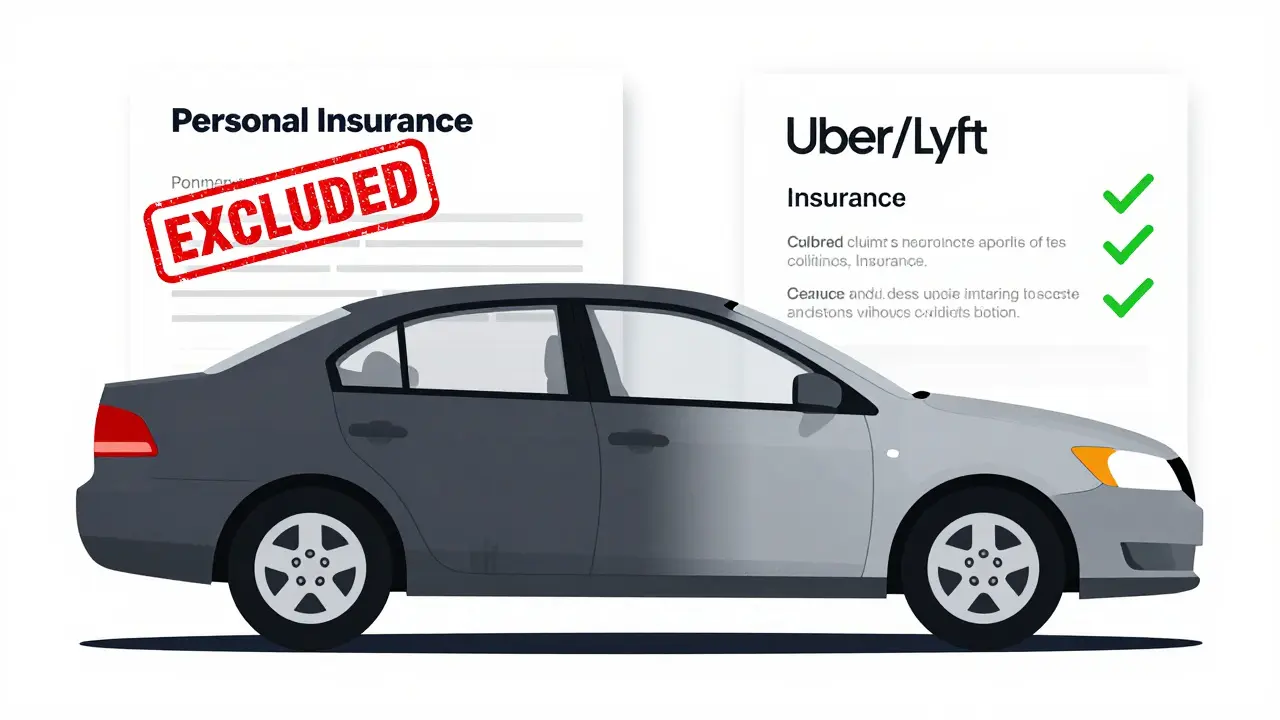
Most personal auto policies have a clause that says: “No coverage for commercial use.” Driving for Uber or Lyft counts as commercial use. That means if you get into an accident while logged into the app, your insurer can refuse to pay - even if you were just waiting for a ride request.
Real story: A driver in Manchester had a fender bender while waiting for a Lyft request. His personal insurer paid for the other car, then sent him a letter saying his policy was canceled because he was using his vehicle for ridesharing. He had no coverage for his own repairs. He ended up paying £3,200 out of pocket.
Insurance companies check claims history, and if they see multiple claims tied to rideshare activity, they’ll drop you. Some even use telematics data or third-party databases to detect app usage. It’s not a myth - it’s happening every day.
What Is Rideshare Insurance?
Rideshare insurance is a special endorsement or standalone policy that fills the gaps between your personal coverage and Uber/Lyft’s limited protection. It’s designed specifically for drivers who use their cars for gig work.
Here’s what it typically covers:
- Collision and comprehensive coverage during all three periods - including when you’re just waiting for a ride
- Higher liability limits than personal policies
- Medical payments coverage for you and your passengers
- Protection against policy cancellation by your personal insurer
Companies like Allstate, State Farm, Geico, and Progressive offer rideshare endorsements in the UK and US. In the UK, companies like Adrian Flux and Hastings Direct have specific rideshare policies.
Cost? Usually between £10 and £30 extra per month on top of your regular premium. That’s cheaper than a single repair bill after an accident in Period 1.
What Happens If You Don’t Have It?
Let’s say you’re driving for Uber, and you get hit by a driver who has no insurance. You’re in Period 2 - so Lyft’s $1 million liability policy covers the other driver’s damage. But your car is totaled.
If you only have personal insurance, you get nothing. Lyft’s contingent collision coverage only applies if you already have collision on your own policy. No collision? No payout.
Same thing if you hit a pedestrian. Uber’s liability coverage will pay the victim. But if you’re injured? Your personal health insurance kicks in - unless you’re uninsured. And if you can’t work for weeks because of injuries? Uber doesn’t pay lost wages.
There’s no safety net unless you build one yourself.
How to Get the Right Coverage
Here’s how to make sure you’re protected:
- Call your current insurer. Ask: “Do you cover rideshare driving?” If they say yes, get it in writing. If they say no, ask if they offer a rideshare endorsement.
- Compare rideshare-specific policies. Look at Allstate’s Drive More, State Farm’s Rideshare Coverage, and UK providers like Adrian Flux. Check what periods they cover and what deductibles apply.
- Don’t rely on Uber or Lyft’s policy alone. Their coverage is temporary, limited, and designed to meet minimum legal requirements - not to protect you.
- Update your policy before you start driving. Waiting until after an accident means it’s too late.
Some drivers try to save money by switching to a commercial policy. That’s expensive - often £800-£1,200 a year. Rideshare endorsements are cheaper and still give you full protection.
Common Myths About Rideshare Insurance
Myth: “Uber’s insurance covers everything.”
Truth: Their coverage is conditional, incomplete, and doesn’t touch your car unless you already have collision. It’s a liability shield, not a repair fund.
Myth: “I only drive on weekends, so I don’t need it.”
Truth: Accidents happen in seconds. One wrong turn during a late-night ride can cost you thousands. Weekend drivers are just as likely to get hit.
Myth: “I’ve never had an accident, so I’m fine.”
Truth: Insurance isn’t about past behavior - it’s about risk. Even the safest drivers get hit by someone else. And if you’re uninsured during a rideshare trip, you’re legally vulnerable.
What to Do Right Now
If you drive for Uber or Lyft:
- Check your current policy documents for commercial use exclusions.
- Call your insurer and ask for rideshare coverage - don’t assume they know what you do.
- Get quotes from at least two providers. Don’t just pick the cheapest - check what’s covered in Period 1.
- Keep proof of coverage in your car. Uber and Lyft may ask for it during background checks.
If you’re thinking about starting: Get insured before you log into the app for the first time. It’s not optional. It’s the difference between driving safely and driving dangerously.
FAQ
Does Uber or Lyft provide full coverage for my car?
No. Uber and Lyft only provide liability coverage and contingent collision/comprehensive coverage - and only during active rides. They don’t cover your car if you’re waiting for a ride request, unless you already have collision coverage on your personal policy. Your car isn’t protected in the most common accident scenario: a fender bender while logged in but not on a trip.
Will my personal car insurance cancel me if I drive for Uber?
Yes, if you don’t tell them you’re driving for hire. Most personal policies exclude commercial use. Insurers can find out through claims data, telematics, or third-party databases. If you’re caught driving for Uber without rideshare coverage, they can cancel your policy retroactively and deny future claims - even for non-rideshare accidents.
How much does rideshare insurance cost in the UK?
Rideshare endorsements typically add £10 to £30 per month to your existing premium. For example, adding rideshare coverage to a standard policy with Adrian Flux might cost £22/month extra. That’s far less than the average £3,000 repair bill after an accident in Period 1.
Do I need rideshare insurance if I only drive a few hours a week?
Yes. Accidents don’t care how many hours you drive. One trip gone wrong - even during your first ride - can lead to major financial loss. The risk is the same whether you drive 10 hours or 100 hours a month. Protection isn’t optional.
Can I use a commercial policy instead of rideshare insurance?
You can, but it’s not worth it. Commercial policies are designed for taxis or delivery vans and cost 2-3 times more than rideshare endorsements. Rideshare insurance gives you the right level of protection without overpaying. Stick with an endorsement unless you’re driving full-time for a company that requires a commercial license.
Comments
Indi s
Man, I had no idea my personal insurance wouldn't cover me while waiting for a ride. I thought Uber had my back. Learned the hard way when my bumper got cracked last month. Had to pay for it myself. Don't be like me.
January 7, 2026 at 18:17
Agni Saucedo Medel
Thanks for this!! 🙏 I just started driving for Lyft last week and was so confused about coverage. Now I'm calling my insurer tomorrow. You just saved me a fortune 💸
January 8, 2026 at 21:41
Rohit Sen
Uber’s insurance? More like Uber’s illusion. Real drivers know you need your own coverage. Period.
January 9, 2026 at 10:25
Vimal Kumar
Hey, if you're driving for Uber or Lyft, don't wait until something goes wrong. Just call your insurer and ask for the rideshare add-on. It's like £20 extra a month - cheaper than a coffee habit. Seriously, do it before your next shift. You'll thank yourself later.
January 10, 2026 at 19:39
Amit Umarani
Technically, the term 'contingent collision coverage' is misused here. It's not 'contingent' in the legal sense - it's conditional. And the article conflates 'comprehensive' with 'collision.' Minor, but important for accuracy.
January 10, 2026 at 21:36
Noel Dhiraj
If you're driving for Uber you're a business owner not a hobbyist. Treat it like one. Insurance isn't optional it's essential. Get covered before you hit the road. No excuses
January 12, 2026 at 02:44
vidhi patel
It is imperative to note that the contractual language of most personal automobile insurance policies explicitly excludes commercial usage. Failure to disclose such activity constitutes material misrepresentation and may result in rescission of coverage, retroactive denial of claims, and potential civil liability. This is not a suggestion - it is a legal reality.
January 14, 2026 at 00:25
Priti Yadav
Wait - did you know Uber and Lyft secretly share your driving data with insurers? I heard they sell your GPS logs to insurance companies so they can cancel you later. That’s why they say ‘we cover you’ - it’s a trap. Don’t fall for it. They don’t care if you lose your car.
January 15, 2026 at 11:26
Ajit Kumar
It is not merely advisable to obtain rideshare-specific insurance - it is a moral and fiduciary obligation. To operate a vehicle for commercial purposes without adequate coverage is not only financially reckless, but ethically negligent toward passengers, other road users, and even one’s own family who may be financially impacted by an uninsured loss. The cost of ignorance far exceeds the cost of coverage, and one must ask oneself: is a few pounds per month too much to pay for peace of mind and responsibility?
January 16, 2026 at 22:34
anoushka singh
Ugh I read all this but honestly I just don’t care. I’ve driven for 2 years and never had an accident. Why waste money on extra insurance? I’ll just pay out of pocket if something happens. Easy.
January 17, 2026 at 18:16
Diwakar Pandey
Good breakdown. I added the rideshare endorsement to my Geico policy last year - £25/month extra. Had a fender bender last month during Period 1. Got my car fixed in 3 days. No drama. Just glad I did it. Seriously, don’t wait.
January 18, 2026 at 07:02
Geet Ramchandani
Let’s be real - Uber and Lyft are scamming drivers with this ‘coverage’ nonsense. They make you think you’re protected so you keep driving for them while they pocket your fares and wash their hands of your car, your injuries, your losses. They don’t care if you go bankrupt. They’re not your friend. They’re a corporation. And your personal insurance will drop you the second they find out - which they will, because data doesn’t lie. You’re not a driver. You’re a disposable asset. Get insured or get out.
January 18, 2026 at 08:00