
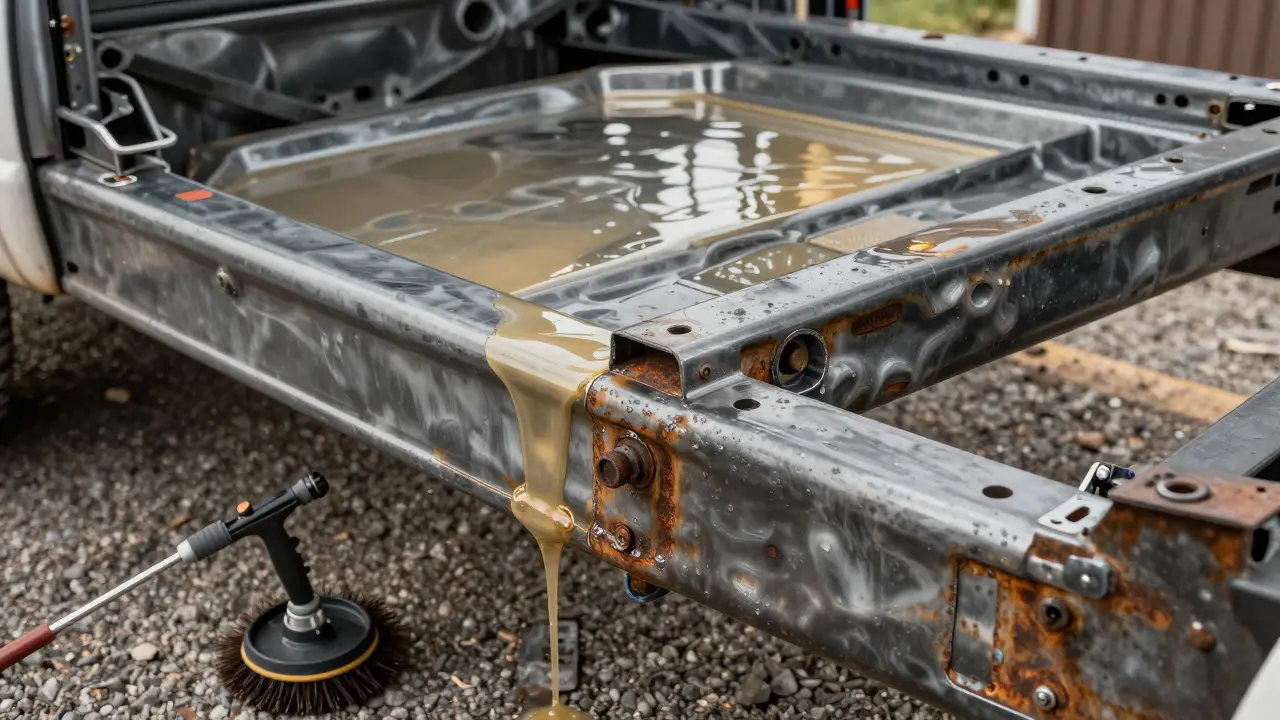
Nothing kills a pickup truck faster than rust. You can ignore a scratch on the fender, but when rust starts eating through the frame or bed, you’re looking at thousands in repairs-or worse, a truck that’s unsafe to drive. The good news? Rust doesn’t have to win. With the right coatings and consistent care, you can keep your pickup’s frame and bed solid for 15, 20, even 25 years. This isn’t about waxing and hoping. It’s about knowing exactly what to apply, where, and when.
Why Pickup Frames and Beds Rust First
Pickup trucks are built tough, but they’re also built to work. That means they’re constantly exposed to road salt, mud, gravel, and water. The frame, especially, is a rust magnet. It’s low to the ground, collects moisture, and often has hidden crevices where water sits for days. The bed? It takes abuse from tools, cargo, and weather. Even if you don’t haul salt, winter slush from highways finds its way in.Factory paint isn’t enough. Most manufacturers use basic primer and paint that holds up for a few years, then starts to chip. Once the metal is exposed, rust begins. And once it starts, it spreads fast-especially under the bed’s plastic liner or inside the frame rails where you can’t see it.
Best Coatings for Pickup Frames
Not all rust preventatives are created equal. For frames, you need something that sticks, seals, and lasts. Here are the top three coatings trusted by mechanics and off-road crews:- Fluid Film - A lanolin-based lubricant that penetrates deep into seams and stays flexible. It doesn’t dry or crack, and it self-heals when scratched. Used by military and agricultural fleets, it’s ideal for hidden frame areas. Reapply every 6-12 months.
- 3M Undercoating - A thick, rubberized spray that forms a rubbery shield. Great for visible frame sections. It blocks salt and stones but can get dirty-looking over time. Best applied with a spray gun for even coverage.
- Rust-Oleum EpoxyShield - A two-part epoxy that bonds like glue. It’s harder than spray coatings and lasts longer, but it’s not flexible. Use it on flat, accessible surfaces like frame crossmembers, not on moving joints.
For the best results, clean the frame with a pressure washer first. Let it dry completely. Then, use a wire brush or sandpaper to remove loose rust. Apply your chosen coating with a spray nozzle or brush-don’t skip the inside of frame rails. Many people forget those, but that’s where rust hides.
Protecting the Truck Bed
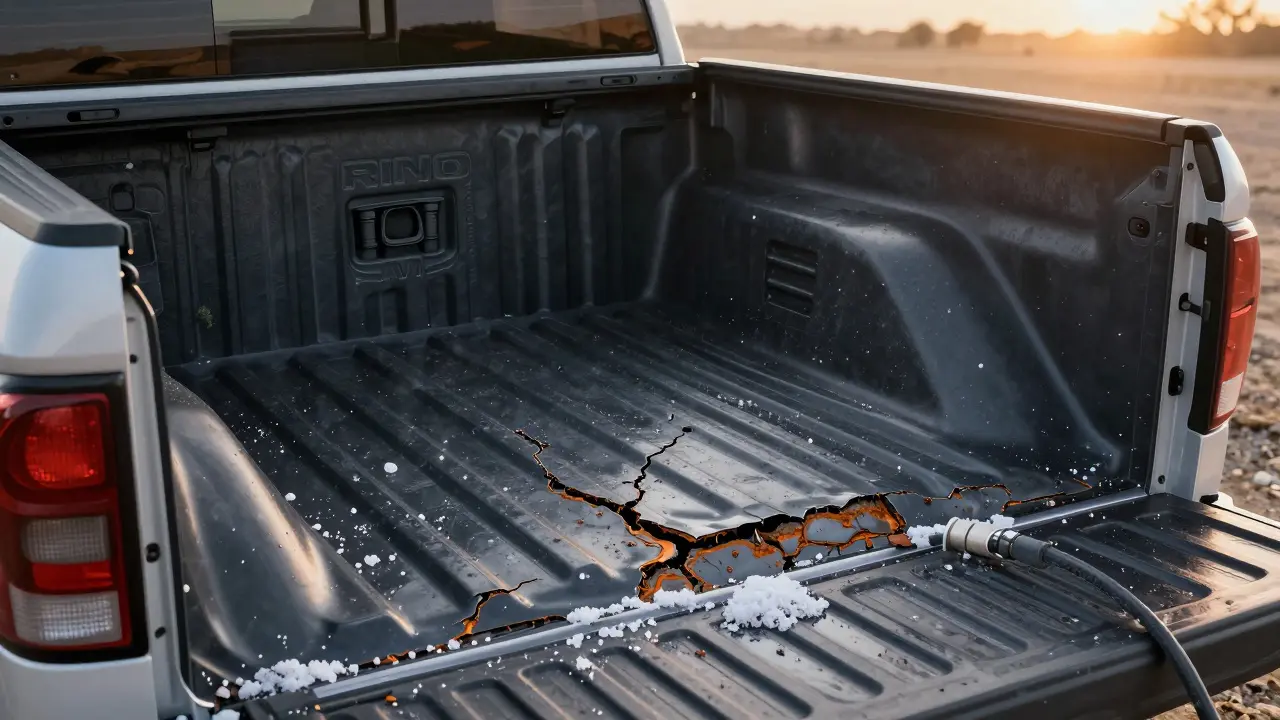
The bed takes more punishment than the frame. Hauling gravel, wet lumber, or heavy tools wears down paint fast. A bed liner is your first line of defense-but not all liners are equal.- Roll-on bed liners (like Rhino Linings or Herculiner) are the gold standard. They’re sprayed on, bond to metal, and create a textured, non-slip surface. They last 10+ years and resist chemicals, UV, and impacts. Professional application is best, but DIY kits work if you prep properly.
- Plastic drop-in liners are cheap and easy, but they trap moisture underneath. If you use one, remove it every 3 months and clean the bed underneath. Otherwise, rust forms silently under the liner.
- Paint-only coatings (like Rust-Oleum Truck Bed Coating) are okay for light use. They’re not as tough as roll-ons and chip faster under heavy loads.
Pro tip: If you haul salted sand or de-icing chemicals, rinse the bed with fresh water after every trip. Don’t wait for it to dry. Salt crystals form and grind into the metal. A quick hose-down takes 2 minutes and adds years to your bed’s life.
Monthly Maintenance Routine
Coatings help, but they’re not magic. You still need to stay on top of things. Here’s a simple monthly checklist:- Wash the undercarriage with a hose or pressure washer. Focus on the frame rails, wheel wells, and bed corners.
- Check for bubbling paint or flaking rust on the frame and bed. Use a magnet-if it doesn’t stick, there’s likely rust underneath.
- Inspect the bed’s corners and tailgate hinges. These are common rust hotspots.
- Wipe down the bed with a damp cloth if you’ve hauled anything abrasive or salty.
- Reapply a thin layer of Fluid Film or similar product to the frame every 6 months, or after heavy winter use.
Don’t wait for rust to show. Check early. A dime-sized rust spot is easy to fix. A quarter-sized one costs $300. A half-inch hole? You’re looking at frame replacement.
What Not to Do
Avoid these common mistakes:- Don’t use WD-40 as a rust protector. It’s a lubricant, not a sealant. It evaporates in weeks and leaves metal bare.
- Don’t ignore mud buildup. Mud holds moisture against metal. Wash it off after off-roading.
- Don’t use abrasive pads on painted surfaces. Scratching the paint invites rust. Use a soft brush or microfiber cloth.
- Don’t assume your truck is ‘rust-proof’. Even new trucks from 2024 have frame rust issues if not maintained. Ford, Ram, and Toyota all have documented cases.
Signs Your Frame Is Already Rusted
If you notice any of these, act fast:- Cracks or holes in the frame rail-visible from underneath
- Loose or wobbly suspension mounts
- Uneven tire wear or pulling to one side (frame twist affects alignment)
- Visible rust flakes falling from the frame when you wash the truck
These aren’t cosmetic. A rusted frame compromises structural integrity. If you see any of this, get a professional inspection. Some shops offer frame repair kits with steel inserts, but if the damage is severe, replacement is the only safe option.
When to Call a Pro
DIY works for prevention. But if you’re dealing with:- Deep pitting on the frame
- Corrosion inside sealed frame rails
- Any structural damage to the bed crossmembers
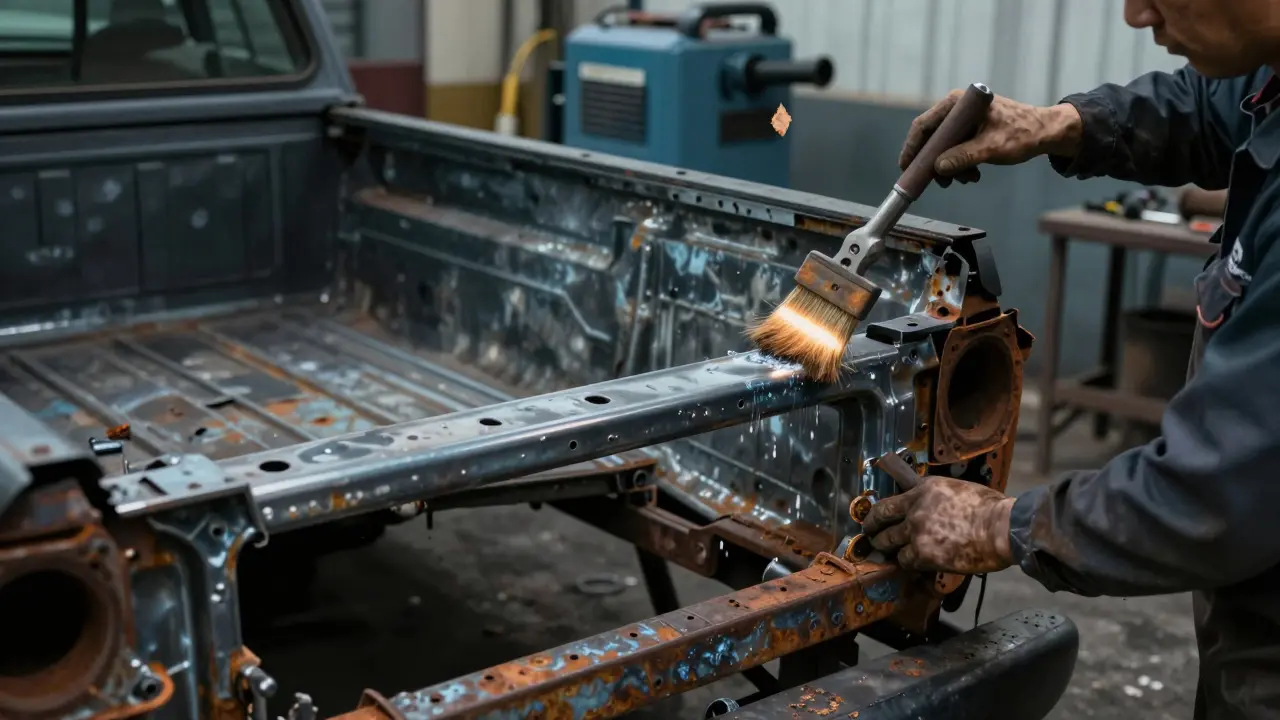
Then it’s time for a shop. A good shop will:
- Remove the bed to access the frame fully
- Use media blasting to strip rust down to bare metal
- Apply zinc-rich primer before coating
- Seal all seams with butyl tape or urethane sealant
This isn’t cheap-$800 to $2,000 depending on damage-but it’s cheaper than a new truck. And it’s safer.
Real-World Example: A 2020 Ford F-150 in Bristol
A customer in Bristol brought in a 2020 F-150 with 42,000 miles. He hauled firewood and salted gravel in winter. The bed had a plastic liner. He never washed underneath. When he removed the liner, the bed floor was 60% rusted. The frame rails had thin spots near the rear axle.He chose to repair instead of replace. We removed the bed, blasted the frame, applied epoxy primer, then sprayed on Fluid Film inside the rails. The bed floor got a professional Rhino Linings application. Total cost: $1,400. He’s now driving it with confidence. No more worrying about the bed collapsing.
That’s the difference between ignoring it and acting early.
Final Thoughts: Prevention Is Cheaper Than Repair
A pickup truck is an investment. Whether you use it for work, weekends, or hauling gear, keeping the frame and bed rust-free saves you money, time, and stress. You don’t need to be a mechanic. Just be consistent.Wash the undercarriage. Apply a good coating. Check for rust every month. Skip the quick fixes. Use products made for trucks, not cars. And never assume your truck is safe just because it’s new.
Years from now, you’ll thank yourself for taking 10 minutes every month to protect what you drive.
Can I use spray-on bed liner on the frame?
No. Most spray-on bed liners are designed for flat, visible surfaces. They’re too thick and rigid for frame rails and joints. Use a flexible product like Fluid Film or a rubberized undercoating instead. Bed liner will crack and trap moisture if applied to moving or hidden parts.
How often should I reapply rust protection?
For frame coatings like Fluid Film, reapply every 6 to 12 months. For rubberized undercoatings like 3M, check annually-reapply if it’s cracked or peeling. Bed liners like Rhino Linings last 10+ years with no reapplication, but clean them regularly to prevent trapped moisture.
Is undercoating worth it for a new truck?
Yes, especially if you live where roads are salted in winter. Factory rust protection is minimal. Adding a quality undercoating in the first year can double the life of your frame. It’s a one-time cost that pays off over time.
Can I use a pressure washer on the frame?
Yes, but use low pressure (under 1,500 PSI) and keep the nozzle at least 12 inches away. High pressure can force water into sealed areas or damage wiring and sensors. Always let the frame dry completely before applying any coating.
What’s the cheapest way to prevent rust on a truck bed?
The cheapest effective method is rinsing the bed with fresh water after every haul, especially if you’ve carried salt, sand, or chemicals. Then, dry it with a towel or let it air dry. Pair that with a quality truck bed coating like Rust-Oleum, and you’ll get 5-7 years of protection without spending hundreds.
Comments
Ryan Toporowski
Just did the Fluid Film treatment on my '18 Silverado last weekend 🙌 Took 2 hours, smelled like a farm, but now the frame looks like it just rolled outta the factory. No more squeaks, no more rust flakes. Do it before winter hits. You won't regret it. 🛠️❤️
January 20, 2026 at 02:04
Samuel Bennett
Fluid Film? That's just fancy lard. The real reason trucks rust is because GM, Ford, and Toyota are in cahoots with the salt industry. They want you to keep buying new trucks every 5 years. Meanwhile, the military uses zinc-rich epoxy on tanks and they last 40 years. You're being played. 🤡
January 20, 2026 at 18:25
Rob D
Listen up, peasants. You wanna stop rust? You don't need some wussy spray can from AutoZone. You need molten zinc, a plasma torch, and a damn good attitude. I coated my F-250 with cold galvanizing spray after sandblasting the frame with a Dremel and a bottle of whiskey. Five years later? Still pristine. If you're not willing to bleed for your truck, you don't deserve to drive it. 🤠
January 21, 2026 at 15:36
Franklin Hooper
Plastic bed liners trap moisture. That's well documented. The EPA has a report on it. But you didn't mention the pH of the water used for rinsing. Acidic runoff from driveways accelerates corrosion. Also, Fluid Film is not FDA approved for incidental food contact. You're risking secondary contamination if you haul produce. Just saying.
January 21, 2026 at 19:23
Jess Ciro
They don't want you to know this but the government pays truck manufacturers to make frames rust faster. It's called the 'Vehicle Retirement Incentive Program'. They recycle the metal for drones. That's why your 2020 F-150 is already rotting. Watch the documentary 'Rustgate' on YouTube. It's eye-opening. And no, I'm not a conspiracy nut. I just read the comments.
January 23, 2026 at 14:58
saravana kumar
This article is good but lacks scientific rigor. No data on corrosion rates under varying humidity levels. Also, no mention of ASTM G170 standard for rust testing. And why no comparison of coating adhesion strength via pull-off test? The entire piece reads like a marketing brochure. Poorly referenced.
January 25, 2026 at 07:16
Tamil selvan
Thank you for this thoughtful, well-structured guide. I've been maintaining my 2016 Tacoma for 8 years now, and this checklist aligns perfectly with what I've learned through experience. A little care goes a long way. I've seen friends lose trucks to neglect - it's heartbreaking. Please keep sharing knowledge like this. You're helping people preserve more than metal - you're preserving memories.
January 26, 2026 at 09:44
Mark Brantner
So wait - you're telling me I don't have to sell my truck to buy a new one just because I drove through a puddle once? 🤯 I thought rust was like a curse from the truck gods. I've been using WD-40 since 2017 and my truck still runs... mostly. Maybe I should stop being a dumbass and actually listen to advice. Thanks for the kick in the pants.
January 27, 2026 at 03:12
Kate Tran
I'm from the UK and we don't get much salt on the roads here, but I still wash my Ranger undercarriage every month. Mud is the real enemy. I just use a garden hose and a sponge. No fancy products. Just consistency. And I don't even have a garage. It's not hard, you just have to care a little.
January 27, 2026 at 19:54
amber hopman
I tried the 3M undercoating last fall and it looked great until the tire kicked up gravel and chipped it all off. I think I need to combine it with Fluid Film - the 3M for visible areas and Fluid Film for the hidden rails. Has anyone done that combo? I'm curious if it creates a better barrier.
January 29, 2026 at 05:55
Jim Sonntag
Man I used to think rust was just part of truck life. Then I saw a 1999 Dodge Ram in Kenya with a bed liner and zero frame rust. Turns out, it's not about where you live. It's about what you do. I'm gonna start washing mine after every beach trip. Thanks for the wake-up call. 🌍
January 30, 2026 at 17:26
Deepak Sungra
Why are we even talking about this? Everyone knows the real problem is that American trucks are built like garbage. Japanese trucks don't rust because they're made by gods. You think your F-150 is tough? My cousin's Hilux from 2001 still hauls goats in Rajasthan and looks like new. You're all just lazy and overpaying for American drama.
January 30, 2026 at 17:32
Samar Omar
It's fascinating how modern metallurgy has regressed so drastically. In the 1980s, we had galvanized steel with chromate conversion coatings - now we get a thin layer of primer that oxidizes in 18 months. The automotive industry has become a capitalist dystopia where planned obsolescence is the only innovation. And yet, we still buy these machines with the same naive enthusiasm as if they were holy relics. The tragedy is not the rust - it's our collective amnesia.
January 31, 2026 at 21:32
chioma okwara
Fluid Film? That's just oil. You need zinc spray. I read it on a forum. Also, your spelling is wrong. Its not 'Rust-Oleum' its 'Rust-Oleum'. And why you say 'bed' not 'truck bed'? Its unprofessional. And you forgot to mention that salt is made by the illuminati to kill trucks.
February 2, 2026 at 21:21
John Fox
Washed my frame today. Still looks good. No rust. Just kept it clean. That's it.
February 3, 2026 at 07:48