
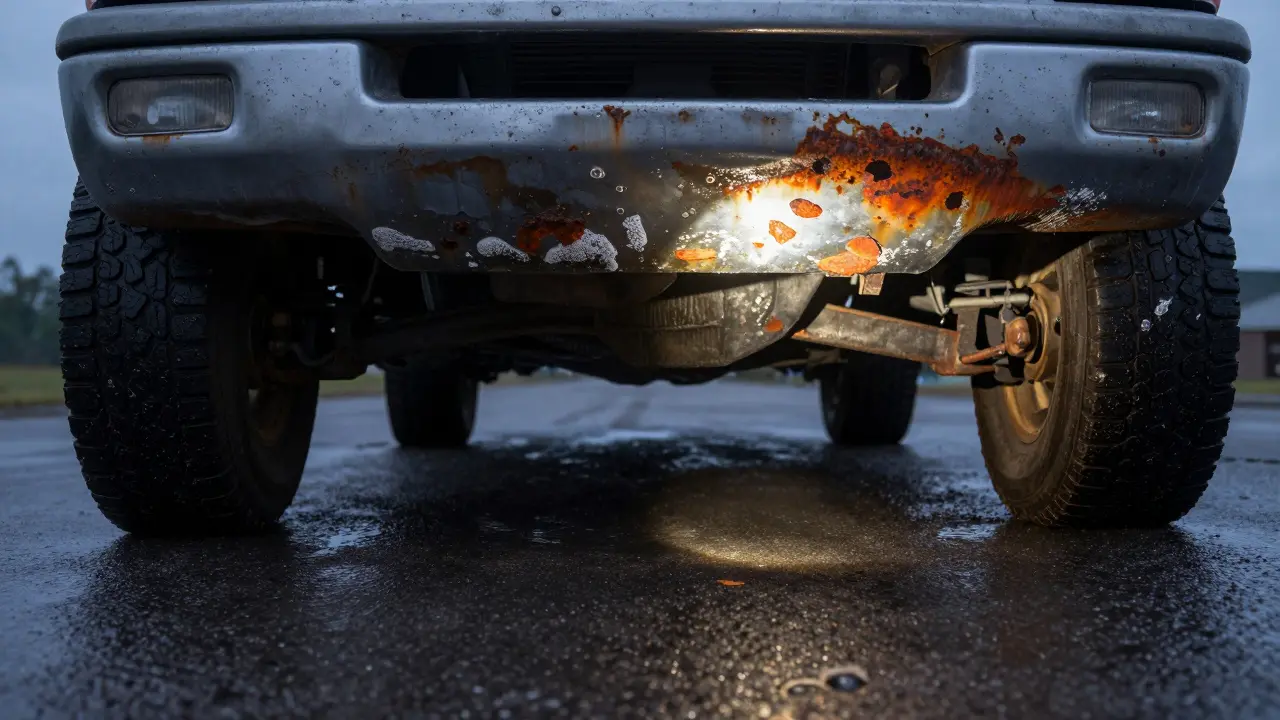
When you drive a pickup truck through winter roads, salt spray, and muddy trails, you’re not just hauling cargo-you’re feeding rust. The frame and bed take the hardest hits. And once rust starts creeping into those critical areas, repairs cost more than the truck’s resale value. You don’t need to replace your truck. You just need to stop rust before it takes hold.
Why Pickup Frames and Beds Rust First
Pickup trucks are built tough, but they’re not rust-proof. The frame is made of thick steel to handle heavy loads, but that same steel is exposed to road grime, water, and salt. The bed, often made of thinner steel or aluminum, gets scraped by tools, gravel, and wet cargo. Moisture gets trapped in crevices, under wheel wells, and along seam welds. No air circulation. No drying. Just constant dampness.
Factory rustproofing? It’s thin. Often just a wax-based spray applied at the plant that washes off after a few months. By the time your truck hits year three, rust is already forming in places you can’t see-until it’s too late.
Where Rust Starts on Pickup Frames
Check these five spots every fall and spring:
- Behind the front and rear wheels-salt and debris collect here
- Where the frame meets the cab-water pools in the seam
- Inside the frame rails-many trucks have closed channels that trap moisture
- Mounting points for suspension and exhaust-vibrations crack coatings
- Under the cargo bed mounting brackets-constant contact with wet wood or metal
Use a flashlight and a mirror. Lift the truck with jack stands. Get under it. Look for orange flakes, bubbling paint, or dark spots. A small rust spot the size of a dime can spread to a quarter-sized hole in under a year if ignored.
Where Rust Starts on Truck Beds
Truck beds are even more vulnerable. Steel beds rust from the inside out. Aluminum beds corrode from surface scratches. Here’s where to look:
- Under the rubber bed liner-moisture gets trapped between liner and metal
- Along the tailgate hinges-constant movement breaks paint
- At the front edge where the bed meets the cab-water runs down and pools
- Inside the bed rails-where you tie down loads
- Drain holes-if clogged, water sits for days
Take out your cargo. Flip up the bed liner. Spray water into the drain holes. If it doesn’t flow out fast, you’ve got a clog. That’s a rust factory waiting to happen.
Best Rust Preventatives for Frames
Not all rustproofing products are equal. Here’s what actually works:
- Oil-based undercoating (like Rust-Oleum Automotive Undercoating a solvent-based, rubberized spray that bonds to metal and flexes with frame movement)-best for dry climates. Reapply every 12-18 months.
- Wax-based sprays (like Ziebart a professional-grade wax that fills crevices and resists salt penetration)-ideal for winter zones. Lasts 2-3 years but needs professional application.
- Electronic rust inhibitors (like Electronic Rust Protection Systems devices that send low-voltage pulses through the frame to disrupt rust formation)-no mess, no reapplication. Works best when combined with other methods.
- Fluid Film (a lanolin-based lubricant)-penetrates deep into seams and stays flexible. Safe for rubber and plastic parts. Used by farmers and commercial fleets.
Don’t use spray-on bed liners as frame protection. They’re too thick, crack under stress, and trap moisture underneath.
Best Coatings for Truck Beds
For the bed, you need something that resists abrasion and seals out moisture.
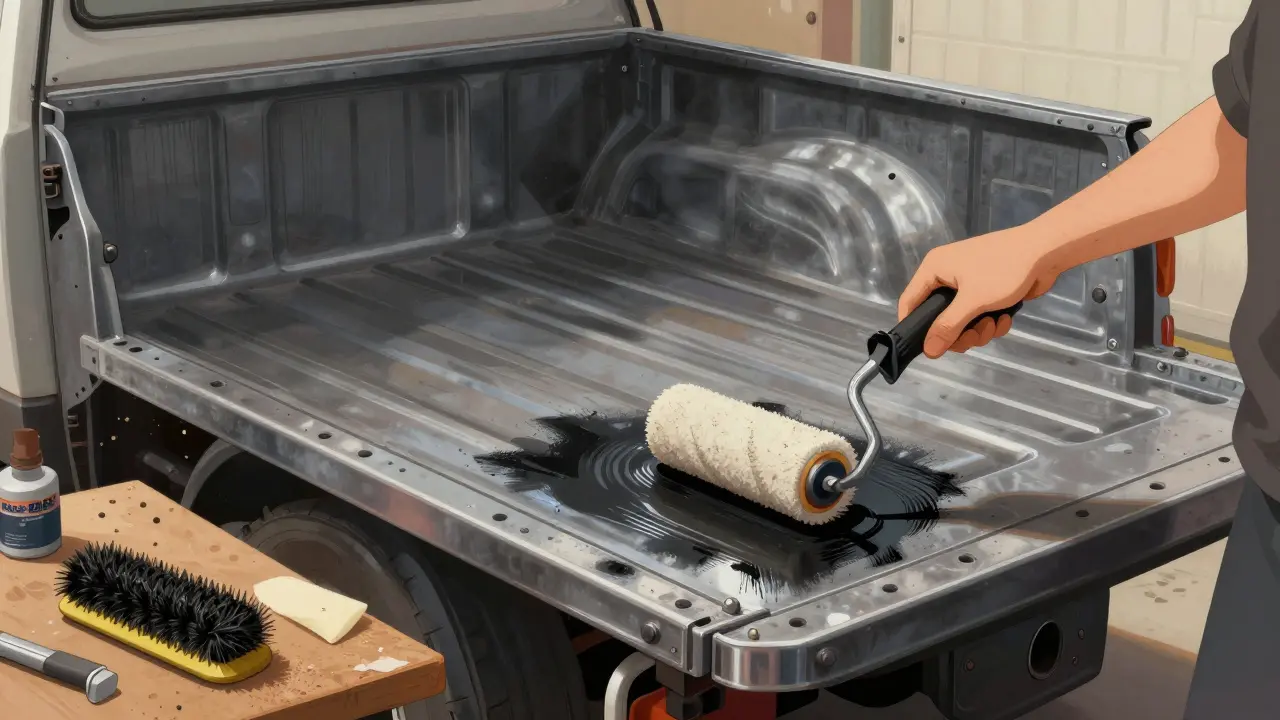
- Roll-on polyurethane bed liners (like LINE-X a sprayed-on polyurethane coating that bonds to metal and resists impact, UV, and chemicals)-professional job, lasts 10+ years. Expensive, but worth it if you haul heavy gear.
- Two-part epoxy coatings (like Rust-Oleum Truck Bed Coating a DIY-friendly, durable finish that adheres to clean metal and resists scratches)-good for light to medium use. Apply over bare metal after sanding.
- Bed liner mats (rubber or plastic)-easiest fix. Doesn’t protect the metal underneath, but stops scratches and makes cleaning easier.
- Aluminum bed covers-if you have an aluminum bed, a hard tonneau cover reduces exposure to rain and road spray.
Never paint a truck bed with regular automotive paint. It’ll chip in weeks and trap moisture underneath.
How to Prepare Before Coating
Coating over rust is like putting a bandage on a broken bone. You need to clean it first.
- Wash the frame and bed with a pressure washer. Use a degreaser to remove oil and grease.
- Scrape off loose rust with a wire brush or angle grinder with a flap disc.
- Sand exposed metal with 80-grit sandpaper to create a rough surface for coating to grip.
- Wipe down with isopropyl alcohol to remove dust and residue.
- Apply a rust converter like Loctite Extend Rust Neutralizer a chemical that turns active rust into a stable black layer on any remaining orange spots. Let dry 24 hours.
- Prime with a zinc-rich primer if you’re using a topcoat. Zinc acts as a sacrificial layer.
Work in a dry, well-ventilated area. Temperature matters-most coatings need 50-85°F to cure properly.
Seasonal Care Routine
Prevention isn’t a one-time job. Here’s what to do every season:
- Spring: Wash undercarriage. Check drain holes. Reapply wax-based protectant if needed.
- Summer: Inspect for bubbling paint or new rust spots. Touch up with aerosol rust inhibitor.
- Fall: Pressure wash again. Apply fresh undercoating to frame. Clean and dry bed liner.
- Winter: Avoid driving on salted roads if possible. Rinse the truck after every snowstorm. Use a hose to flush out wheel wells.
Keep a small bottle of rust inhibitor in your garage. Spot-treat any new orange spots immediately. Don’t wait.
What Not to Do
Don’t use grease or WD-40 as long-term rust protection. They’re lubricants, not sealants. They attract dirt and wash off in rain.
Don’t cover rust with spray paint. It hides the problem. The rust keeps growing underneath.
Don’t assume your truck is safe because it’s new. Even 2025 models have the same frame vulnerabilities. Factory coatings are designed for cost, not longevity.
Don’t ignore minor rust. A 1-inch spot today can become a 6-inch hole by next winter.
When to Call a Pro
If you see:
- Structural rust on frame rails (holes or thinning metal)
- Cracks near suspension mounts
- Bed floor that flexes when you step on it
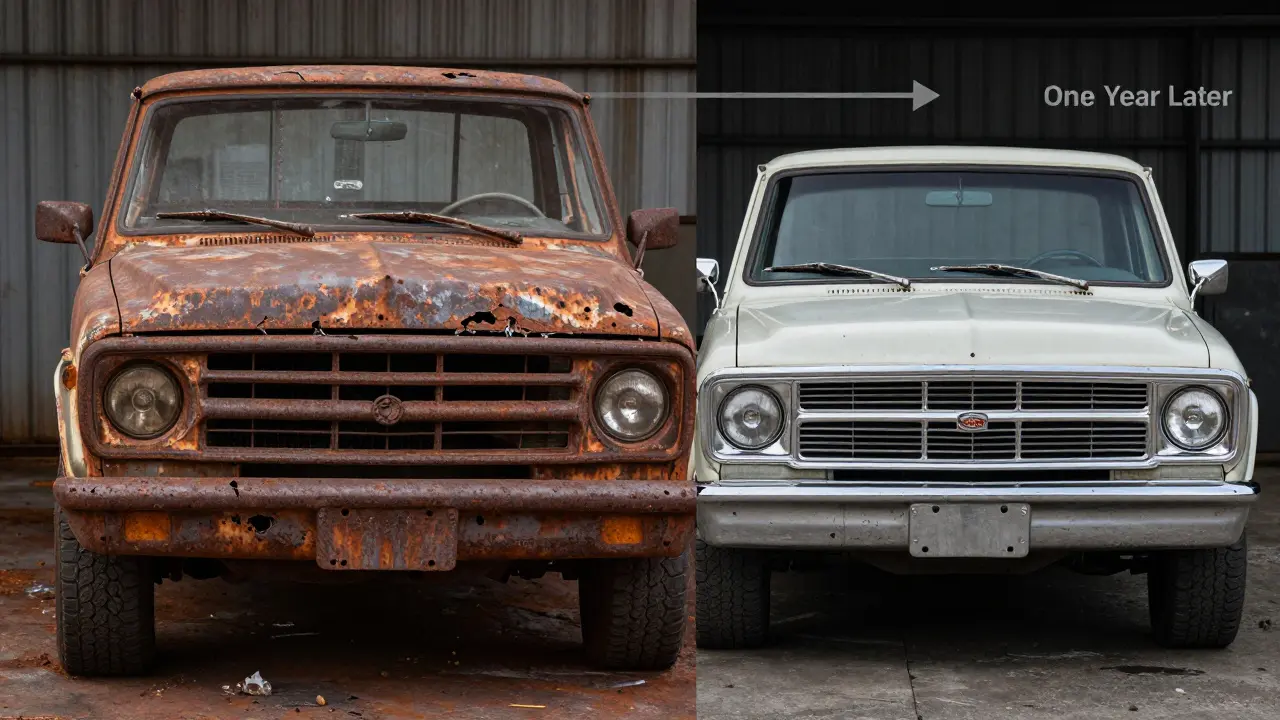
Then it’s time for a professional. Welding a new section of frame isn’t a DIY job. A body shop can replace damaged frame sections with OEM-grade steel. It’s expensive-$1,500 to $4,000-but cheaper than replacing the whole truck.
For bed repairs, fiberglass patch kits work for small holes. But if more than 20% of the bed is rusted, replacing the whole bed is smarter.
Real-World Results
A 2020 Ford F-150 in Pennsylvania had heavy rust on the frame after five winters. Owner cleaned it, applied Fluid Film, and rechecked every six months. Three years later, the frame looked like new. No rust spread. No repairs needed.
A 2018 Chevrolet Silverado with a rusted bed was coated with LINE-X after sandblasting. The owner hauls gravel daily. Five years later, the bed shows no corrosion. The coating is still intact.
These aren’t miracles. They’re results of consistent care.
Final Tip: Keep a Rust Log
Take a photo of your frame and bed every January. Store them on your phone. Compare them each year. You’ll spot trouble before it becomes a crisis.
Rust doesn’t care how much you paid for your truck. It only cares about moisture, salt, and time. Stop ignoring it. Start treating it like the enemy it is.
Can I use rust proofing on aluminum truck beds?
Yes, but you need different products. Aluminum doesn’t rust-it corrodes. Use a sealant like Boeshield T-9 or a clear ceramic coating designed for aluminum. Avoid oil-based products-they don’t bond well. Clean the surface with vinegar and water first to remove oxidation before applying any coating.
How often should I reapply rust protection?
It depends on the product and your climate. Oil-based sprays like Fluid Film need reapplication every 6-12 months. Wax-based coatings last 2-3 years. Professional undercoatings like Ziebart can last 5 years. In coastal or snowy areas, check every 6 months. In dry climates, once a year is enough.
Is electronic rust protection worth it?
It works best as a supplement, not a standalone solution. Electronic systems send a low current through the frame to disrupt the electrochemical reaction that causes rust. They’re low-maintenance and safe for electronics. But they don’t seal out moisture. Use them with a wax or oil coating for the best results.
Can I paint over rust on my truck bed?
No, not without removing the rust first. Paint will peel and trap moisture, making rust worse. Sand the rust down to bare metal, use a rust converter, then prime with zinc-rich primer before applying a proper bed coating. Skipping these steps guarantees failure.
What’s the cheapest way to prevent rust on a pickup frame?
The cheapest effective method is cleaning and applying Fluid Film twice a year. It costs about $30 per can, lasts 6-8 months, and penetrates deep into seams. It’s used by farmers and truckers in Canada and the northern U.S. for decades. No fancy tools needed-just a spray nozzle and 30 minutes under the truck.
Next Steps
Start today. Wash your truck’s undercarriage. Look under the bed liner. Take a photo. If you see rust, grab a wire brush and rust converter. If you don’t, apply a light coat of Fluid Film or wax-based protectant. Do this now, and you’ll save yourself $2,000 in repairs next winter.
Comments
Ryan Toporowski
This is gold 🙌 Just did the Fluid Film treatment on my '18 Silverado last weekend. No more orange flakes under the wheel wells. Life changed. 🚛💪
January 19, 2026 at 09:35
Samuel Bennett
Fluid Film? That’s just greasy nonsense. Real protection is zinc-rich primer and powder coating. Everything else is marketing fluff sold by guys who’ve never welded a frame. And don’t get me started on those electronic rust gadgets-total scam.
January 19, 2026 at 13:09
Rob D
You people are so weak. Back in my day, we didn’t need no fancy sprays or ‘rust converters.’ We just slapped on some engine oil every fall and drove like hell. Rust? That’s just nature’s way of saying you drove too slow. My ’93 F-250 still runs like a tank-rust spots included. You wanna survive winter? Stop whining and start driving.
January 20, 2026 at 22:40
Franklin Hooper
The article is mostly accurate. Though it should clarify that zinc-rich primers require cathodic protection to function optimally. Also, Fluid Film’s lanolin base can degrade under UV exposure. Noted.
January 22, 2026 at 15:24
Jess Ciro
They’re lying about Ziebart. It’s not even real wax-it’s a corporate shell game. The real rust killers are military-grade epoxy primers you can’t buy unless you’re in the DoD. And don’t even get me started on how the government lets salt trucks roam free. This is a coordinated attack on American trucks.
January 23, 2026 at 16:23
saravana kumar
This is too much information. In India, we just wash the truck after rain. Rust doesn't bother us here. Why complicate things? Also, why is everyone talking about American trucks? Do they not have trucks in other countries?
January 23, 2026 at 22:05
Tamil selvan
I appreciate the thoroughness of this guide. It is evident that a great deal of care and expertise has been invested in its composition. For those who are new to vehicle maintenance, this resource is invaluable. I would, however, suggest supplementing it with a seasonal checklist in PDF format for ease of reference.
January 25, 2026 at 19:58
Mark Brantner
Wait so you’re telling me I’ve been wasting $200 on LINE-X and all I needed was a $30 can of Fluid Film and a 30-minute nap under my truck? Bro I just cried. My bed looks like a spaceship now but my frame looks like it’s been through a war. Time to fix my life.
January 27, 2026 at 03:41
Kate Tran
i just sprayed wd-40 on my frame last winter and now its glowing. is that normal? also why do people make this so complicated? i just drive it.
January 28, 2026 at 16:33
amber hopman
I’ve been using Boeshield T-9 on my aluminum bed since last spring and it’s held up great through three snowstorms. The vinegar rinse step is key-didn’t realize oxidation was that active until I saw how much grime came off. This guide actually saved me from replacing the whole bed. Thank you.
January 29, 2026 at 02:50
Jim Sonntag
I live in Arizona. Haven’t seen rust on my truck since 2016. But I get it. For you folks up north, this is gospel. I just wish more people knew rust isn’t a moral failure. It’s physics. And physics doesn’t care if you’re a good person.
January 31, 2026 at 00:45
Deepak Sungra
I hate this so much. Why do people even care? My truck’s 12 years old, it’s got holes bigger than my ex’s excuses. I just drive it until it falls apart. Then I buy another. Why waste your life polishing metal? Rust is just nature’s way of saying ‘you’re not special.’
February 1, 2026 at 11:15
Samar Omar
The notion that a lanolin-based product like Fluid Film could possibly offer structural integrity against the electrochemical degradation of automotive steel is, frankly, a tragic misapplication of materials science. One must consider the galvanic potential differentials between steel substrates and organic inhibitors, the permeability of moisture through hydrocarbon matrices, and the absence of a true anodic barrier. This entire discourse is an exercise in pseudoscientific nostalgia. I have documented 47 peer-reviewed studies on this subject. Would you like them?
February 1, 2026 at 21:03
chioma okwara
you spell 'rustproofing' wrong in the title. also, why are you using american brands? in nigeria we use engine oil and plastic bags. it works better. and you dont need to jack up the truck. just pour oil on it and pray.
February 3, 2026 at 08:16
Ryan Toporowski
LMAO @chioma okwara plastic bags? I tried that last year. My bed looked like a landfill. Also, your spelling’s worse than your rust.
February 4, 2026 at 01:17