
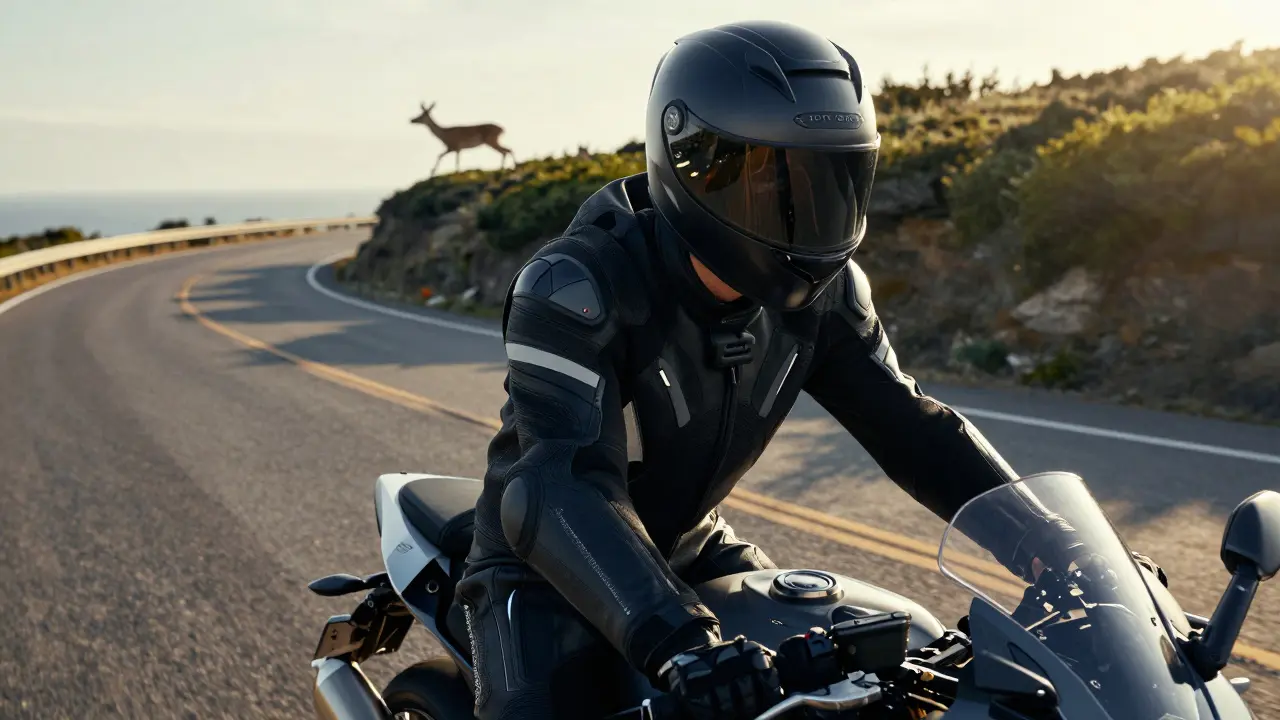
Imagine riding your motorcycle down a winding coastal road. The sun is shining, the wind feels great, and you are in total control. Suddenly, a deer jumps out from the bushes. You swerve. In that split second, everything comes down to one thing: what you are wearing. For decades, motorcycle safety gear was just about padding and hard plastic. But today, protective equipment technology has changed completely. We are no longer just talking about stopping a break; we are talking about saving lives before the crash even happens.
The motorcycle industry is seeing a massive shift. Riders want more than just style or basic DOT compliance. They want gear that thinks for them. From helmets that call emergency services automatically to jackets with armor that changes its state in milliseconds, innovation is happening fast. If you ride regularly, understanding these new tools isn't just cool-it could be the difference between a hospital visit and walking away unscathed.
The Rise of Smart Helmets and Connectivity
Your head is your most vulnerable asset. Traditional helmets do one job well: they absorb impact. But modern smart helmets integrate communication systems, cameras, and impact sensors into protective headgear are doing much more. These devices connect directly to your smartphone or bike's onboard computer via Bluetooth.
Take the Sena SR10 or the Cardo Packtalk Bolt. These aren't just intercoms. They feature GPS tracking and automatic crash detection. If the accelerometer senses a sudden deceleration consistent with a high-impact crash, the helmet sends an alert to your emergency contacts with your exact location. This cuts down the "golden hour"-the critical time after an accident when medical help is most effective.
Some newer models, like the Shoei GT-Air II with integrated audio, also include heads-up displays (HUD). This projects your speed, navigation arrows, and engine RPM onto a small transparent screen in your peripheral vision. Why does this matter for safety? Because it keeps your eyes on the road instead of looking down at your dashboard or phone. Distraction is a major cause of accidents, and HUDs eliminate that risk entirely.
Non-Newtonian Armor: Science Meets Protection
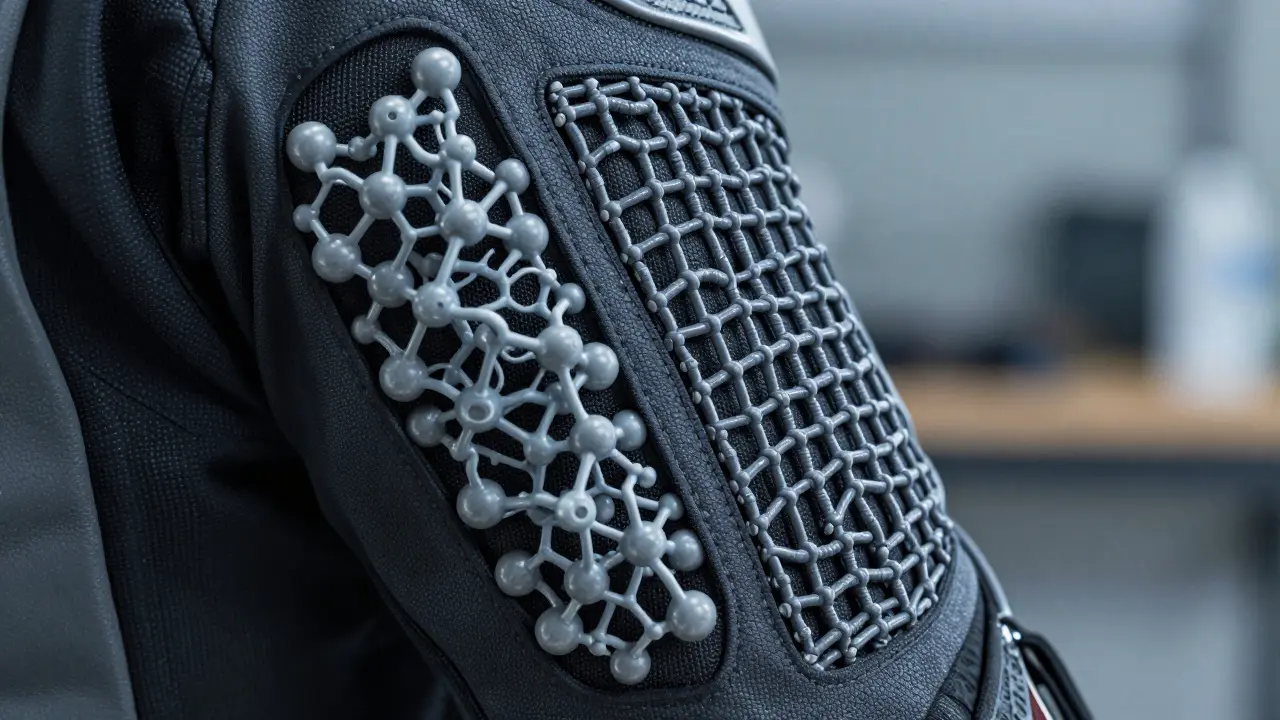
Let's talk about the stuff inside your jacket and gloves. For years, riders used foam or rigid plastic inserts. Foam compresses over time and loses effectiveness. Plastic is stiff, which can restrict movement and make you less agile on the bike. Enter non-Newtonian materials.
D3O a flexible polymer that hardens instantly upon impact is the leader here. It sounds like magic, but it's physics. D3O molecules are loosely packed in their normal state, allowing you to bend, twist, and move freely. When you hit something at high speed, those molecules lock together instantly, becoming rigid and absorbing the energy of the impact. Then, they relax back to being soft within seconds.
This technology is now standard in high-end gear from brands like Alpinestars and Icon. It offers better abrasion resistance than traditional foam while providing superior comfort. You don't feel like you're wearing a suit of armor; you feel like you're wearing a comfortable hoodie. That encourages riders to wear their gear every single time, which is half the battle in safety.
Airbag Systems: The Game Changer
If there is one innovation that stands above all others, it is the airbag system. Borrowed from Formula 1 racing and car manufacturing, motorcycle airbags inflatable protective systems that deploy during crashes to cushion the spine, chest, and neck are now available for street riders. There are two main types: standalone suits and integrated systems.
The i-System by Alpinestars is a standalone unit. You strap a battery pack to your back, and it connects wirelessly to sensors on your wrists and ankles. If the sensors detect a fall pattern, the airbag inflates in 50 milliseconds-faster than you can blink. It covers your spine, chest, and collarbone, dispersing the force of the impact over a larger area.
Integrated systems, like the BMW Motorrad CE Performance Racing Kit, are built directly into the jacket and pants. They use the bike's own electronics to detect a crash. This is often faster because the bike knows it's falling before your body hits the ground. The downside? Integrated systems only work with specific bikes, and standalone units require regular battery maintenance. But both have been proven to reduce severe spinal injuries significantly.
| Feature | Standalone (e.g., i-System) | Integrated (e.g., BMW CE) |
|---|---|---|
| Deployment Speed | ~50ms | ~40ms (bike-assisted) |
| Compatibility | Any motorcycle | Specific bike models only |
| Maintenance | Battery charging/replacement | Dealer service required |
| Cost | $800 - $1,200 | $1,500 - $2,500+ |
| Comfort | Slightly bulkier due to battery | Sleeker, designed fit |
Textile Innovations: Beyond Leather
Leather has always been the gold standard for abrasion resistance. But it has flaws: it gets heavy when wet, it doesn't breathe well in summer, and it takes forever to dry. New textile technologies are changing this narrative. Materials like Kevlar an aramid fiber known for high tensile strength and heat resistance and Dyneema are being woven into flexible fabrics.
Dyneema is five times stronger than steel by weight. Jackets made with Dyneema panels offer incredible slide protection without the stiffness of leather. Brands like Rev'it! and Cortech are using multi-layer textiles that include waterproof membranes, ventilation zippers, and reflective threading all in one package. This means you stay safe, dry, and visible regardless of the weather. Visibility is a huge part of safety; if drivers can see you, they are less likely to cut you off.
Visibility Tech: Being Seen Saves Lives
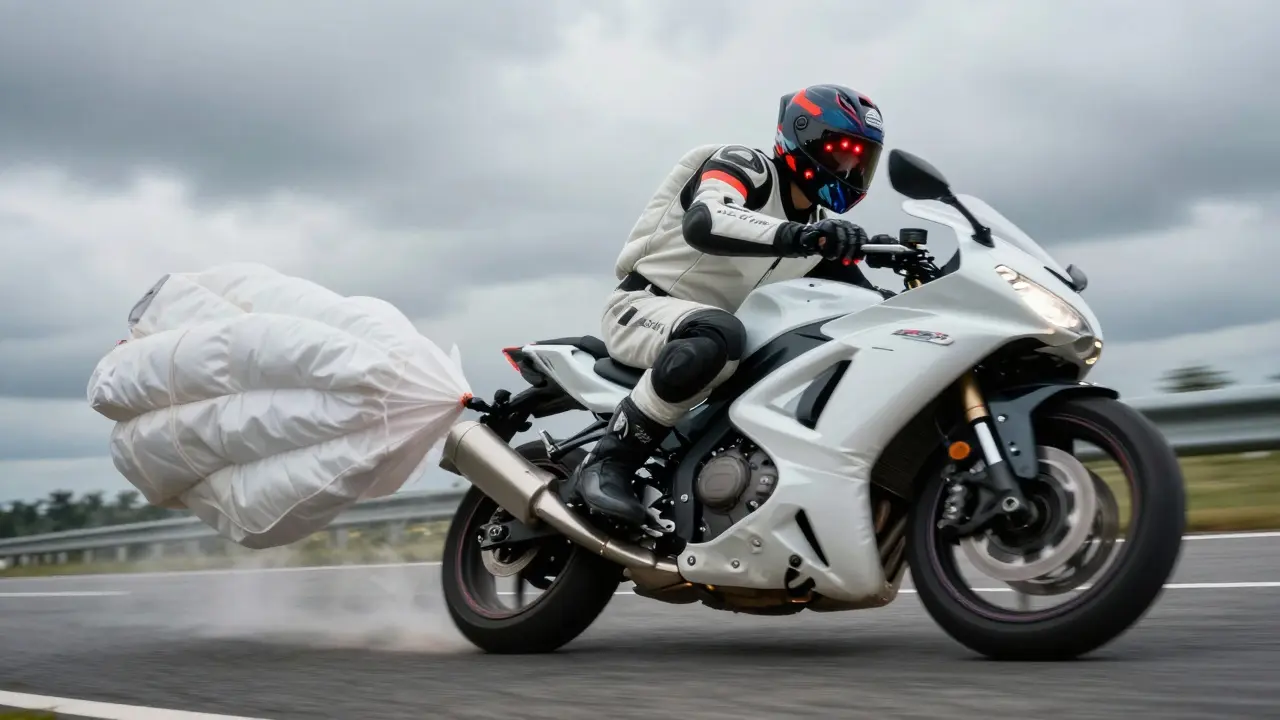
Most accidents happen because a car driver didn't see the motorcyclist. New tech is tackling this head-on. Active LED lighting is becoming common in jackets and vests. Unlike passive reflectors that only work when headlights hit them, active LEDs glow continuously.
Some advanced systems, like the Lumos helmet, use rear-facing LED strips that change color based on your braking. Green means cruising, red means braking. This mimics a car's brake lights, giving drivers behind you an instant visual cue. It creates a predictable language between you and other road users. Additionally, some apps now allow your phone to broadcast your position to nearby cars equipped with V2X (Vehicle-to-Everything) communication technology, though this infrastructure is still growing.
Choosing the Right Gear for You
All this technology is impressive, but how do you choose? First, consider your riding style. If you commute in city traffic, visibility and quick-deployment airbags are key. If you ride sportbikes on weekends, lightweight D3O armor and aerodynamic helmets are better. Never compromise on fit. Even the most advanced airbag won't work if the jacket is too loose or the helmet is too big.
Also, check the certifications. Look for CE Level 2 for armor and ECE 22.06 for helmets. The ECE 22.06 standard is the latest European regulation, requiring helmets to withstand impacts from multiple angles, not just the front. It's stricter than the older DOT standards used in the US. Don't buy gear just because it looks good. Buy it because it works.
Are smart helmets worth the extra cost?
If you ride frequently or travel long distances, yes. The safety features like automatic crash notification and hands-free navigation reduce distraction and ensure help arrives quickly if needed. However, if you only ride occasionally, a high-quality traditional helmet with a good fit is sufficient.
Do airbag systems work in low-speed falls?
Yes, but they are calibrated to avoid false deployments. Most systems will deploy in falls above 10-15 mph. For very slow tip-overs, the armor in your jacket and gloves provides enough protection. Airbags are designed for higher-energy impacts where spinal and chest injuries are most likely.
How long do airbag batteries last?
Stand-alone airbag units typically hold a charge for several weeks. However, manufacturers recommend checking the battery level before every ride. After deployment, the battery must be replaced or recharged depending on the model. Always follow the manufacturer's maintenance schedule to ensure reliability.
Is D3O armor better than traditional foam?
In most cases, yes. D3O offers superior impact absorption because it hardens on contact. Traditional foam compresses permanently after a significant hit and needs replacement. D3O returns to its soft state, offering consistent protection over time. It is also more flexible, improving rider comfort.
What is the ECE 22.06 helmet standard?
ECE 22.06 is the latest European safety standard for motorcycle helmets. It requires rigorous testing from multiple impact angles, including the sides and rear, which older standards did not cover as strictly. Helmets certified to this standard offer the highest level of verified protection available today.