

Imagine a busy Saturday morning at your dealership. You have three customers waiting in the showroom, two test drives scheduled, and one buyer ready to sign papers on a trade-in. Now imagine your best salesperson is stuck negotiating with a customer who wants a truck that’s currently being looked at by another client. This chaos isn’t just annoying; it’s costing you money. Every minute spent arguing over inventory or guessing who owns which lead is a minute not spent closing deals.
This is where desking tools come into play. In the automotive world, "desking" refers to the process of assigning specific vehicles from your inventory to specific salespeople based on customer interest, availability, and deal potential. Without a system, this happens via sticky notes, whiteboards, or frantic phone calls. With modern desking software, it happens instantly, accurately, and fairly.
What Exactly Is a Desking Tool?
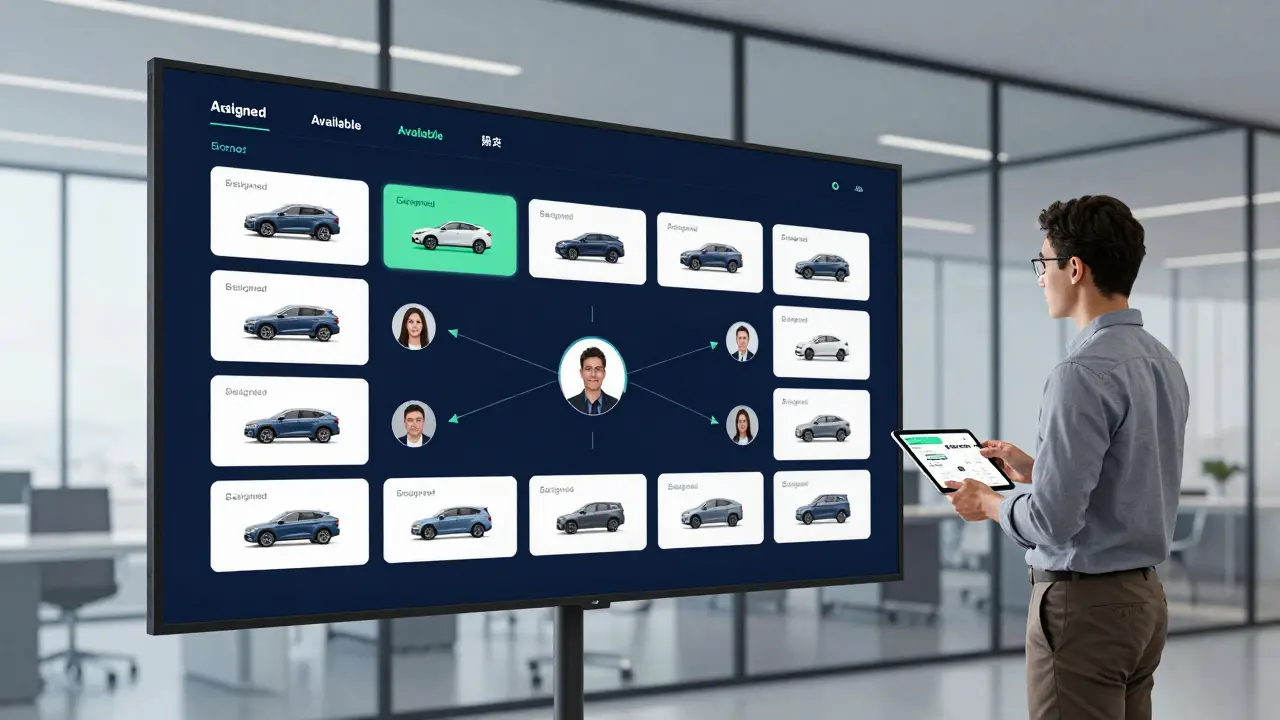
A desking tool is a specialized software module within dealership management systems (DMS) or CRM platforms that manages vehicle allocation and salesperson assignments. Think of it as the traffic controller for your lot. It ensures that when a customer shows interest in a specific VIN (Vehicle Identification Number), that car is immediately "locked" or assigned to a particular sales rep so no one else tries to sell it simultaneously.
In the past, managers handled this manually. They would walk around the lot, check with reps, and physically move cars if needed. Today, digital desking integrates directly with your inventory database. When a lead comes in-whether from a website chat, a phone call, or a walk-in-the system can automatically suggest or assign the best available vehicle to the most appropriate salesperson. This reduces confusion, prevents double-booking, and speeds up the time from inquiry to sale.
Core Features That Drive Efficiency
Not all desking tools are created equal. To truly transform your sales desk operations, you need features that go beyond simple assignment. Here are the critical capabilities that top-tier tools offer:
- Real-Time Inventory Visibility: The tool must sync instantly with your main DMS. If a car is sold online while a salesperson is showing it to a walk-in, the system should flag this immediately. No more embarrassing moments where a customer asks to buy a car that was already shipped an hour ago.
- Automatic Lead Routing: Advanced desking tools use algorithms to match leads with salespeople based on performance history, current workload, or specialization. For example, if a customer is interested in luxury SUVs, the system might route them to the rep with the highest conversion rate in that category.
- Conflict Resolution Protocols: What happens when two reps want the same car? Good software has built-in rules. Maybe the first person to claim it gets priority, or perhaps the manager overrides the decision based on profit margin. These rules prevent internal friction.
- Mobile Accessibility: Salespeople are rarely glued to their desks. They’re out on the lot, in the finance office, or driving customers home. A mobile-friendly interface allows them to claim vehicles, update status, and release cars back to inventory from their smartphones.
- Analytics and Reporting: Managers need to know which vehicles are sitting idle and which salespeople are hoarding inventory without moving it. Dashboards provide insights into assignment duration, conversion rates per rep, and overall inventory turnover.
The Business Benefits: Why Invest in Desking Software?
You might be thinking, "We’ve managed fine with a whiteboard for years." But as competition heats up and customer expectations rise, manual processes become bottlenecks. Implementing robust desking tools delivers tangible ROI through several key areas:
1. Faster Turnaround Times
Speed kills in car sales. The faster you respond to a lead and present a viable vehicle option, the higher your chance of closing. Desking tools eliminate the delay of checking availability. A salesperson can confirm a car is theirs to sell within seconds, allowing them to focus on building rapport and negotiating price rather than logistics.
2. Reduced Internal Conflict
Sales teams can be competitive, sometimes to a fault. Manual desking often leads to accusations of favoritism or stealing deals. Automated systems apply consistent, transparent rules. Everyone knows how assignments work, which fosters a healthier team environment and keeps morale high.
3. Better Inventory Management
Dead stock costs money. Desking tools help identify vehicles that aren’t getting attention. If a car hasn’t been assigned or shown in weeks, the system can alert management to adjust pricing, change marketing efforts, or reassign it to a different rep. This proactive approach keeps your lot moving.
4. Enhanced Customer Experience
Customers hate waiting. They also hate inconsistency. When a desking tool ensures that the salesperson they spoke to yesterday still has access to the car they liked today, it builds trust. Seamless communication between the front end (sales) and back end (inventory) makes the buying process feel professional and organized.
| Feature | Manual Process | Digital Desking Tool |
|---|---|---|
| Assignment Speed | Minutes to hours (phone calls/walks) | Seconds (automated) |
| Error Rate | High (double bookings common) | Near zero (real-time sync) |
| Fairness Perception | Subjective (manager bias) | Objective (rule-based) |
| Data Insights | Limited (spreadsheets) | Rich (dashboards/analytics) |
| Scalability | Poor (breaks down with volume) | Excellent (handles high volume) |
Integrating Desking Tools with Your Existing Stack
One of the biggest hurdles dealerships face is integration. You likely already use a DMS like Reynolds & Reynolds, CDK Global, or Dealertrack. Adding a new tool shouldn’t mean starting from scratch. Modern desking solutions are designed to plug into these existing ecosystems.
Look for tools that offer API connectivity or native integrations with major CRMs like Salesforce, HubSpot, or Automotive-specific platforms like VinSolutions. The goal is a single source of truth. When a salesperson updates a lead’s status in the CRM, that information should flow seamlessly to the desking tool and vice versa. This eliminates data silos and ensures everyone is working with the latest information.
For instance, if a customer books a test drive online, the desking tool should automatically reserve that vehicle for the assigned rep until the appointment ends. If the customer doesn’t show, the car is automatically released back to the pool. This level of automation requires tight integration but pays off massively in efficiency.

Choosing the Right Solution for Your Dealership
With dozens of options on the market, how do you pick the right one? Start by assessing your current pain points. Are you struggling with double-booking? Or is it more about tracking which reps are performing best? Your primary challenge will dictate which features matter most.
Consider the size of your operation. A small independent dealer might only need basic assignment features. A large multi-brand group will require complex routing rules, hierarchical approvals, and advanced analytics. Don’t overspend on features you won’t use, but don’t underspend either. A cheap tool that crashes during peak hours is worse than no tool at all.
Also, evaluate the user experience. If the software is clunky and hard to learn, your sales team will resist using it. Look for intuitive interfaces, minimal clicks, and strong training support. Adoption is key. The best technology in the world is useless if no one uses it.
Future Trends in Automotive Desking
The landscape of car sales is changing rapidly. Electric vehicles, subscription models, and direct-to-consumer sales are reshaping how dealerships operate. Desking tools are evolving to keep pace. Expect to see more AI-driven recommendations, where machine learning predicts which customers are most likely to buy which cars based on historical data.
We’re also seeing greater emphasis on omnichannel experiences. Whether a customer interacts via social media, email, or in-person, the desking tool should recognize them and maintain continuity. This seamless journey is becoming a competitive advantage. Dealerships that master digital desking will find themselves better positioned to handle the complexities of modern automotive retail.
How much does a typical desking tool cost?
Costs vary widely depending on the provider and feature set. Basic modules might start at $50-$100 per user per month, while comprehensive enterprise solutions can run several thousand dollars monthly. Many providers offer tiered pricing based on dealership size and transaction volume. Always ask about implementation fees and ongoing support costs.
Can desking tools integrate with my current DMS?
Most modern desking tools are built to integrate with major DMS providers like CDK, Reynolds & Reynolds, and Dealertrack. However, compatibility depends on the specific version of your DMS and whether the vendor offers a certified connector. Before purchasing, verify integration capabilities with your IT department or DMS provider.
Will salespeople resist using automated desking?
Resistance is common with any new technology, especially if reps feel it removes their autonomy. To mitigate this, involve sales leaders in the selection process and highlight benefits like reduced conflict and faster closings. Provide thorough training and demonstrate how the tool helps them earn more by focusing on selling rather than admin tasks.
What is the difference between desking and lead routing?
Lead routing focuses on directing incoming inquiries to the right salesperson. Desking goes a step further by assigning specific inventory units to those salespeople. While related, desking specifically manages vehicle allocation and prevents double-booking, whereas lead routing manages contact distribution.
Is cloud-based desking secure for customer data?
Reputable vendors prioritize security, using encryption, regular audits, and compliance with standards like GDPR and CCPA. Cloud-based solutions often offer better security than local servers because they benefit from dedicated cybersecurity teams. Always review the vendor’s privacy policy and security certifications before committing.