
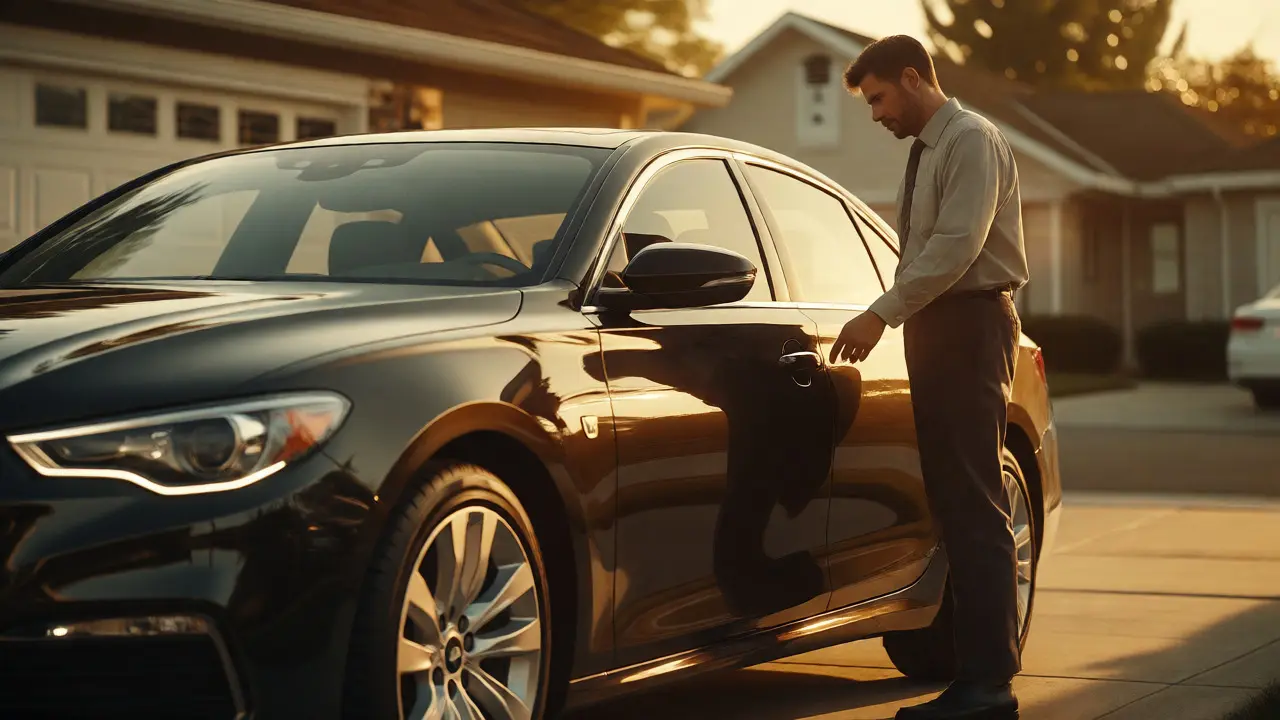
You’re standing in a driveway, looking at a sleek sedan that costs 40% less than the same model with a clean title. The seller is friendly, the paint shines, and the engine purrs. But there’s a catch lurking in the paperwork or under the skin of the metal. Buying a salvage title vehicle designated by an insurance company as a total loss due to accident, flood, or theft recovery can be a smart financial move, but it’s also a minefield. One wrong step could leave you with a car that drives like a dream until it doesn’t.
The real danger isn’t just the title itself-it’s what the title hides. While a salvage status tells you the car was totaled, it doesn’t tell you if the repair was done correctly. Worse, some cars with "clean" titles have suffered catastrophic structural failures that were patched up cosmetically. This guide breaks down how to spot these red flags before you hand over your cash, ensuring you don’t buy a ticking time bomb disguised as a bargain.
Decoding the Salvage Title Status
A salvage title isn’t just a label; it’s a legal designation triggered when repair costs exceed a certain percentage of the car’s value-usually between 70% and 90%, depending on the state or country. Once an insurer declares a total loss, the vehicle gets branded. If you’re looking at a car with this brand, you need to know why it happened. Was it a minor fender bender that totaled out because parts are expensive? Or was it a high-speed rollover?
Here’s where things get tricky. Some vehicles undergo a rebuilt title process where the vehicle passes a safety inspection and receives a new title indicating it has been repaired. This means the car was inspected and deemed roadworthy. However, "roadworthy" doesn’t mean "perfect." It simply means it won’t fall apart on the way home from the DMV. You still need to verify the quality of the repairs. Always ask for the original photos taken by the insurance adjuster. These images often show the extent of the damage before any bodywork began, giving you a baseline for comparison.
The Silent Killer: Hidden Frame Damage
Frame damage is the nightmare scenario for any used car buyer. The vehicle frame the main structural component of a vehicle to which other parts such as the engine and body are attached keeps everything aligned. If it’s bent, twisted, or cracked, no amount of fresh paint will fix the underlying physics. Modern cars often use unibody construction, where the frame and body are integrated. This makes repairs harder and more prone to error compared to older body-on-frame trucks.
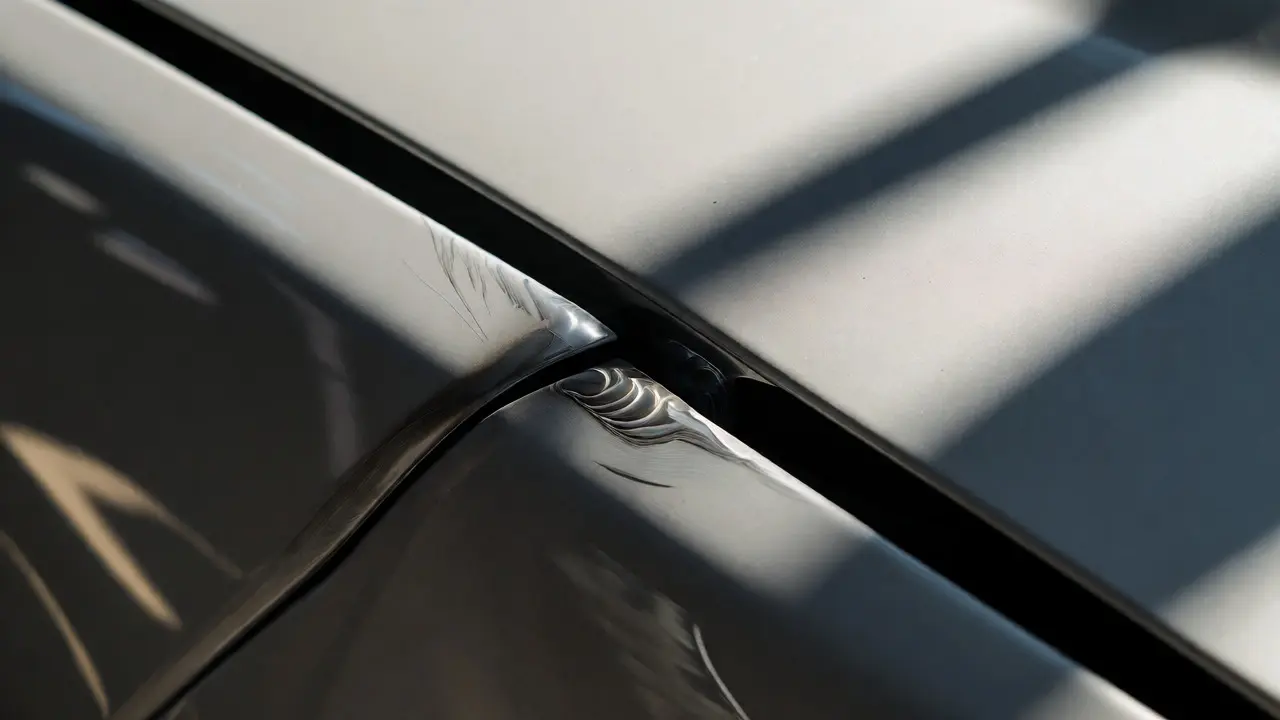
How do you spot this without X-ray vision? Look for inconsistencies. Check the gaps between panels. Are they uniform? On a factory-built car, the gap between the door and the fender should be consistent from top to bottom. If the gap widens at the bottom, the frame might be shifted. Another trick is to look at the car from head-on and tail-on. Stand directly in front of the bumper. Do the headlights line up perfectly with the taillights? If one side looks closer or further away, the chassis may be skewed.
| Inspection Point | Normal Condition | Red Flag (Potential Damage) |
|---|---|---|
| Panel Gaps | Uniform width throughout | Varying widths, uneven alignment |
| Door Operation | Closes smoothly, latches securely | Requires force, rubs against frame |
| Tire Wear | Even wear across tread | Uneven wear, pulling to one side |
| Rear Window | Centered in trim | Offset to left or right |
| Undercarriage | Smooth, symmetrical welds | Rippled metal, fresh welding marks |
Using Vehicle History Reports Effectively
You’ve probably heard of services like Carfax or AutoCheck. They’re useful, but they aren’t infallible. A vehicle history report a document containing records of a vehicle's past including accidents, ownership, and maintenance relies on data reported to its database. Not every mechanic reports every dent. Not every police report makes it into the system immediately. Sometimes, a car with severe frame damage might slip through with a clean report if the previous owner didn’t file an insurance claim.
So, how do you use these reports properly? Treat them as a starting point, not the final verdict. Look for patterns. Multiple owners in a short period? That’s suspicious. Service records stopping abruptly after a specific date? Maybe the car sat in a shop waiting for parts. Pay close attention to mileage discrepancies. If the odometer reads 50,000 miles but the service record shows an oil change at 60,000 two years prior, someone might have rolled back the clock. This is especially common with salvage vehicles trying to hide their age and abuse.
The Pre-Purchase Inspection: Your Best Defense
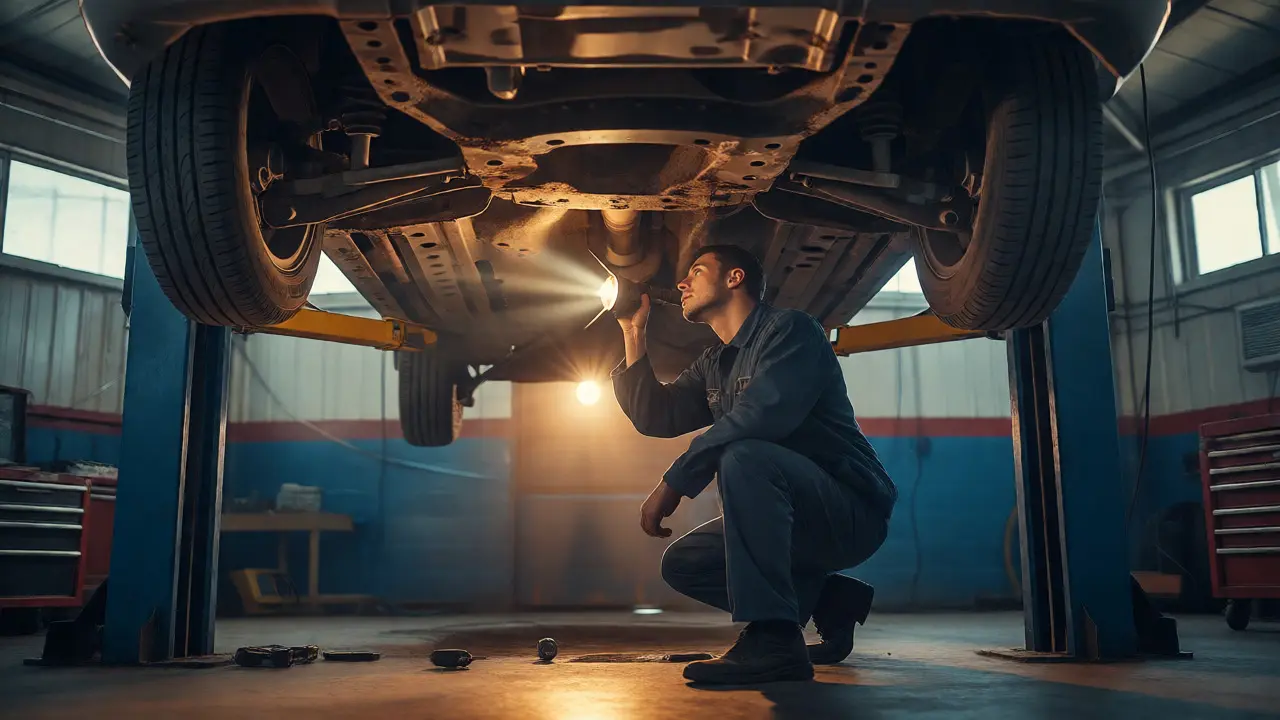
If you can’t see the problem yourself, hire someone who can. A professional pre-purchase inspection an evaluation performed by a qualified mechanic to assess the condition of a used vehicle is non-negotiable when dealing with salvage titles. Don’t let the seller pressure you into skipping this. A good inspector will put the car on a lift. They’ll look at the suspension components, the steering rack, and the exhaust system for signs of impact.
Ask the inspector specifically about frame measurements. Many shops have laser measuring tools that check critical points on the chassis against factory specifications. If the measurements are off by even a few millimeters, the car might drive fine today, but tire wear and handling issues will surface within months. Also, bring your own OBD-II scanner. Even if the check engine light is off, there might be stored codes in the computer memory related to airbag deployment or sensor faults that haven’t triggered the dashboard warning yet.
Negotiating Price and Insurance Realities
Once you’ve identified the issues, you have leverage. A salvage title typically devalues a car by 20% to 40% compared to its clean-title counterpart. But if the frame was repaired poorly, that discount needs to be deeper. Use the cost of potential future repairs-like replacing tires due to misalignment or fixing persistent electrical gremlins-to justify a lower offer.
Before you sign anything, call your insurance provider. Not all companies cover salvage vehicles comprehensively. Some will only offer liability coverage, meaning if you crash, you pay out of pocket for your own car’s repairs. Others might charge higher premiums. Knowing this upfront prevents nasty surprises later. If your insurer refuses full coverage, factor that risk into your budget. Is the savings worth the inability to insure the asset fully? For many, the answer is no unless the price is incredibly low.
Common Pitfalls to Avoid
Don’t fall for the "cosmetic-only" trap. Sellers often claim the damage was purely cosmetic. Unless you have proof-like the insurance adjuster’s photos showing only bumper and fender damage-assume the worst. Flood damage is another sneaky one. Saltwater corrosion eats wiring harnesses slowly. A car might run fine for six months, then develop random electrical failures as connectors corrode from the inside out. Smell the interior. Does it smell like mold or mildew? That’s a bad sign.
Also, beware of "title washing." This happens when a car moves to a state with lax branding laws, gets a new title that wipes the salvage brand, and then returns to the market. Cross-reference the VIN across different databases. If the car appears in multiple states with conflicting histories, walk away. The hassle isn’t worth the discount.
Can I sell a car with a salvage title later?
Yes, but expect to sell it at a significant discount again. Most buyers are wary of salvage titles, so your pool of interested parties shrinks. Private sales are usually easier than trading it in at a dealership, as dealers often refuse salvage vehicles or offer very low trade-in values.
Does a rebuilt title mean the car is safe?
A rebuilt title means the car passed a basic safety inspection, but it doesn’t guarantee long-term reliability or perfect structural integrity. It indicates the car is legally allowed on the road, not that it’s equivalent to a never-accidented vehicle. Professional inspections are still crucial.
How much should I discount a salvage title car?
Generally, aim for 20-40% below the market value of a clean-title equivalent. If there is evidence of frame damage or poor repair work, push for a higher discount, potentially 50% or more, to account for future maintenance risks and resale difficulties.
Will my insurance company inspect the car before covering it?
Many insurers require a physical inspection or photos of the VIN and odometer before issuing comprehensive coverage on a salvage vehicle. Some may even require a certified repair shop’s documentation proving the repairs were completed correctly.
What is the difference between salvage and rebuilt titles?
A salvage title means the car is currently totaled and not registered for road use. A rebuilt title means the salvage vehicle has been repaired, inspected, and re-registered for road use. The rebuilt status acknowledges the history but permits legal driving.
Comments
Sherri Jones
As a mechanic who has seen way too many of these, please listen to the part about hiring an independent inspector. 🛠️ It is not just about checking if the engine starts; it is about verifying that the unibody wasn't pulled back together with body filler and hope. I once inspected a "rebuilt" sedan that looked pristine under the lights but had frame rails twisted by three inches on the passenger side. The seller was furious when I told them the car would eat tires in six months. Always ask for the adjuster's photos from the initial total loss event because those never lie like the final repair job might. Also, check your insurance options before you even fall in love with the car. Some carriers will flat out refuse comprehensive coverage on salvage titles, which leaves you fully exposed financially if you get into another accident. Don't let the low sticker price blind you to the hidden costs of ownership and resale difficulty. It's worth the extra effort to be sure.
October 23, 2026 at 01:18
Anthony .
This is such a balanced take 🙌 We often demonize salvage titles entirely, but sometimes they are just high-value cars totaled for minor cosmetic reasons due to expensive parts costs. If you approach it with humility and respect for the vehicle's history, you can find gems that others overlook. It’s all about perspective and doing your homework with an open heart ❤️
October 24, 2026 at 06:26
Howard Hurd
Typical advice for people who don't know how to wrench themselves. You Americans always want to pay someone else to look at things. Just use your eyes and common sense. :)
October 25, 2026 at 11:59
Brad Walker
The universe doesn't care about your title status. Entropy increases regardless of whether the paper says 'clean' or 'salvage'. Buying a car is an exercise in accepting chaos. Why do we think paperwork changes reality? It doesn't. It just makes us feel safe while we drive towards our inevitable demise.
October 26, 2026 at 07:00
Kieran Mitchell
I cannot stress this enough!!! The panel gaps are NOT just aesthetic issues!!! They are screaming evidence of structural compromise!!! If the gap varies by more than two millimeters, WALK AWAY!!! Do not negotiate!!! Do not hesitate!!! This is critical safety information that is often ignored by lazy buyers!!! The physics of collision repair are unforgiving!!! A bent frame cannot be magically fixed by a hammer and some paint!!! It requires precise laser measurement and professional expertise!!! Most local shops do not have the equipment or the training to handle unibody repairs correctly!!! You are gambling with your life every time you get behind the wheel of a poorly repaired salvage car!!! It is not worth the risk!!! Period!!! End of story!!!
October 26, 2026 at 13:41
jyotshna Senapati
It is honestly annoying how people still buy these without understanding the stigma. In India, a damaged car loses value instantly, but here everyone thinks they are smart shoppers. You are just buying someone else's mistake. And don't get me started on flood cars. They smell weird and rot from the inside. People ignore the signs because they want a deal. It is sad really. You deserve better than a ticking time bomb, but you won't listen until it breaks down on the highway.
October 28, 2026 at 01:23
Sean Eagen
Don't buy used cars. New cars only. Salvage means broken. Broken means unsafe. Simple logic.
October 28, 2026 at 03:56
Manoj Kumar
One must consider the possibility that the branding laws themselves are manipulated by corporate interests to depress asset values artificially. The discrepancy between repair cost percentages across states suggests a systemic inconsistency that benefits large auction houses rather than the consumer. Furthermore, the reliance on third-party databases like Carfax assumes a level of transparency that does not exist in the private sector. Data entry errors are frequent, and intentional omissions are common. Therefore, the 'history report' is merely a marketing tool designed to create a false sense of security. One should remain skeptical of any document provided by entities with a financial incentive to obscure the truth. The frame damage mentioned is likely symptomatic of broader industrial negligence. Proceed with extreme caution and assume malice where incompetence is possible.
October 29, 2026 at 17:34
Darlene Hopkins
Thank you for sharing this. It helps so much to hear different perspectives on such a stressful purchase.
October 29, 2026 at 23:27
Bryce Imbriale
Love the energy in this thread! Keep pushing forward with your research and don't let anyone discourage you from finding that perfect deal! Every car has a story and yours could be the one that wins big! Stay motivated!
October 31, 2026 at 17:32
Hemali Jaiswal
The metaphor of the "ticking time bomb" is quite vivid, isn't it? It captures the anxiety perfectly. However, I believe we should also celebrate the resilience of these vehicles. Many are restored with great care and continue to serve their owners faithfully for years. It is a testament to human ingenuity and mechanical skill. Let us appreciate the complexity of modern automotive engineering rather than fearing it. Each scratch tells a tale, and each repair is a new chapter.
November 1, 2026 at 16:21
Sundaraiah Kollipara
i wonder if the frame damage detection methods apply equally to electric vehicles since the battery pack adds significant weight and structural rigidity in different ways. maybe the center of gravity shifts differently after a crash which affects handling more than traditional cars. its interesting to think about how EV architecture changes the definition of 'frame' integrity. what do you think?
November 2, 2026 at 21:19