
Most of us have been trained to treat the car as a time machine. We punch in the destination, select the fastest route on the GPS, and endure the gray monotony of the interstate until we arrive. But what if the journey was the point? What if the miles between A and B held more value than the destination itself?
This is the promise of scenic byways and heritage roads designed for slower travel experiences that prioritize landscape, history, and culture over speed. These aren't just backroads; they are curated journeys through some of the most visually stunning and historically significant landscapes in the world. In 2026, with burnout at an all-time high, travelers are increasingly rejecting the 'rush' culture. They are trading highway efficiency for winding coastal drives, mountain passes, and historic trails that tell a story.
Slower travel isn't about being lazy. It's about being present. It requires a shift in mindset from 'getting there' to 'being there.' This guide will help you understand why these routes matter, how to choose the right one for your vehicle and temperament, and how to plan a trip that feels less like a commute and more like an adventure.
The Rise of Slow Travel on Historic Routes
The concept of slow travel is a movement encouraging deeper engagement with destinations by reducing transit speed and increasing local interaction has gained massive traction. According to recent tourism data, interest in 'experiential travel' has outpaced traditional sightseeing for three consecutive years. Drivers are realizing that the interstate strips away context. You miss the architecture, the geology, and the human element of a region when you zip past it at 75 mph.
Heritage roads are routes designated for their historical significance, often following ancient trade paths or colonial boundaries. Unlike standard scenic routes that might just offer a nice view, heritage roads connect you to the narrative of a place. Driving along the Natchez Trace Parkway in the United States, for instance, isn't just about seeing trees; it's about retracing the footsteps of Native Americans, French traders, and early American settlers. The road itself is a museum without walls.
This shift also aligns with a growing environmental consciousness. While driving isn't carbon-neutral, taking a slower, more direct scenic route can sometimes be more efficient than weaving through congested urban interstates. Plus, the psychological benefit of reduced stress levels during the drive is measurable. Cortisol levels drop when you're immersed in nature rather than stuck in traffic jams.
Iconic Scenic Byways Worth Your Time
Not all backroads are created equal. Some are poorly maintained gravel tracks that require serious off-road capability. Others are paved, well-signed, and rich with amenities. Here are a few standout examples that define the genre of slow travel.
| Route Name | Location | Key Feature | Best Season | Vehicle Requirement |
|---|---|---|---|---|
| Pacific Coast Highway (CA-1) | California, USA | Ocean cliffs and redwood forests | Spring/Fall | Standard Sedan |
| Route 66 | Multi-state, USA | American pop-culture history | Summer | Standard Sedan |
| Great Ocean Road | Victoria, Australia | Dramatic coastline and wildlife | Autumn | Standard Sedan |
| North Coast 500 | Scotland, UK | Highland landscapes and castles | May-September | Compact Car |
| Icefields Parkway | Alberta, Canada | Glaciers and national parks | June-September | SUV Recommended |
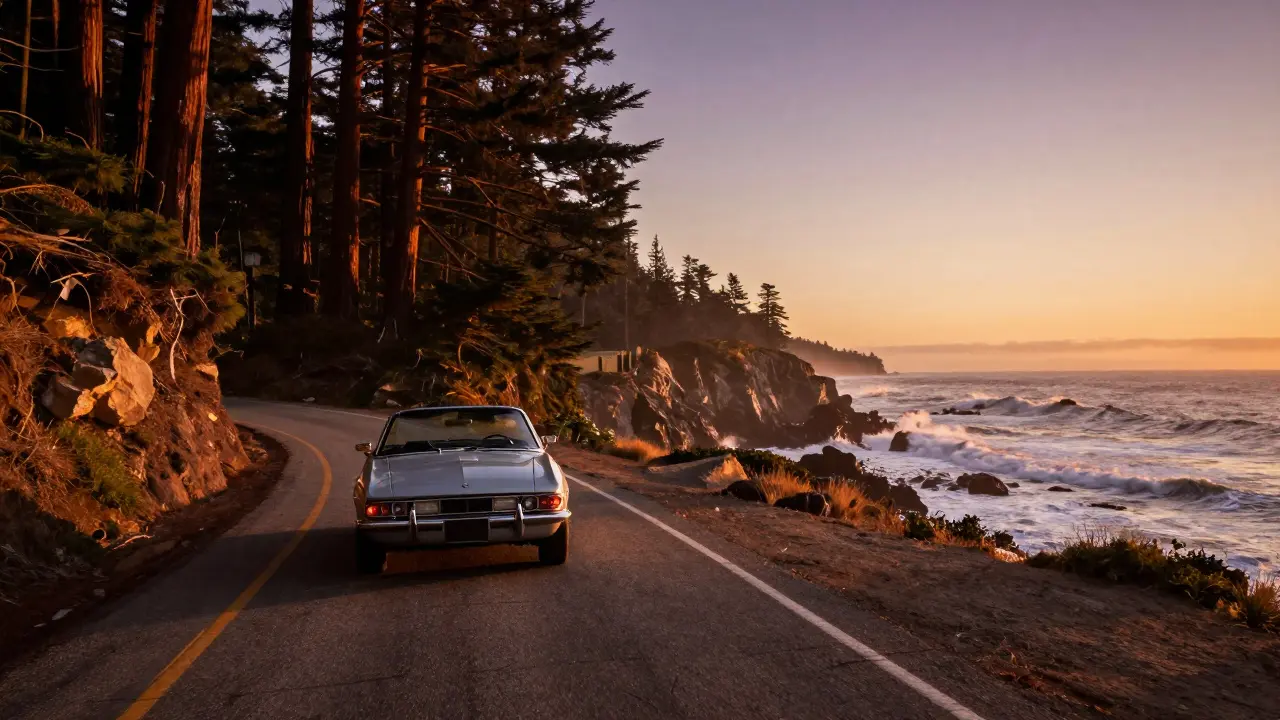
The Pacific Coast Highway is one of the most famous scenic drives in the world, stretching along California's rugged coastline. It’s iconic for a reason. The combination of crashing waves below and towering redwoods above creates a sensory experience that flat highways cannot replicate. However, it gets crowded. To truly enjoy the 'slow' aspect, aim for shoulder seasons-April or October-when the fog rolls in but the tourists haven't fully arrived.
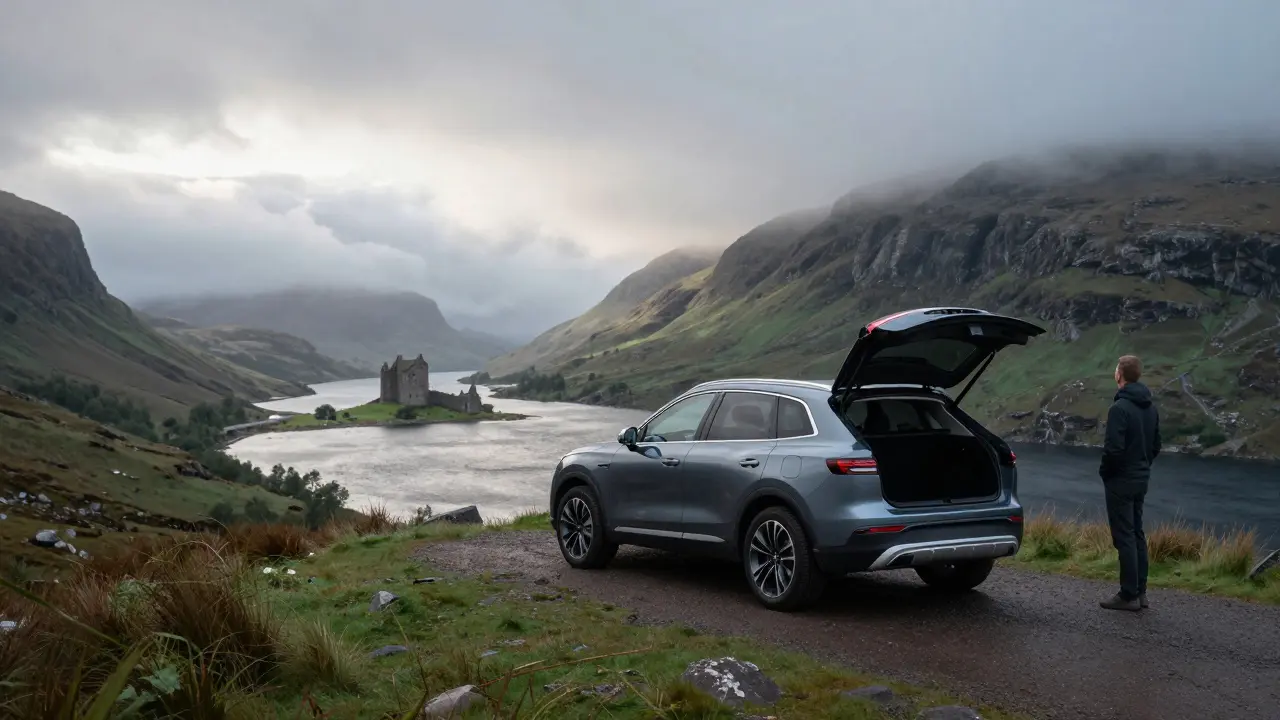
In contrast, the North Coast 500 in Scotland offers a rawer, wilder experience. As the UK's premier scenic drive, it winds through the Scottish Highlands, offering views of lochs, ancient ruins, and dramatic mountains. The challenge here is the weather. Conditions can change rapidly, so flexibility is key. This route demands attention not just to the scenery, but to the road surface, which can be narrow and winding.
Choosing the Right Vehicle for Heritage Roads
Your choice of vehicle matters more on a scenic byway than on an interstate. On the highway, comfort is king. On a heritage road, agility and reliability take precedence. You don't need a tank, but you do need a car that inspires confidence.
If you're sticking to paved routes like Route 66 or the Atlantic Coast Road in Norway, almost any modern car will suffice. However, consider the interior space. Slow travel means stopping frequently. You'll want easy access to gear, cameras, and snacks. A hatchback or a small SUV often works better than a sedan because of the cargo versatility.
For routes like the Icefields Parkway, ground clearance becomes important. While the main road is paved, pull-offs for glacier viewing or wildlife spotting might involve gravel or uneven surfaces. An All-Wheel Drive (AWD) system provides peace of mind, especially if you encounter unexpected rain or snow patches, even in summer.
Don't overlook maintenance. Before embarking on a long scenic drive, check your tire pressure, brake pads, and fluid levels. Breakdowns in remote areas are not part of the romantic slow travel fantasy. They are stressful and expensive. A pre-trip inspection is non-negotiable.
Planning Your Itinerary: Quality Over Quantity
The biggest mistake people make when planning a scenic byway trip is trying to see too much. If you book a 300-mile route into a single day, you're not doing slow travel; you're just doing fast travel on a prettier road.
Adopt the 'One Major Stop Per Day' rule. Pick one town, one viewpoint, or one historical site to focus on each day. This allows you to linger. Eat lunch at a family-owned diner instead of a chain. Talk to the locals. Visit the small museum that explains the geology of the area. These interactions create memories that photos alone cannot capture.
Use technology wisely. Download offline maps before you leave. Cell service can be spotty in rural and mountainous regions. Apps like Gaia GPS or AllTrails can provide detailed topographical information, helping you identify viewpoints that aren't marked on standard maps. However, keep your phone away while driving. The goal is to look out the window, not at a screen.
Accommodation plays a huge role in the slow travel experience. Avoid large chain hotels near interstate exits. Instead, look for bed and breakfasts, farm stays, or historic inns located directly on or near the byway. Waking up in a 19th-century farmhouse in Vermont or a cottage overlooking the sea in Ireland sets the tone for the entire day.
Respecting the Land and Local Communities
With the rise of social media, popular scenic spots are facing overtourism. Places that were once quiet gems are now clogged with cars and litter. As a slow traveler, you have a responsibility to protect these environments.
Stay on designated roads. Off-roading damages fragile ecosystems and can lead to fines. Respect parking restrictions. If a viewpoint is full, move on. There are always other spots. Take your trash with you. Leave no trace.
Economically, support local businesses. Buy food from farmers' markets. Hire local guides. Stay in locally owned accommodations. When you spend money in the community, you contribute to the preservation of the very heritage and scenery you came to see. This economic feedback loop is essential for keeping these roads open and maintained.
FAQ
What is the difference between a scenic byway and a heritage road?
While there is overlap, a scenic byway is primarily designated for its natural beauty and visual appeal, such as mountain views or coastlines. A heritage road is designated for its cultural, historical, or architectural significance. For example, the Blue Ridge Parkway is scenic, while the Natchez Trace is a heritage road due to its historical usage.
Do I need a special vehicle to drive on scenic byways?
Most major scenic byways are paved and accessible to standard sedans. However, for remote or mountainous routes like parts of the Icefields Parkway or unpaved heritage trails, an SUV with All-Wheel Drive (AWD) is recommended for safety and comfort. Always check the specific road conditions before you go.
How many days should I allocate for a scenic road trip?
For true slow travel, plan for at least 2-3 days for every 200-300 miles. This allows time for stops, meals, accommodation changes, and exploring local attractions. Rushing defeats the purpose of the experience. A week-long trip covering 500 miles is often more rewarding than a two-day sprint covering 1,000 miles.
Are scenic byways safe to drive at night?
Generally, no. Many scenic byways lack street lighting, have sharp curves, and may feature wildlife crossings. Driving at night increases the risk of accidents. It is best to plan your driving hours during daylight to maximize safety and enjoyment of the views.
Can I find charging stations for electric vehicles on heritage roads?
Charging infrastructure is improving, but it can still be sparse in remote rural areas. Plan your route carefully using EV-specific mapping tools. Identify charging points in towns along the route before you depart. Consider carrying a portable charger or ensuring your vehicle has sufficient range for longer stretches between services.
Comments
Saranya M.L.
The semantic distinction between a 'scenic byway' and a 'heritage road' is fundamentally flawed when viewed through the lens of global infrastructure equity. While Western nations romanticize their paved tourist traps, developing economies are still struggling with basic connectivity. It is intellectually dishonest to suggest that 'slower travel' is a universal good without acknowledging the privilege required to treat transportation as leisure rather than necessity.
June 26, 2026 at 15:56
om gman
oh wow another article telling us how to breathe properly while driving... i guess none of you have ever actually driven on route 66 in july because it smells like diesel and desperation not nostalgia
June 28, 2026 at 10:16
Jeanne Abrahams
In South Africa, we have the Garden Route which is absolutely stunning, but let's be real, half the appeal is just watching tourists from colder climates try to figure out why they can't park anywhere near the cliff edge. The irony of 'slow travel' causing traffic jams at every viewpoint is rich indeed.
June 29, 2026 at 09:34
Bineesh Mathew
You speak of cortisol levels dropping as if stress is merely a chemical imbalance to be managed by scenery. True peace comes from the internal void, the silence of the soul that no redwood forest can fill. We drive these roads seeking redemption for our modern sins, yet we bring our phones with us to capture the moment, thereby destroying the very presence we seek to cultivate. It is a paradox of existence wrapped in asphalt.
July 1, 2026 at 01:27
Oskar Falkenberg
i totally agree with the bit about checking tire pressure because last time i went on a long drive i forgot and had a flat tire in the middle of nowhere which was really annoying so yeah definitely check your fluids and stuff before you go otherwise you might get stuck and thats no fun at all for anyone involved in the trip planning process
July 2, 2026 at 01:03
Caitlin Donehue
I just find it interesting that people are suddenly realizing this after decades of highway expansion. It feels like a delayed reaction to the industrialization of travel.
July 3, 2026 at 16:41
Stephanie Frank
This entire premise is lazy journalism repackaged as lifestyle advice. You're selling me a fantasy of 'being present' while ignoring the economic reality that most people cannot afford to take three days to drive 300 miles. It's elitist nonsense disguised as mindfulness.
July 3, 2026 at 18:59
Marissa Haque
Oh my goodness!! I literally cried reading the part about waking up in a 19th-century farmhouse!!! That is exactly what I need in my life right now!!! Please tell me there are more places like that because I am ready to drop everything and go!!!
July 4, 2026 at 00:17
Keith Barker
the road is a metaphor for life we think we need speed to survive but often it is the detours that define us not the destination
July 5, 2026 at 09:58
Lisa Puster
americans always complaining about traffic then acting surprised when scenic routes get crowded because everyone wants the same instagrammable view it’s pathetic honestly
July 6, 2026 at 02:42
Francis Laquerre
Having driven the North Coast 500 myself, I can attest that the weather changes faster than your mood swings. One minute you are basking in sunlight, the next you are battling sleet. It requires a certain resilience, a willingness to embrace discomfort as part of the aesthetic. It is not for the faint of heart or the poorly prepared.
July 8, 2026 at 01:22
michael rome
I truly appreciate the emphasis on supporting local businesses. It transforms a simple road trip into an act of community stewardship. When we choose locally owned accommodations, we are not just paying for a bed; we are investing in the preservation of the culture and landscape that makes these routes special. Let us strive to be conscious travelers who leave a positive footprint wherever we go.
July 9, 2026 at 06:16
Andrea Alonzo
It is so important to remember that slow travel is not just about the physical act of driving slower but also about slowing down our mental pace allowing ourselves to absorb the nuances of the environment rather than just scanning for photo opportunities which leads to a much deeper connection with the place and its history and ultimately a more fulfilling experience overall
July 9, 2026 at 19:40
Patrick Dorion
From a Canadian perspective, the Icefields Parkway is non-negotiable for any serious traveler. However, the suggestion that an SUV is merely 'recommended' undersells the reality of shoulder seasons. If you are visiting in late September, snow is not an anomaly; it is a probability. Respect the terrain, or the terrain will humble you quickly.
July 10, 2026 at 15:17
Joe Walters
lol u guys are taking this way too seriously its just a car ride stop acting like ur going on a spiritual journey to tibet its california man chill out
July 11, 2026 at 08:33