

You sit in your car for hours every week. Maybe you commute to work, maybe you drive for delivery services, or maybe you just love long road trips. But there is a price for that time on the road. Your lower back starts to ache. Your shoulders feel tight. By the time you reach your destination, you feel like you’ve run a marathon, even though you haven’t moved much at all.
This isn’t just about comfort. It’s about health. Poor posture while driving can lead to chronic pain, reduced circulation, and even accidents if you’re too distracted by discomfort. That’s where seat massagers and lumbar support cushions designed specifically for drivers come into play. These aren’t just luxury add-ons anymore; they are essential tools for anyone who spends significant time behind the wheel.
But here is the problem: the market is flooded with options. You have inflatable pillows, heated pads, vibrating mats, and complex air-cell systems. How do you know which one will actually help? Do you need active massage to relax muscles, or do you need static support to fix your spine alignment? The answer depends entirely on your specific needs, your budget, and how you use your vehicle.
Understanding the Root of Driving Pain
Before buying anything, it helps to understand why your back hurts in the first place. Most modern car seats are designed for average body types and short trips. They often lack adequate support for the natural curve of your lower spine, known as the lumbar region.
When you sit for extended periods, gravity pulls your pelvis backward. This causes your spine to flatten out against the seatback. Over time, this puts immense pressure on your intervertebral discs-the shock absorbers between your vertebrae. This condition is often called "slouching," but medically, it leads to increased intradiscal pressure. Studies suggest that sitting increases spinal load by up to 40% compared to standing. Add in the vibration from the road and the engine, and your muscles start to spasm in an attempt to stabilize your skeleton.
So, what is the solution? There are two main approaches:
- Passive Support: Using a cushion to physically hold your spine in the correct position.
- Active Relief: Using heat and vibration to stimulate blood flow and relax tight muscles.
Lumbar support cushions fall into the passive category. Seat massagers fall into the active category. Understanding this distinction is key to making the right choice.
The Case for Lumbar Support Cushions
If your primary issue is poor posture or a dull, constant ache in your lower back, a lumbar support cushion is likely your best friend. These devices are simple, effective, and usually affordable. Their job is to fill the gap between your lower back and the seatback, maintaining the natural inward curve (lordosis) of your spine.
There are three main types of lumbar cushions you’ll find in stores today:
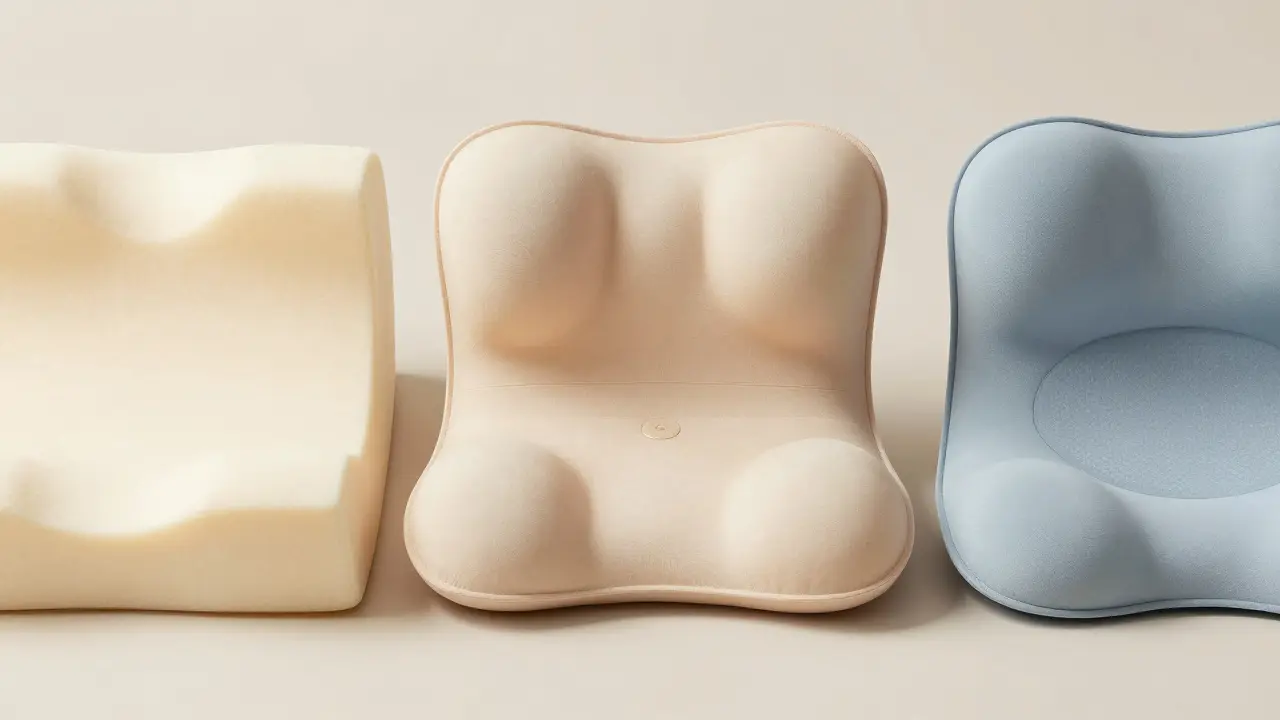
- Memory Foam Cushions: These mold to your body shape over time. They provide consistent, firm support. Brands like Tempur-Pedic or generic memory foam brands offer these. They are great because they don’t lose their shape easily. However, they can get hot during summer drives since foam traps heat.
- Inflatable Air Cushions: These allow you to adjust the firmness by adding or releasing air. This is perfect if you share the car with someone who has a different body type or preference. You can pump it up for maximum support or deflate it slightly for comfort. The downside is that they can leak air over time and may feel less stable than foam.
- Ergonomic Gel-Infused Cushions: These combine foam with cooling gel layers. They aim to solve the overheating problem of traditional foam while providing decent support. They are slightly more expensive but offer a better temperature-regulating experience.
The biggest advantage of a lumbar cushion is that it works silently and requires no power source. You can install it in seconds, and it stays put. If you suffer from herniated discs or sciatica, doctors often recommend maintaining neutral spine alignment, which a good lumbar cushion facilitates.
The Power of Seat Massagers
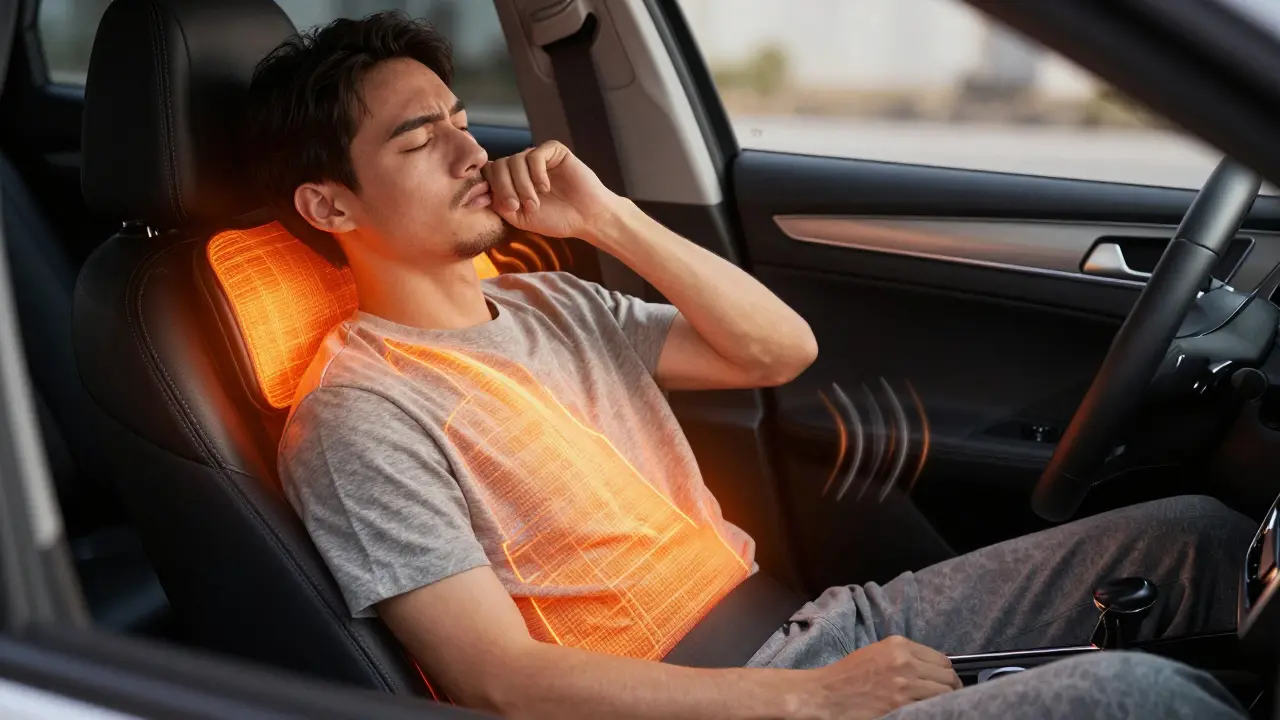
Now, let’s talk about seat massagers. These are for people who deal with muscle tension, stiffness, or acute pain rather than just postural issues. If you feel knots in your shoulders or tightness in your glutes after a drive, a massager can provide immediate relief.
Most aftermarket seat massagers connect to your car’s 12V cigarette lighter port or USB outlet. They generally fall into two categories:
| Type | Mechanism | Best For | Limitations |
|---|---|---|---|
| Vibrating Mats | Small motors create surface-level vibrations. | General relaxation, warming up cold muscles. | Shallow penetration; doesn't reach deep tissue. |
| Air-Cell Compression | Inflatable chambers squeeze muscles rhythmically. | Circulation improvement, reducing swelling. | Noise from air pumps; bulkier design. |
| Heated + Vibrating | Combines heat elements with vibration motors. | Chronic pain, arthritis, stiff joints. | High power consumption; risk of burns if misused. |
Air-cell compression massagers are particularly popular among professional drivers. The rhythmic squeezing mimics a human hand kneading the muscles, which helps flush out lactic acid buildup. Heat is another powerful tool. Applying heat to sore muscles increases blood flow, delivering oxygen and nutrients needed for repair. Many high-end models, such as those from Osaki or Breo, combine both features.
However, there are downsides. Massagers consume power. If you have an older car with a weak battery, running a high-wattage massager for hours could drain your battery. Also, the noise from air pumps can be distracting in a quiet cabin. And unlike a cushion, a massager pad can sometimes slide around if not secured properly, requiring frequent readjustment.
Choosing Between Support and Massage
So, which one should you buy? It comes down to diagnosing your specific pain pattern. Ask yourself these questions:
- Does my back hurt immediately when I start driving? If yes, you likely have a postural issue. A lumbar support cushion will align your spine and prevent the pain from starting.
- Do I feel fine at first, but my muscles get tight after 30 minutes? If yes, you need active relief. A seat massager will keep your muscles loose and circulating.
- Do I have both problems? Then you might need both. Fortunately, many modern solutions combine them. Some premium lumbar cushions now include built-in heating elements or gentle vibration nodes.
Budget also plays a role. A basic memory foam lumbar pillow costs anywhere from $20 to $50. A high-quality air-compression seat massager can range from $80 to $200+. If you are on a tight budget, start with the cushion. It addresses the root cause of most driving-related back pain: bad posture.
Installation and Safety Tips
Regardless of which product you choose, proper installation is crucial. A poorly placed lumbar cushion can actually make your back worse by pushing your spine into an unnatural arch. Place the cushion so that the thickest part aligns with the small of your back, roughly where your belt line sits. You should feel supported, not pushed forward.
For seat massagers, ensure the device is securely strapped to the seat. Loose straps can create friction burns or interfere with your ability to move quickly in an emergency. Never use a massager while parked in extreme heat without checking the temperature settings, as combined with sunlight through the windshield, it can become dangerously hot.
Also, consider the material of your car seats. Leather seats tend to slide more than fabric ones. If you have leather seats, a smooth-bottomed cushion might slip. Look for products with non-slip silicone bases or extra-wide straps that wrap around the seatback.
Future Trends in Driver Ergonomics
The technology in this space is evolving rapidly. We are seeing the rise of smart cushions that integrate with smartphone apps to monitor your sitting habits. Some advanced models use sensors to detect when you are slouching and gently vibrate to remind you to sit up straight. Others use AI to adjust air pressure in real-time based on your movement.
As electric vehicles become more common, manufacturers are focusing more on interior comfort since EVs are quieter and smoother, making any physical discomfort more noticeable. Expect to see more integrated solutions where the seat itself provides dynamic lumbar support and targeted massage zones, eliminating the need for aftermarket accessories.
Until then, however, aftermarket solutions remain the most cost-effective way to protect your back. Whether you choose the simplicity of a lumbar support cushion or the active relief of a seat massager, investing in your seating comfort is an investment in your long-term health. Don’t wait until the pain becomes chronic. Take action today to make your drives safer and more comfortable.
Can I use a lumbar support cushion with a seat massager?
Yes, you can layer them, but it might be bulky. Place the lumbar cushion directly against your back and the massager pad on top of your clothing or seat cover. Ensure the massager's straps don't compress the lumbar cushion too much, as this reduces its effectiveness. Alternatively, look for hybrid products that combine both features in one unit.
Are inflatable lumbar supports safe to use while driving?
Yes, they are safe as long as they are properly inflated and secured. Avoid over-inflating them, as this can push your torso forward and interfere with your seatbelt fit. Make sure the inflation valve is covered and won't puncture if you lean back hard. Always test the fit before driving to ensure it doesn't distract you.
How long should I use a seat massager during a drive?
It is recommended to use a seat massager in intervals of 15-20 minutes. Continuous use can desensitize your nerves or cause skin irritation. Use it when you feel tension building up, then turn it off to let your muscles rest. Taking breaks to stretch outside the car is still the best way to relieve driving fatigue.
Will a lumbar cushion help with sciatica pain?
A lumbar cushion can help alleviate sciatica symptoms caused by poor posture. By maintaining the natural curve of your spine, it reduces pressure on the sciatic nerve. However, it is not a cure. If you have severe sciatica, consult a doctor. Combining a cushion with heat therapy often provides better relief for nerve-related pain.
Do seat massagers drain my car battery?
Most 12V seat massagers draw between 1 to 3 amps. While this is relatively low, leaving the massager on with the engine off for several hours can drain a weak or old battery. Always use the massager only when the engine is running, or ensure your car has a healthy alternator and battery.