
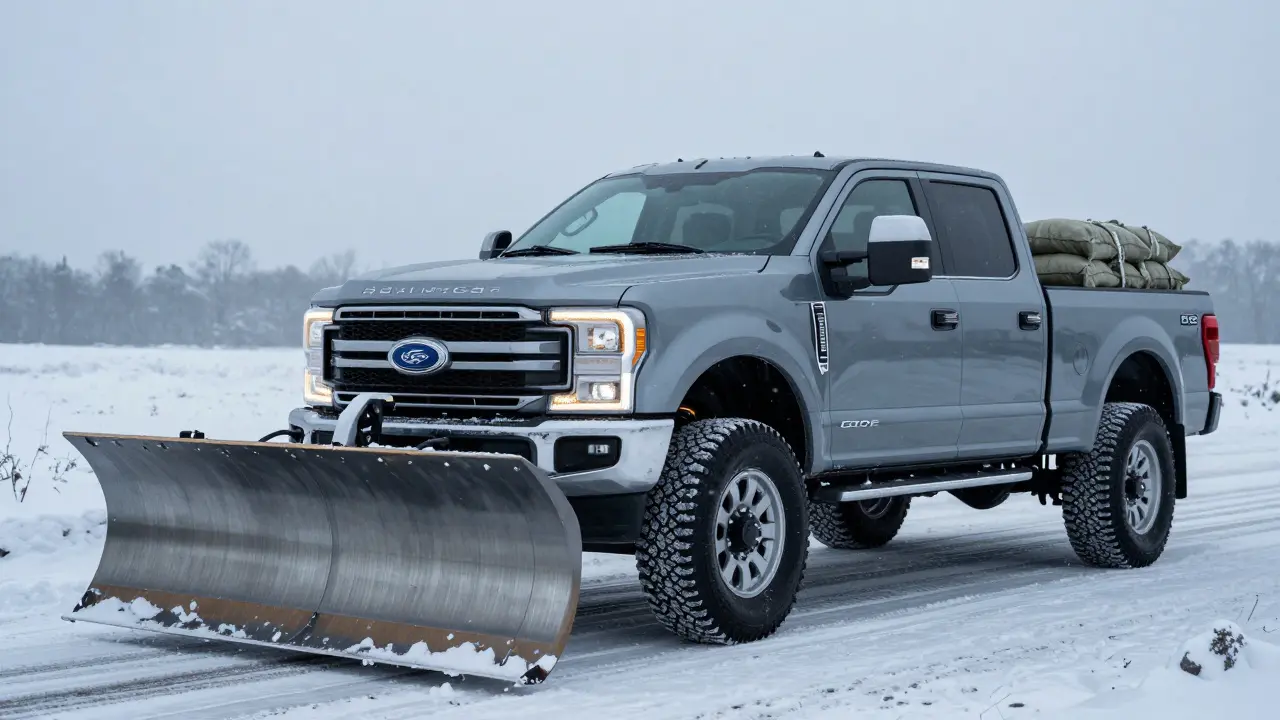
Putting a snow plow on your pickup truck isn’t just about buying a blade and bolting it on. If you skip the basics-weight distribution and electrical readiness-you could end up with a damaged truck, a failed plow, or worse, a dangerous situation on icy roads. This isn’t guesswork. It’s engineering. And if you live where snow piles up six feet deep by February, you already know that half-measures don’t cut it.
How Much Weight Does a Snow Plow Add?
Most full-size pickup snow plows weigh between 300 and 600 pounds. That’s not just a number-it’s a load that changes how your truck handles. A 400-pound plow mounted on the front axle doesn’t just sit there. It shifts your truck’s center of gravity forward, reducing rear tire traction and increasing strain on the front suspension. That’s why you can’t just slap on any plow and call it done.
For example, a 2024 Ford F-250 with a standard 8-foot plow adds about 520 pounds to the front. That’s nearly the weight of two adult passengers. Without proper counterbalance, your rear end gets light. When you turn or brake, you risk fishtailing or even losing steering control. The fix? Ballast. Add 200-300 pounds of sand or gravel in your truck bed, right over the rear axle. This restores balance and keeps your tires gripping the road.
Truck manufacturers like Chevrolet, Ram, and Toyota publish weight limits for front-mounted equipment. Check your owner’s manual. If it says “maximum front gross axle weight rating (FGAWR)” is 4,200 pounds, and your truck already weighs 6,800 pounds with passengers and fuel, you’re already close to the edge. Add 500 pounds of plow? You’re in overload territory. That’s not a risk you take lightly.
Electrical System: The Hidden Killer
The electrical system is where most snow plow setups fail-not because the plow is broken, but because the truck’s wiring can’t handle it.
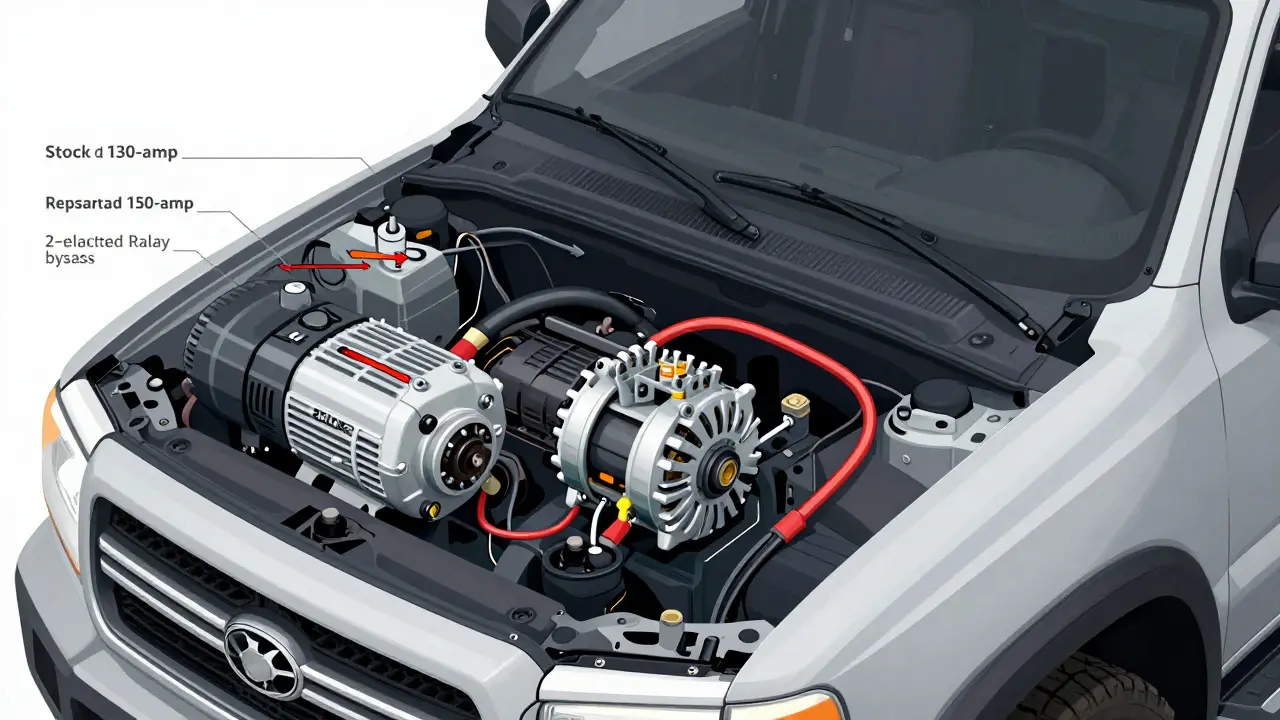
A typical snow plow uses a 12-volt system with a 150-amp motor. That’s not just a little draw. When you engage the plow’s hydraulic pump to lift or angle the blade, you’re pulling up to 120 amps continuously. Your truck’s alternator? Most stock models on 2020-2025 pickups output between 130 and 160 amps. Sounds fine, right? But here’s the catch: your alternator also powers headlights, heated seats, defrosters, infotainment, and charging ports. In winter, you’re already running at 80-90% capacity. Add the plow? You’re overloading the system.
What happens then? Lights dim. The battery drains. The engine stalls. Or worse-the wiring insulation melts, and you get smoke under the hood. I’ve seen it happen three times in Bristol last winter. All on trucks that didn’t upgrade their wiring.
The fix? Three things:
- Install a heavy-duty alternator rated for 200+ amps. Brands like MSD or Powermaster make direct-fit replacements for Ford, GM, and Ram trucks.
- Upgrade the battery cables. Stock 8-gauge cables are too thin. Go with 4-gauge or even 2-gauge for the main power run from battery to alternator.
- Add a dedicated relay harness. This bypasses the truck’s factory wiring and routes power directly from the battery to the plow motor. No more relying on the dash switches or fuse boxes that weren’t designed for this kind of load.
Companies like Blizzard and Meyer include relay harnesses with their plows for a reason. Don’t skip it. Even if your plow says “plug-and-play,” that’s just a marketing term. It means it fits the connector. Not that your truck can handle the current.
Mounting Systems: More Than Just Bolts
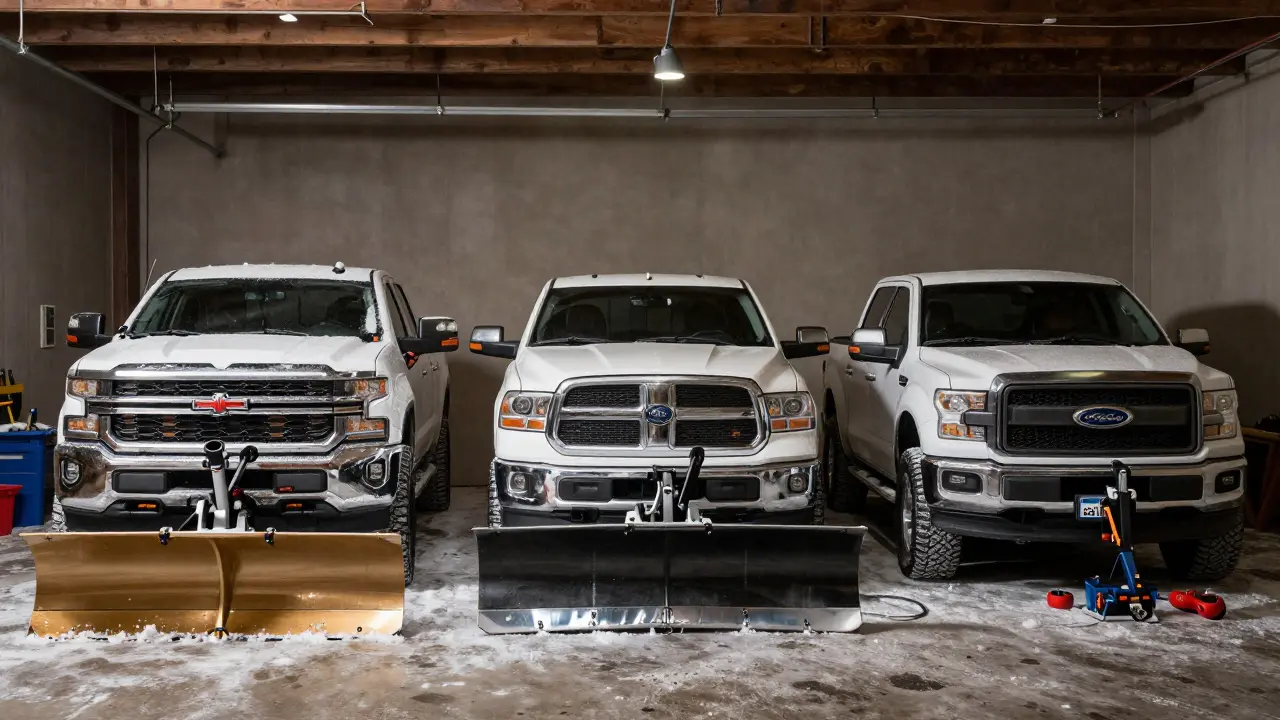
Not all plow mounts are created equal. There are three main types:
- Frame-mounted - bolts directly to the truck’s frame. Best for heavy-duty plowing. Handles 600+ pounds. Requires drilling into frame rails. Permanent.
- Front receiver hitch - attaches to a 2-inch trailer hitch. Easy to install and remove. But only rated for up to 400 pounds. Not for deep snow or commercial use.
- Quick-attach systems - like the Fisher Minute Mount or Sno-Way Fast Hitch. Lets you swap plows in under 2 minutes. Ideal if you own multiple trucks or share equipment. Still needs a frame-mounted base.
Frame-mounted systems are the only choice if you’re clearing driveways over 150 feet long or dealing with snowfall over 18 inches. The others? They’re for light-duty use-maybe a weekend homeowner with a 100-foot driveway and occasional flurries.
And don’t forget the hydraulic lines. If you’re using a hydraulic plow, those hoses need to be protected from road salt and ice. Wrap them in rubber conduit. Check them every 30 days. A cracked hose in sub-zero temps can dump hydraulic fluid on the road-and your truck-within seconds.
Truck Compatibility: What Models Actually Work?
Not every pickup can handle a snow plow. Here’s what you need:
| Truck Model | Recommended Plow Weight | Alternator Required | Mount Type |
|---|---|---|---|
| 2024 Ford F-150 (5.0L V8) | 400-500 lbs | 180-200A | Frame or Quick-Attach |
| 2025 Ram 1500 (3.6L V6) | 350-450 lbs | 160-180A | Front Hitch (Light Duty) |
| 2024 Chevrolet Silverado 2500HD | 550-600 lbs | 200A+ | Frame-Mounted |
| 2025 Toyota Tundra (3.5L V6 Twin-Turbo) | 450-500 lbs | 180A | Frame or Quick-Attach |
| 2024 GMC Canyon | 250-350 lbs | 140A | Front Hitch Only |
Notice a pattern? Light-duty trucks (1500 series) can handle light plowing. But if you’re using a 2500 or 3500, you’re in the right class for serious work. And if your truck is a half-ton with a V6? Don’t even think about a 6-foot steel plow. It’ll wreck your front end.
What Happens When You Ignore the Rules?
People think, “My truck’s tough. It pulled a trailer last summer. It’ll handle a plow.” That’s how you end up with a bent frame, a blown alternator, or a cracked radiator.
One customer in Bristol brought in a 2021 Toyota Tacoma with a 500-pound plow. No ballast. No alternator upgrade. The plow kept lifting and dropping as he drove, and the battery died every time he turned on the heat. He thought it was a bad battery. Turns out, the alternator was running at 190% capacity for 12 hours straight. It melted the stator windings. Repair cost: $2,100.
Another case: a 2023 Ford F-250 with a quick-attach plow. The owner didn’t use the relay harness. The dash wiring overheated. The fuse box caught fire. Insurance wouldn’t cover it because the modification voided the warranty. He lost his truck.
This isn’t about being careful. It’s about being smart. Your truck isn’t a snow plow. It’s a truck that can carry one-if you set it up right.
Final Checklist Before You Install
Before you spend a dime on a plow, run through this:
- Check your truck’s front gross axle weight rating (FGAWR) in the owner’s manual. Add the plow weight. If it’s over 90% of the limit, don’t proceed.
- Verify your alternator output. If it’s under 160 amps, upgrade it.
- Install a dedicated relay harness-even if the plow says you don’t need it.
- Add ballast in the truck bed-200-300 lbs over the rear axle.
- Choose the right mount type for your truck class and snow load.
- Test the system with the engine running. Check for dimming lights or unusual noises.
If you skip even one of these, you’re gambling with your truck-and your safety.
Can I use a snow plow on a half-ton pickup like a Ford F-150?
Yes, but only if it’s a 5.0L V8 or twin-turbo EcoBoost model, and you stick to plows under 500 pounds. Use a frame-mounted or quick-attach system, upgrade the alternator to 180+ amps, install a relay harness, and add 250 lbs of ballast in the bed. Avoid using it for commercial plowing or heavy snowfall over 12 inches.
Do I need a special battery for a snow plow?
Not necessarily, but your battery needs to be in top condition. A weak battery won’t support the extra load. Use an AGM (Absorbent Glass Mat) battery-they handle high draw cycles better than standard lead-acid. Look for 700+ CCA (Cold Cranking Amps). Brands like Odyssey or Optima are reliable choices.
Can I install a snow plow myself?
If you’re comfortable with wiring, hydraulic lines, and torque specs, yes. But if you’re unsure about alternator output, fuse ratings, or frame mounting, hire a professional. A $300 installation fee is cheaper than replacing a bent axle or a fried ECM. Most plow dealers offer free installation with purchase.
Will a snow plow void my truck’s warranty?
Only if you damage the truck due to improper installation. The Magnuson-Moss Warranty Act protects you if you use aftermarket parts that don’t cause damage. But if you overload the electrical system or mount the plow incorrectly, the manufacturer can deny claims. Always follow the plow and truck manufacturer’s guidelines.
What’s the best snow plow brand for pickup trucks?
For durability and reliability, Meyer, Blizzard, and Sno-Way lead the market. Meyer’s X-Plow is popular for its hydraulic efficiency. Blizzard’s 8100 series handles heavy snow best. Sno-Way’s Fast Hitch system is ideal if you need to swap plows quickly. Avoid cheap no-name brands-they use thin steel, weak motors, and unreliable wiring.
Comments
John Fox
Been running a Meyer plow on my F-250 for five winters now. Ballast in the bed and a 200A alternator. No issues. Just don't skip the basics.
March 13, 2026 at 22:45
Tasha Hernandez
Oh great so now we're all supposed to be electrical engineers just to clear our driveways? My 2018 Tacoma with a 350 lb plow and stock wiring? Still running fine. Maybe your truck is just trash.
March 15, 2026 at 22:16
Anuj Kumar
This whole thing is a scam. The truck companies don't want you to plow because they make more money selling new trucks. They put weak alternators on purpose. The government knows. They just won't tell you.
March 17, 2026 at 20:04
Christina Morgan
I appreciate how thorough this is. Seriously. So many people treat plow setups like they're installing a bike rack. The electrical part alone? That's the silent killer. Good call on the relay harness.
March 18, 2026 at 19:52
Kathy Yip
I didn't know about the ballast thing. I just thought 'more weight up front = better traction'. Turns out I had it backwards. So the rear needs weight to keep the front from being too heavy? That's... kinda counterintuitive. But makes sense now.
March 19, 2026 at 03:35
Bridget Kutsche
If you're doing this yourself, start with the relay harness. It's the easiest upgrade and the most impactful. I did it last fall and my lights stopped dimming the second I hit the plow controls. Total game changer. And it only took an hour.
March 20, 2026 at 10:15
Jack Gifford
Grammar check: 'It's not guesswork. It's engineering.' That's correct. But 'you could end up with a damaged truck, a failed plow, or worse, a dangerous situation' - the Oxford comma is missing. Small thing. But it matters.
March 20, 2026 at 22:43
Sarah Meadows
America doesn't need half-ton trucks trying to plow like they're in Alaska. If you can't afford a 2500, don't plow. Stop pretending your F-150 is a work truck. You're not a snow professional. You're a guy with a driveway.
March 22, 2026 at 19:25
Nathan Pena
The author makes a compelling case, but fails to address the fundamental flaw in consumer-grade snow plow systems: the assumption that OEM electrical architectures are designed for continuous 120A loads. They're not. This is a systemic failure of automotive engineering, not user negligence.
March 22, 2026 at 20:30
Mike Marciniak
I installed a plow on my 2022 Silverado. No upgrades. No ballast. Two winters later, my truck's still running. So maybe all this is just fearmongering.
March 23, 2026 at 15:21
VIRENDER KAUL
In view of the foregoing, it is imperative to acknowledge that the deployment of snow plow apparatus upon light-duty automotive platforms constitutes an egregious misapplication of mechanical engineering principles. The structural and thermal loads imposed are not commensurate with the design parameters of the chassis or electrical system. One must therefore conclude that such practices are not merely inadvisable, but fundamentally unsound.
March 25, 2026 at 08:00