

You just bought a clean 2024 Honda Civic at auction. It’s sitting in your lot, waiting for the reconditioning team, but three days later, it’s still there. Why? Because the paperwork got stuck between the buyer and the service manager, or maybe the keys were lost in the shuffle of a busy Friday afternoon. This isn’t just an inconvenience; it’s money leaking out of your business. Every day a vehicle sits idle because of administrative friction is a day you’re paying floor plan interest without earning a dime.
Car dealership workflows are the backbone of your operation, connecting the moment you acquire a vehicle to the moment it drives off the lot with a new owner. If these steps are disjointed, manual, or reliant on sticky notes and verbal handoffs, you’re fighting a losing battle against inefficiency. The good news? You don’t need million-dollar software to fix this. You need a clear, logical sequence that removes bottlenecks. Let’s break down exactly how to tighten up your processes from the moment a car arrives until the final signature.
The Critical First Step: Standardizing Vehicle Intake
Most dealerships lose time before a car even hits the showroom floor. The vehicle intake process is often chaotic. One person buys the car, another inspects it, and a third handles the title work. Without a standardized checklist, things fall through the cracks. Think about the last time you had to chase down a missing key fob or a forgotten smog certificate. That’s a workflow failure.
To streamline this, implement a digital or physical "Intake Passport" for every single unit. This isn’t just a list; it’s a tracking mechanism. When a car arrives, whether from trade-in, auction, or wholesale, it must be logged into your inventory management system immediately. Not "eventually," not "when I get a chance." Immediately. Use a mobile app or a tablet on the lot to snap photos, record VINs, and assign a status tag like "Pending Reconditioning" or "Title Hold."
Why does this matter? Because speed equals profit. According to data from Cox Automotive, the average days-to-sale (DTS) for used cars has hovered around 35-40 days in recent years. Every day you shave off this number by speeding up intake increases your turnover rate. If you can cut intake processing from two days to four hours, you’ve just freed up capital and shelf space. Make sure the person buying the car is also responsible for the initial digital entry. Handoffs create delays; ownership creates accountability.
Bridging the Gap Between Sales and Service
Here is where most dealerships bleed efficiency: the handoff between the acquisition team and the reconditioning department. Often, the sales team thinks the car is ready because they took pretty pictures, while the service team knows it needs new tires and a brake job. This disconnect leads to vehicles being listed online as "available" when they are actually physically incapable of being sold safely or legally.
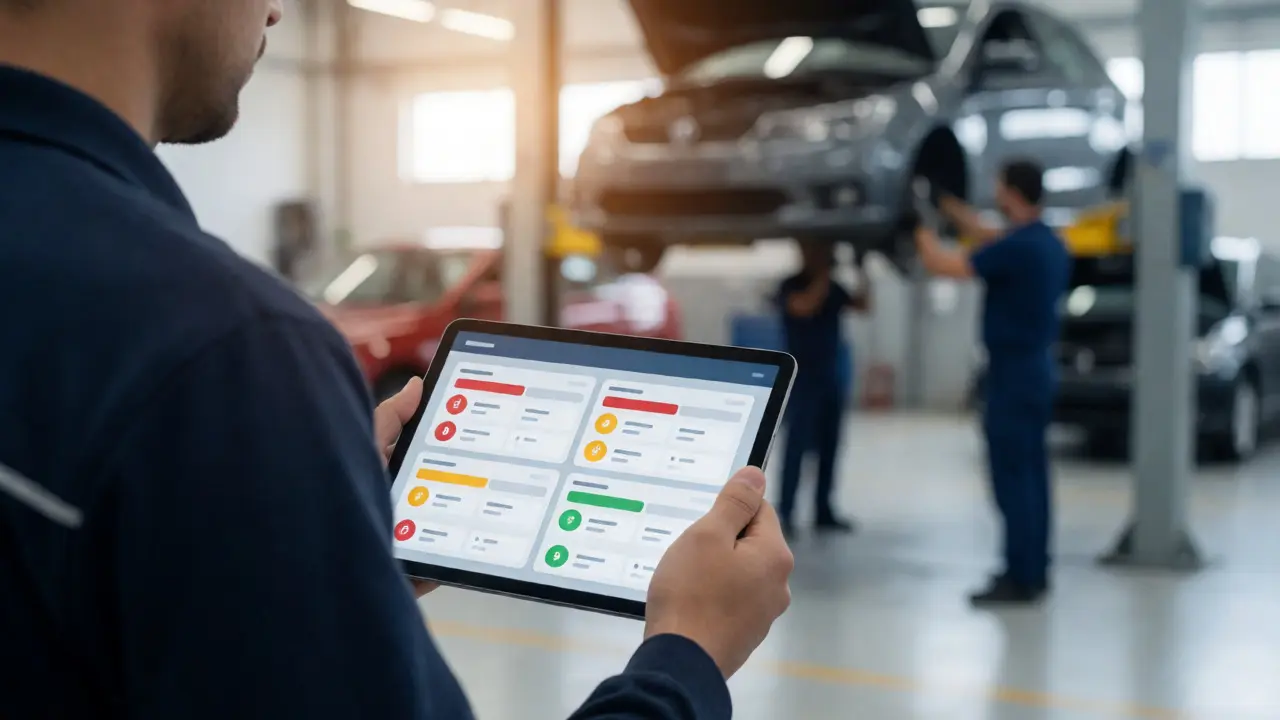
Solve this by integrating your CRM (Customer Relationship Management) with your DMS (Dealer Management System). But if you don’t have seamless integration yet, use a shared dashboard. Create a visual board-whether it’s Trello, Asana, or a whiteboard in the shop-that shows the real-time status of every car. Use color codes: Red for "Needs Parts," Yellow for "In Shop," Green for "Ready for Display."
When the service manager marks a car as "Green," it triggers an automatic alert to the sales floor. No more walking back and forth asking, "Is that Camry done?" The sales consultant sees it on their phone and can schedule a test drive instantly. This tight coupling reduces the days-to-sale significantly. It also prevents the embarrassment of selling a car that isn’t actually ready, which kills trust and wastes customer time.
Optimizing the Digital Presence Before Physical Availability
Once a car is marked ready, the next bottleneck is marketing. Many dealers wait until the car is polished and parked in front of the window to take photos. That’s too late. In today’s market, the first impression happens on AutoTrader or Cars.com, not on your lot. You need to capture high-quality media during the reconditioning phase, specifically after the mechanical work is done but before the final detailing, or coordinate closely with detailers to ensure the car looks its best.
Use automated photo tools if possible. Apps like VAuto or DealerOn allow you to shoot 360-degree views quickly. More importantly, automate the listing creation. Your DMS should push the vehicle details directly to your website and major portals. Manual data entry here is a killer. Typing in mileage, trim level, and features by hand introduces errors and takes minutes per car. Automate it. If your system doesn’t support auto-publishing, batch-process listings once a day at a set time rather than sporadically throughout the shift.
Consider the impact of SEO on your inventory pages. Ensure every listing has unique descriptions. Don’t just paste the factory specs. Add a sentence about why this specific unit is a good buy. Is it one-owner? Low mileage? These human touches improve engagement and help your site rank better for long-tail keywords like "low mileage blue honda civic bristol."
| Stage | Common Bottleneck | Streamlined Solution | Impact on Days-to-Sale |
|---|---|---|---|
| Intake | Manual data entry & paper trails | Digital Intake Passport via Mobile App | -1 to -2 Days |
| Reconditioning | Poor communication with Sales | Shared Status Dashboard (Red/Yellow/Green) | -2 to -3 Days |
| Marketing | Delayed photography & listing | Automated Photo Capture & DMS Push | -1 Day |
| Sales Process | Slow F&I paperwork | Pre-filled Contracts & E-signatures | -1 to -2 Hours |
Accelerating the Sales Floor Interaction
A streamlined workflow doesn’t stop at logistics; it extends to the customer experience. If your sales consultants spend half their day chasing keys, printing forms, or explaining basic specs, you’re wasting expensive labor hours. Equip them with tablets loaded with your inventory database. They should be able to pull up a car’s history, photos, and pricing instantly in front of the customer.
Implement a "Speed-to-Lead" protocol. When an online inquiry comes in, it should ring on a specific device, not sit in a general inbox. Studies show that responding within five minutes makes you eight times more likely to qualify the lead. Use text messaging templates for initial responses. "Hi John, thanks for asking about the 2022 Ford Focus. It’s available now. Would you like to schedule a test drive for Saturday morning?" Simple, fast, effective.
Also, reduce friction in the negotiation process. If your pricing strategy is transparent and based on live market data (using tools like Black Book or KBB), your staff spends less time arguing about price and more time building value. Train your team to explain *why* the price is what it is, referencing recent local sales. This confidence speeds up decisions.

The Final Mile: Paperwork and Delivery
The sale isn’t closed when the handshake happens; it’s closed when the car leaves the lot. Traditional F&I (Finance and Insurance) offices are notorious for slow-moving paperwork. Customers hate sitting in a small room for two hours signing documents. To streamline this, move towards electronic signatures (e-signatures) wherever legally permissible in your jurisdiction. Most UK and US states now accept digital contracts for finance agreements.
Prepare documents in advance. Once a deal is struck, the F&I manager should have the contract pre-filled with the customer’s info pulled from the CRM. The customer reviews, signs digitally, and pays via card or transfer. No more carbon copies flying everywhere. For delivery, have a dedicated "Delivery Specialist" or ensure the salesperson has a clear checklist: keys, manuals, registration papers, and a quick walk-around explanation. Do not make the customer hunt for the owner’s manual.
Finally, close the loop with feedback. Send an automated SMS survey immediately after delivery. Ask one question: "How was your experience?" This gives you immediate data on where the workflow might still be snagging. If people consistently complain about wait times for plates, you know your DMV liaison process needs attention.
Measuring What Matters
You can’t improve what you don’t measure. Stop looking only at gross profit per unit. Start tracking operational metrics. How long does it take from "Buy Date" to "List Date"? How many days does a car sit in "Reconditioning" versus "Display"? What is your lead response time?
Set weekly targets. If your goal is 25-day DTS and you’re averaging 40, identify which stage is adding the extra 15 days. Is it parts availability? Fix your supply chain. Is it photographer scheduling? Hire a part-time shooter. By isolating the variables, you solve specific problems rather than guessing at broad fixes.
Remember, streamlining isn’t about cutting corners; it’s about removing waste. It’s about ensuring that every hour spent on a vehicle adds value, not just admin overhead. When your workflow is smooth, your team is less stressed, your customers are happier, and your bottom line grows. Start with one area-likely intake-and tighten it up. Then move to the next. Before you know it, your dealership will run like a well-oiled machine, leaving competitors stuck in traffic.
What is the biggest mistake dealerships make in vehicle intake?
The biggest mistake is delaying the digital logging of the vehicle. If a car is physically present but not in the system, it cannot be marketed, priced accurately, or tracked. This delay creates a "ghost inventory" problem where sales teams don't know what they can sell, leading to missed opportunities and inflated days-to-sale metrics.
How does automating photography help dealership workflows?
Automating photography ensures consistency and speed. Professional-looking images attract more clicks. When integrated with your DMS, these photos can be pushed to your website and third-party portals automatically, eliminating the manual step of uploading files and resizing images. This can save several hours per week and ensures listings go live faster.
Why is communication between sales and service critical?
Miscommunication leads to selling unavailable cars. If sales lists a car as "ready" but service hasn't finished repairs, the customer arrives for a test drive only to find the car isn't drivable. This damages trust and wastes both employee and customer time. A shared status dashboard ensures everyone is working from the same truth.
Can small dealerships benefit from workflow automation?
Absolutely. Small dealerships often rely on fewer staff, making each person's time more valuable. Automation tools for e-signatures, automated texts, and simple project management boards cost little but free up significant time. You don't need enterprise-level tech; you just need consistent processes and digital tools to enforce them.
How do I track my dealership's efficiency improvements?
Focus on three key metrics: Days-to-Sale (DTS), Lead Response Time, and Turnover Rate. Compare these monthly. If DTS drops by 5 days after implementing a new intake process, you know it worked. Use your DMS reports to generate these numbers automatically rather than calculating them manually in spreadsheets.
Comments
Art HND
Standardizing intake is just corporate speak for 'stop being lazy.' If your team can't log a VIN in under five minutes, the software isn't the problem, the people are. You don't need an app to fix incompetence.
September 7, 2026 at 18:34
Elizabeth Brooks
This is such a helpful breakdown! I've been trying to implement something similar at my small shop and the color coded board idea is brilliant. We actually started using a shared Trello board last month and it cut down our internal emails by half. One thing I'd add is that training is key though because even the best system fails if people dont update it consistently. Have you found any specific apps that work well for smaller budgets?
September 7, 2026 at 19:56
Deb Kortyna, MBA
I must respectfully disagree with the premise that this requires minimal investment. While the author suggests simple tools, true workflow optimization often necessitates significant capital expenditure on integrated DMS platforms. Furthermore, the suggestion to automate photography ignores the nuanced reality of vehicle condition assessment which requires human oversight to ensure accurate representation. It is not merely about speed but about integrity in presentation.
September 8, 2026 at 02:19
alex kobri
there is a deeper issue here than just workflow
we treat cars like inventory items when they are emotional purchases for customers
if you streamline too much you lose the human touch that builds trust
efficiency should never come at the cost of relationship
September 8, 2026 at 19:46
Zach Loescher
I'm curious how this applies to dealerships that operate mostly online? The physical lot dynamics seem central to these points but maybe less relevant for pure e-commerce models.
September 10, 2026 at 03:30
Quintin Franzese
Oh wow another article telling me to use a tablet instead of a sticky note. Groundbreaking stuff truly. I bet if we just told everyone to 'be efficient' without changing their pay structure nothing would actually change.
September 11, 2026 at 01:18
Susan Cole
The point about the Intake Passport resonates with me. We had so many lost keys before we implemented a strict logging protocol. It’s annoying at first but saves so much headache later.
September 12, 2026 at 12:33
Tamara Miller
Finally!! Someone said it!!! The industry has been drowning in inefficiency for decades... and nobody wants to admit it. It's not about the tech; it's about management accountability. If you aren't measuring lead response time, you're failing your customers. Period.
September 13, 2026 at 13:49
Savara Gunn
love the focus on removing friction for the customer. that delivery checklist tip is gold. keep it up!
September 15, 2026 at 07:45
john randall
Good read. The part about pre-filling contracts is huge for us. Saves us like 20 mins per deal which adds up fast on busy weekends.
September 16, 2026 at 19:51