
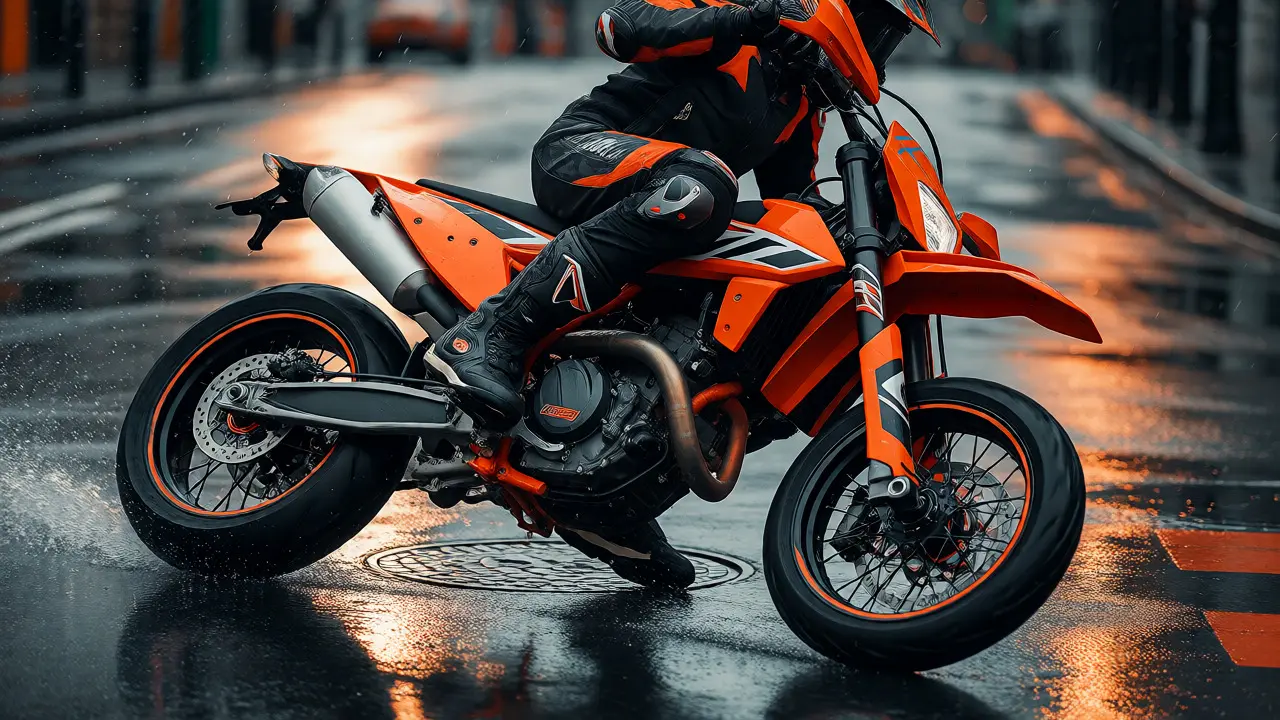
Imagine tearing through a tight urban corner on a bike that handles like a go-kart but looks like it just crawled out of a muddy motocross track. That is the Supermoto experience. It isn’t quite a sportbike, and it’s definitely not your typical cruiser. These machines are hybrids-built for speed on asphalt but born from the rugged world of off-road racing.
If you live in a city with winding backroads or just want something more agile than a heavy touring bike, a supermoto might be exactly what you’re looking for. But they aren’t perfect for everyone. They have quirks, high maintenance costs, and specific safety considerations that regular commuters often overlook. Let’s break down why these street-legal dirt bikes are gaining popularity and whether one fits your garage.
What Exactly Is a Supermoto?
At its core, a Supermoto is a type of motorcycle designed for mixed-surface racing, combining the agility of a dirt bike with the braking and handling capabilities of a sportbike on pavement. Think of it as a motocross bike that went to gym class and learned how to stop properly. Unlike traditional dirt bikes, which have small brakes and knobby tires meant for mud, supermotos feature large disc brakes, smaller wheels (usually 17-inch front and rear), and slicker tires optimized for grip on asphalt.
The concept started in France in the late 1970s when riders realized their dirt bikes could handle paved roads surprisingly well if modified correctly. Today, manufacturers like KTM, Husqvarna, and Honda build dedicated supermoto models straight from the factory. You don’t need to be a mechanic to get one; you just need to know what you’re buying into.
Why Choose a Supermoto for City Riding?
City traffic is a nightmare for big, heavy motorcycles. You’re stuck at red lights, dodging potholes, and trying to thread the needle between cars. This is where supermotos shine. Their lightweight frames make them incredibly easy to maneuver at low speeds. If you drop one-which happens to new riders-it’s far easier to pick up than a 500-pound sportbike.
Visibility is another huge factor. Supermotos sit higher off the ground than most street bikes. You’re literally above the line of sight of SUV drivers who think they can merge without checking their mirrors. Being taller means you see further ahead, allowing you to anticipate traffic jams before they happen. Plus, the upright seating position keeps your wrists and back happy during those long, stop-and-go commutes.
| Feature | Supermoto | Sportbike | Dual-Sport |
|---|---|---|---|
| Primary Use | Track days, twisty roads, city commuting | Pavement only, high-speed touring | Off-road trails and light highway use |
| Tire Type | Street-oriented slicks or semi-slicks | High-performance street rubber | Knobby or dual-sport tread |
| Wheel Size | 17-inch front/rear | 17-inch front/rear | 21-inch front / 18-inch rear |
| Weight | Light (300-350 lbs) | Medium to Heavy (400-600 lbs) | Light to Medium (250-350 lbs) |
| Comfort Level | Upright, good visibility | Aggressive, leaned forward | Upright, rough ride |
The Handling Advantage: Go-Kart Feel on Two Wheels
Riders often describe the supermoto feel as "telepathic." Because the chassis is stiff and the suspension is tuned for pavement rather than jumps, the bike reacts instantly to your inputs. When you lean into a corner, the bike leans with you immediately. There’s no lag, no wobble, just pure connection to the road.
This responsiveness comes from the geometry. Supermotos typically have a steeper rake angle compared to cruisers or adventure bikes. A steeper rake makes the steering quicker. In a city environment, this means you can dart through gaps in traffic with confidence. However, this same trait makes them twitchy at very high speeds on the highway. If you plan to do 80 mph runs on the interstate regularly, a supermoto might feel unstable. They are best enjoyed on roads with curves, not long straightaways.
Maintenance Realities: High Performance Means High Upkeep
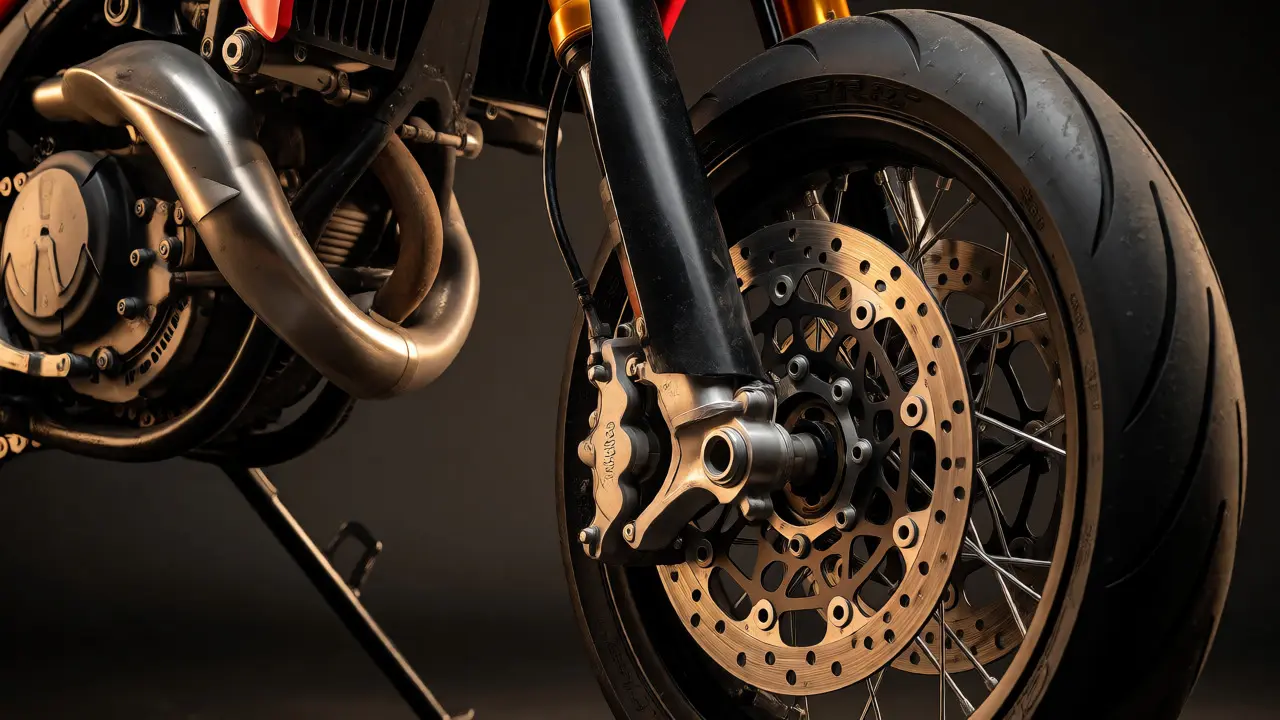
Here is the catch nobody tells you at the dealership: supermotos are high-maintenance beasts. Most modern supermoto engines are single-cylinder, four-stroke units that rev incredibly high. While this provides punchy acceleration, it also wears out parts faster. You will likely find yourself changing oil every 3,000 to 4,000 miles, whereas a standard Japanese commuter bike might go 6,000 to 8,000 miles.
Chain tension is another daily ritual. Because the suspension works hard on rough city streets, the chain stretches quickly. Neglecting this leads to snapped chains or damaged sprockets. If you buy a used supermoto, check the sprocket teeth. If they look like shark fins, walk away or budget for a replacement set. Also, brake pads wear out fast because these bikes rely heavily on aggressive braking to control their power.
Safety Considerations for Urban Environments
Do not let the fun factor fool you into complacency. Supermotos lack wind protection. At 60 mph, the wind blast hits your chest directly, which gets exhausting after twenty minutes. More importantly, the tires are often softer compounds designed for maximum grip, not longevity. On wet city streets, especially over painted lines or manhole covers, traction can vanish instantly.
Another risk is the lack of fairings. Sportbikes have plastic shells that protect your legs and engine in a minor tip-over. Supermotos expose everything. A simple drop at a stoplight can crack a radiator or bend a lever. Always invest in quality armor. Elbow guards, knee sliders, and a sturdy helmet are non-negotiable. Since you are sitting higher, your center of gravity is different. Practice slow-speed maneuvers in an empty parking lot before taking your new bike into dense traffic.
Top Models to Watch in 2026
The market has evolved significantly. Here are three standout options depending on your budget and skill level:
- KTM 690 SMC R: Often called the king of supermotos. It features a massive single-cylinder engine that produces around 74 horsepower. It is raw, loud, and incredibly fast. Perfect for experienced riders who want track-day performance on public roads.
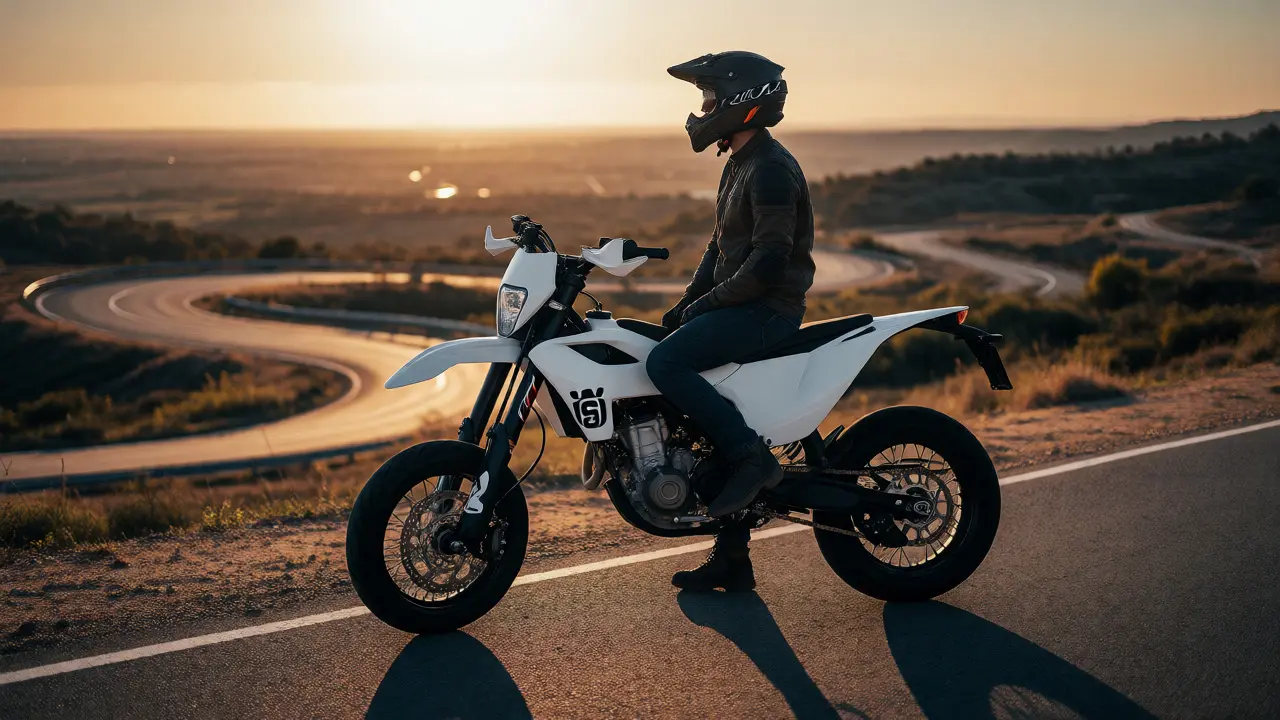
- Husqvarna SM 701 Enduro: Technically an enduro, but many riders convert it to a supermoto spec. It offers slightly more comfort and a smoother power delivery than the KTM, making it better for longer commutes.
- Honda CRF250M: The entry-level option. It is lighter, cheaper, and less intimidating. While it lacks the top-end speed of the 690cc monsters, it is reliable and affordable to maintain. Great for beginners learning the ropes of high-revving engines.
Is a Supermoto Right for You?
You should buy a supermoto if you value agility over comfort, enjoy twisty roads, and don’t mind spending extra time on maintenance. They are fantastic for short-to-medium commutes where traffic congestion requires quick reflexes. They are also excellent for weekend track days because you can ride home afterward without needing a trailer.
Avoid them if you plan to carry passengers regularly. Most supermotos have tiny seats that barely fit one person, let alone two. Also, skip them if your commute involves hundreds of miles of flat highway each day. The vibration and wind fatigue will ruin the joy of riding pretty quickly.
Ultimately, owning a supermoto is about embracing a specific lifestyle. It’s about loving the mechanical noise, the smell of hot exhaust, and the feeling of being one with the machine. If that sounds appealing, go test ride one. Just be prepared to fall in love with the chaos.
Are supermoto motorcycles street legal?
Yes, dedicated supermoto models sold by major manufacturers like KTM and Honda are fully street legal. They come equipped with headlights, turn signals, license plate brackets, and DOT-approved tires. However, converted dirt bikes may require additional modifications to meet local regulations.
How much does a supermoto cost to maintain annually?
Expect to spend between $800 and $1,500 per year on routine maintenance for a mid-sized supermoto. This includes frequent oil changes, chain replacements, tire rotations, and brake pad swaps. High-performance models like the KTM 690 can cost even more due to expensive parts and specialized labor requirements.
Can you ride a supermoto in the rain?
You can, but it requires caution. Supermoto tires are often soft-compound slicks or semi-slicks that offer less water displacement than standard street tires. Wet conditions reduce grip significantly, especially on painted road markings. Reduce speed and avoid sudden braking or leaning until you understand how your specific tires behave in the wet.
Are supermotos good for beginners?
Not necessarily. High-displacement supermotos (like 450cc or 690cc) deliver power abruptly and can be difficult to control at low speeds. Beginners should start with a smaller displacement model, such as a 250cc or 300cc version, or consider a standard naked bike first to build fundamental skills before tackling the aggressive nature of a supermoto.
What is the difference between a supermoto and a dual-sport?
Dual-sports are built primarily for off-road use with some street legality, featuring larger wheels and knobbier tires. Supermotos are built primarily for pavement, using smaller wheels and street-focused tires. While both can go off-road, a supermoto performs poorly in deep mud or sand, whereas a dual-sport excels there but feels clumsy on tight asphalt corners.
Comments
SHANNON GRUBER
Generic fluff. The KTM 690 is overrated and the maintenance costs are a scam designed to keep you poor.
November 1, 2026 at 00:05
Prayagraj Medicose
Wake up sheeple!! Big Motorcycle doesn't want you knowing this... supermotos are actually surveillance tools disguised as fun bikes. They track your every move on those 'twisty roads' and report back to the algorithm that decides if you get insurance or not. I saw one parked outside my house last week, no plates, just staring at me. It knows what I did in the summer of 2019. Don't let them fool you with their 'go-kart feel' marketing hype. That feeling is just your soul leaving your body because they drained it for fuel efficiency metrics. We need to stop buying these things until we understand who really owns the data from the ECU. The French started this? Obviously. France has always been behind the times when it comes to true freedom. This whole concept is a psyop to keep us distracted while the real dirt bikes rule the world underground. I'm telling you, check your tire pressure daily or risk being flagged by the system. Trust nothing. Especially not Honda's reliability claims.
November 1, 2026 at 08:08
Howard Hurd
Honestly, this article misses the point completely 🙄. If you aren't riding an American brand like Harley or Indian, are you even riding? These Euro bikes break down constantly and cost more than my first car to fix. Plus, why would anyone want a bike that looks like it belongs in a mud pit? We have plenty of good roads here in the US, we don't need 'agility', we need power and comfort. The author clearly hasn't ridden a proper cruiser on Route 66. Supermotos are for people who can't handle real weight. 😒
November 1, 2026 at 20:50
jyotshna Senapati
Oh please, spare me the technical jargon. You talk about 'telepathic handling' but you ignore the fact that most riders lack the basic coordination to handle such twitchy machines. It’s not agility, it’s instability masked as performance. People buy these because they want to look cool, not because they actually understand the mechanics. I see so many newbies dropping these expensive toys in parking lots because they think high seat height equals dominance. It’s pathetic really. You’re spending thousands on a bike that requires constant babysitting just to feel 'alive'. Why not just buy a scooter and save your money for therapy? At least then you’d be addressing the root cause of your need for validation through machinery. The article reads like it was written by someone who has never actually owned one, just read forums. Typical internet expertise.
November 3, 2026 at 20:35
Sundaraiah Kollipara
this feels less about the machine and more about our relationship with control. we spend so much time optimizing our lives for efficiency yet we seek out chaos on two wheels. maybe the supermoto isn't a vehicle but a mirror reflecting our desire to master the unpredictable. the friction between the slick tire and the asphalt is where life happens right there in the cornering limit. i wonder if the maintenance burden is actually a feature not a bug forcing us to engage with the object rather than just consuming it. we forget how to touch things in the digital age. this bike demands your hands and your attention fully. it is a philosophical exercise in balance both physical and mental. perhaps we should view the oil changes as meditation rituals instead of chores. the vibration becomes part of the heartbeat of the city. it is interesting how we categorize joy into horsepower and torque when it might simply be presence. do we ride to escape or to arrive? the supermoto seems to exist in the liminal space between the two. it challenges the notion that comfort is the highest virtue in transportation. sometimes discomfort leads to clarity. i find myself thinking about the french origins again not as history but as a mindset shift towards minimalism and raw feedback. it is a rejection of excess in favor of essence. what do you all think about the spiritual aspect of single cylinder engines?
November 5, 2026 at 10:12
Manoj Kumar
The analysis provided herein exhibits a severe deficiency in critical rigor regarding the structural integrity of modern supermoto frames. One must consider the metallurgical implications of repeated stress cycles on aluminum swingarms under urban commuting conditions. Furthermore, the assertion regarding 'high visibility' ignores the aerodynamic drag coefficients which significantly impact rider fatigue over extended periods. It is imperative to acknowledge that the market saturation of these vehicles suggests a speculative bubble rather than genuine utility demand. The reliance on single-cylinder engines introduces harmonic imbalances that accelerate component wear beyond reasonable expectations. Consequently, the long-term value proposition remains questionable at best. Riders often underestimate the cognitive load required to manage such responsive steering geometries in dense traffic environments. This oversight leads to increased accident probabilities despite perceived safety advantages. A more comprehensive study would include longitudinal data on resale values versus maintenance expenditures. Without such empirical evidence, the enthusiasm expressed in this article appears largely anecdotal and potentially misleading to prospective buyers. The omission of comparative data against traditional naked bikes further weakens the argument for superior versatility. Thus, the conclusion drawn lacks sufficient evidentiary support.
November 6, 2026 at 02:38
Brad Walker
We are all just dust in the wind, waiting for the next drop.
The bike falls, we pick it up, we fall again. It is the cycle of existence, mirrored in the throttle. You chase the horizon but the horizon runs away. The supermoto is a metaphor for futility. Beautiful, loud, expensive futility. But hey, at least the exhaust note sounds like crying angels. Or demons. Hard to tell when you're going fast enough to leave time behind. Just don't hit a manhole cover. That's how the universe reminds you you're still mortal. 😔
November 6, 2026 at 04:56
Charles Reah
Great overview! For those considering a switch, remember that the 'quirks' mentioned are actually features once you adapt. The upright position saves your back compared to sportbikes, and the lightness makes parking lot maneuvers a breeze. Just budget for the tires-they wear faster than you expect due to the soft compound needed for grip. Also, practice emergency braking early; the lack of fairings means you'll feel every mistake, but you also learn faster. It’s a rewarding platform for building confidence in tight spaces.
November 7, 2026 at 18:21