
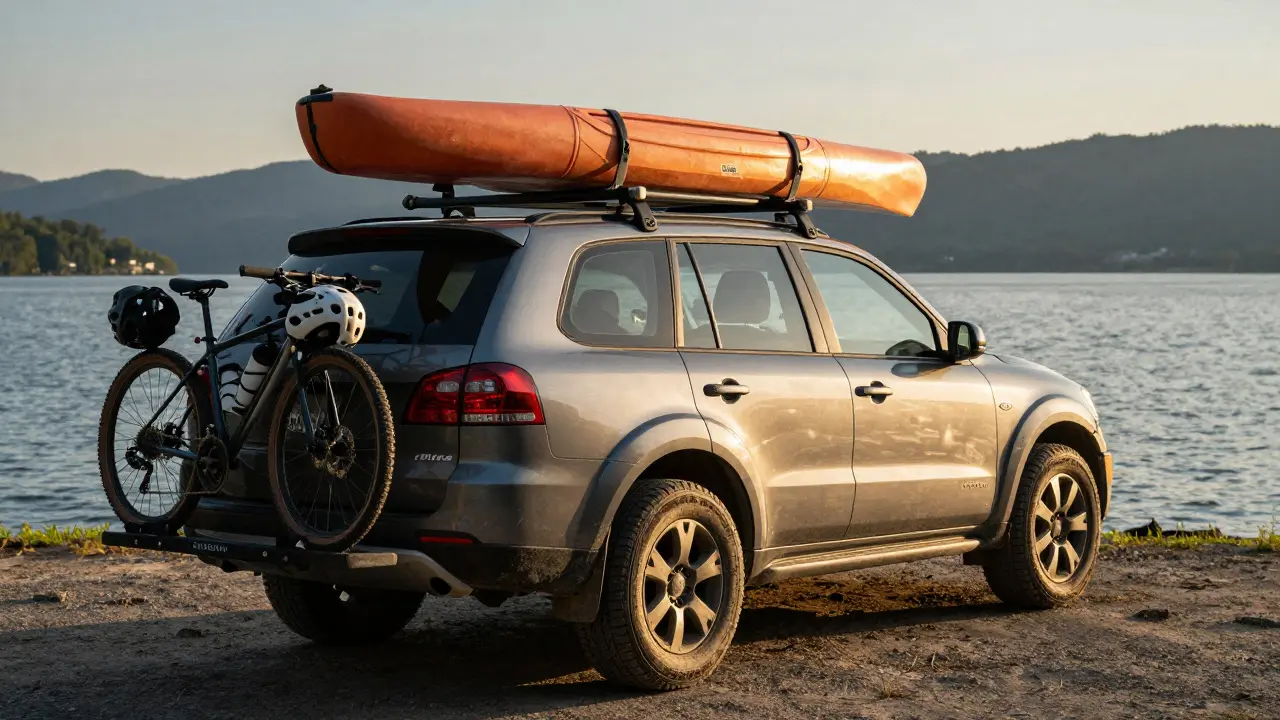
Most people buy an SUV for space. But once you bring home that big, boxy ride, you quickly realize: space doesn’t mean usefulness unless you organize it right. A roof rack isn’t just a metal frame. A hitch isn’t just a metal plug. And organization isn’t just buying another plastic bin. It’s about turning your SUV into a tool that works for your life - whether you’re hauling kayaks to Lake Windermere, towing a small trailer to a campsite in the Lake District, or hauling groceries, gear, and kids across the M4 on a Sunday afternoon.
Roof Racks: More Than Just a Box on Top
Not all roof racks are the same. If you’ve ever tried to strap a bike to factory crossbars with flimsy straps, you know the problem. Factory rails? They’re fine for light loads. But if you’re carrying more than 50kg, you need a proper system. The key is matching the rack to your load type.
For bikes, get a platform-style rack that holds the wheels without touching the frame. Brands like Thule and Yakima have models that lock into your SUV’s factory side rails - no drilling needed. For larger gear like kayaks, snowboards, or lumber, go with crossbars made from aluminum or steel, paired with load straps that have ratchets, not just buckles. A good setup holds 75kg to 100kg safely. Always check your SUV’s manual - some models like the Ford Kuga or Volkswagen Tiguan have a roof load limit of just 75kg. Exceed it, and you risk damaging the roof or losing control on a bend.
Here’s what actually matters: weight distribution. Put the heaviest items in the center, over the roof’s strongest point. Don’t stack tall boxes - they turn your SUV into a sail on the motorway. A 1.5m kayak sticking out the back? That’s illegal in the UK if it’s not marked with a red flag. Always secure the ends.
Hitches: The Hidden Power of Your SUV
A hitch isn’t just for trailers. It’s your gateway to towing, carrying, and expanding what your SUV can do. Most modern SUVs come with a tow rating - check yours. A Hyundai Tucson can tow up to 1,600kg. A Toyota RAV4? Around 1,500kg. A Land Rover Discovery? Over 3,500kg. But that number means nothing if you don’t have the right hitch.
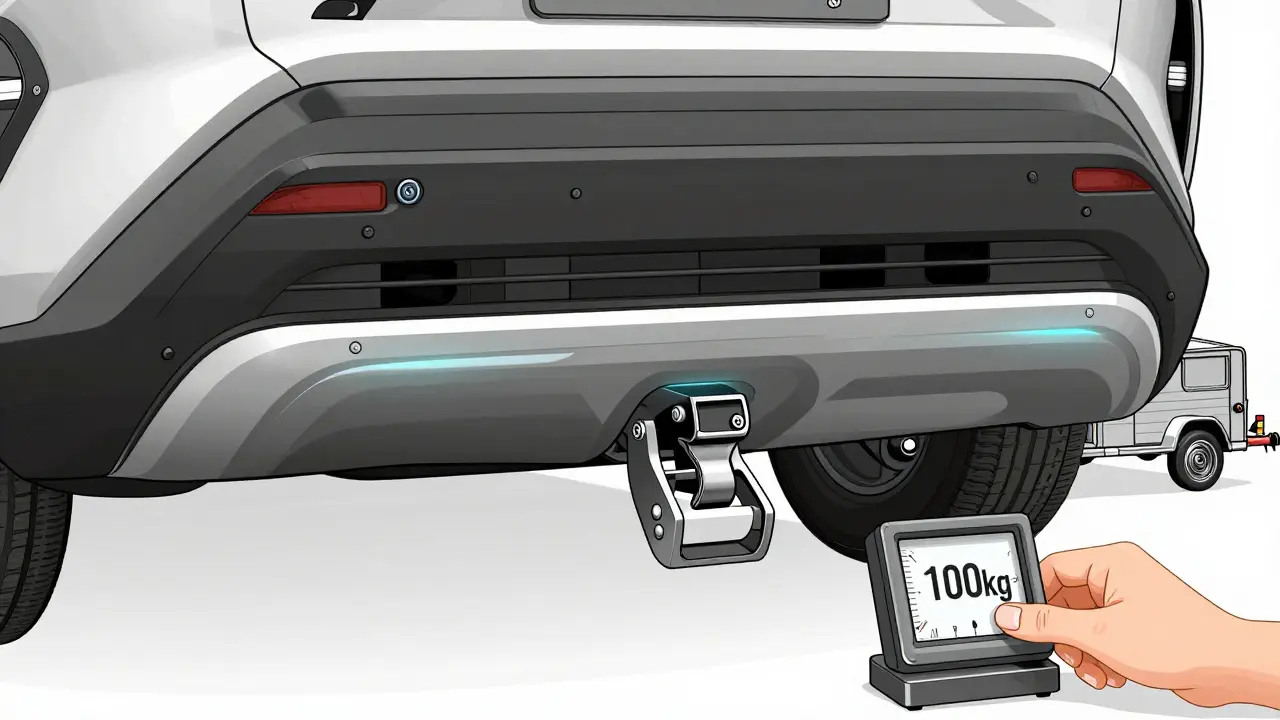
There are two main types: fixed and detachable. Fixed hitches are stronger and more durable, but they stick out all the time. Detachable ones pull out of sight when not in use - great if you park in tight spaces or hate the look. For most people, a detachable Class II hitch (rated for 2,000kg) is enough. It handles small trailers, bike carriers, and even portable generators.
Don’t forget the wiring. Towing lights need a proper electrical kit. Cheap aftermarket kits often fail. Stick with OEM or brands like Bosch or Tekonsha. They plug into your SUV’s existing connector behind the bumper. If your SUV didn’t come with a tow package, you’ll need to have the wiring installed by a professional. DIY kits often cause error codes or blow fuses.
And here’s the thing most people miss: tongue weight. The hitch must carry 10% of the trailer’s total weight. So if you’re towing a 1,000kg trailer, you need 100kg pushing down on the hitch. Too little? The trailer sways. Too much? You crush the rear suspension. Use a tongue weight scale - they cost under £30 online. It’s not optional. It’s safety.
Organization: Stop the Chaos in the Back
Every SUV owner has had this moment: you open the tailgate, and everything falls out. Water bottles roll under the seats. Dog toys get stuck in the floor gaps. Your camping gear is buried under a pile of school bags. Organization isn’t about buying fancy stuff. It’s about control.
Start with the floor. Most SUVs have a flat, removable floor panel. Underneath? A hidden storage compartment. Use it for things you never need to grab - spare tire tools, jumper cables, emergency blankets. Keep them in a waterproof bin with a handle.
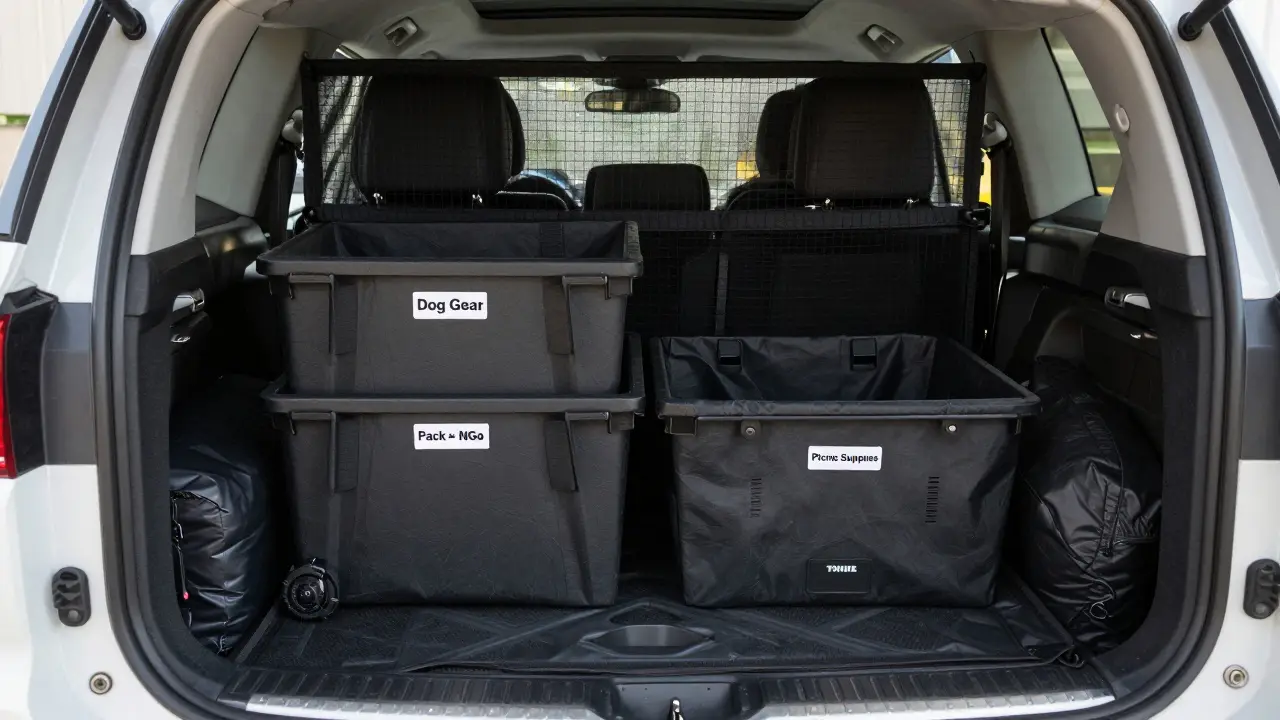
Next, the back seats. Install a cargo barrier. It’s a mesh or metal screen that snaps into the seat rails. It stops your dog from launching into the front seat when you brake. It also stops groceries from sliding forward. Brands like PetSafe and CargoBuckle make ones that fit most SUVs without drilling.
For gear, use modular bins. Not plastic bins from the supermarket. Use ones with wheels and dividers - like the U-Haul Cargo Keeper or the Thule Pack ’n Go. They stack, slide, and lock. Put heavy items at the bottom. Lighter stuff on top. Label them. You’ll thank yourself when you’re digging for your hiking boots at 7am in the rain.
And don’t ignore the door pockets. They’re useless if you just shove a water bottle in there. Use slim, stretchable organizers with multiple pockets. Put sunglasses, charging cables, and snacks in them. No more frantic searches while driving.
What You Don’t Need (And What You Should Skip)
Not every accessory is worth it. Skip the LED light bars for your roof. Unless you’re off-roading in the Scottish Highlands at night, they’re just heavy, expensive, and attract attention from the police. Skip the oversized roof boxes if you only use them twice a year. They drag your fuel economy down by 15% and make parking a nightmare.
Same with those cheap hitch-mounted cargo carriers. They’re fine for short trips, but they vibrate, rattle, and often block your license plate or tail lights. If you’re hauling gear regularly, get a trailer. It’s safer, legal, and more efficient.
And avoid those ‘universal’ organizers that claim to fit every SUV. They don’t. They sag. They slip. They break. Buy ones made for your exact model. Look up your SUV’s year, make, and trim on the manufacturer’s accessory site. It’s worth the extra £20.
Real-World Setup: A Sample Build
Here’s what a practical setup looks like for a family with two kids, a dog, and weekend adventures:
- Roof: Thule Crossbars + Thule Motion XT rooftop box (16 cubic feet) - holds sleeping bags, tents, and extra clothes.
- Hitch: Detachable Class II hitch + Thule T2 Pro bike rack (holds 2 bikes, no frame contact).
- Back: Cargo barrier + two Thule Pack ’n Go bins (one for dog gear, one for picnic supplies).
- Doors: Slim organizer pockets with slots for water bottles, phone chargers, and dog treats.
- Underfloor: Waterproof bin with jumper cables, tire inflator, and first-aid kit.
This setup adds about £1,200 to the cost of the SUV. But it turns a bland family hauler into a ready-to-go adventure machine. You don’t need to spend more. Just spend smarter.
Final Tip: Test Before You Buy
Before you commit to any accessory, test it. Borrow a roof rack from a friend. Rent a trailer for a weekend. Try loading your gear into a bin at the store. See how it feels. Watch how your SUV handles. If it feels wobbly, too high, or too noisy - it’s not right.
Your SUV is your mobile basecamp. Don’t treat it like a storage closet. Treat it like a vehicle built for purpose. The right accessories don’t just add space. They add confidence. And that’s worth more than any discount.
Can I install a roof rack on my SUV myself?
Yes, most modern roof racks are designed for DIY installation. They clamp onto factory side rails without drilling. But you need the right tools - usually a torque wrench and a helper. Always follow the manufacturer’s torque specs. Over-tightening can crack the rail. Under-tightening means it could fly off. If you’re unsure, get it done at a garage. It usually costs under £50.
Do I need a special license to tow with my SUV?
No, not if you passed your driving test after January 1, 1997. You can tow up to 3,500kg with a standard UK driving licence. But you must not exceed your SUV’s maximum towing limit. Also, the trailer’s weight must not be heavier than the unladen weight of your SUV. Always check your vehicle’s manual and the trailer’s weight plate.
What’s the best way to organize dog gear in an SUV?
Use a dedicated bin with compartments: one for leash and collar, one for food and water bowls, one for towels and waste bags. Keep it behind the front seats or under the cargo floor. Add a non-slip mat under the bin to stop it sliding. A cargo barrier keeps your dog contained and protects the seats from claws and wet fur.
Will roof racks hurt my fuel economy?
Yes, even an empty roof rack can reduce fuel efficiency by 5% to 15%, depending on speed and design. A roof box adds another 10% to 20%. Remove them when not in use. If you must keep them on, choose low-profile, aerodynamic models. Never leave a bare rack on in winter - snow and ice buildup makes it worse.
Can I use a hitch-mounted cargo carrier in the rain?
You can, but it’s risky. Most carriers aren’t fully waterproof. Gear can get wet from road spray, especially if the carrier blocks your tail lights. Use a waterproof cover, and make sure the carrier doesn’t obscure your license plate or brake lights. For long trips or heavy rain, a trailer or roof box is safer and more secure.
Comments
anoushka singh
I just threw a bike rack on my Kuga last weekend and now I’m pretty sure I’ve ruined the roof. But hey, at least my kids stopped fighting over who gets the front seat.
January 23, 2026 at 16:29
Jitendra Singh
Had the same issue with my RAV4. Bought a Thule rack after reading this. Took me two hours, no drilling, and now I can actually take the dog camping without everything sliding around. Best £400 I’ve spent this year.
January 24, 2026 at 08:48
Madhuri Pujari
Wow. You really think a 'Thule Motion XT' is the answer? Let me guess-you also buy organic kale and name your SUV 'Dandelion'. Most people just use a cargo net and a little discipline. Also, 'tongue weight'? That’s not a thing, it’s just physics you’re too lazy to understand. And why are you recommending a £1,200 setup? You sound like a Thule affiliate.
January 24, 2026 at 17:14
Indi s
My dog used to jump into the front seat every time I braked. Got that cargo barrier. Game changer. Now he just lies there like a king. No more fuzzy hair on my seats. Worth every penny.
January 24, 2026 at 19:59
Rohit Sen
Roof racks are for people who can’t park. Also, why are you talking about Lake Windermere like it’s the North Pole? It’s just a lake.
January 26, 2026 at 05:46
Vimal Kumar
Love this breakdown. I used to just toss stuff in the back until my kid’s soccer gear got crushed by a suitcase. The modular bins changed everything. Also, the underfloor storage trick? Genius. I keep my tire inflator there now. Never thought of that.
January 26, 2026 at 09:42
Amit Umarani
‘You’ll thank yourself when you’re digging for your hiking boots at 7am in the rain.’ - This sentence is grammatically correct, but stylistically redundant. Also, ‘Thule Pack ’n Go’ is capitalized incorrectly. It should be ‘Thule Pack ’n Go™’. And you misspelled ‘kayak’ as ‘kayacks’ twice. Fix it.
January 28, 2026 at 07:40
Noel Dhiraj
People spend so much money on gadgets when all they need is a little planning. I use a tarp, some rope, and a cooler. I’ve hauled five people, two dogs, and a tent across India with zero accessories. Your SUV doesn’t need to be a spaceship. Just drive smart.
January 30, 2026 at 01:54
vidhi patel
It is imperative that you clarify that the term 'tongue weight' is not colloquial, but a technical term defined under ISO 11748:2019. Furthermore, the phrase 'it’s worth the extra £20' is an improper use of the contraction 'it’s' in formal discourse. Your article lacks academic rigor and may mislead readers regarding statutory vehicle safety regulations.
January 30, 2026 at 03:32
Priti Yadav
Did you know roof racks are used by the government to track your movements? They put microchips in the crossbars. And hitch wiring? That’s how they activate your GPS remotely. I stopped using mine after I saw my SUV’s fuel economy drop. Coincidence? I think not.
January 31, 2026 at 06:55
Ajit Kumar
It is worth noting, with the utmost seriousness, that the assertion that 'a good setup holds 75kg to 100kg safely' is not only imprecise but potentially dangerous. The correct phrasing should be: 'A properly engineered and correctly installed roof rack system, when used in accordance with the manufacturer’s specifications and within the structural load-bearing limits of the vehicle’s roof rails, may safely accommodate loads ranging from seventy-five kilograms to one hundred kilograms.' Furthermore, the use of the word 'flimsy' to describe factory crossbars is emotionally charged and unprofessional. The term 'inadequate for heavy-duty applications' would be more appropriate.
January 31, 2026 at 17:51
Diwakar Pandey
I used to think I needed all this gear until I tried just using bungee cords and a tarp. Turns out, I’m fine. But I still appreciate the effort. Honestly, if you’re not sure what you need, just borrow stuff first. I borrowed a hitch rack from my neighbor last summer. Used it twice. Returned it. Saved a grand. And my SUV still works fine.
February 2, 2026 at 15:00