

Ever tried to find your phone charger in a pile of gym bags, grocery bags, and loose water bottles at the end of a chaotic day? If you drive an SUV or crossover, you know the struggle. The spacious rear area is great for volume, but without proper organization, it becomes a black hole where items vanish into the void between the seatbacks and the spare tire well.
Cargo management isn't just about keeping things tidy; it's about maximizing utility, protecting your interior from spills, and making loading and unloading faster. Whether you're a parent juggling school supplies or an outdoor enthusiast hauling camping gear, the right combination of cargo management tools can transform how you use your vehicle. Let’s look at the three pillars of effective SUV storage: nets, dividers, and boxes.
Why Standard Storage Fails in SUVs
SUVs are designed with large, open cargo floors. While this flexibility is a selling point, it creates a physics problem. Without containment, objects shift during acceleration, braking, and cornering. A loose box of cereal can become a projectile that cracks your rear window. A bag of dog food can tip over and soak your floor mats.
The core issue is weight distribution and friction. Most factory-provided tie-down points are insufficient for heavy loads. When you add a roof box or load the rear seats with passengers, the center of gravity shifts. Proper management systems anchor items to the vehicle structure, reducing movement by up to 80% compared to relying on friction alone. This not only protects your belongings but also reduces wear on your suspension components caused by shifting weights.
Cargo Nets: The First Line of Defense
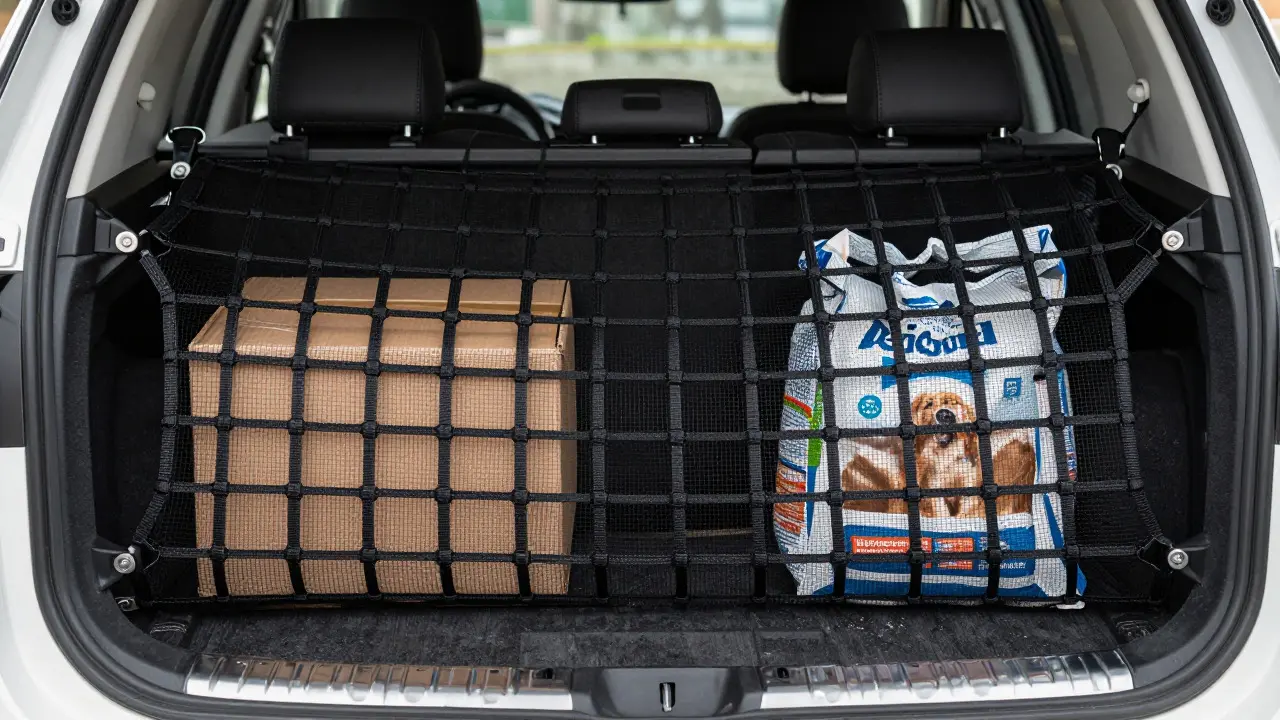
Cargo Nets are elastic mesh barriers installed across the width of the cargo area to prevent items from sliding forward into the passenger cabin. They are the most basic form of containment and are ideal for lighter items like groceries, laundry, or small pets.
Nets come in two main types: fixed and retractable. Fixed nets bolt directly to the side rails or headrest posts. They offer superior strength and don't take up space when not in use, as they remain taut against the sides. Retractable nets roll out from a central hub and extend across the width. These are easier to install but can be less durable if overstretched repeatedly.
When choosing a net, consider the material. Nylon is lightweight and affordable but degrades quickly under UV exposure if left inside a parked car in summer. Polyester is more resistant to stretching and fading. For families, a double-layer net provides extra security for heavier loads like cases of water or toolboxes. Always check the load rating; a standard net should handle at least 50kg (110 lbs) evenly distributed.
Dividers: Creating Zones in Your Trunk
If nets stop items from moving forward, dividers stop them from mixing with each other. Cargo Dividers are rigid or semi-rigid panels that create separate compartments within the cargo area. Think of them as room dividers for your trunk.
Dividers are particularly useful for crossovers where the cargo floor might have a lip or step. They help define a "wet zone" for muddy boots or wet towels, separating them from clean clothing or electronics. Many modern dividers feature adjustable heights and widths, allowing you to customize the layout based on your daily needs.
There are two primary styles:
- Folding Panels: Made of plastic or fabric-covered metal, these fold flat when not in use. They are easy to store but can wobble if not anchored properly.
- Magnetic Strips: Some vehicles have metal strips embedded in the cargo floor. Magnetic dividers snap onto these tracks, offering a sleek, integrated look. However, this limits compatibility to specific car models.
Storage Boxes: The Heavy-Duty Solution
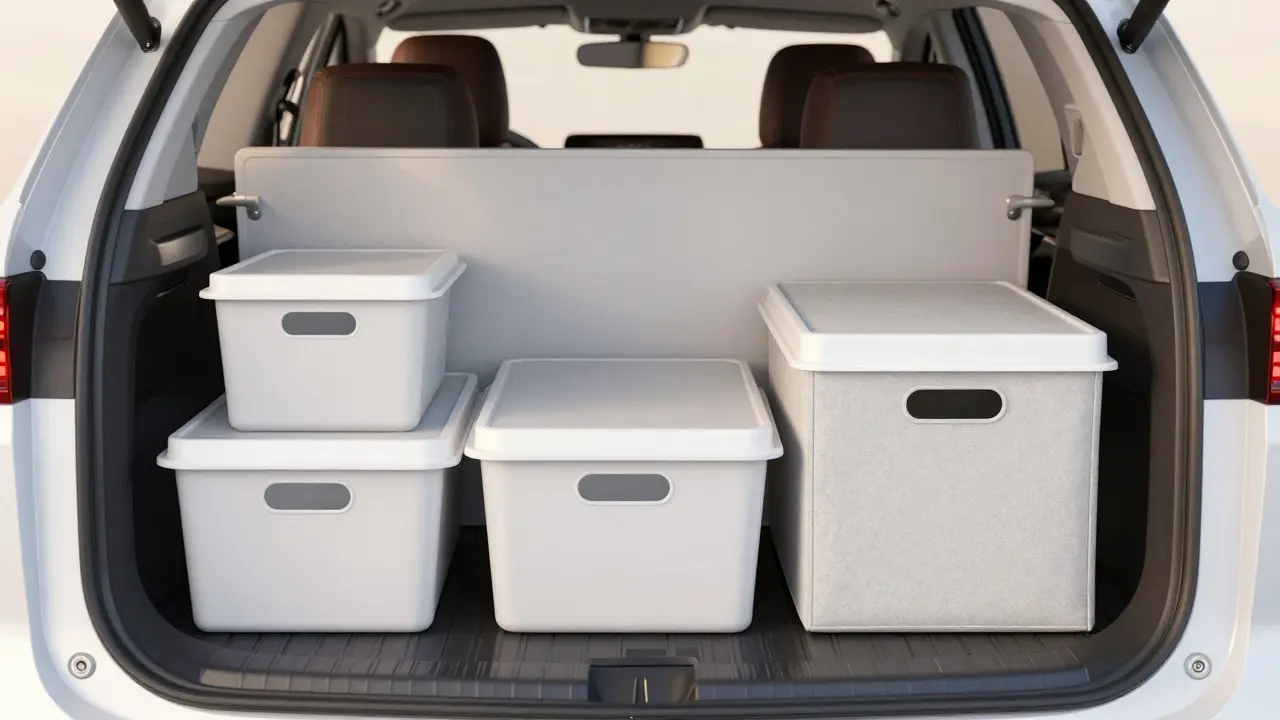
For bulky, irregular, or fragile items, boxes are the gold standard. Cargo Boxes are structured containers made of hard plastic, fabric, or wood that provide rigid protection and defined shape.
Hard-shell boxes, often made of ABS plastic, are perfect for electronics, tools, or sports equipment. They stack securely and resist crushing. Fabric boxes, typically canvas or polyester with a wooden frame, are lighter and better for soft goods like clothes or blankets. They collapse flat for easy storage when empty.
The key advantage of boxes is modularity. You can buy a set of three different sizes that nest together. This allows you to scale your storage capacity. Small boxes hold chargers and cables; medium boxes hold shoes and snacks; large boxes hold coolers or pet carriers. Unlike loose items, boxes have flat bottoms and vertical walls, which means they distribute weight evenly and don't dig into the carpet.
| Feature | Cargo Nets | Dividers | Storage Boxes |
|---|---|---|---|
| Best For | Light, loose items | Separating categories | Bulky, heavy, or fragile items |
| Weight Capacity | Low-Medium (up to 50kg) | Medium (structural support) | High (depends on material) |
| Flexibility | High (adjustable tension) | Medium (fixed positions) | Low (fixed size) |
| Cost Range | £20 - £60 | £30 - £100 | £40 - £150+ |
| Installation Time | 5-10 minutes | 10-15 minutes | None (just place) |
Combining Strategies for Maximum Efficiency
No single solution works for every scenario. The most effective cargo management systems layer these tools. Start with a base layer of a full-floor mat to protect the carpet. Add a cargo net behind the rear seats to catch anything that slips back. Place a divider in the middle of the trunk to separate front-facing items from rear-facing ones. Finally, use boxes for your regular weekly loads-like a dedicated box for work documents and another for gym gear.
This layered approach ensures that even if one item shifts, it hits a barrier before causing chaos. It also speeds up your routine. Instead of digging through a mess, you know exactly where the umbrellas are (in the side pocket), where the first aid kit is (in the top box), and where the dog leash is (in the lower compartment).
Consider the frequency of use. Items you grab daily should be accessible without bending down too far. Items used monthly can go deeper into the trunk or under the floor cover. Vertical space is often wasted in SUVs; using wall-mounted hooks or ceiling rails for light items like shopping bags can free up valuable floor space.
Common Mistakes to Avoid
One frequent error is over-reliance on the factory cargo hooks. These are designed for light loads and can tear out of the plastic trim if yanked heavily. Use reinforced anchors or straps that wrap around the seat frames instead. Another mistake is ignoring the spare tire well. In many SUVs, this area is deep and dark, making it a perfect spot for rarely used items like seasonal decorations or emergency kits, provided you use a lid to keep dust out.
Also, beware of blocking the rear window defroster vents. If your divider or box is too tall, it can obstruct airflow, leading to fogging in cold weather. Measure your cargo height before purchasing large dividers. Finally, don't forget maintenance. Clean your fabric boxes regularly to prevent mold, especially if you carry wet gear. Check your nets for fraying threads every few months, as a snapped net offers zero protection.
Selecting the Right Setup for Your Lifestyle
Your choice depends on your daily reality. If you commute alone with minimal luggage, a simple net and a small organizer bin may suffice. If you run a family logistics operation, invest in a comprehensive system: a heavy-duty net, adjustable dividers, and a modular box set. Outdoor enthusiasts should prioritize waterproofing and durability, opting for hard-shell boxes and quick-dry fabrics.
Remember, the goal is not just organization, but efficiency. Every second saved in the morning rush hour adds up. A well-managed SUV feels larger because you utilize every cubic inch effectively. It also increases resale value; a clean, organized interior signals careful ownership to potential buyers.
Do cargo nets fit all SUV models?
No, they are model-specific. You need to measure the distance between the mounting points on your vehicle's cargo area. Universal nets exist but often lack the tension stability of custom-fit options. Always check the manufacturer's compatibility list before buying.
Are cargo dividers worth it for crossovers?
Yes, especially if you transport mixed items. Crossovers often have smaller cargo areas than full-size SUVs, so separation helps maximize usable space. Look for slim-profile dividers that don't eat up too much depth.
What is the best material for storage boxes?
It depends on usage. Hard plastic is best for heavy or sharp items. Canvas with a wooden frame is best for soft goods and ease of cleaning. For outdoor use, look for waterproof PVC-coated fabrics.
How do I prevent items from sliding on a sloped cargo floor?
Use a non-slip rubber mat as a base layer. Additionally, secure items with elastic straps or bungee cords attached to the vehicle's anchor points. A cargo net behind the load acts as a final barrier.
Can I use cargo management tools with a roof rack?
Yes, but be mindful of weight distribution. Keep heavy items low in the trunk to maintain balance. Ensure your cargo doesn't interfere with the roof rack's access or aerodynamics.