
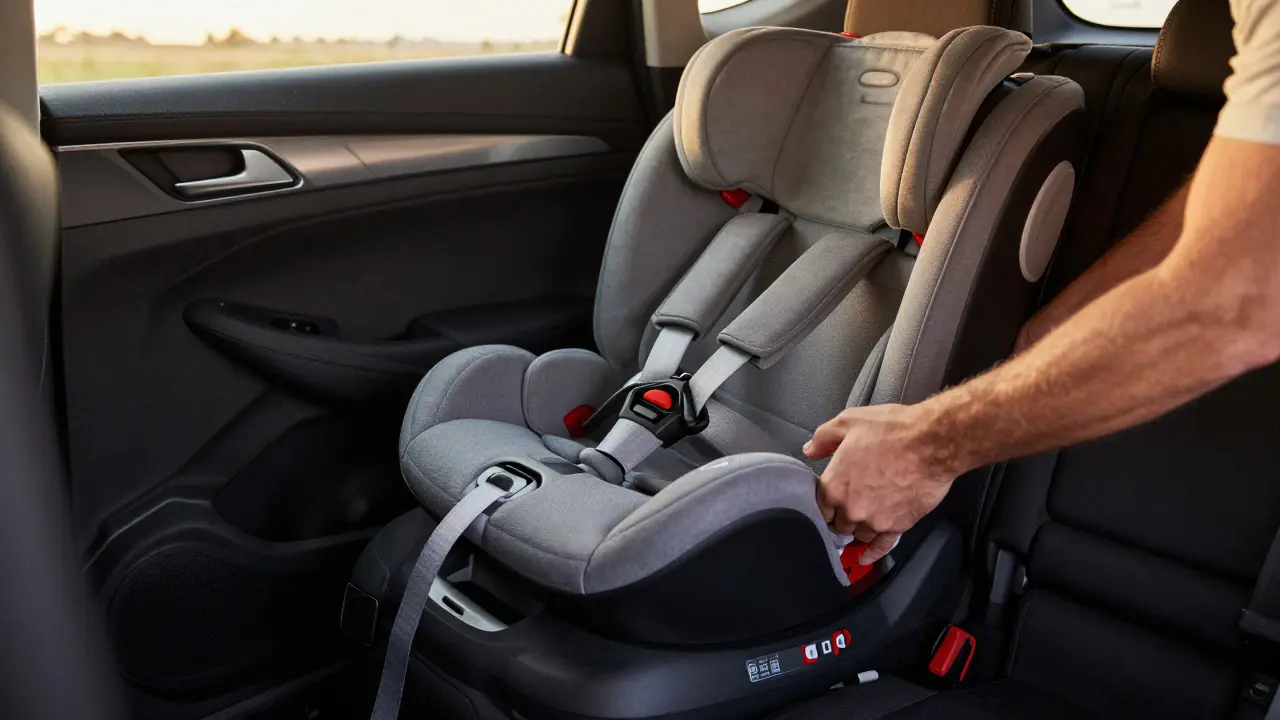
The Reality of Fitting Seats in Big Cars
Buying a new SUV often comes with a hidden anxiety: will the actual child safety seats fit properly in the back? You see the marketing images showing spacious cabins, but the moment you try to install a heavy car seat, reality hits. Many parents struggle with anchor placement or run out of headroom before reaching the age limit for rear-facing travel. This guide strips away the jargon to explain exactly how to evaluate your vehicle's capability.
Understanding the Anchor Points
The most common mistake we see involves hunting for anchors that aren't actually there. Some manufacturers hide the brackets behind removable cushions or trim panels, making them invisible until you strip the interior. When inspecting an SUV, you need to locate the lower anchors first. These are metal loops positioned in the bight-the crease where the seat cushion meets the backrest.
- Check for visible metal bars or fabric labels indicating anchor locations.
- Confirm that the anchors are not obstructed by storage wells or cup holders.
- Verify the distance between anchors; some older cars have spacing wider than modern car seat connectors.
If the vehicle relies solely on belt routing rather than LATCH, the friction fit becomes critical. You cannot rely on a loose belt to hold a five-point harness in place during a crash. The vehicle inertia must transfer directly through the mounting mechanism to the frame, bypassing the slack found in webbing.
The Crucial Role of Top Tethers
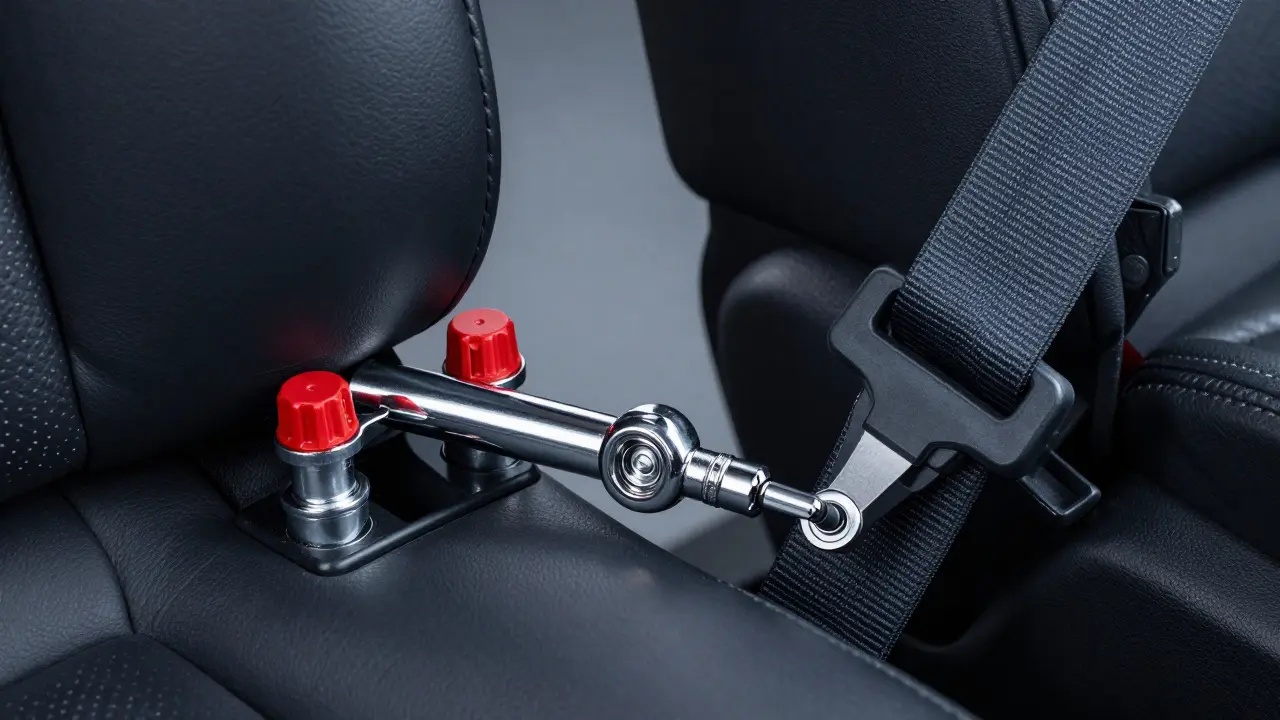
Often overlooked, the top tetherstrap used to anchor the upper part of a child safety seat to the vehicle frame prevents forward rotation during a collision. In front-end impacts, the head of a child can pitch forward violently if the bottom anchors hold firm but the top swivels. Most modern SUVs come equipped with three tether anchors across the rear seat, usually located on the roof lining or the tailgate panel.
You must physically locate these straps before purchasing a seat. Some high-performance SUVs with leather upholstery might bury the hooks under the headliner. Without access to a tether point, you might not be able to use forward-facing options safely. Always measure the clearance between the anchor point and the seat attachment to ensure the strap has enough slack to tighten fully without tensioning the vehicle bodywork.
| Feature | LATCH / ISOFIX | Seat Belt Method |
|---|---|---|
| Error Rate | Low (Hard points reduce user error) | Higher (Webbing can twist or slip) |
| Vibration Dampening | High (Rigid connection) | Medium (Depends on tightness) |
| Vehicle Compatibility | Mandatory in post-2002 US models | Universal across all years |
| Weight Limit | Often restricted at approx 33kg combined | No manufacturer imposed limit |
Maximizing Space and Headroom
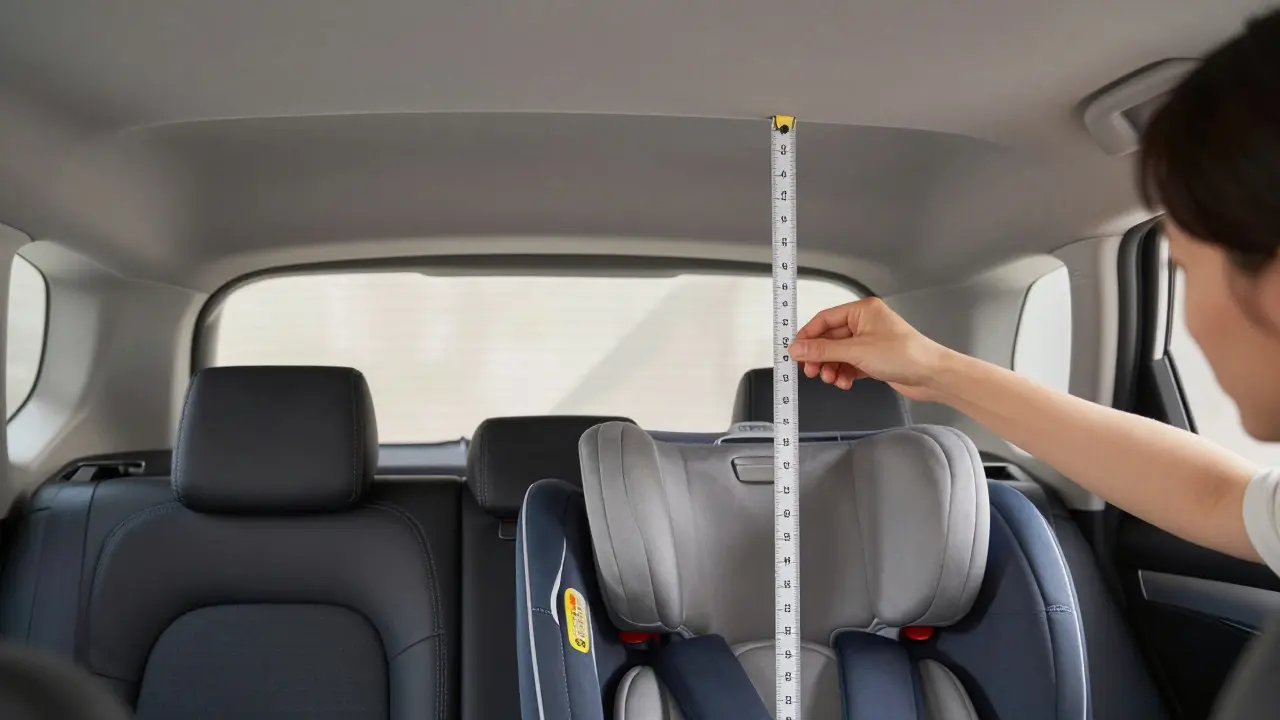
SUVs offer vertical height, which sounds beneficial, but base car seats can be bulky. A large bucket-style car seat in an SUV reduces legroom for siblings sitting nearby. More importantly, rear-facing installation eats up headroom. You need to measure the available space from the floor to the roof rails specifically behind the driver's seat, where the floor hump might interfere with base recline angles.
When extending the usage period for rear-facing, verify that the child's ears do not touch the roof when the headrest is down. If you find yourself constantly adjusting the headrest position to accommodate the seat, you may be cutting your safety window short. A dedicated ruler or tape measure helps here more than estimation.
- Place the base in the reclined position intended for use.
- Measure the gap between the highest point of the car seat shell and the ceiling material.
- Subtract at least ten centimeters for hair volume and pillow adjustments.
- Ensure the tether doesn't pull the top of the seat downward, reducing this gap further.
Verifying Compatibility Before Purchase
Do not trust online reviews blindly regarding "fits well." Every model year changes slightly. A 2025 Grand Highlander might fit perfectly, while a 2024 version had different bracket placements. The safest approach is a manual check. Download the PDF owner's manual from the manufacturer's site or bring a physical copy of the car seat's specifications to a dealership.
Look for the seating capacity chart in your vehicle documentation. Manufacturers list maximum weights per anchor point. Exceeding this number means you must switch to the seat belt method or move to a middle row configuration. Some mid-size SUVs have weak roof structures that struggle with heavy top-tether loads, so check the structural integrity notes in your service guide.
Common Pitfalls in Modern Vehicles
New technology sometimes interferes with safety gear. Heating elements embedded in the seat cushions can damage plastic car seats over time or reduce friction. Similarly, side airbags located within the torso zone of the front passenger seat can deploy dangerously during a rear-facing installation. Never place a rear-facing seat next to an active side airbag unless the manufacturer explicitly disables it or confirms safe positioning.
Wireless charging pads and USB hubs located in the seat bight area can block the LATCH connectors from locking fully. If the click sound is faint, the connection isn't secure. Run your finger along the metal path to ensure the connector hasn't slid off the loop. Finally, consider the resale value of your time. Spending hours wrestling with an incompatible base every trip is exhausting. Choosing a vehicle with intuitive access to anchor points improves long-term usability.
Can I use LATCH and the seat belt at the same time?
No, never combine LATCH anchors with the vehicle seat belt. Doing so alters the load paths during a crash and may invalidate the warranty. Always choose one method strictly following the manufacturer's guidelines.
What if my LATCH anchors are too far apart?
If the anchors exceed the width of your car seat connectors, you cannot use LATCH safely. Switch to using the vehicle's three-point seat belt routed through the designated guides on the seat base.
How do I know if the seat is installed tightly enough?
Shake the base side-to-side at the belt path. There should be less than one inch of movement. You should hear a distinct mechanical click when the system locks into place.
Are third-party covers safe for LATCH anchors?
Most aftermarket cushion covers obscure the anchors and prevent a secure connection. Avoid placing any padding between the metal bar and the plastic connector on the car seat.
Does the top tether need to be adjusted for every ride?
No, once tightened, the tether remains locked. Check it monthly to ensure it hasn't loosened due to vibration or temperature expansion.
Comments
Jeroen Post
anchors hidden by design manufacturers dont want us finding them
April 1, 2026 at 03:44
Nathaniel Petrovick
yeah that happens alot people complain about the plastic covers hiding latches i found mine behind the trim panel though so it works out fine once you dig around
April 1, 2026 at 23:33
Honey Jonson
omg i was so worried about buying this suv because my kid is huge but reading this helps soo much thanks for sharing this info guys please be safe out there driving
April 2, 2026 at 01:32
Sara Escanciano
people need to take safety seriously instead of rushing through installation every single parent must read the manual before getting in the car or they are risking lives
April 3, 2026 at 05:25
Elmer Burgos
everyone relax a bit we all make mistakes learning the system takes time just take your time with it no need to stress over perfection
April 3, 2026 at 15:32
Jason Townsend
relaxing is dangerous when corporations lie about fitment specs they change anchors without telling anyone check the frame manually dont trust the salesmen ever
April 4, 2026 at 08:04
Antwan Holder
The car is not merely metal.
It is a vessel for our most fragile treasures.
We place our hope into these plastic shells that claim protection against physics itself.
I considered the silence of the tether click deeply.
That sound represents a promise kept between steel and child.
Yet we ignore the shadows where anchors hide beneath the leather.
Manufacturers build beauty while sacrificing function for aesthetics alone.
The roof line matters more than airbags in some designs.
Convenience is not worth the risk of rotation during impact.
We drive blind into uncertainty trusting labels printed on cardboard inserts.
My own vehicle felt like a coffin until I measured the headroom with my hands.
Do not let marketing images deceive the vision of safety.
A loose inch means nothing in a crash scenario.
The vibration dampening is real science not buzzwords.
You must feel the resistance in the lower rails yourself.
Safety is a verb not a noun on the door sticker.
Wake up to the reality of the bight where cushions meet backs.
This guide speaks truth but actions matter more than words.
Verify before you buy or regret later.
April 5, 2026 at 23:01
Angelina Jefary
your grammar in the last comment is terrible and undermines the serious point you are making about structural integrity people need to communicate clearly regarding safety standards if you cannot type properly you cannot install a seat correctly stop making excuses for spelling errors and focus on the anchors being secure because liability is real
April 7, 2026 at 06:58
Jennifer Kaiser
I hear the concern about headroom measurements and empathize with the frustration parents feel when spaces are tight but we also must acknowledge the engineering constraints designers face balancing weight distribution with cabin volume so lets work together to find solutions rather than blaming solely the auto industry since families need reliable transport options
April 7, 2026 at 14:24