
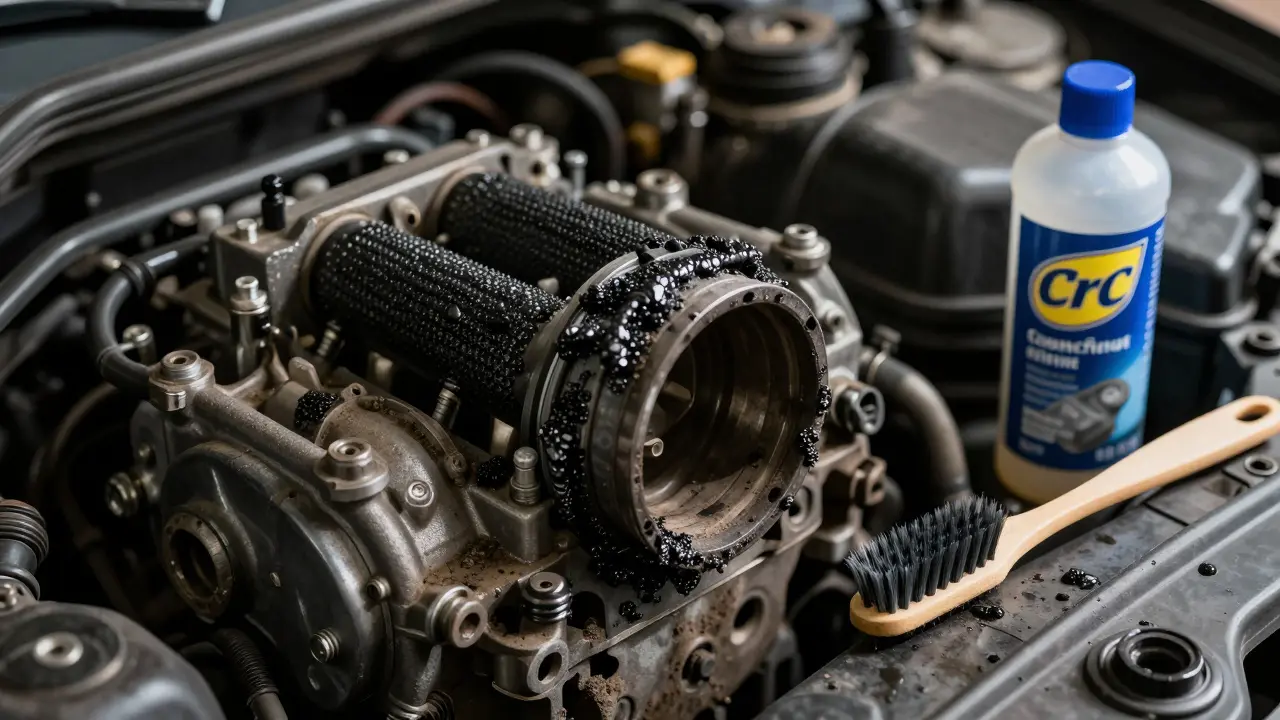
When your car idles rough, stalls at stoplights, or feels sluggish when you press the gas pedal, the culprit isn’t always a bad spark plug or a failing fuel pump. More often than not, it’s a dirty throttle body. Cleaning it is one of the simplest and most effective fixes you can do yourself - and it makes a noticeable difference in how your engine runs.
Why a Dirty Throttle Body Ruins Idle Quality
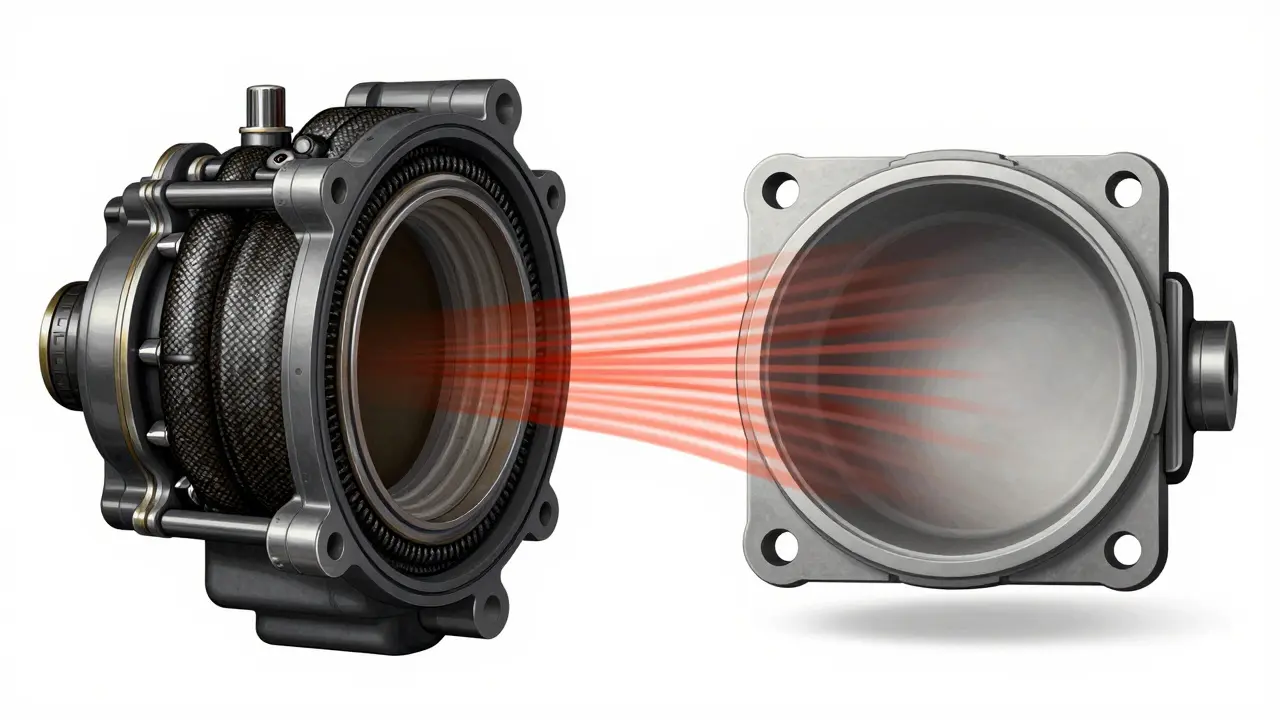
The throttle body controls how much air enters your engine. Inside, a small plate (the throttle plate) opens and closes to let air in based on how hard you press the gas pedal. Over time, carbon deposits and oily residue build up on this plate and the walls of the bore. These deposits stick like glue, especially in cars with direct injection engines, which don’t have fuel washing over the back of the intake valves like port-injected engines do.When that buildup gets thick enough, the throttle plate doesn’t close all the way. Even a tiny gap - less than the thickness of a sheet of paper - lets in extra air. The engine’s computer doesn’t know it’s there, so it keeps injecting the same amount of fuel. That throws off the air-fuel ratio, and the engine starts to run unevenly. You feel it as a choppy idle, a shaking steering wheel, or the engine almost stalling when you’re stopped.
Modern cars have idle air control systems that try to compensate, but they have limits. Once the buildup crosses a certain threshold, the system can’t keep up. That’s when you start noticing problems. It’s not a dramatic failure. It’s subtle. But it’s enough to make your car feel old, tired, and unresponsive.
How Throttle Body Cleaning Restores Throttle Response
A clean throttle body doesn’t just fix idle issues - it brings back the snap you used to feel when you pressed the gas. Think of it like cleaning a clogged nozzle on a spray bottle. When it’s dirty, the stream is weak and uneven. When it’s clean, the spray shoots out fast and true.Carbon buildup creates drag on the throttle plate. It doesn’t move smoothly. Even when your foot presses the pedal just a little, the plate has to fight through gunk before it opens. That delay is what makes acceleration feel lazy. After cleaning, the plate moves freely. The engine responds instantly. You don’t have to press harder or wait for the car to catch up. It’s like switching from a worn-out cable to a brand-new one.
Drivers often report that after cleaning their throttle body, their car feels lighter, more connected to the road. That’s not imagination. It’s physics. The engine gets the air it needs exactly when it needs it. No lag. No hesitation. Just smooth, immediate power delivery.
When to Clean Your Throttle Body
There’s no fixed mileage for this job - it depends on your driving habits and engine type. But here’s what to look for:- Idle speed fluctuates between 600 and 900 RPM when cold
- Engine stalls when you come to a stop
- Check Engine light comes on with codes like P0505 (Idle Control System) or P0122 (Throttle Position Sensor)
- Gas mileage drops suddenly without other changes
- Acceleration feels sluggish, especially from a stop
Most cars need their throttle body cleaned between 30,000 and 60,000 miles. If you drive mostly short trips in stop-and-go traffic, clean it sooner - maybe every 25,000 miles. Long highway drives help keep it cleaner because the engine runs hotter and burns off some deposits.
Direct injection engines - common in cars made after 2010 - are especially prone to buildup. Ford EcoBoost, GM Ecotec, Toyota Dynamic Force, and Volkswagen TSI engines all suffer from this. If you own one of these, treat throttle body cleaning like an oil change: schedule it before problems start.
What You’ll Need
You don’t need fancy tools. Just these basics:- Throttle body cleaner (non-chlorinated, safe for sensors - brands like CRC or MAF Cleaner work)
- Soft-bristle brush (an old toothbrush is fine)
- Lint-free cloths (microfiber is best)
- Socket wrench or screwdriver (to remove the air intake hose)
- Gloves and safety glasses
Never use brake cleaner, carb cleaner, or acetone. They can damage rubber hoses, plastic parts, or the throttle position sensor. Only use cleaners labeled safe for throttle bodies or MAF sensors.
Step-by-Step Cleaning Process
- Turn off the engine and disconnect the negative battery terminal. This resets the ECU and prevents accidental throttle activation.
- Remove the air intake hose from the throttle body. It’s usually held by a clamp or quick-release clips.
- Visually inspect the inside. If you see thick black gunk coating the walls and the edges of the throttle plate, it’s time to clean.
- Spray cleaner directly onto the throttle plate and bore. Don’t spray the sensor on the side - that’s the throttle position sensor. Keep the cleaner away from it.
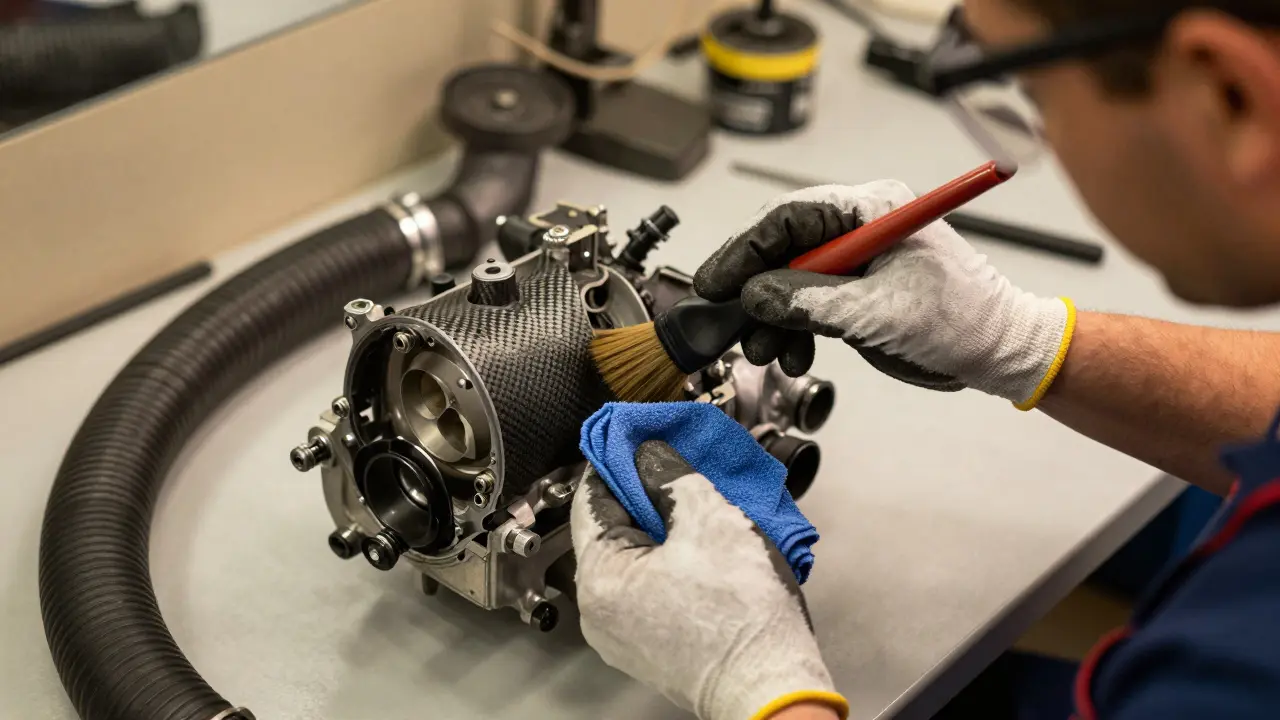
- Use the brush to gently scrub away the buildup. Focus on the edges of the plate where it meets the bore - that’s where most deposits cling.
- Wipe everything clean with a lint-free cloth. Don’t leave any fibers behind.
- Let it dry for 10 minutes. Don’t rush this. Moisture can cause issues.
- Reattach the air intake hose and reconnect the battery.
After you restart the engine, it may idle roughly for 30 seconds to a minute. That’s normal. The ECU is relearning the correct idle position. Let it run for a few minutes. Then take it for a short drive - accelerate gently at first. Within a few miles, the idle should smooth out, and throttle response will feel crisper.
What Happens If You Don’t Clean It
Ignoring a dirty throttle body doesn’t immediately kill your engine. But it slowly degrades performance. Over time, the ECU keeps trying to compensate by adjusting fuel trim. That can lead to:- Increased fuel consumption - up to 10% more in severe cases
- Higher emissions - failing smog tests due to lean or rich conditions
- Strained idle control valve - it wears out faster trying to make up for air leaks
- Throttle position sensor failure - constant erratic signals can fry the sensor
Eventually, you might get a Check Engine light, or worse, a limp-home mode where the car limits power to protect itself. Cleaning it early avoids all that.
Common Mistakes to Avoid
- Using the wrong cleaner - chlorinated or carb cleaners destroy sensors
- Scraping with metal tools - scratches on the bore create new air leaks
- Forgetting to disconnect the battery - the ECU doesn’t reset, and idle problems linger
- Cleaning only the plate and ignoring the bore - deposits on the walls still cause airflow issues
- Reassembling while parts are still wet - moisture causes erratic sensor readings
One of the biggest mistakes is thinking a can of fuel injector cleaner will fix it. Those additives go into the fuel system. They don’t reach the throttle body. You need direct, physical cleaning.
Is It Worth Doing Yourself?
Yes. This job takes under an hour and costs less than $15 in cleaner. At a shop, you’ll pay $80 to $150 for the same thing. Most people are surprised at how easy it is. You don’t need to be a mechanic. Just follow the steps, be gentle, and don’t rush.And the payoff? A smoother idle, quicker throttle response, better fuel economy, and a car that feels like it did when it was new. That’s worth the 45 minutes.
How often should I clean my throttle body?
Most cars need a throttle body cleaning every 30,000 to 60,000 miles. If you drive mostly short trips or have a direct injection engine, clean it every 25,000 miles. Look for signs like rough idle or sluggish acceleration - those mean it’s overdue.
Can I use carb cleaner on my throttle body?
No. Carb cleaner contains chlorinated solvents that can damage rubber seals, plastic components, and the throttle position sensor. Always use a cleaner labeled safe for throttle bodies or MAF sensors. CRC Throttle Body Cleaner or similar products are designed for this job.
Will cleaning the throttle body fix a Check Engine light?
It can, if the light is caused by a dirty throttle body triggering codes like P0505 or P0122. After cleaning, clear the codes with an OBD2 scanner and drive for a few days. If the light stays off, the problem was the buildup. If it comes back, there’s another issue - like a failing sensor or vacuum leak.
Do I need to reset the ECU after cleaning?
Disconnecting the battery for 10 minutes resets the ECU and lets it relearn the correct idle position. Some cars will relearn automatically after driving, but manually resetting ensures a clean start. Don’t skip this step - it’s why many people think cleaning didn’t work when it actually did.
Why does my car idle rough after cleaning the throttle body?
That’s normal. The ECU has to relearn the idle air volume without the carbon buildup. Let the engine run for 5-10 minutes with no accessories on. Then take a short drive. Within 10-20 miles, the idle should smooth out. If it doesn’t, check for air leaks or leftover cleaner residue.
Throttle body cleaning isn’t glamorous. But it’s one of those quiet fixes that makes a huge difference. If your car feels off at idle or sluggish off the line, don’t assume it’s time for a major repair. Check the throttle body first. It might be the simplest solution you’ve overlooked.
Comments
James Winter
This is why Canadians drive like robots-our cars are too clean. Just let it gunk up a little, it builds character.
January 1, 2026 at 00:23
Aimee Quenneville
sooooo... you're telling me i don't need to pay $120 at the dealership to... wipe a plate?? with a toothbrush?? my bank account is crying but my engine is cheering 🙌
January 2, 2026 at 08:29
Cynthia Lamont
Let me just say this: if your throttle body is dirty enough to cause problems, you've been neglecting your car like a bad ex. This isn't maintenance, it's damage control. And don't even get me started on people using carb cleaner-do you also clean your eyeballs with acetone? No? Then why do it to your throttle body? You're not a mechanic, you're a liability.
And yes, I've seen people try to clean it with Q-tips. Q-tips. In the throttle bore. I'm not joking. The ECU doesn't know what hit it. The car started making sounds like a dying kazoo. I had to unplug the battery while screaming into the void.
Also, if you think 'a little gunk' is fine, you're the same person who thinks 'a little rust' on your brake line is 'just cosmetic'. Wake up. Your car isn't a plant. It doesn't 'grow' carbon. It accumulates it because you're lazy.
And don't even mention fuel injector cleaner. That stuff goes in the gas tank. It doesn't magically teleport to the throttle body. That's like thinking pouring bleach in your coffee will clean your sink. It's not magic. It's physics. And physics doesn't care about your hopes.
And yes, disconnecting the battery is non-negotiable. If you skip that, you're not saving time-you're just buying a new idle control valve next month. I've seen it. Six times. All from the same person who said 'I didn't think it mattered'.
Also, if your car idles rough after cleaning? That's the ECU learning. Not a failure. Not a mistake. A process. But you? You'll blame the cleaner. Or the brush. Or the moon. It's always something else.
And no, you don't need a 'special tool'. Your toothbrush is fine. Your microfiber rag is fine. Your gloves are fine. You don't need a $200 air compressor and a torque wrench for a 15-minute job.
And if you're still reading this, you're probably the person who just cleaned their throttle body and now thinks they're a mechanic. You're not. You're just someone who didn't break their car today. That's it.
And yes, I've done this 17 times. On 11 different cars. All of them ran better. All of them lived longer. All of them didn't cost me $1000 in unnecessary repairs. You can do this. Stop listening to the shop guys. They want you to come back.
And if you're still not convinced? Fine. Drive your car like a garbage can on wheels. But don't come crying to me when the check engine light turns into a check-your-bank-account light.
January 3, 2026 at 21:07
Kirk Doherty
cleaned mine at 45k. idle smoothed out. no more stalling. took 20 mins. worth it.
January 4, 2026 at 02:21
Dmitriy Fedoseff
There is a quiet dignity in caring for a machine that carries you through life. We live in an age of disposability, where everything is replaced before it’s understood. But a throttle body-this small, silent gatekeeper of air-is not disposable. It is a covenant between engineer and driver. To clean it is to honor that covenant. To ignore it is to betray the trust of the machine that never asked for anything but proper care.
And yet, we treat it like a nuisance. We slap on fuel injector cleaner as if it were a prayer. We wait until the engine shudders like a dying animal. We pay strangers to do what we could do ourselves with a toothbrush and $12 of cleaner.
This is not just about air-fuel ratios or idle control valves. It is about humility. About recognizing that mastery is not in owning the most expensive tools, but in knowing when to use the simplest one.
And perhaps, in this act of cleaning, we also clean ourselves. We slow down. We get our hands dirty-not from neglect, but from intention. We become, for a moment, not consumers, but caretakers.
So yes. Clean your throttle body. Not because the manual says so. But because you owe it to the thing that gets you home.
January 5, 2026 at 07:32
Meghan O'Connor
Actually, the P0505 code is more often caused by a vacuum leak, not throttle body gunk. And if you're cleaning it every 25k miles, you're either driving a 2010 Civic with a bad PCV or you're overreacting. Also, 'non-chlorinated' cleaners are still toxic-why not just use isopropyl alcohol? It's cheaper and doesn't leave residue. And you didn't mention cleaning the IAC valve, which is usually the real culprit. This article is dangerously incomplete.
January 7, 2026 at 02:25
Morgan ODonnell
My dad taught me this trick when I was 16. Said if you treat your car like a pet, it’ll never leave you stranded. Cleaned mine at 52k. Idle’s smoother than my morning coffee. No drama. Just good vibes.
January 8, 2026 at 02:00
Liam Hesmondhalgh
Bro just use carb cleaner its fine. I did it on my 2018 Camry and it worked fine. Stop being so scared of your car. Also why are you so obsessed with the battery? I just turned it off. No big deal. And yeah I used a screwdriver to scrape the gunk. It’s fine. No scratches. Trust me I’m a mechanic. Probably.
January 9, 2026 at 15:31
Patrick Tiernan
yo i cleaned mine with windex and a paper towel and now my car runs like a sports car lmao who needs advice
January 10, 2026 at 16:08
Patrick Bass
Just a quick note: if you're using CRC Throttle Body Cleaner, make sure it's the one labeled 'for MAF sensors'. Some versions are not safe. Also, let it dry for at least 15 minutes. I once rushed it and the ECU went haywire for three days. Lesson learned.
January 10, 2026 at 20:13
Tyler Springall
Let’s be real: this is a glorified band-aid for poorly engineered direct injection systems. Automakers knew carbon buildup was inevitable, yet they designed engines to rely on fuel washing the valves. Now they want you to pay $15 for cleaner and spend an hour scrubbing because they cut corners to save $2 per engine. This isn’t maintenance-it’s corporate negligence dressed up as a DIY fix. And yet, we’re praised for being ‘resourceful’? Pathetic.
Meanwhile, port-injected engines from the 90s ran clean for 200k miles without a single throttle body cleaning. We’ve regressed. And we’re being sold a lie that this is normal.
So yes, clean it. But don’t celebrate it. Celebrate the fact that you didn’t buy a Toyota.
January 11, 2026 at 23:06
Colby Havard
It is imperative to note that the mechanical integrity of the throttle body is contingent upon the precise calibration of the electronic control unit. Failure to adhere to the manufacturer-specified cleaning protocol, including the mandatory disconnection of the negative battery terminal for a minimum of ten minutes, constitutes a non-compliant procedural deviation that may result in irreversible ECU memory corruption. Furthermore, the use of non-OEM-approved cleaning agents introduces volatile organic compounds that may compromise the sensorial fidelity of the throttle position sensor, thereby inducing anomalous feedback loops within the engine management system. One must, therefore, exercise the utmost diligence in this endeavor, as the consequences of negligence extend far beyond idle quality and into the realm of vehicular sovereignty.
January 12, 2026 at 15:07
Amy P
Okay but what if your car is a 2020 Hyundai and you live in a place where it snows 6 months a year? Does the salt air make the gunk worse? I feel like my throttle body is a science experiment at this point. Also, I tried cleaning mine and now my car sounds like a dragon with a cold. Is that normal? Or did I break it??
January 13, 2026 at 03:30
Ashley Kuehnel
Hi! Just wanted to say I did this last week on my 2017 Civic and it was SO easy! Used CRC cleaner, old toothbrush, and a microfiber towel. I didn’t disconnect the battery first and my car idled weird for like 10 minutes but then it smoothed out. Now it feels like a new car! Also, if you’re scared, just watch a YouTube video first-it’s not scary, I promise. You got this!! 💪
January 14, 2026 at 15:02
adam smith
It is recommended that the throttle body be cleaned at intervals not exceeding sixty thousand miles, in accordance with standard automotive maintenance protocols. Utilization of non-approved cleaning agents is discouraged due to potential deleterious effects on sensor components. The procedure described herein is both efficacious and economical, and may be undertaken by the vehicle owner with minimal risk provided that all safety precautions are observed.
January 14, 2026 at 20:53