
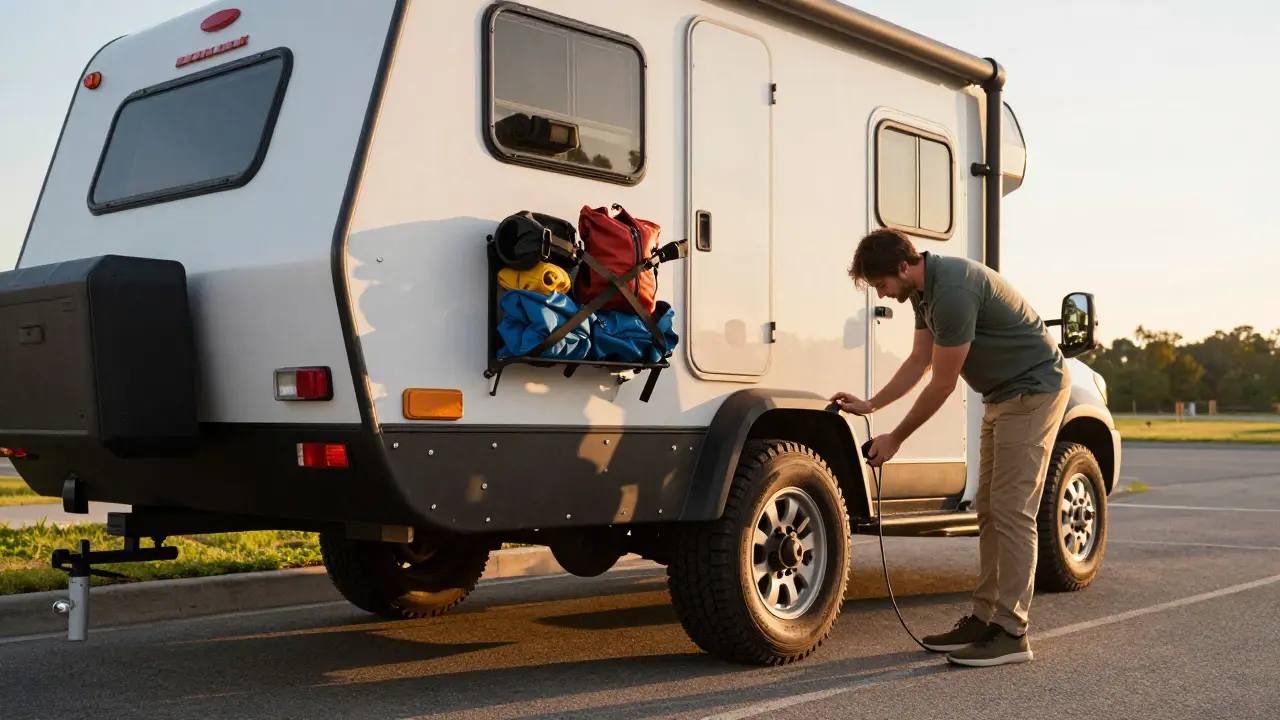
When you hook up a trailer to your vehicle for a road trip, you’re not just adding cargo-you’re changing how your whole vehicle behaves. Suddenly, stopping takes longer. Turning feels different. Wind doesn’t just push against your car-it pushes against a whole new surface. If you’ve ever felt like your trailer was fighting you on the highway, you’re not alone. Most people don’t realize how much preparation towing actually requires. And skipping even one step can turn a fun trip into a dangerous situation.
Know Your Vehicle’s Towing Capacity
Not every car can tow. Even if your SUV looks tough, the manufacturer sets a hard limit. This number isn’t a suggestion-it’s a safety boundary. Check your owner’s manual or look for a sticker inside the driver’s door jamb. It’ll say something like Maximum Towing Capacity: 5,000 lbs. That includes the trailer itself, plus everything inside it: coolers, bikes, camping gear, even the water tank.
Here’s what most people get wrong: they focus on the trailer’s dry weight and forget about the added weight of fuel, food, and gear. A 3,000-pound trailer can easily hit 4,200 pounds when fully loaded. If your vehicle’s max is 4,500, you’re cutting it too close. Always leave at least 10% room under your limit. That buffer matters when you hit a steep hill or face strong crosswinds.
Match the Right Hitch to Your Vehicle
There are four main types of hitches, and using the wrong one is a recipe for trouble. If you’re towing under 2,000 pounds, a Class I or II receiver hitch might work. But for anything heavier, you need a Class III or IV. Class V is for heavy-duty trailers like horse trailers or large travel trailers.
Don’t just buy a hitch that fits your vehicle’s receiver. Make sure it’s rated for your trailer’s weight. A hitch labeled for 5,000 lbs won’t save you if your trailer weighs 6,000 lbs. Also, check the ball size. Most trailers use a 2-inch ball, but larger ones need a 2-5/16-inch ball. Using the wrong size can cause the coupler to slip off while driving-something that’s happened to too many people on the highway.
Check the Trailer Brakes
Trailers under 3,000 pounds often don’t have brakes. But once you hit 3,000 pounds, brakes become critical. Electric brakes are standard on most trailers today. They work when your vehicle’s brake pedal is pressed-your trailer slows down at the same time. But if your trailer has brakes, they need to be tested before every trip.
Here’s how: drive slowly in an empty parking lot, then apply the brakes hard. You should feel the trailer tug slightly against your vehicle. If you don’t, or if the trailer skids, the brake controller might be misadjusted. Most modern vehicles have a built-in brake controller setting. Go into your infotainment menu and make sure it’s turned on and calibrated. If you’re using an older vehicle without one, you’ll need a portable brake controller installed.
Load the Trailer Right
How you load your trailer matters more than how much you load. The goal is balance. Put 60% of the weight over the front half of the trailer, right in front of the axle. That keeps the tongue weight steady. Too little tongue weight (under 10% of total trailer weight) and your trailer will sway. Too much, and you’ll crush your vehicle’s rear suspension.
Use bungee cords or straps to secure everything. Loose items can shift during a turn or sudden stop. A cooler sliding forward can break the coupler. A bike rack that isn’t tied down can fly off. And never store heavy items like propane tanks or tools in the trailer’s rear. If you’re hauling a boat, make sure the winch is locked and the trailer’s safety chains are properly attached.
Inspect Before You Leave
Before you pull out of the driveway, do a quick walk-around. Check tire pressure on both your vehicle and trailer. Trailer tires often go underinflated because they’re not used often. Underinflated tires overheat and blow out-especially on long highway drives. Most trailer tires need 50-65 psi. Don’t guess-use a reliable gauge.
Look at the lights. Turn on your headlights and brake lights. Have someone stand behind the trailer to confirm all signals work. A broken turn signal or brake light isn’t just illegal-it’s deadly. Test the emergency brake release. Pull the trailer’s emergency brake cable (the one that snaps if the coupler disconnects) to make sure it engages the trailer’s brakes. This isn’t a test you want to fail on the highway.
Drive Differently With a Trailer
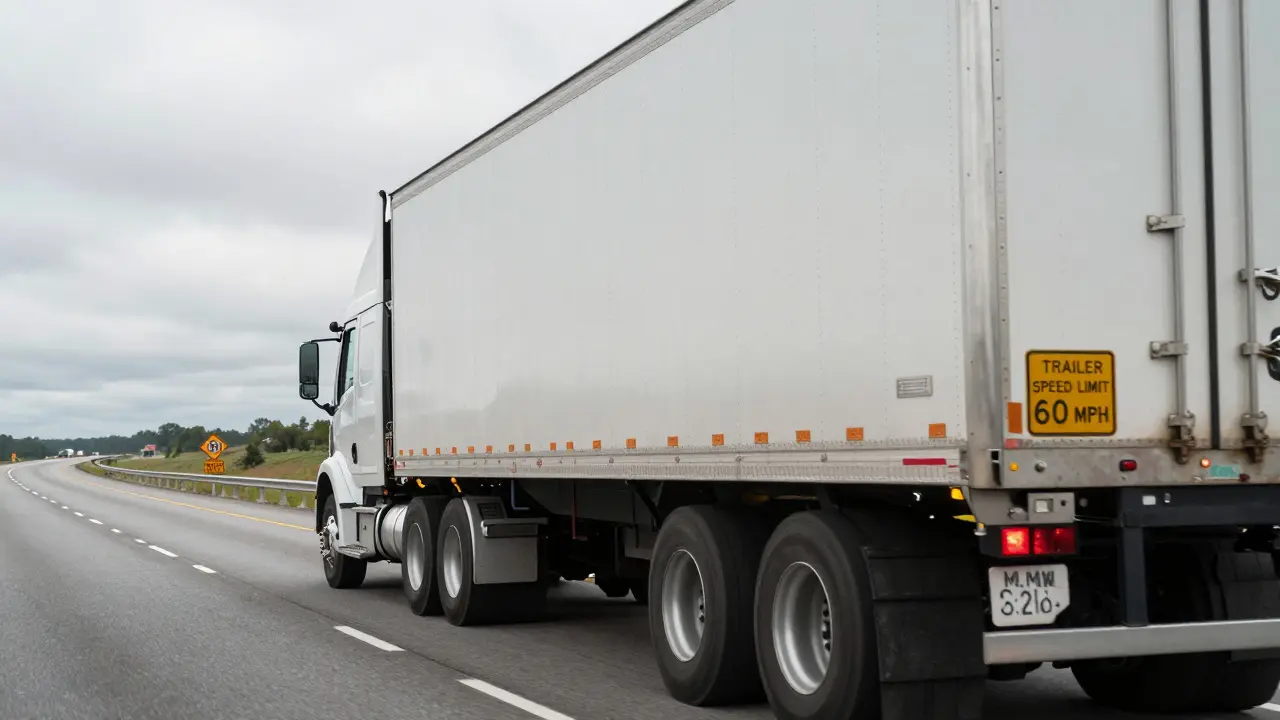
Once you’re on the road, slow down. Even if the speed limit is 70 mph, 60 mph is safer when towing. Wind gusts from big trucks can push your trailer sideways. The wider your trailer, the more it catches wind. Give yourself extra space. If you need to stop, start braking earlier. You’ll need up to 40% more distance than usual.
When turning, take wider arcs. A trailer doesn’t follow your car’s path-it swings out before turning in. Make a U-turn? You’ll need room for two lanes. Always check your mirrors before changing lanes. Blind spots are bigger. And never tailgate. If the vehicle ahead brakes suddenly, your trailer might keep moving forward, causing a jackknife.
What to Do If Your Trailer Starts Swinging
If you feel the trailer swaying side to side, don’t panic. Don’t hit the brakes hard. Don’t steer sharply. Ease off the gas. Keep the steering wheel straight. Let the vehicle slow down naturally. Once you’re under 40 mph, pull over and check your load. Swaying usually means the tongue weight is too low or the cargo is unevenly distributed.
Install a sway control bar if you tow often. These devices connect between the trailer and your hitch and reduce side-to-side motion. They’re cheap, easy to install, and worth every dollar if you’re towing more than 3,000 pounds.
Breakdowns and Emergencies
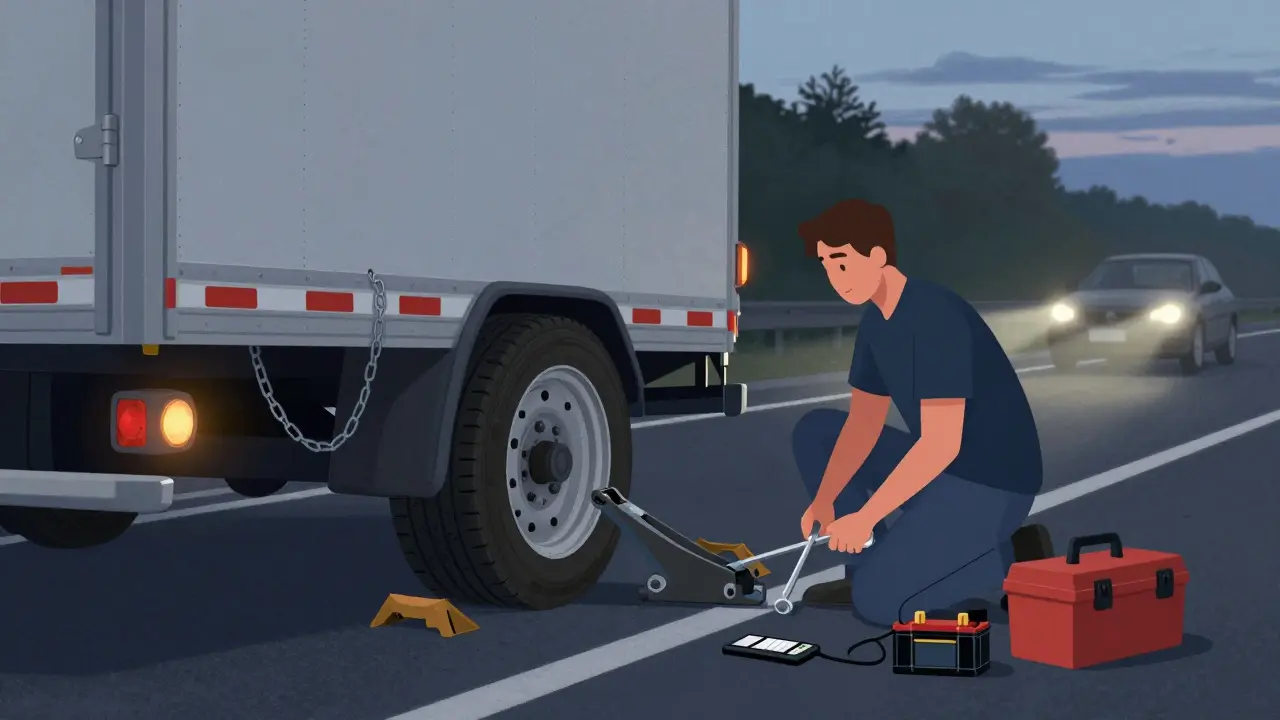
Always carry a spare tire for the trailer. Trailer tires wear out faster than car tires because they’re not designed for long highway miles. Also pack a lug wrench, jack, and wheel chocks. If you have a flat on the trailer, you can’t just pull over on the shoulder. You need to secure the trailer first. Place chocks in front and behind the trailer wheels before jacking it up.
Keep a portable battery pack and jumper cables in your vehicle. Trailer lights can drain your car’s battery if there’s a wiring fault. And always have a phone charger. If you get stuck on the side of the road, you’ll need to call for help. Don’t rely on roadside assistance without knowing your coverage limits-some plans don’t cover trailers.
Final Checklist Before Every Trip
- Verify towing capacity of your vehicle
- Match hitch and ball size to trailer rating
- Test trailer brakes and adjust controller
- Load trailer with 60% weight in front of axle
- Secure all cargo with straps or tie-downs
- Check trailer tire pressure (50-65 psi)
- Test all lights: brake, turn, running
- Connect safety chains in a crossed pattern
- Ensure emergency brake works
- Carry spare tire, jack, chocks, and tools
Towing a trailer isn’t complicated-but it does demand attention. Treat it like flying a plane: every step matters. Skip one, and things can go wrong fast. Do them all, and your road trip will be smooth, safe, and unforgettable.
Can any car tow a trailer?
No. Every vehicle has a maximum towing capacity set by the manufacturer. Compact cars, sedans, and some small SUVs can’t safely tow even small trailers. Always check your owner’s manual or the sticker inside the driver’s door. If your car’s rating is below 2,000 lbs, it’s not meant for trailer towing.
How do I know if my trailer has brakes?
Look for an electric brake controller inside your vehicle’s dashboard or infotainment system. If your trailer has brakes, it will have a 7-pin connector (instead of a 4-pin) that plugs into your vehicle. Also, trailers over 3,000 pounds are legally required to have brakes in most U.S. states. If your trailer is that heavy and doesn’t have brakes, it’s not legal to tow on public roads.
Why does my trailer sway when I drive?
Trailer sway usually happens when the tongue weight is too low-less than 10% of the trailer’s total weight. It can also happen if cargo is loaded too far back, or if you’re driving too fast in windy conditions. Always load heavier items over the axle, and use a sway control bar if you tow frequently. Slowing down also helps reduce sway.
Do I need a special license to tow a trailer?
In most U.S. states, a regular driver’s license is enough for trailers under 10,000 pounds. But some states require a special endorsement if the combined weight of your vehicle and trailer exceeds 26,000 pounds. Always check your state’s DMV website. Even if it’s not legally required, practicing in an empty lot before hitting the highway is a smart idea.
How often should I check trailer tires?
Check trailer tire pressure before every trip. Trailer tires often sit unused for months, which causes them to lose air and develop cracks. Even if they look fine, they can fail from dry rot. Most trailer tires need 50-65 psi. Replace them every 5-7 years, regardless of tread wear. Older tires are a major cause of breakdowns on the road.
Comments
NIKHIL TRIPATHI
Towing a trailer for the first time feels like learning to drive all over again. I thought my SUV could handle anything, until I hit a gust on the highway and the trailer started dancing. Took me three trips to realize I was overloading by 800 lbs. Always leave that 10% buffer-trust me, your tires will thank you.
Also, never skip the brake check. I once drove 200 miles without realizing my controller was off. Lucky I noticed the smell of burning pads at a rest stop. Don’t be me.
March 2, 2026 at 00:15
Shivani Vaidya
Proper trailer preparation is not merely a mechanical task; it is an act of responsibility toward oneself and others on the road. The discipline required to adhere to weight limits, inspect connections, and verify lighting systems reflects a deeper commitment to communal safety. Many overlook this because convenience outweighs caution-but convenience is not a substitute for prudence.
March 2, 2026 at 22:36
Rubina Jadhav
I just got my first trailer last month. Didn’t know about tongue weight. Now I know. 60% in front. Got it.
March 3, 2026 at 07:45
sumraa hussain
OMG I thought I was fine until I saw a 17-foot travel trailer go sideways on I-80 because some guy didn’t check his tires. BRO. Tires. On. Trailers. Are. NOT. THE. SAME. AS. CAR. TIRES. They turn into death traps if you ignore them. I swear, half the people towing don’t even know what psi means. I cried watching that trailer flip. Don’t be that guy.
March 5, 2026 at 07:41
Raji viji
You people are being way too nice. This isn’t ‘towing tips’-this is a survival guide for idiots who think their Honda CR-V is a Ford F-150. You’re not ‘towing’-you’re playing Russian roulette with 3,000 pounds of steel and your family’s life.
And don’t even get me started on those ‘I’ll just drive slower’ folks. Slower doesn’t fix a broken hitch. Slower doesn’t fix underinflated tires. Slower doesn’t fix a trailer that’s loaded like a drunk monkey threw stuff in it.
Read the manual. Or don’t. But don’t blame me when your SUV becomes a missile.
March 7, 2026 at 04:18
Rajashree Iyer
Towing a trailer is a metaphor for life, really. You carry weight. You must balance it. You cannot rush. You must anticipate forces beyond your control-wind, panic, the unknown. The trailer doesn’t care how confident you feel. It only cares if you did the work.
So when you hitch up, ask yourself: Are you ready? Or are you just hoping for the best? The road doesn’t care about your intentions. It only responds to preparation.
March 7, 2026 at 20:06
Tarun nahata
YESSSS! This is the kind of guide I wish I had before my first trip! I thought I could wing it. Big mistake. Now I check EVERYTHING-tires, lights, chains, brakes. It’s not a chore-it’s a ritual. And now? My trailer glides like a dream.
PS: Sway bar changed my life. 10/10 recommend. Go get one. Your backseat passengers will thank you.
March 8, 2026 at 10:42
Aryan Jain
They didn’t tell you this, but the government knows trailer accidents are rising. That’s why they’re pushing these ‘checklists.’ But here’s the truth-they’re covering up the real issue: trailer manufacturers don’t test for real-world conditions. They test in labs with perfect weather. Real roads? Wind, potholes, bad drivers. That’s why so many trailers flip.
And don’t trust ‘standard’ brake controllers. They’re designed to fail just enough to make you buy upgrades. I’ve seen it. I work in auto sales. You’re being played.
March 10, 2026 at 05:00
Nalini Venugopal
Just a quick note: in your checklist, you wrote ‘connect safety chains in a crossed pattern’-this is correct, but please make sure you use the right gauge of chain. Many people use cheap, thin chains that snap under stress. Look for Grade 43 or Grade 70. Also, never tie chains to the bumper-always to the frame. Small things matter. I’ve seen too many accidents from sloppy chains.
March 10, 2026 at 11:05
Pramod Usdadiya
Good info. I learn a lot. But one thing: trailer tire pressure. I always check with my phone app. But app not good. Use real gauge. I made mistake once. Tire blow out. Scary. Now I use digital gauge. 60 psi. Always. And replace every 5 years. Even if looks new. Dry rot is sneaky.
March 12, 2026 at 08:54
Aditya Singh Bisht
THIS. THIS IS THE ENERGY. Towing isn’t about having the biggest truck-it’s about having the right mindset. I used to think I was a pro until I got stuck in the rain with a swaying trailer. Now? I plan like a NASA engineer. Checklists. Practice runs. Dry runs. I even test my emergency brake in my driveway. It’s not overkill-it’s peace of mind.
And guess what? I just took my family to the mountains. No drama. Just smooth sailing. You can do this. Start small. Check one thing today. Then another tomorrow. You got this.
March 14, 2026 at 05:39
Agni Saucedo Medel
Thank you for this! 🙏 I’m a first-time trailer owner and this saved me. I didn’t even know about tongue weight until today. Now I’m going to re-load my trailer tonight. Also, I bought a sway bar after reading this. 💪❤️
March 14, 2026 at 13:42
ANAND BHUSHAN
Check your brakes. Check your tires. Don’t over load. That’s all you need to know.
March 15, 2026 at 17:15
Indi s
I’ve been towing for 12 years. I used to think I knew everything. Then I saw a trailer flip because someone didn’t check their ball size. Just a 1/16th inch difference. That’s all it took.
Now I bring a caliper in my toolbox. I measure everything. It’s weird. But it works. Don’t be like the guy who thought ‘close enough’ was good enough.
March 17, 2026 at 10:01