
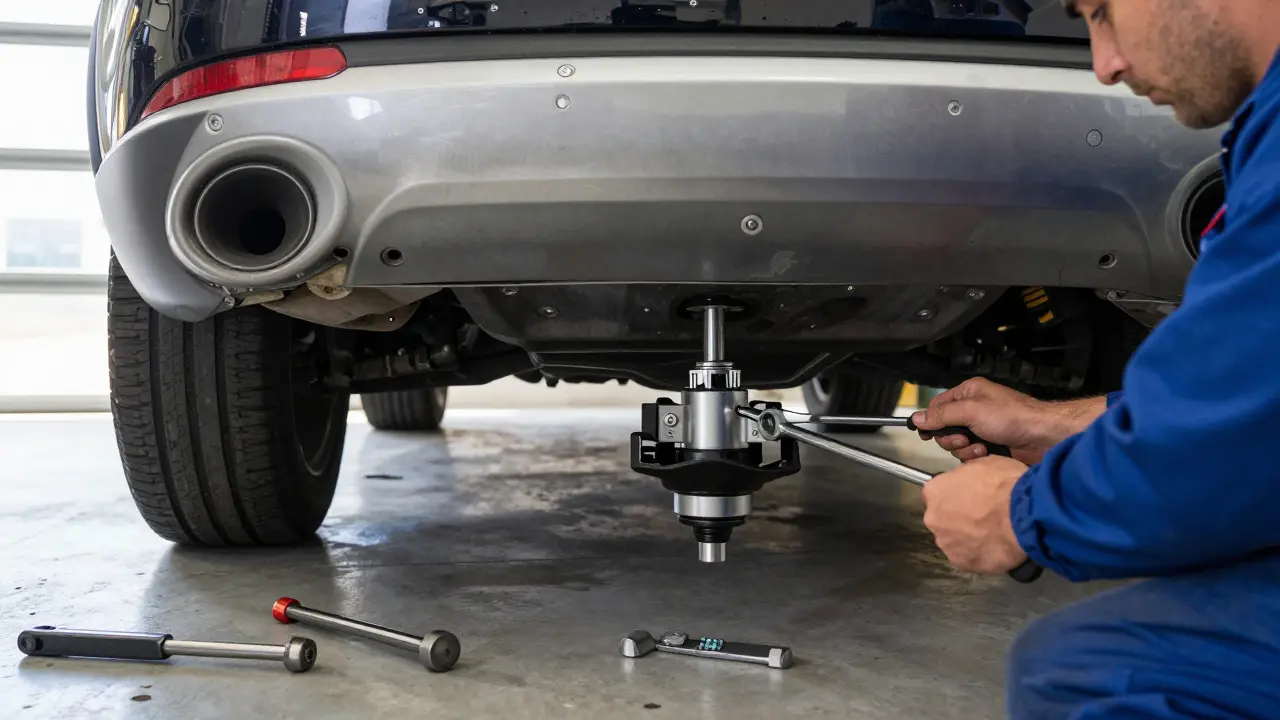
Ever tried pulling a trailer, bike rack, or campervan only to realize your car doesn’t have a hitch? You’re not alone. Thousands of UK drivers add a hitch receiver every year-not just for holidays, but for hauling gear, bikes, or even small utility trailers for work. But installing one isn’t as simple as bolting on a metal bar. Get it wrong, and you risk damaging your vehicle, voiding your warranty, or worse-causing an accident. Here’s what you actually need to know before you start.
Why a Hitch Receiver Matters
A hitch receiver isn’t just an accessory. It’s a structural component designed to transfer weight and force from your trailer back into your vehicle’s frame. Without the right setup, your car’s suspension, brakes, and even alignment can suffer. In the UK, the law requires that any towing setup must meet European Standard ECE R55. That means your hitch must be certified, properly rated, and installed to manufacturer specs.Most modern cars come with a factory tow package, but if yours doesn’t, you’re looking at an aftermarket hitch receiver. These come in different classes: Class I (up to 2,000 lbs), Class II (up to 3,500 lbs), Class III (up to 5,000 lbs), and Class IV (up to 10,000 lbs). Most SUVs and pickups in the UK use Class III. Compact cars? Stick with Class I or II.
What You Need Before You Start
You can’t just buy a hitch and start drilling. Here’s your checklist:- Your vehicle’s towing capacity-Check your owner’s manual or the sticker inside the driver’s door. Never exceed this number.
- Hitch class-Match it to what you’re towing. A 1,500 lb bike rack needs a Class II. A 4,000 lb caravan? You need Class III or higher.
- Compatible hitch model-Not all hitches fit all cars. Use your VIN or exact make, model, and year to find the right one. Brands like TowPro, Witter, and Westfalia make UK-specific fits.
- Wiring harness-Your trailer lights must connect to your car’s electrical system. A universal harness won’t cut it. You need a plug-and-play kit designed for your car’s make and year.
- Basic tools-Socket set, torque wrench, drill (if needed), jack stands, safety gloves, and a helper.
Skipping any of these steps is asking for trouble. I’ve seen people install a Class IV hitch on a Ford Focus-then wonder why the rear suspension collapsed. It’s not magic. It’s physics.
Installation: Step-by-Step
Most hitch receivers follow the same basic process, but details vary by vehicle. Here’s the general flow:- Park on level ground and engage the parking brake. Raise the rear of the car with jack stands-never rely on a hydraulic jack alone.
- Remove the rear bumper trim if needed. Some hitches require you to cut or remove plastic underbody panels. Don’t force it-use a trim removal tool.
- Locate the mounting points-These are usually reinforced holes or threaded studs near the rear frame rails. If you can’t find them, consult the hitch manufacturer’s diagram.
- Position the hitch-Slide it into place. Most hitches are bolted from underneath. Use the provided hardware. Don’t reuse old bolts.
- Torque the bolts-This is critical. Over-tightening can crack the frame. Under-tightening lets the hitch wiggle. Use a torque wrench. For most Class III hitches, 80-100 Nm is standard. Check the manual.
- Reinstall trim and panels-Make sure nothing is pinched or rubbing.
- Install the wiring harness-Route the cable along existing looms. Plug it into your car’s factory connector (usually under the rear bumper). Test the lights before driving.
- Test everything-With a helper, check brake lights, turn signals, and hazard lights. Then, do a slow drive in an empty lot to feel for vibrations or unusual noises.
Some vehicles-like the Volkswagen Tiguan or Volvo XC60-require a software reset after wiring installation. If your trailer lights don’t work after plugging in, you might need a diagnostic tool to activate the towing module. Dealerships charge £60-£100 for this. Some aftermarket kits include a programmer to do it yourself.
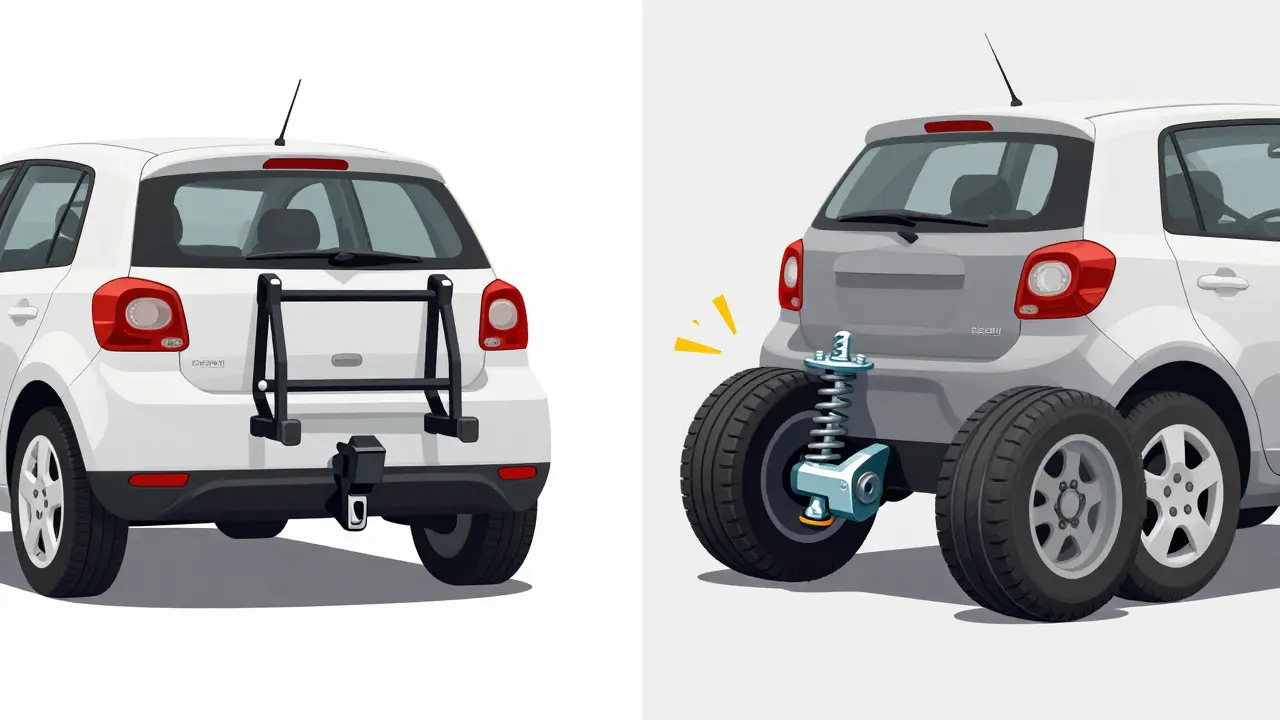
Common Mistakes to Avoid
- Buying a hitch based on price alone-A £50 eBay hitch might fit, but it won’t be tested for your car’s weight distribution. Stick to brands with TÜV or ECE certification.Do You Need a Professional?
You can install a hitch yourself if you’re comfortable with basic tools and have a safe workspace. But here’s when to call a pro:- Your car has rear sensors or a backup camera-wiring interference can cause errors.
- You’re towing over 2,000 lbs and need a weight-distributing system.
- Your vehicle has a unibody frame (most modern cars)-improper installation can weaken structural integrity.
- You’re unsure about torque specs or electrical connections.
Professional installation in the UK typically costs between £120 and £250, depending on complexity. Many garages offer a warranty on their work. That’s worth it if you’re not confident.
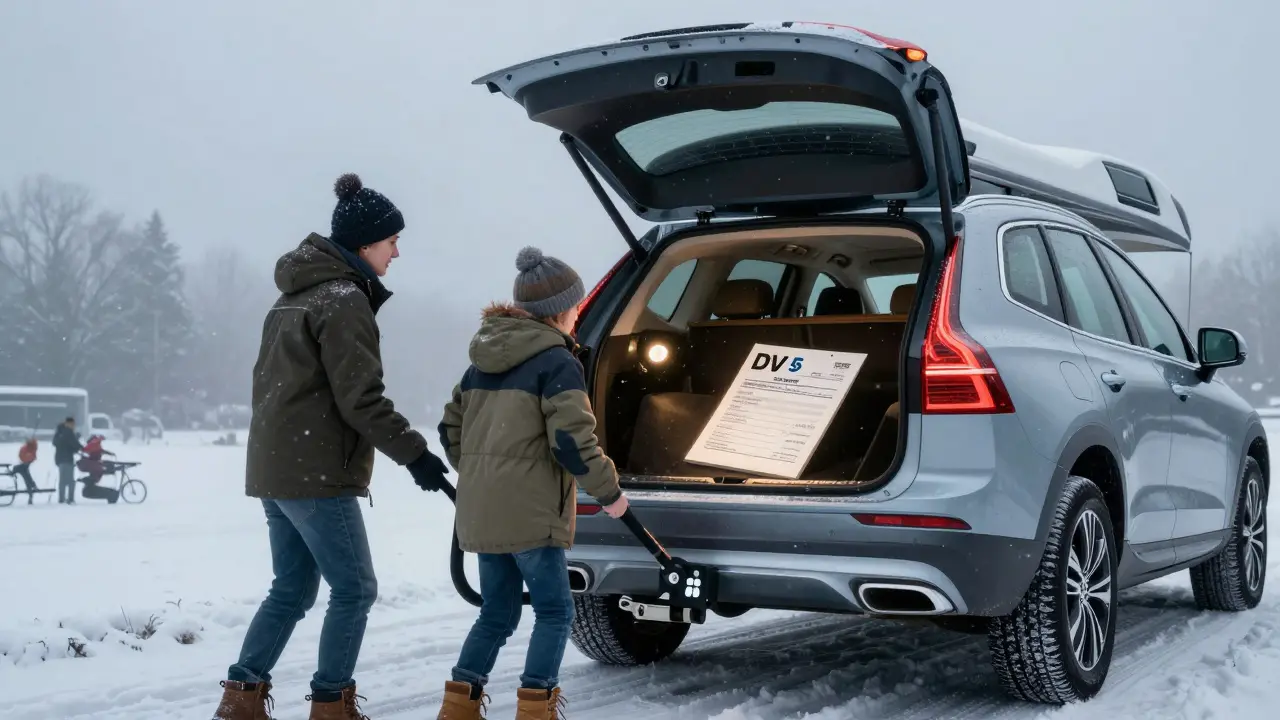
What Happens After Installation?
Once it’s done, you’re not done. Here’s what to do next:- Update your insurance-Tell your provider you’ve added a tow hitch. Some policies require it, especially if you’re towing regularly.
- Register the change on your V5C-Use form V317 to notify the DVLA. You’ll need the hitch’s certification number (usually on a sticker).
- Test your load-Start light. A fully loaded trailer should never exceed 85% of your car’s towing limit.
- Check the hitch monthly-Look for rust, loose bolts, or worn ball mounts. Salt and moisture in UK winters are brutal on metal.
And never, ever tow without proper mirrors. UK law requires extended side mirrors if your trailer is wider than your car. Fines start at £100.
Final Thoughts
Installing a hitch receiver isn’t about making your car look cool. It’s about safety, legality, and function. Do it right, and you’ll have years of reliable towing. Do it wrong, and you could be facing repairs, fines, or worse.Take your time. Match the hitch to your vehicle. Use certified parts. Test everything. And if you’re unsure-get help. There’s no shame in calling a pro when your car’s safety is on the line.
Can I install a hitch receiver on any car?
Not every car is designed for towing. Some small hatchbacks and electric vehicles have no factory towing capacity or structural reinforcement. Always check your owner’s manual or manufacturer’s website first. If the manual says "not designed for towing," don’t force it.
What’s the difference between a hitch and a receiver?
The hitch is the entire assembly that attaches to your vehicle’s frame. The receiver is the square tube at the back-usually 1.25" or 2" in size-where you plug in your ball mount, bike rack, or cargo carrier. So all receivers are part of a hitch, but not all hitches have receivers (some are fixed ball types).
Do I need a brake controller for my trailer?
Only if your trailer has electric brakes and weighs over 750 kg. Most small trailers (like bike racks or light utility trailers) use surge brakes, which don’t need a controller. But if you’re towing a caravan or horse trailer with electric brakes, you’ll need a brake controller installed inside your car. These connect to your brake pedal and activate trailer brakes proportionally.
Can I remove the hitch later?
Yes, most bolt-on hitches can be removed. But if you had to cut or modify body panels during installation, you might not be able to restore the original look. Always choose a no-drill hitch if you think you might remove it later.
Is a hitch receiver legal in the UK?
Yes, as long as it’s certified to ECE R55 and installed correctly. All reputable hitch manufacturers provide certification paperwork. You must also update your V5C logbook with the DVLA if the hitch changes your vehicle’s towing capacity. Failure to do so can result in a fine and insurance invalidation.
If you're planning to tow this winter, now’s the time to get it right. Don’t wait until the first snowfall to realize your hitch isn’t rated for your load. Plan ahead, choose wisely, and drive safely.
Comments
kelvin kind
Just installed a Class II last weekend. Took two hours, no drama. Torque wrench is your best friend.
December 27, 2025 at 03:06
Ian Cassidy
Class III on my Tacoma. Witter hitch. Perfect fit. Wiring harness was the real pain-had to splice into the rear module. Took three tries.
December 28, 2025 at 07:48
Sam Rittenhouse
I used to think hitches were just metal bars you bolt on. Then I saw a guy tow a 5,000-lb camper with a £40 eBay special on a Honda Civic. The rear axle bent. The trailer flipped. No one was hurt, but the insurance claim was six figures. Physics doesn't care if you're in a hurry.
December 29, 2025 at 21:18
Denise Young
Let’s be real-most people who install hitches are either overconfident or underinformed. I’ve seen Class IVs slapped onto Priuses because the seller said ‘fits most SUVs.’ Spoiler: Priuses aren’t SUVs. They’re electric toaster ovens with wheels. And no, your ‘universal’ wiring harness isn’t going to magically sync with your 2022 VW ID.4’s CAN bus. You need the OEM-specific kit, the diagnostic reset, and the humility to admit you don’t know what you’re doing. Which, honestly, is the first step toward not turning your car into a roadside sculpture.
December 31, 2025 at 04:26
Peter Reynolds
Been towing for years. Always check the manual. Always torque to spec. Always test lights. That’s it. No need to overthink it.
December 31, 2025 at 17:55
Kenny Stockman
For anyone nervous about wiring-just buy a plug-and-play kit from TowPro. They’re a little pricier but save you hours of frustration. And if your car’s got rear sensors, don’t ignore the warning about interference. I fried my parking camera once because I rushed. Learned the hard way.
January 1, 2026 at 08:37
Antonio Hunter
One thing nobody mentions enough is the psychological shift that comes with towing. You’re no longer just driving a car-you’re managing a system. Your braking distance doubles. Your turning radius shrinks. Your mirror sightlines become critical. It’s not just hardware. It’s a new driving identity. And if you treat it like an accessory, you’re not just risking your car-you’re risking everyone on the road with you. Take it seriously. Even if you’re just hauling a bike rack.
January 1, 2026 at 13:05
Ananya Sharma
You people are so naive. The entire towing industry is a scam engineered by manufacturers to sell overpriced hitches and forced software updates. Your ‘ECE R55 certification’? That’s just a sticker slapped on by a subcontractor in Poland. The real structural integrity of modern unibody frames is a lie. They’re designed to fail under load so you’ll keep buying new cars every five years. And don’t get me started on the DVLA-your V5C update is a trap to collect ‘modification fees.’ You’re being played. The only safe option is to never tow. Ever. Walk. Ride a bike. Live in a city. Escape the system.
January 2, 2026 at 23:58
Paritosh Bhagat
you dont even know what you are talking about i bet you think torque wrench is for tightening screws and you probably used duct tape for your wiring and now your car is on fire and you are crying on reddit like a baby and also why do you think the dvla cares about your hitch its just a government ploy to spy on you and track your movements also i saw a guy on youtube install a hitch with a hammer and it worked so why are you even here
January 3, 2026 at 16:21
Ben De Keersmaecker
Interesting that the post mentions ECE R55 but doesn’t clarify that the UK adopted this under the EU framework pre-Brexit. Post-Brexit, the UKCA mark is now the legal standard for new installations, though ECE R55 remains grandfathered. Many aftermarket suppliers still label products as ECE-only, creating confusion. If you’re installing now, ensure the hitch has both ECE R55 and UKCA certification-or risk non-compliance during an MOT. Also, some garages still use outdated diagnostic tools for VW and Volvo resets. Ask for a VAG-COM or VCDS if you’re doing it yourself.
January 5, 2026 at 15:24
Chris Heffron
Just a quick one-make sure your ball mount is the right height. Too high or too low and you’ll wear out your tires unevenly. And yes, I’ve seen people use a 1.25” receiver for a 2” ball mount. Don’t be that guy.
January 6, 2026 at 10:49
Zach Beggs
Had a hitch installed last year. Still works fine. No issues. Just follow the instructions.
January 8, 2026 at 05:08
Fred Edwords
Correction: The post states, ‘Most modern cars come with a factory tow package,’ but this is misleading. Many ‘tow packages’ are merely wiring harnesses with no structural reinforcement. The hitch receiver itself is often an aftermarket addition-even on vehicles marketed as ‘tow-ready.’ Always verify the frame’s load-bearing capacity independently of the manufacturer’s brochure. Additionally, ‘Class I, II, III, IV’ are SAE classifications, not ECE. ECE R55 governs certification, not load rating. Precision matters.
January 8, 2026 at 23:13
Aaron Elliott
The entire premise of this article is a capitulation to consumerist absurdity. Why does society demand that individuals transform their personal vehicles into mobile cargo platforms? Is this not a symptom of a culture that conflates utility with identity? The hitch receiver is not a tool-it is a symbol of alienated labor, of the commodification of leisure, of the desperate attempt to externalize one’s existential void through the acquisition of trailers, bikes, and utility carts. The real question is not how to install it-but whether we should have ever allowed it to exist.
January 9, 2026 at 14:13
Sarah McWhirter
Okay but have you considered that the hitch might be a government mind-control device? I read this one blog that said the receiver tube emits low-frequency pulses that sync with your brain’s dopamine receptors. That’s why people get addicted to towing. They’re not enjoying the outdoors-they’re being conditioned. And the wiring harness? It’s a backdoor into your car’s ECU. They’re tracking your routes. The DVLA update? That’s how they register you as a ‘tow subject.’ I’m not saying don’t install it-I’m saying wear a tin foil hat while you do it. And maybe unplug your car’s battery for 72 hours after. Just saying.
January 11, 2026 at 00:58