
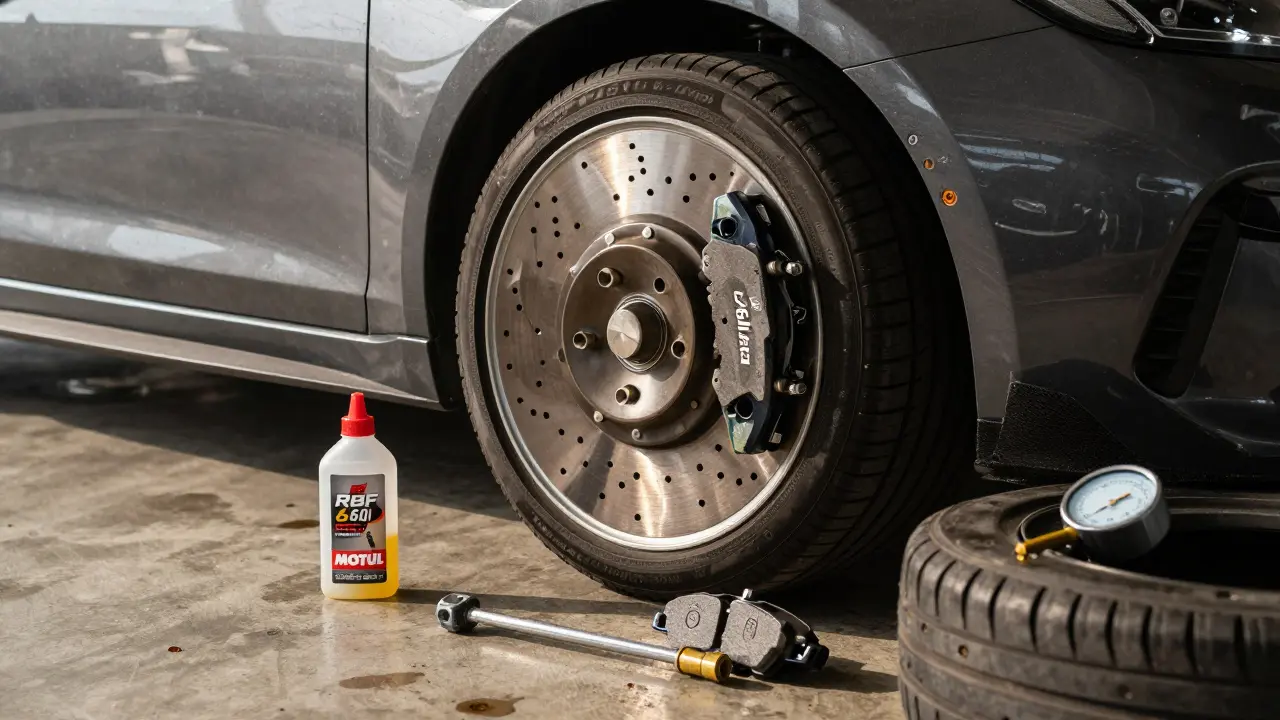
Going to a track day isn’t just about driving fast-it’s about coming home in one piece. Whether you’re new to the circuit or you’ve been lapping for years, skipping proper prep on your brakes, tires, and safety gear is like stepping onto a tightrope without a net. The track doesn’t care how much money you spent on your car’s sound system. It only cares if your brakes can handle six consecutive hot laps, if your tires have enough grip to hold through Turn 3, and if your harness is tight enough to keep you from sliding into the steering wheel during a hard braking zone.
Brakes: The Most Critical Upgrade
Your street brakes are built for stoplights and highway merges, not 100+ mph braking zones. On a track, you’re slamming the pedal 15-20 times per lap. That generates heat fast. Overheat your stock rotors and pads, and you’ll get brake fade-where the pedal goes soft and the car doesn’t slow down like it should. I’ve seen people lose control at Snetterton because their brakes turned to mush after three laps.
Start with the right pads. Street pads like EBC Redstuff or Ferodo DS2500 are fine for occasional track use, but if you’re doing more than two track days a year, upgrade to a true track compound. Pagid RS29 or Hawk DTC-70 are popular choices. They work best above 150°C and hold up under repeated heavy use. Don’t just swap pads, though. Pair them with slotted or drilled rotors. Slotted rotors clear away gas and debris better than smooth ones, and they last longer than drilled rotors, which can crack under thermal stress.
Brake fluid matters too. DOT 4 fluid boils around 230°C. DOT 5.1 climbs to 270°C. But for serious track use, go with a high-temp racing fluid like Motul RBF 660 or Castrol SRF. These have boiling points above 315°C. Change it before every track day. Old fluid absorbs moisture, which lowers its boiling point. I’ve had clients show up with brake fluid that was two years old-by lap four, their pedal went to the floor.
Tires: Grip Is Everything
Here’s the hard truth: no matter how good your brakes are, if your tires are worn street rubber, you’re not going fast. You’re just sliding around. Track tires aren’t just grippier-they’re built to handle heat buildup and lateral loads that would destroy a regular tire in minutes.
Don’t waste money on “performance” street tires like Michelin Pilot Sport 4S if you’re serious about track time. They’re great for backroads, but they harden and lose grip fast when hot. Instead, go for a true track tire: the Michelin Pilot Sport Cup 2 R, Pirelli P Zero Trofeo R, or Toyo Proxes R888R. These tires are designed to work best at 80-100°C. They’ll blister if you drive them cold, so warm them up properly before pushing hard.
Pressure is everything. Street tires run at 32-36 psi. Track tires? You’re looking at 28-30 psi cold. That’s right-lower than your car manual says. Why? Because the tire expands as it heats up. If you start too high, you end up with a tiny contact patch and less grip. Use a tire pyrometer after a few laps to check the tread temperature across the width. If the edges are hotter than the center, you’re overinflated. If the center’s hotter, you’re underinflated. Adjust in 1 psi increments until the heat is even.
And never, ever run tires with less than 3mm of tread depth on track. I’ve seen people try to save money by using 2mm tires. They lost control at high speed and totaled their car. Tires aren’t a place to cut corners.
Safety Upgrades: It’s Not Optional
You don’t need a full roll cage to do a track day. But you do need a few non-negotiable safety items. First: a helmet. Not just any helmet. You need one that meets Snell SA2020 or FIA 8860 standards. A DOT motorcycle helmet? Not enough. Track speeds mean you need a helmet built to handle impacts at 150+ mph.
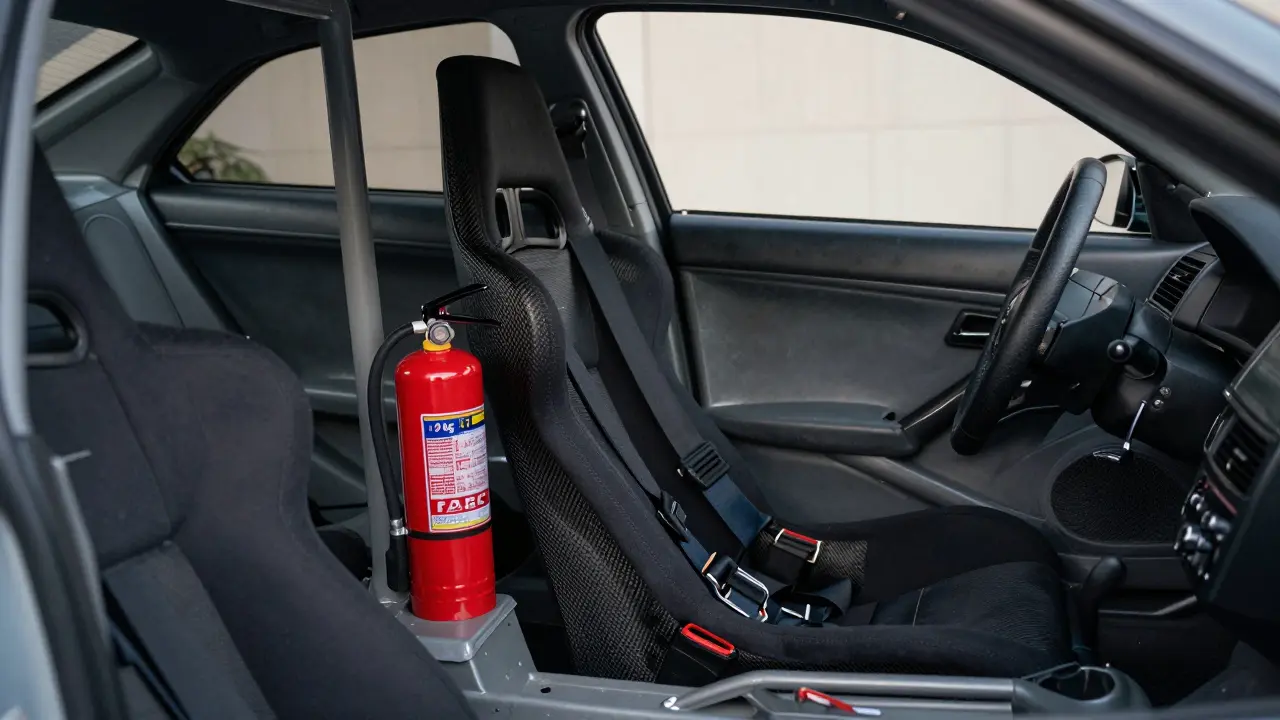
Next: a racing harness. Stock seatbelts are designed to let you move during a crash to reduce injury. On track, that movement can kill you. A 5-point or 6-point harness locks you in place. Install it properly-no twists, no slack. The shoulder straps should lie flat across your collarbone, not your neck. The lap belt should sit low on your hips, not your stomach. And always use a head and neck support (HANS device) if you’re driving anything faster than a stock Civic.
Fire extinguisher? Yes. A 2kg ABC dry chemical extinguisher mounted near your driver’s seat is required at most UK track days. Make sure it’s secured with a quick-release bracket. You won’t have time to fumble with straps if smoke starts coming from your engine bay.
And don’t forget about your car’s interior. Remove anything loose: phone chargers, sunglasses, water bottles, floor mats. In a hard corner or sudden stop, those become projectiles. I’ve seen a loose water bottle crack a windshield during a 120 mph panic stop. It wasn’t the driver’s fault-it was the lack of prep.
Pre-Track Checklist: Do This Before You Leave
- Check brake fluid level and condition-replace if it’s cloudy or over 12 months old
- Inspect brake pads-replace if under 4mm thickness
- Check rotors for cracks, deep grooves, or warping
- Set tire pressure cold: 28-30 psi for track tires
- Verify tire tread depth: minimum 3mm
- Ensure all wheels are torqued to spec (use a torque wrench, not your foot)
- Remove all loose items from cabin and trunk
- Confirm your helmet and harness are Snell/FIA approved
- Carry a fire extinguisher with quick-release mount
- Bring spare brake pads, a tire pressure gauge, and a portable air compressor
What Not to Do on Track Day
Don’t assume your car is ready because it passed its MOT. The MOT checks for road legality, not track performance. A car that’s safe on the highway can be dangerous on the circuit.
Don’t skip the tech inspection. Most track days require a quick safety check before you hit the track. They’ll look at your harness, extinguisher, tire condition, and brake fluid. If you fail, you won’t get on track. No exceptions.
Don’t push too hard too soon. The first two laps should be warm-up laps. Feel the brakes, test the tire grip, learn the line. Go full throttle on lap one? You’ll be walking back to the paddock.
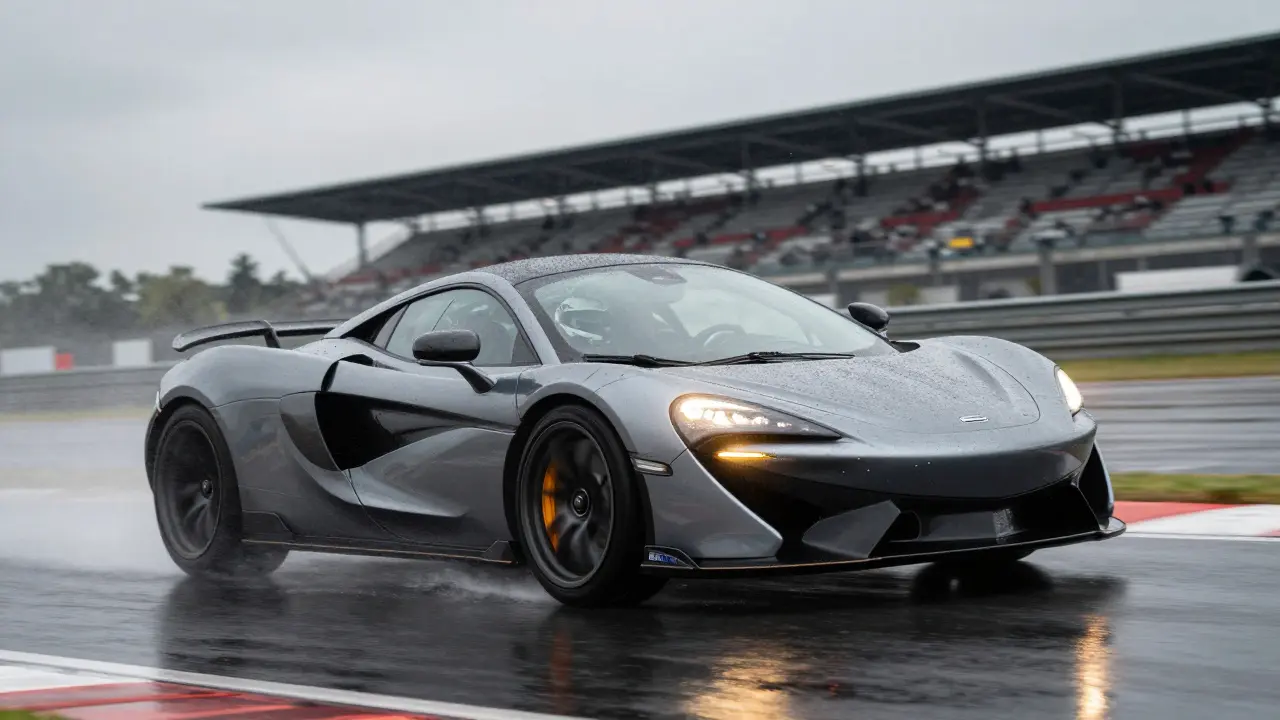
Don’t ignore the weather. Wet track? Switch to rain tires or stay off the circuit. Wet asphalt with slicks is a one-way ticket to the wall.
Common Mistakes and How to Avoid Them
One of the biggest mistakes? Thinking you need a race car. You don’t. A well-prepared Ford Focus ST or Honda Civic Type R can be faster on track than a poorly set-up Porsche 911. It’s not about the car-it’s about the prep.
Another? Using the same brake pads for street and track. That’s like using a kitchen knife to chop wood. It’ll work… until it breaks. Stick to dedicated track pads and swap them back for street driving.
And don’t forget to check your suspension. Worn shocks or ball joints can cause unpredictable handling under load. A quick bounce test-press down on each corner and let go-should result in one bounce, not three. If it bounces more than twice, your shocks are worn out.
Final Thought: It’s About Control, Not Speed
Track days aren’t about setting the fastest lap. They’re about learning how your car behaves under stress. They’re about building confidence in your brakes, your tires, and your own reactions. The moment you feel the brake pedal firm up under heavy use, or the tires bite into the asphalt without sliding-that’s when you know your prep paid off.
Do the work. Upgrade the right things. And never underestimate how much a $50 set of brake pads or a $120 set of tires can save you from a $20,000 repair bill.
Can I use my street tires for a track day?
You can, but you shouldn’t. Street tires harden quickly under track heat, leading to poor grip, unpredictable sliding, and increased risk of blowouts. For more than one or two track days, invest in a proper track tire like the Michelin Pilot Sport Cup 2 R or Pirelli Trofeo R. They’re designed to handle high temperatures and lateral forces.
Do I need a racing harness for a track day?
Yes, if you’re pushing your car hard. Stock seatbelts are designed for road crashes, not high-G cornering. A 5-point or 6-point harness keeps you locked in place, reduces fatigue, and prevents you from sliding into the steering wheel during hard braking. Most organized track days require it for safety inspections.
How often should I change brake fluid for track use?
Before every track day if you’re using high-temp racing fluid. Even the best fluids absorb moisture over time, which lowers their boiling point. For serious track drivers, we recommend flushing the system every 3-6 months, even if you’re not driving on track regularly.
What’s the minimum tire tread depth for track driving?
3mm. Anything less and you risk hydroplaning on damp patches or losing grip during hard braking. Many track organizers will refuse entry if your tires are below this threshold. Even if they don’t check, your own safety should be the deciding factor.
Is a fire extinguisher required for track days in the UK?
Yes, at nearly all organized track days in the UK. A 2kg ABC dry chemical extinguisher with a quick-release mount is standard. It’s not just a rule-it’s a lifesaver. Engine fires can start without warning, and you need to be able to reach it in under two seconds.
Should I upgrade my brake rotors or just the pads?
Upgrade both. Pads alone won’t solve overheating. Slotted rotors help clear gas and debris from the pad surface, improving bite and consistency. Drilled rotors look cool but can crack under repeated heat cycles. Stick with slotted for durability. If your rotors are worn, warped, or have deep grooves, replace them before installing new pads.
Can I use the same brake pads for street and track?
Technically yes, but it’s a bad idea. Track pads need high temperatures to work properly, so they’ll feel mushy and noisy on the street. Street pads will fade quickly on track. For regular track use, swap to dedicated track pads before each event and switch back for daily driving.
Do I need a helmet for a track day?
Yes, and it must be Snell SA2020 or FIA 8860 certified. Motorcycle or construction helmets won’t cut it. Track speeds mean you need a helmet built to handle high-speed impacts and fire resistance. Most track organizers will check this at tech inspection.
Comments
Sandy Dog
I just spent $800 on new brakes and tires for my Civic Type R and now I’m scared to even turn the key 😭 I mean, what if I die? Like, I just want to go fast but also not turn into a pancake on Turn 3?? 🥲
January 11, 2026 at 03:42
Nick Rios
This is actually one of the most thoughtful and practical guides I’ve read on track prep. No fluff, just real stuff that keeps you alive. I’ve been doing this for 12 years and still learned a few things.
January 12, 2026 at 07:10
Amanda Harkins
You know, it’s funny how we treat cars like they’re extensions of ourselves. We obsess over brake fluid and tire pressure like they’re our soul’s last breath. But really, it’s just physics. And maybe a little fear. And maybe a lot of ego wrapped in carbon fiber.
January 14, 2026 at 06:24
Jeanie Watson
Yeah okay but how many of these upgrades are just for people who want to feel like they’re in Fast & Furious?
January 14, 2026 at 06:56
Tom Mikota
You say "DOT 5.1 climbs to 270°C" - that’s not even right. It’s 268°C dry, 218°C wet. And you didn’t mention fluid viscosity ratings. And why no mention of bleeding technique? You can’t just pour it in and hope for the best. This is amateur hour.
January 14, 2026 at 13:54
Mark Tipton
Let me break this down for you: the real reason people die on track days isn’t because of brake fade or worn tires - it’s because they’re emotionally unstable. The track doesn’t care about your ego. The car doesn’t care about your Instagram. You think you’re a hero? You’re just a statistic waiting to trend. Also, did you know the Nürburgring has a 2% fatality rate per lap for unprepared drivers? I’ve got sources.
January 14, 2026 at 20:47
Adithya M
I love this post. I just got my first track day booked next month and I was about to use my stock pads. Now I’m ordering Pagid RS29 and a 2kg extinguisher. Also, why is everyone ignoring suspension? Worn shocks = bad news.
January 15, 2026 at 10:36
Jessica McGirt
One thing I appreciate about this guide is how it respects the driver’s intelligence. No condescension. Just clear, actionable steps. Thank you for not talking down to beginners.
January 15, 2026 at 12:56
Donald Sullivan
You people are overcomplicating this. I’ve done five track days with stock brakes and street tires. I’m fine. You’re just scared. If you can’t handle it, stay off the track.
January 17, 2026 at 05:42
Ronak Khandelwal
I just want to say - this is beautiful. 🌿 You’re not just teaching people how to drive faster. You’re teaching them how to be present. How to listen to their machine. How to respect the moment. That’s more than safety. That’s mindfulness on four wheels. 🙏✨
January 17, 2026 at 11:07
Jeff Napier
Brake fluid? Tires? Safety gear? Please. The real danger is the track organizers. They’re all just government shills pushing fear to sell you overpriced gear. I’ve never had a problem with my 2008 Subaru and a $20 helmet from Walmart. They’re just trying to control you.
January 18, 2026 at 19:19
Sibusiso Ernest Masilela
I’ve raced in Le Mans. You’re all amateurs. If you don’t have a full FIA roll cage, a six-point harness, and carbon fiber brake lines, you’re not even on the same planet as real drivers. Your Civic Type R is a toy. Your "track day" is a picnic. You’re embarrassing the sport.
January 19, 2026 at 23:41
Daniel Kennedy
To everyone who said "I’m fine with stock stuff" - I get it. I’ve been there. But I also saw a guy lose control at Laguna Seca because his pads glazed over. He walked away. His car didn’t. You don’t need to be a pro to avoid a $20k mistake.
January 20, 2026 at 23:02
Taylor Hayes
I really liked how you emphasized control over speed. That’s the whole point, isn’t it? It’s not about being the fastest - it’s about being the most aware. I’ve seen people go from zero to hero on lap one and then crash on lap two. The ones who last? They’re the ones who listened.
January 22, 2026 at 17:47
Sanjay Mittal
For anyone new: warm up your tires properly. Do three slow laps, then two medium, then one hard. Don’t go full throttle on lap one. Your tires will thank you. And your wallet.
January 24, 2026 at 15:48