
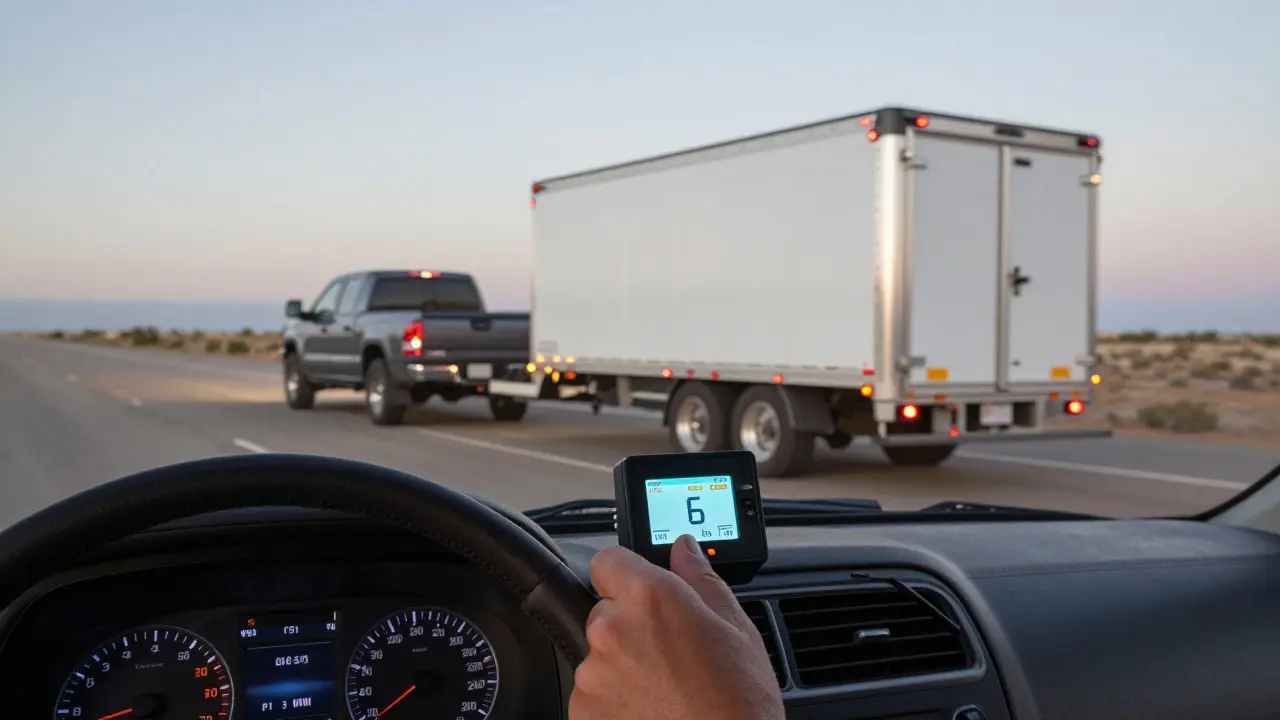
When you hook up a trailer to your pickup truck, you’re not just adding weight-you’re adding stopping distance. Without a properly set up trailer brake controller, your brakes won’t work in sync, and that’s dangerous. Many drivers think installing the controller is enough. But if the gain and boost settings are wrong, you could be skidding, jerking, or even losing control on the highway. This guide walks you through exactly how to set up your trailer brake controller, adjust gain and boost, and test it so your rig stops smoothly every time.
What a Trailer Brake Controller Actually Does
A trailer brake controller is the brain behind electric trailer brakes. It tells your trailer’s brakes when to engage and how hard to push based on how fast your truck is slowing down. It doesn’t just copy your truck’s brake pressure-it senses deceleration using an accelerometer or hydraulic pressure sensor. That’s why it’s smarter than a simple on/off switch.
Most modern controllers are proportional. That means they react in real time. When you tap the brakes gently, the trailer brakes gently. When you slam them, the trailer locks up hard. But that only works if the gain and boost settings are correct. Get it wrong, and you’ll either have under-braking (trailer pushes into the truck) or over-braking (wheels lock and skid).
Understanding Gain: The Sensitivity Dial
Gain is the most important setting. It controls how sensitive the controller is to your truck’s braking. Think of it like the volume knob for your trailer’s brakes. Too low, and the trailer drags. Too high, and it bites too hard.
Most controllers have a gain range from 1 to 10. But the right number isn’t in the manual-it’s in the road. Start at 6. Drive on a dry, flat road at 25 mph. Tap the brakes firmly but not hard. Watch the trailer. If it slides or jerks, reduce gain by one point. If it feels like it’s not helping at all, increase it.
Here’s what to listen for:
- Whining or squealing noise from trailer wheels? Gain too high.
- Trailer sways or pushes forward when braking? Gain too low.
- Smooth, even stop with no noise? You’re in the sweet spot.
Heavy loads (like a 5th wheel or boat trailer) usually need gain between 7 and 9. Light loads (a small utility trailer) often work best at 4 to 5. Always test with the same load you plan to tow.
Boost: The Extra Push for Heavy Loads
Boost isn’t on every controller, but if yours has it, it’s a game-changer. Boost adds extra braking power on top of the gain setting. It’s like giving your trailer brakes a turbocharge when you really need it.
Boost is usually a separate knob or digital slider. It’s meant for situations where gain alone isn’t enough-like steep hills, long downhill stretches, or towing over 7,000 pounds. Don’t turn boost on for everyday driving. It can cause wheel lockup on wet pavement.
Use boost only when:
- Towing over 7,000 lbs
- Going down a steep grade (over 8% incline)
- Driving in hot weather (brakes fade faster)
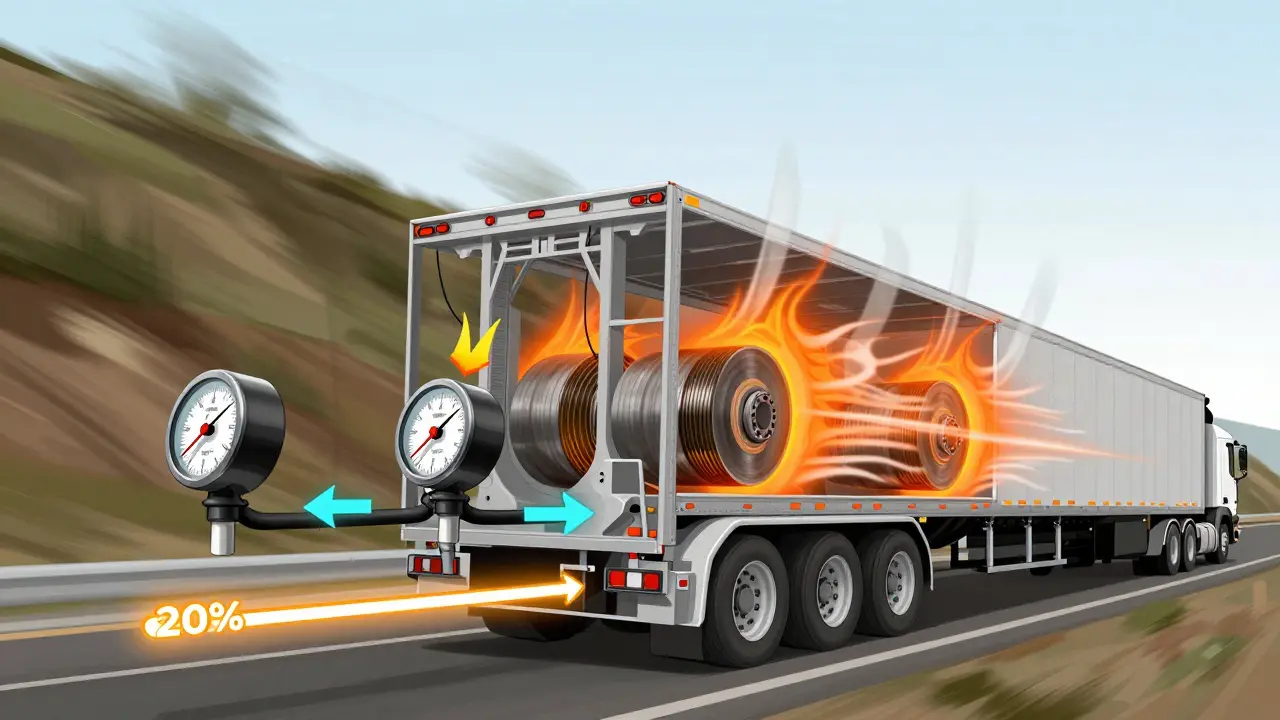
Start with boost at 20%. Drive a short downhill road and test. If the trailer still feels sluggish, bump it to 30%. Never go over 50% unless you’re hauling a heavy RV on a mountain pass. Too much boost can fry your trailer’s brake magnets or overheat the drums.
Testing Your Setup: The Real-World Check
Setting gain and boost isn’t enough. You need to test under real conditions. Don’t just drive around the parking lot. Find a safe, empty stretch of road-preferably with a slight incline.
Here’s a simple 3-step test:
- Brake at 25 mph: Drive straight, then apply steady pressure. The trailer should stop in line with your truck. No swaying, no bouncing.
- Emergency stop: From 30 mph, slam the brakes (don’t pump). The trailer should lock up slightly, but not skid. If the tires lock hard and smoke, lower gain or turn off boost.
- Downhill test: Find a 5-7% slope. Drive down at 20 mph with gain set. Use boost only if needed. The trailer should roll smoothly without dragging or surging.
Do this test with the same trailer, load, and tire pressure you’ll use on your trip. Weather matters too. Test in both dry and damp conditions. Wet roads need 10-15% less gain than dry ones.
Common Mistakes and How to Fix Them
Even experienced tow drivers mess this up. Here are the top three mistakes-and how to avoid them.
Mistake 1: Setting gain once and forgetting it
Many people set gain for their camper, then use it for a boat trailer. Big mistake. Different trailers have different weights, brake sizes, and friction levels. Always recheck gain when you switch trailers.
Mistake 2: Using boost on dry pavement
Boost is not for city driving. I’ve seen drivers lock up trailer wheels on a wet highway because they left boost at 40%. Result? A jackknife. Turn boost off unless you’re on a steep descent or hauling heavy.
Mistake 3: Not checking wiring
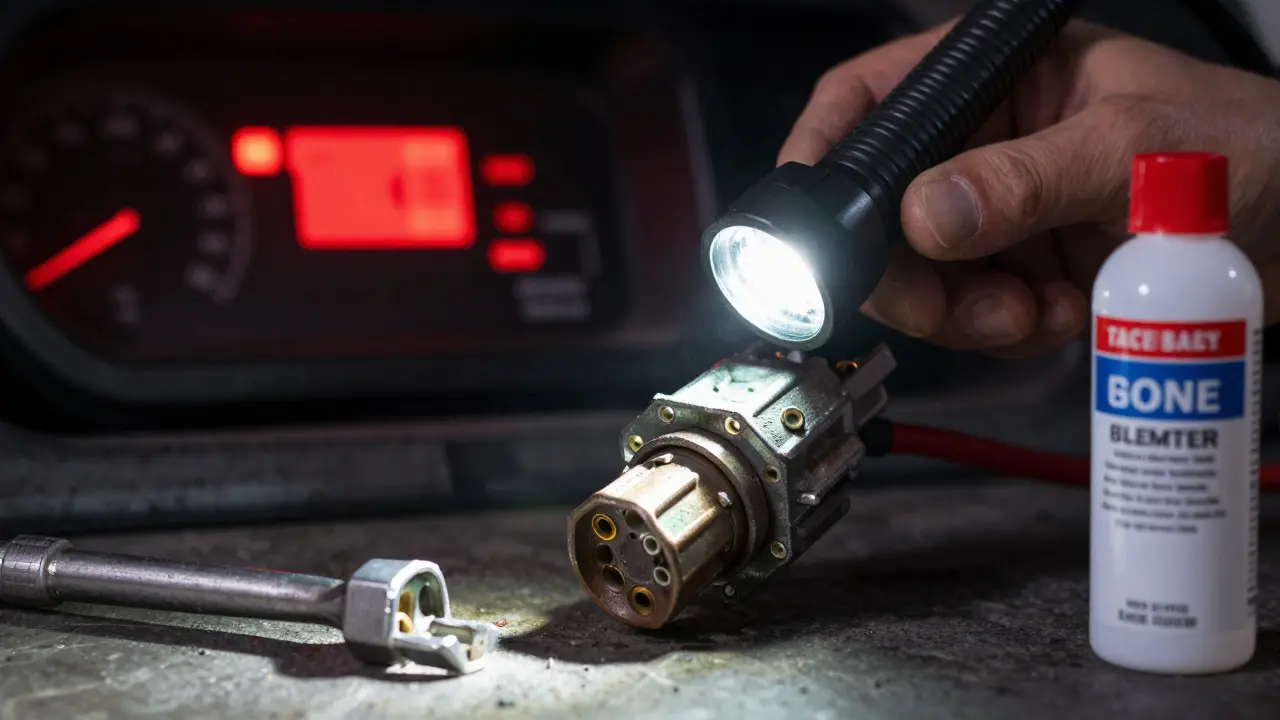
A controller can be perfectly set, but if the trailer’s brake wires are corroded or loose, it won’t work. Check the 7-pin plug every time you hook up. Look for green or white buildup on the pins. Clean with electrical contact cleaner. If the trailer brake light on your dash doesn’t come on when you test, the connection is bad.
When to Replace Your Brake Controller
Brake controllers last 5-10 years, but they don’t last forever. If you notice:
- Random brake activation (brakes engage without you pressing the pedal)
- Erratic gain settings (numbers jump or reset)
- No response from the trailer even with correct gain
It’s time to replace it. Older controllers (like the Tekonsha P3 or Draw-Tite Activator) are still reliable, but newer models like the Curt Venturer or Redarc Tow-Pro Elite offer better diagnostics, automatic gain adjustment, and smartphone apps to monitor performance.
Final Tip: Keep a Log
Write down your gain and boost settings for each trailer you tow. Note the load weight, weather, and road conditions. Over time, you’ll build a personal reference. Next time you hook up that same trailer, you won’t guess-you’ll know.
Safe towing isn’t about horsepower. It’s about control. And control starts with a properly set brake controller.
What’s the right gain setting for a 5,000 lb trailer?
Start at 6 and test on dry pavement. If the trailer stops smoothly without jerking or sliding, keep it. For a 5,000 lb load, gain usually falls between 5 and 7. Always test with the exact same load you plan to tow-weight distribution matters more than the trailer’s max rating.
Can I use boost for everyday towing?
No. Boost is designed for heavy loads and steep descents only. Using it on flat roads or light trailers can cause trailer wheels to lock up, especially on wet or icy surfaces. Keep boost off unless you’re hauling over 7,000 lbs or going downhill for more than a mile.
Why does my trailer brake light blink when I press the pedal?
A blinking brake light usually means a poor connection between your truck and trailer. Check the 7-pin plug for corrosion, bent pins, or loose wires. Clean the contacts with electrical contact cleaner. If the light still blinks after cleaning, the brake controller’s wiring or the trailer’s brake magnets may be faulty.
Do I need to retest after changing tires or adding weight?
Yes. Tire size, pressure, and load distribution change how your trailer responds to braking. Even a 200-pound shift in cargo can affect balance. Always retest gain and boost after changing tires, adding gear, or switching trailers.
How often should I inspect my trailer brake system?
Inspect the brake system every 3,000 miles or before every long trip. Check brake pads, drums, wiring, and the 7-pin connector. Look for cracked wires, melted insulation, or rust on the brake magnets. If you hear grinding or smell burning, stop and fix it before driving again.
Comments
Morgan ODonnell
This is actually really helpful. I’ve been towing my boat for years and never messed with the gain much. Just set it and forgot it. Learned the hard way last summer when the trailer started fishtailing on the highway. Took me three days to figure out it was the controller. Now I test every time. Simple stuff, but life-saving.
March 4, 2026 at 04:45
Meghan O'Connor
I’m sorry, but this guide is laughably incomplete. You mention 'gain' and 'boost' like they’re universal terms, but every controller brand has its own proprietary naming scheme. And you didn’t even mention the difference between time-delayed and proportional controllers? You assume everyone has a modern setup. What about people with 2008 F-150s and a Tekonsha Prodigy? This is amateur hour.
March 4, 2026 at 20:41
Liam Hesmondhalgh
I can’t believe people still use these analog controllers. We’re in 2025. If you’re not using a smartphone-linked system like the Redarc Tow-Pro Elite with auto-calibration, you’re basically driving blindfolded. And why are we still talking about 'gain' on a scale of 1-10? That’s like measuring fuel efficiency in gallons per mile. Use percentages. Use data. Use logic.
March 5, 2026 at 04:30
Patrick Tiernan
I read this whole thing and all I got was that you need to press brake and see what happens. Wow. Groundbreaking. I’m surprised you didn’t include a diagram of how to use your foot. Also, 'don’t use boost on dry roads' - really? Who thought that was a secret? My 8-year-old knows that. This feels like someone wrote a blog post after watching a 10-minute YouTube video.
March 6, 2026 at 23:06
Aryan Gupta
You know what they don’t tell you? The brake controller is just the tip of the iceberg. The real danger is the Chinese-made brake magnets being sold on Amazon. They overheat, melt, and cause fires. I’ve seen three trailers burn up. The government won’t regulate this because of trade deals. You think your gain setting matters? Wait until your trailer catches fire because your magnets were made in Shenzhen.
March 8, 2026 at 20:16
Fredda Freyer
The key insight here is that trailer braking isn’t about mechanical alignment - it’s about dynamic equilibrium. The trailer’s center of mass shifts during deceleration, and the controller’s job is to anticipate that shift. Gain isn’t a dial - it’s a calibration of inertia. And boost? It’s not an extra push. It’s a compensation for thermal decay in the brake drums under sustained load. If you treat it like a volume knob, you’re treating physics like a suggestion.
March 9, 2026 at 18:53
Gareth Hobbs
I’ve been towing for 20 years, and I’ve never once used gain above 5.5. And I’ve hauled 10,000lb caravans across the Alps. You don’t need fancy settings. You need common sense. And clean contacts. And not buying cheap Chinese junk. Also, why are we still using 7-pin plugs? It’s 2025. Use CAN bus. Use Bluetooth. Use something that doesn’t rust in rain. This guide is stuck in 2010.
March 10, 2026 at 01:07
lucia burton
One thing this guide misses is the importance of brake fade mitigation through thermal management. When you’re descending prolonged grades, the kinetic energy transfer exceeds the thermal dissipation capacity of the drum assembly. This causes coefficient of friction decay, leading to nonlinear deceleration response. That’s why boost isn’t just 'extra power' - it’s a compensatory algorithm designed to maintain brake torque vectoring under thermal stress. If you’re not monitoring brake drum temperature with an IR sensor, you’re operating in a blind zone.
March 12, 2026 at 00:01
Meghan O'Connor
I’m not saying this is wrong, but I’m also not saying it’s right. I’ve tried everything. I’ve calibrated with a multimeter. I’ve used the manufacturer’s app. I’ve followed the 25mph test. And still - sometimes the trailer jerks. I think it’s the tires. Or the road. Or the wind. Or maybe my truck’s ABS is interfering. I just don’t know anymore. I’m done. I’m selling the trailer.
March 12, 2026 at 22:25